hoofstukke
Waarom Mondkankerbewustheid Saak Maak
[00:00:04 – 00:01:22]
Mondkanker is 'n onderwerp wat nie naastenby die openbare aandag kry wat dit verdien nie. Anders as bors- of prostaatkanker, verskyn dit selde in bewusmakingsveldtogte, maar oorlewingsyfers is swak juis omdat dit so dikwels laat opgespoor word.
Om die waarskuwingstekens te verstaan , die risikofaktore te ken en gereeld gekeur te word, kan 'n enorme verskil aan uitkomste maak. Vroeë opsporing is werklik lewensreddend.
Word mondkanker al hoe meer algemeen?
[00:01:22 – 00:02:34]
Mondkanker is nie skaars nie. Wêreldwyd styg die voorkoms van kankers wat die mond, tong en keel aantas. Terwyl dit tradisioneel geassosieer word met ouer mans wat rook en swaar drink, verander daardie profiel aansienlik.
In Suid-Afrika is mondkanker 'n ernstige gesondheidsprobleem wat gereeld in 'n gevorderde stadium gediagnoseer word, wat die uitkomste aansienlik vererger. Die publieke persepsie dat dit ongewoon is, is grootliks te wyte aan 'n gebrek aan bewusmakingsveldtogte eerder as 'n gebrek aan gevalle.
Die verband tussen HPV en mondkanker
[00:02:35 – 00:03:53]
Menslike papillomavirus, veral die HPV-16-stam, word nou erken as 'n belangrike oorsaak van orofaringeale kanker — kankers wat die agterkant van die tong en keel aantas. Hierdie verskil biologies van kankers wat deur tabak en alkohol veroorsaak word.
HPV-verwante mondkankers affekteer dikwels jonger pasiënte sonder 'n geskiedenis van rook of swaar drinkery, en word hoofsaaklik deur orale seksuele kontak oorgedra. Alhoewel hulle geneig is om beter op behandeling te reageer, word hulle gereeld laat opgespoor omdat hul vroeë simptome baie subtiel is.
Hierdie verskuiwing in die tipiese pasiëntprofiel maak deeglike mondondersoeke – insluitend die keel en basis van die tong – belangriker as ooit tevore.
Hoe 'n verdagte letsel lyk
[00:03:54 – 00:04:52]
Vroeë mondkanker lyk nie altyd kommerwekkend nie. Dit kan voorkom as 'n aanhoudende ulkus, 'n rooi kol, 'n wit kol of 'n gemengde rooi-en-wit area wat eenvoudig nie binne twee tot drie weke genees nie.
Ander waarskuwingstekens sluit in onverklaarbare knoppe, verdikte areas, gevoelloosheid of veranderinge in tekstuur. Pyn is nie 'n betroubare aanduiding nie – baie vroeë kankers is heeltemal pynloos. Die belangrikste rooi vlag is volharding: enigiets wat nie binne 'n paar weke vanself opgelos het nie, moet dadelik deur 'n tandarts ondersoek word.
Waarom die tong en mondvloer die belangrikste is
[00:04:52 – 00:05:46]
Die kante en onderkant van die tong is van die mees algemene plekke vir mondkanker. Die weefsel daar is dun en het 'n ryk bloedtoevoer, wat dit besonder kwesbaar maak – maar dit is 'n area waaraan die meeste mense nooit dink om hulself te ondersoek nie.
'n Eenvoudige selfondersoek behels om die tong met 'n stukkie gaas vas te gryp, dit uit te trek en die kante en onderkant noukeurig te inspekteer. Subtiele veranderinge kan dikwels gevoel word voordat dit sigbaar word, en daarom sluit 'n behoorlike kliniese ondersoek ook gevoel langs die kakebeen en nek in vir enige ongewone knoppe.
Die VELscope: Verbetering van die opsporing van abnormale weefsel
[00:05:47 – 00:07:03]
Die VELscope is 'n siftingsinstrument wat 'n spesifieke golflengte van lig gebruik om mondweefsel te laat fluoresereer. Gesonde weefsel fluoresereer normaalweg, terwyl areas wat abnormale selle bevat donkerder of onreëlmatig onder die toestel voorkom.
Dit is meer algemeen beskikbaar in die Verenigde State as in Suid-Afrika, en dit diagnoseer nie kanker op sy eie nie. Dit dien egter as 'n nuttige verbetering tot 'n standaard kliniese ondersoek, wat klinici help om verdagte areas te identifiseer wat andersins misgekyk sou word.
Pyn is nie 'n waarskuwingsteken waarop jy kan staatmaak nie
[00:07:03 – 00:08:00]
Een van die belangrikste punte oor mondkanker is dat dit dikwels heeltemal pynloos is in die vroeë stadiums. Algemene mondswere wat seer is en binne 'n week of wat genees, is gewoonlik niks om oor bekommerd te wees nie - die betrokke letsel is die een wat ontwikkel en eenvoudig nie beter word nie.
Pyn verskyn gewoonlik eers sodra die kanker senuweeweefsel begin aantas, teen watter punt die siekte reeds in 'n gevorderde stadium kan wees. Die afwesigheid van pyn moet nooit as gerusstelling beskou word dat 'n aanhoudende verandering onskadelik is nie.
Hoe Alkohol en Rook Risiko Vermenigvuldig
[00:08:00 – 00:10:16]
Alkohol en tabak dra nie bloot by tot mekaar se skadelike effekte nie – hulle het 'n sinergistiese verhouding wat risiko dramaties vermenigvuldig. Sterk drank in die besonder maak mondweefsel baie meer deurlaatbaar, wat kankerveroorsakende molekules van tabak makliker laat binnedring.
Mense wat beide rook en baie drink, het 'n aansienlik hoër risiko vir mondkanker as diegene wat albei alleen doen. Alkoholbevattende mondspoelmiddels wat gereeld gebruik word, is ook met soortgelyke weefselveranderinge geassosieer.
Die vermindering of uitskakeling van enige gewoonte verlaag die algehele risiko. Om heeltemal op te hou rook is die mees impakvolle stap, maar selfs die matige alkoholinname – byvoorbeeld, om van sterk drank na 'n ligter drankie oor te skakel – bied betekenisvolle voordele.
Oorlewingsyfers: Die argument vir vroeë opsporing
[00:10:17 – 00:11:00]
Wanneer mondkanker in 'n vroeë stadium opgespoor word, kan die vyfjaar-oorlewingsyfer 80 persent oorskry. Laat gediagnoseer – sodra die kanker na die limfkliere of omliggende weefsel versprei het – kan daardie syfer heelwat onder 40 persent daal.
Laatstadiumbehandeling is ook baie meer aggressief en kan moontlik uitgebreide chirurgie, bestraling en chemoterapie behels. Vroeë opsporing red nie net lewens nie, maar verminder ook die las van behandeling wat benodig word aansienlik.
Hoe om 'n selfondersoek by die huis uit te voer
[00:11:01 – 00:13:00]
'n Maandelikse selfondersoek is veral die moeite werd vir diegene met beduidende risikofaktore soos swaar rook, vaping, gebruik van tabaksakkies of swaar alkoholgebruik. Deur goeie beligting te gebruik – natuurlike sonlig wat in 'n motor se truspieël weerkaats word, werk dit verbasend goed – ondersoek die lippe, wange, tandvleis, tong, mondvloer en keel.
Voel ook met skoon hande vir enige knoppe of stampe langs die wange, lippe en onder die kakebeen waar limfkliere geleë is. 'n Vergrootende grimeerlamp met 'n ringlig kan ook nuttig wees vir 'n deeglike voorkoms.
Selfondersoek vervang nie professionele sifting nie , maar dit bou vertroudheid met wat normaal is en help om veranderinge te identifiseer wat onmiddellike aandag van 'n tandarts regverdig.
Mondkanker-sifting by OptiSmile
[00:13:01 – 00:14:31]
By OptiSmile is mondkanker-sifting 'n integrale deel van elke ondersoek – nie 'n opsionele byvoeging nie. Tandartse en higiëniste inspekteer en palpeer gereeld die sagte weefsel, insluitend die uittrek van die tong om alle oppervlaktes na te gaan, en neem kliniese foto's van enigiets wat monitering regverdig.
Enige area van kommer word tydens 'n opvolgafspraak hersien om te bepaal of dit opgelos het, en pasiënte word na 'n mondpatoloog of periodontis verwys vir 'n biopsie indien enigiets verdags geïdentifiseer word. Die boodskap van hierdie episode is duidelik: moenie veranderinge in jou mond ignoreer nie, en moenie die waarde van 'n gereelde tandheelkundige ondersoek onderskat nie - dit kan oor veel meer as net jou tande gaan.
Transcript
Eon Engelbrecht (0:04)
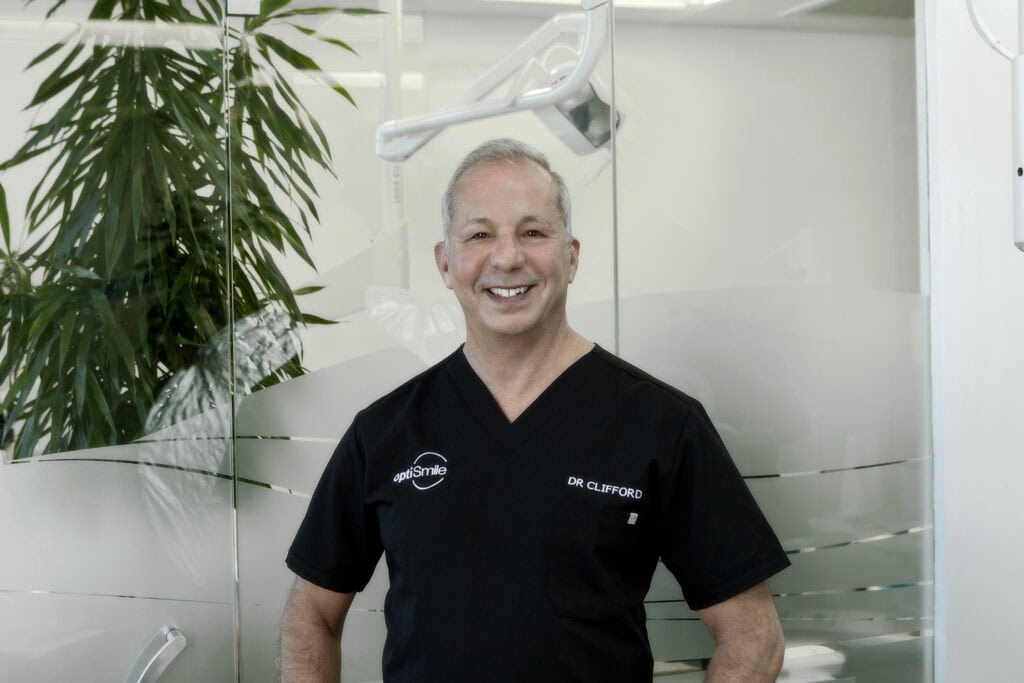
Hallo en welkom by Spaar Jou Geld, Spaar Jou Tande, die podsending waar ons die tandheelkundige onderwerpe ontrafel wat 'n werklike verskil aan jou gesondheid, jou selfvertroue en ook jou lewensgehalte kan maak. Ek is Eon, en vandag praat ons oor 'n baie belangrike onderwerp wat nie altyd genoeg aandag kry nie: mondkanker. Dis een van daardie onderwerpe wat 'n bietjie intimiderend kan klink, maar hoe meer ons daaroor praat, hoe meer besef ons hoe belangrik bewustheid werklik is. Om te weet waarna om te soek, die risikofaktore te verstaan en vroegtydig ondersoek te word, kan 'n groot impak hê. Dr. Clifford Yudelman van OptiSmile sluit weer by my aan om ons te help om die tekens, die risiko's en waarom roetine-sifting so belangrik is, beter te verstaan. Dr. Yudelman, dis wonderlik om jou weer by ons te hê.
Dr. Clifford Yudelman (1:00)
Dis wonderlik om terug te wees, dankie. Nadat ek laas gerook en ge-e-vape het, het ek gedink ons sou hierdie keer direk in mondkanker beland.
Eon Engelbrecht (1:13)
Jy hoor nie so gereeld van mondkanker nie, of ten minste ek nie. Is mondkanker skaars, of word dit al hoe meer algemeen?
Dr. Clifford Yudelman (1:22)
Dit is nie skaars nie. Trouens, dit word wêreldwyd al hoe meer algemeen. Terwyl dit tradisioneel geassosieer word met ouer mans wat rook en swaar drink, verander daardie profiel baie. Wêreldwye data toon dat die voorkoms van kanker in die mond, die tong en die keel toeneem, veral die kankers wat gekoppel is aan menslike papillomavirus, of HPV.
In Suid-Afrika is mondkanker 'n beduidende gesondheidsprobleem. Dit word dikwels laat, of baie laat, gediagnoseer, wat die uitkomste werklik vererger. Een van die redes waarom dit vir die publiek skaars voel, is dat dit nie dieselfde bewusmakingsveldtogte as borskanker of prostaatkanker ontvang nie, maar die oorlewingsyfers vir mondkanker is redelik laag omdat dit dikwels in 'n gevorderde stadium opgespoor word. Die kernboodskap is dat mondkanker algemeen genoeg is dat roetine-sifting saak maak, en vroeë opsporing kan lewensreddend wees.
Eon Engelbrecht (2:35)
Goed, en wat is die verband tussen HPV, of menslike papillomavirus, en mondkanker?
Dr. Clifford Yudelman (2:43)
HPV, veral HPV-16, word nou erken as 'n belangrike oorsaak van kanker in die orofarinks, wat die mond en keel insluit. Ons praat dus van die agterkant van die tong en die keel. Hierdie kankers is biologies anders as dié wat deur die gewone roete veroorsaak word, naamlik tabak en alkohol.
HPV-verwante mondkankers affekteer dikwels baie jonger pasiënte en kan voorkom by mense sonder 'n geskiedenis van rook of swaar drinkery. Oordrag vind hoofsaaklik plaas deur orale seksuele kontak. Dit is belangrik dat HPV-positiewe mondkankers dikwels beter op behandeling reageer as tradisionele mondkankers, maar hulle word gereeld later opgespoor omdat die simptome baie subtiel is. Hierdie veranderende landskap versterk die belangrikheid van deeglike mondondersoeke wat die keel en die basis van die tong insluit, nie net die tande en die tandvleis nie.
Eon Engelbrecht (3:54)
Dokter, waarna moet ons oppas? Hoe lyk 'n verdagte letsel of kol binne-in die mond?
Dr. Clifford Yudelman (4:01)
Hulle lyk nie altyd dramaties nie. Vroeë mondkanker kan voorkom as 'n aanhoudende ulkus, 'n klein rooi kolletjie, 'n wit kolletjie of 'n gemengde rooi en wit area wat nie binne twee of drie weke genees nie. As jy een van hierdie het en dit net nie weggaan nie, is dit tyd om daarna te kyk.
Ander waarskuwingstekens sluit in onverklaarbare knoppe, verdikte areas, gevoelloosheid of veranderinge in tekstuur. Pyn is nie 'n betroubare aanduiding nie. Baie vroeë kankers is heeltemal pynloos. Maar die rooi vlag is volharding. Basies, as dit nie binne 'n paar weke vanself verdwyn nie, moet jy daarna kyk. Dit is baie belangrik. Pasiënte moet in hul eie mond kyk en aandag gee.
Eon Engelbrecht (4:52)
Ek glo dis ook baie belangrik om die kante van jou tong en die vloer van jou mond na te gaan. Is dit korrek?
Dr. Clifford Yudelman (4:59)
Ja, dis die mees algemene plek vir mondkanker. Die weefsel daar is dunner en het 'n baie ryk bloedtoevoer, wat dit meer kwesbaar maak. Dis 'n plek waar baie min mense na hulself kyk. Jy kan jou tong met 'n stukkie gaas gryp, jou tong uittrek en na die kante van jou tong kyk om te kyk.
As jy na hierdie podsending luister, kyk na jou tong. Kyk deeglik. Kyk na die agterkant van jou tong, maar veral die kante en onderkant. Ons kyk altyd hierna wanneer ons 'n nuwe pasiënt ondersoek, en subtiele veranderinge kan gevoel word voordat hulle sigbaar is. Dis soortgelyk aan die nagaan van limfkliere onder die kakebeen en rondom die hoek van die kakebeen vir enige knoppe of stampe. Dit is een rede waarom baie van hierdie vroeë veranderinge oor die hoof gesien word.
Eon Engelbrecht (5:47)
Goed, en wat is die VELscope en hoe help dit tandartse om hierdie onsigbare veranderinge te sien?
Dr. Clifford Yudelman (5:56)
Ek het hierdie vraag hoofsaaklik ingesluit vir mense in Amerika en ander lande waar die VELscope beskikbaar is. Dit word eintlik nie so algemeen gebruik soos dit behoort nie, en ons kan dit nie maklik in Suid-Afrika kry nie. Dit is basies 'n siftingsinstrument met 'n spesifieke golflengte van lig wat weefsel, soos tandvleis en die kante van die tong, laat fluoresseer.
Jy kyk deur die spesiale teleskoop en gesonde weefsel fluoresseer op een manier. Dis amper soos 'n UV-lig of 'n diskolig, en dit fluoresseer anders as weefsels wat abnormale selle het. Verdagte areas lyk donkerder of onreëlmatig. Dit diagnoseer nie kanker nie, maar dit kan jou help om abnormale areas baie vinniger in 'n pasiënt se mond te sien. Dit verbeter die opsporing van abnormale weefsel tydens 'n kliniese ondersoek. Dis nie 'n plaasvervanger vir 'n behoorlike ondersoek nie, maar 'n verbetering. Dit verbeter net waaksaamheid en verminder die kans om vroeë veranderinge mis te kyk.
Eon Engelbrecht (7:03)
Dokter, kan u vir ons sê, maak mondkanker eintlik seer in die vroeë stadiums?
Dr. Clifford Yudelman (7:10)
Ek is bly dat dit ter sprake gekom het, want dit is die een ding wat ek regtig vir mense wil sê. Net omdat iets nie seermaak nie, beteken dit nie dis niks om oor bekommerd te wees nie. Trouens, as jy 'n lelike maagsweer sonder pyn het, sou ek na die tandarts hardloop.
Baie keer kry mense daardie algemene mondswere wat kom en gaan. Daardie pynlike swere is niks om oor bekommerd te wees nie – hulle genees na 'n paar dae of 'n week. Sommige mense kry wel baie daarvan, maar hulle weet uit ondervinding dat hulle altyd genees.
Waarvan ons hier praat, is iets wat ontwikkel en nie eintlik beter word nie. Dit begin gewoonlik eers seermaak sodra senuwees aangetas word. Moet dus nie op pyn staatmaak nie. Gaan eerder na jou tandarts.
Eon Engelbrecht (8:00)
Ek wil ook oor risiko's praat. Hoe vermenigvuldig alkohol gekombineer met rook eintlik die risiko?
Dr. Clifford Yudelman (8:09)
Ek is bly jy het die woord vermenigvuldig gebruik, want hulle het wat 'n sinergistiese effek genoem word. Hulle werk saam. Hulle is ongelukkig baie goeie vennote.
Sterk drank, veral soos whiskey, jenewer of brandewyn – dit brand die weefsels. Ek hou ook nie van alkoholbevattende mondspoelmiddels nie. Soms gebruik rokers 'n baie sterk alkoholbevattende spoelmiddel, wat ook met soortgelyke effekte as sterk drank geassosieer word. Dit maak die weefsels baie meer deurlaatbaar, wat die kankerveroorsakende molekules van tabak makliker toelaat om binne te dring. Dit vermenigvuldig die risiko eerder as om dit net te vererger.
Studies oor jare het getoon dat mense wat beide rook en swaar drink, in plaas daarvan om net die een of die ander te doen, 'n dramaties hoër risiko vir mondkanker het as diegene wat alleen een van die twee doen. My oorlede moeder was 'n swaar roker en is aan 'n hartaanval oorlede, maar sy het glad nie gedrink nie, en my pa was 'n tandarts. Sy het nooit enige sere of kanker in haar mond gehad nie. My pa, wat nooit 'n drinker of 'n roker was nie, het mondkanker in sy mond gekry wat eintlik versprei het van 'n kanker wat hy op sy voorkop gehad het, en dit het na sy limfkliere beweeg. Dis 'n ander situasie as kankers wat hoofsaaklik in die mond begin. Hy het dit oorleef, hy het nog 15 jaar geleef, hy het 'n operasie en bestraling gehad.
Die vermindering van een of albei van hierdie gewoontes verlaag werklik die algehele risiko. Dit is natuurlik ideaal om heeltemal op te hou rook, en selfs die vermindering van die alkohol – miskien om van 'n stywe skottelgoedseer na 'n ligte bier oor te skakel – is beter as niks.
Eon Engelbrecht (10:17)
Ja. En dokter, wat is die oorlewingsyfer van mondkanker as dit vroeg teenoor laat opgespoor word?
Dr. Clifford Yudelman (10:26)
As dit in 'n baie vroeë stadium opgespoor word, kan die vyfjaar-oorlewingsyfer 80 persent oorskry. Maar as dit laat gediagnoseer word, sodra dit na die limfkliere of omliggende weefsel versprei het, kan die oorlewingsyfers heelwat onder 40 persent daal. En die behandeling word baie meer aggressief. Ons praat van hektiek operasies, soms waar hulle die helfte van jou gesig verwyder, gekombineer met bestraling en dikwels chemoterapie. Die kontras is werklik skerp. Vroeë opsporing red nie net lewens nie, maar dit verminder ook lyding en die omvang van die behandeling wat benodig word.
Eon Engelbrecht (11:01)
En sou u pasiënte aanmoedig om 'n selfondersoek tuis te doen? En indien wel, hoe kan hulle dit doen?
Dr. Clifford Yudelman (11:08)
Ja. Ek dink dis een van die sterk punte van hierdie podsending vandag. Ek wil regtig hê mense wat swaar rokers is, insluitend vapers en diegene wat tabaksakkies gebruik, in kombinasie met swaar drinkery, moet 'n bietjie meer waaksaam wees. Jy kan my later bedank.
Maak seker dat jy een keer per maand, in goeie beligting, na jou lippe, jou wange, jou tandvleis, jou tong, die vloer van jou mond en jou keel kyk. Soms is die beste beligting eintlik in jou motor, met die truspieël afgedraai en die son wat reg in jou mond skyn. Dis moeilik om 'n flitslig te gebruik, want dit is te helder. Een van daardie grimeerlampe met 'n vergrootglas en 'n ronde lig sal baie goed wees.
Voel dan vir knoppe en stampe. Met skoon hande kan jy jou lippe en wange voel, en ook onder jou keel, waar limfkliere swel wanneer jy 'n seer keel het. Selfondersoek word nie gereeld aangemoedig nie, en mense word nie regtig geleer hoe om dit te doen nie, maar dit is nuttig. Dit vervang nie professionele sifting nie.
Wanneer ek 'n swaar roker of iemand wat soos 'n swaar drinker lyk, het, sê hulle dikwels iets soos: "O, ek het 'n swaar naweek gehad." Ek kyk altyd ekstra noukeurig na daardie pasiënte. Maar ek het ook baie pasiënte gesien met klein vratjies of papillomas wat deur oordraagbare virusse veroorsaak word, en ek stuur hulle vir 'n biopsie sodat hulle nie in kanker verander nie. Let asseblief daarop as jy 'n swaar roker en 'n swaar drinker is.
Eon Engelbrecht (13:01)
Net voor u gaan, dokter, hoe gereeld toets OptiSmile vir mondkanker tydens ondersoeke?
Dr. Clifford Yudelman (13:09)
Ek, die ander tandartse en die higiëniste by OptiSmile is altyd waaksaam. Ons kyk, ons voel, ons trek die tong uit, ons kontroleer. Dis nie 'n eenmalige gebeurtenis nie. Ons neem foto's as daar enigiets is wat ons wil hê die pasiënt moet terugkom en oor 'n paar weke hersien, om te sien of iets weg is. Ons verwys pasiënte altyd na 'n mondpatoloog of 'n periodontis vir 'n biopsie as ons iets vermoed. Dis hoe 'n mens verhoed dat hierdie dinge vererger, en hopelik red mens lewens.
Eon Engelbrecht (13:44)
Absoluut. Dr. Yudelman, baie dankie weereens dat u hierdie waardevolle insigte oor mondkanker deel, waarna ons moet oppas, en waarom vroeë opsporing so belangrik is. Ons waardeer dit baie.
Dr. Clifford Yudelman (14:00)
Baie dankie, en ek sien uit daarna om volgende week met jou te gesels.
Eon Engelbrecht (14:05)
Absoluut. Ek dink die groot boodskap van vandag se gesprek is eenvoudig. Moenie veranderinge in jou mond ignoreer nie, en moenie die waarde van 'n gereelde tandheelkundige ondersoek onderskat nie. Dit kan oor veel meer as net jou tande gaan. Om meer te wete te kom of 'n afspraak te bespreek, besoek OptiSmile.co.za. Dis dit vir Spaar Jou Geld, Spaar Jou Tande vir hierdie week. Ons sien jou weer volgende keer.
Aankondiger (14:52)
Ontdek die wêreld van tandheelkundige uitnemendheid met OptiSmile. Sluit by ons aan vir 'n weeklikse podcast met dr Clifford Yudelman, 'n gesoute kenner met 40 jaar se tandheelkundige ervaring oor vier kontinente. Kry unieke insigte en kundige tandheelkundige advies deur OptiSmile.co.za te besoek vir artikels wat die pad na optimale mondgesondheid verlig. As jy ongeëwenaarde tandheelkundige sorg in Kaapstad soek, kontak OptiSmile of bespreek direk aanlyn op OptiSmile.co.za. OptiSmile, waar wêreldwye kundigheid plaaslike sorg ontmoet.
Vrywaring: Die inhoud verskaf in hierdie poduitsending, "Save Your Money Save Your Teeth" op Mediese Maandae, is slegs vir inligting en opvoedkundige doeleindes. Dit is nie bedoel om as tandheelkundige of mediese advies te dien nie. Die insigte en menings uitgespreek deur Dr. Clifford Yudelman en enige gaste is ontwerp om 'n beter begrip van tandheelkundige gesondheid, voorkomende maatreëls en algemene welstand te bevorder, maar moet nie geïnterpreteer word as professionele tandheelkundige of mediese aanbevelings nie.Dr. Clifford Yudelman diagnoseer, behandel of bied voorkomingstrategieë vir enige gesondheidstoestande direk deur hierdie podcast aan. Hierdie platform is nie 'n plaasvervanger vir die persoonlike sorg en advies wat deur 'n gelisensieerde tandarts of gesondheidswerker verskaf word nie. Ons moedig ons luisteraars sterk aan om met hul eie tandheelkundige sorgverskaffers te konsulteer om individuele tandheelkundige gesondheidsbehoeftes en bekommernisse aan te spreek. Die inligting wat hier gedeel word het ten doel om luisteraars te bemagtig met kennis oor tandheelkundige gesondheid, maar moet nie as 'n basis gebruik word om gesondheidsverwante besluite te neem sonder professionele leiding. Jou tandheelkundige sorgverskaffer is die beste bron van advies oor jou tandheelkundige en algemene gesondheid. Soek asseblief altyd die advies van jou tandarts of ander gekwalifiseerde gesondheidswerkers in oor enige vrae of bekommernisse oor jou tandheelkundige gesondheid.