Written by Dr. Clifford Yudelman | Last Medically Reviewed: February 2026
Over four decades of clinical expertise in conservative and biomimetic (tooth-preserving) dentistry.
Rated 4.9 on Google (450+ reviews) • Trusted by local and international patients in Sea Point, Cape Town
If you are seeking composite bonding in Cape Town, you are likely looking for a way to improve your smile without unnecessary drilling or irreversible treatment. Composite bonding (also called dental bonding) can be an elegant, effective solution when planned properly. However, when applied as a “quick fix” without a bite assessment and careful design, it can lead to premature staining, chipping, and disappointment.
At OptiSmile in Sea Point, we don’t treat bonding as a shortcut. It is a planned, high-precision treatment designed to protect your enamel while enhancing your smile. Our role is not to push one treatment over another, but to help you decide whether composite bonding or porcelain veneers is the right biological choice for your bite and your long-term confidence.
Your First Step: The 90-Minute Digital Smile Design Consultation
High-quality bonding requires a deep-dive diagnostic. For R3,495, your initial 90-minute visit includes high-definition 3D digital scans, a bite and enamel assessment, and a full personalised roadmap. Whether you are local or visiting from abroad, this is where your journey to a healthy, preserved smile begins.
Looking for costs? See our Composite Bonding Cost in Cape Town (2026 Price Guide) below, including what affects fees and how to keep treatment conservative.
Composite bonding (also called dental bonding) is a conservative cosmetic technique in which a tooth-coloured resin is precisely applied to the surface of a tooth to improve its shape, strength, and appearance. It can be sculpted by hand or placed using a digitally planned mould (often called injection-moulded bonding) to achieve highly accurate, natural-looking results.
You can think of it as a biomimetic restoration — designed to blend with your enamel in colour, translucency, and feel, while preserving as much natural tooth structure as possible.
At OptiSmile, we use precision bonding to help with:
It’s easy to ask, “Does composite bonding look good?”
The better question is, “Is composite bonding the right biological solution for your teeth and bite?”
Composite bonding can look incredibly natural and perform beautifully when the foundation is healthy and the bite is stable. But when bonding is placed without proper planning — especially without understanding bite forces, grinding habits, and enamel condition — it can stain, chip, or wear far sooner than it should.
That’s why we never recommend bonding “by default”. At OptiSmile, we assess your enamel, bite, and long-term risk factors first, then recommend the most conservative option that will be predictable and maintainable over time.



For many patients, ABC delivers a veneers-level improvement in brightness, symmetry, and polish — often with little to no enamel removal. In suitable cases, we can achieve a beautiful transformation with no drilling at all. The biggest relief our patients feel is realising they may not need to commit to porcelain veneers to achieve a truly world-class result.
Composite bonding is often an excellent choice when:
Composite bonding may not be the best option if:
If bonding isn’t the most predictable choice, we’ll guide you towards alternatives such as aligners (to correct the position first), professional whitening, injection-moulded composite for more complex cases, or porcelain veneers, based on what best suits your bite and lifestyle.
Book a bonding suitability assessment
High-quality composite bonding shouldn’t be a rushed, freehand “quick fix”. At OptiSmile, it’s a planned, high-precision procedure designed around your enamel, your bite, and the way you smile.
Our approach typically includes:
Nothing is done on the day unless you are comfortable with the plan. For cases involving multiple teeth, we may recommend injection-moulded composite bonding — a digitally designed technique that improves accuracy, consistency, and durability.
See if you’re a candidate
90-Minute Digital Smile Design Consultation: R3,495
Includes high-definition 3D scans, bite and enamel assessment, and a personalised roadmap.
Single-tooth bonding (small chip/edge repair): from R1929 per tooth
Multi-tooth bonding in the smile line (shape/gap refinements): from R2320 per tooth
Injection-moulded composite bonding (digitally planned, multi-tooth cases): from R7348 per tooth
Polish/refresh appointments (maintenance):
included when maintaining regular hygiene and exam visits.
Please note: exact fees are confirmed only after we’ve digitally mapped your enamel and bite. This ensures your plan is tailored to your biology and risk factors, not a generic template. Cosmetic procedures are not usually covered by medical aids, but we provide clear, itemised invoices for your records.
Get a personalised quote after 3D scans
Before-and-after galleries can be misleading because:
Instead, during your consultation, we review real cases relevant to you, explain exactly what was done, and compare composite bonding with other options so you can make a confident decision.
1. Is composite bonding painful?
Composite bonding is usually comfortable and often requires little or no anaesthetic. Most patients describe it as straightforward, especially for small chips or edge refinements.
2. Does composite bonding stain?
Yes — composite can stain over time, especially with coffee, red wine, and smoking. Staining can often be reduced with the right home care and professional polishing.
3. Can I eat normally after bonding?
Yes — you can eat normally, but avoid very hard or sticky foods, especially on the first day. Long-term, common-sense habits help bonding last longer.
4. How long does composite bonding last?
With good care, composite bonding can last for several years, and one of its biggest advantages is that it’s often repairable rather than fully replaceable.
5. Is composite bonding better than veneers?
It depends on your goals and your bite. Bonding is more conservative and flexible, while porcelain veneers may be better when you need maximum stain resistance, durability, or a major colour and shape change.
6. Can bonded teeth be whitened?
Whitening gel can brighten natural enamel, but it does not lighten the composite used in bonding. If you whiten after bonding, your natural teeth may get lighter while the bonded areas stay the same shade.
7. How long does a composite bonding appointment take?
Small repairs (like a single chipped edge) are usually a focused appointment. Bonding across multiple teeth requires more planning and may be staged across more than one visit.
8. Can composite bonding be repaired if it chips?
Yes — in many cases, bonding can be repaired without redoing the entire tooth. The best approach depends on why it chipped, how large the chip is, and how your bite contacts that area.
9. Is bonding suitable if I grind or clench my teeth?
Grinding and clenching increase the risk of chipping and wear, especially on bonded edges. If you grind, we assess bite stability carefully before recommending bonding.
10. Is dental bonding a good option if I drink a lot of coffee or smoke?
It can be, but you should expect more maintenance. Coffee, red wine, and smoking are common causes of staining, so heavier use may require more frequent polishing and reviews.
11. How do you match the composite shade to my natural teeth?
We shade-match the composite to your natural tooth colour, then layer and sculpt it to mimic enamel’s light reflection before curing it with a blue light.
12. Is bonding or a crown better for a large tooth fracture?
It depends on how much tooth structure is missing and whether the tooth needs full coverage for strength. Small chips may be suitable for bonding, moderate damage may be suitable for inlays/onlays, and more severe fractures may require a crown.
13. Is bonding or Invisalign better for closing minor gaps?
Choose aligners when the tooth position or bite needs improvement. Choose bonding when the tooth position is acceptable, and the gap is mainly a cosmetic shape issue, or as a finishing step after aligners.
14. Can bonding be used to protect exposed roots from gum recession?
Sometimes. If recession exposes dentine and causes sensitivity, we may use a small amount of tooth-coloured resin at the gum line to cover an exposed area when clinically appropriate.
15. What’s the difference between direct bonding and injection-moulded bonding?
Direct bonding is shaped by the dentist chairside: we prepare the surface, apply composite, sculpt it by hand, cure it with light, then finish and polish. Injection-moulded bonding is digitally designed first and transferred using a clear mould for more consistent, repeatable results.
16. What toothpaste should I use with bonding?
Use a non-abrasive toothpaste and avoid harsh “whitening” toothpastes, which can dull the surface over time. Fluoride toothpaste is a good baseline, and hydroxyapatite can be helpful for some patients.
17. Can professional cleaning damage bonding?
It can if the wrong tools or techniques are used. Some air-powder polishers and heavy-handed ultrasonic scaling can roughen surfaces or damage margins if used improperly.
18. Can composite bonding fall off?
It’s uncommon, but bonding can debond if there’s heavy bite contact, moisture contamination during placement, or if the tooth surface isn’t ideal for bonding.
19. How do I maintain composite bonding at home to make it last longer?
Daily habits make a big difference. Good home care protects the margins, reduces staining, and helps bonding last longer.
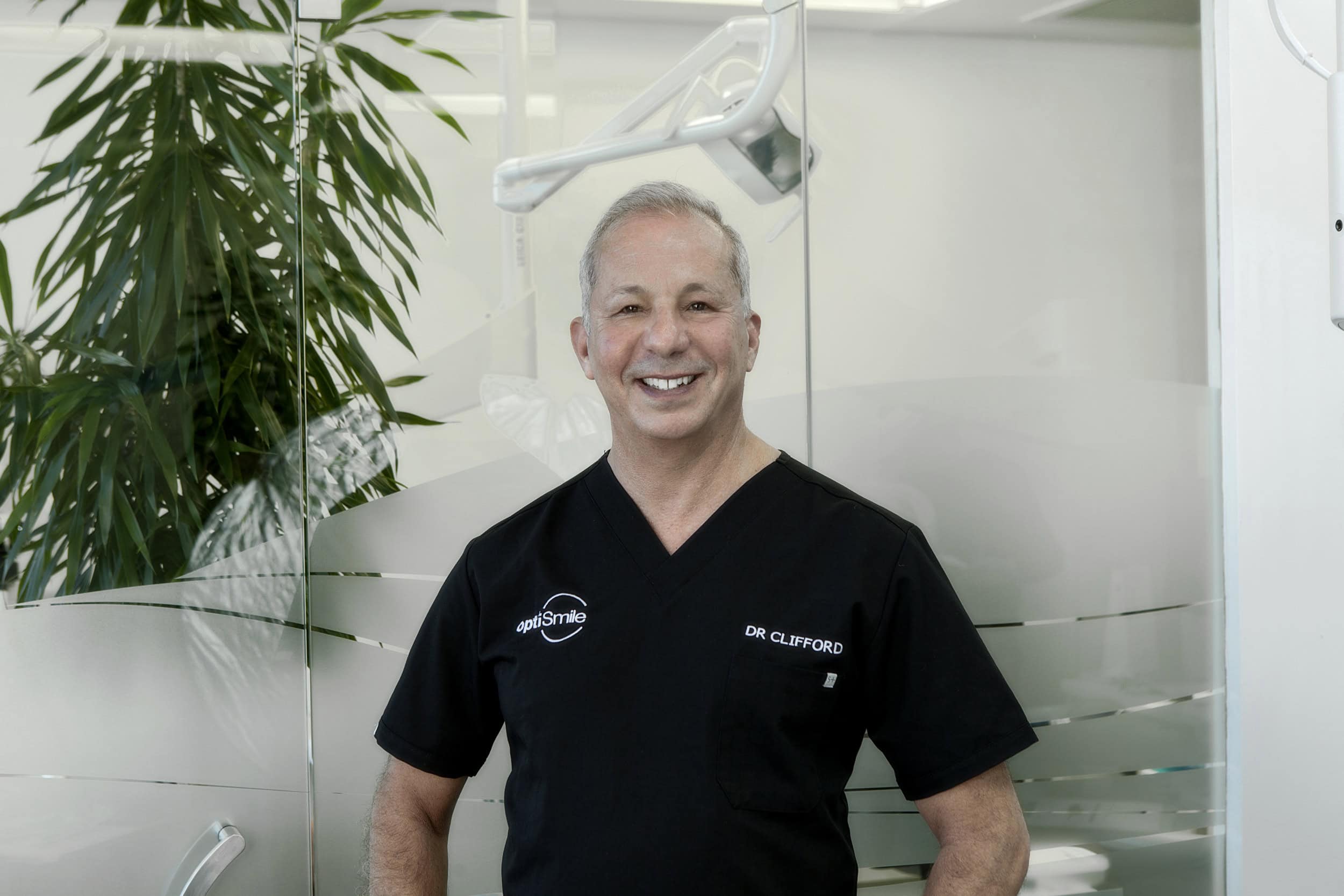
Dr. Clifford Yudelman (BDS Wits) is the founder of OptiSmile and a second-generation dentist with over four decades of experience across four continents, including London, Australia, and America. As the host of the “Save Your Money, Save Your Teeth” podcast, Dr. Yudelman is a leading advocate for ethical, minimal-prep dentistry. He is a member of the South African Dental Association (SADA), the South African Academy of Aesthetic Dentistry (SAAAD), and HPCSA-registered (Registration number DP 004219), and specializes in integrating AI diagnostics and Digital Smile Design into patient-centered care.
🍪 Cookies for a Better Visit, Not Cavities! 🍪
Our website uses cookies to enhance your user experience. These cookies won’t harm your teeth—promise! By continuing to browse, you agree to our Privacy Policy.