OptiSmile is committed to enhancing your smile with expert care, ensuring consistent results and a pleasant experience.
Over 15 million people worldwide have chosen Invisalign clear aligners to achieve a radiant smile that stands out without the appearance of traditional braces.
Gone are the days of uncomfortable and prolonged wear of traditional metal braces, with memories of the dreaded “tin-grin” or “railway tracks” fading away. It’s refreshing to see advancements in orthodontics that have made the process of straightening teeth more comfortable and less daunting.


Over the past eight years, OptiSmile has expertly aligned countless smiles as a leading Invisalign specialist in Sea Point. We proudly stand as a top-tier Invisalign Platinum provider in South Africa and the first practice in Africa to use the iTero Scanner.
We are the only practice in South Africa to boast five certified Invisalign providers led by our Clinical Director of Invisalign, Dr Harris Smeyatsky. Dr Smeyatsky is the first Certified Invisalign trainer in Africa and, in 2023, travelled to Ghana to train new providers from all over the region.
| Invisalign | Alternative Clear Aligners | |
| Provider | Supervised by a qualified Invisalign specialist | Provider training and case experience vary widely by brand |
| Technology | iTero intraoral scan for precision fit | Fit method varies by dental practice, from digital scans to putty impressions |
| Treatment planning | Custom plan with 3D movement mapping | Planning details and software differ from brand to brand |
| Bite correction | Can address overbites, underbites, and crossbites | Many brands are positioned for mild‑to‑moderate cases; capacity for complex bites varies |
| Progress monitoring | Regular check-ins with Dr Smeyatsky | Follow‑up frequency and format vary by provider and brand |
| Aligner Material | Medical-grade SmartTrack® material | Materials vary by brand, often without published clinical data |
| Retainer & aftercare | Managed by your specialist | Retainer options and aftercare support vary |
| Risk management | Issues identified and resolved in-clinic | Depends on the provider’s protocols and clinical backup |
| Best suited for | Cosmetic and complex orthodontic cases | Patients seeking a lower‑cost option for simpler cases |
01
Clear
Invisalign is an orthodontic treatment that uses clear, plastic aligners to straighten teeth in one-week to two-week increments. Each week, you will switch out your set of aligners for the next set in your straightening series. Invisalign aligners are designed for your unique smile.
02
Gentle
Invisalign aligners gently move the teeth to close gaps, reduce crowding, and fix bite alignment issues. In addition, clear aligners can correct overbites and underbites. Clear aligners are virtually invisible, soft, yet impressively powerful in moving teeth into their new position.
03
Convenient
Have you always wanted straighter teeth but been afraid of the inconvenience of eating, with food getting stuck in the wires and elastics? Invisalign won’t interfere with your daily activities.
04
Precise
Unlike conventional braces, Invisalign allows precise adjustments at specific points in your mouth instead of putting pressure on all your teeth that have been “wired in”.
05
Faster than conventional braces.
Invisalign and Invisalign for children are much quicker than traditional braces, taking 50% less time on average.
06
Discreet
They are a discreet choice that can be worn without anyone ever knowing you are wearing them.
07
No interference
Invisalign is the best way to transform your smile without interference in your day-to-day life.
08
Powerful
Invisalign can be used with other cosmetic dental solutions, such as veneers or injection-moulded composite bonding, if teeth are deformed or discoloured.
Crowding
When there isn't enough space in the jaw for teeth to sit neatly in line, crowding leads to overlapping, twisted, or displaced teeth, making them harder to clean.
Spacing and gaps
Visible gaps between teeth, whether caused by missing teeth, jaw size, or natural spacing, close gradually through targeted aligner movements.
Overbite
Where the upper teeth extend significantly over the lower teeth, an overbite can cause jaw strain and uneven wear over time.
Underbite
An underbite is where the lower teeth sit in front of the upper teeth, often affecting chewing, speech, and facial profile.
Crossbite
A crossbite occurs when some upper teeth sit inside the lower teeth when biting down, which can wear enamel unevenly and loosen teeth over time.
Open bite
An open bite, where the upper and lower teeth don't meet when the mouth is closed, makes biting and chewing less efficient.
Teeth straightening without complex bite issues
Regular teeth straightening is for patients whose bite is healthy but who want to refine the appearance of their smile.
Invisalign suits a wide range of patients, from teenagers to adults well into their sixties. You’re likely a good candidate if:
1
2
3
4
5
Does Invisalign Influence Speech?
Orthodontic treatments, including Invisalign, may cause minor changes in speech patterns, but any adjustments needed are typically quick and straightforward. It’s worth noting that traditional metal braces can sometimes lead to speech difficulties, but they can be addressed with proper care and attention from your orthodontic care practitioner.
Conversely, Invisalign is virtually invisible and doesn’t have the same potential for speech difficulties as metal braces, making it a popular choice among patients.
How Much Do Invisalign Clear Aligners Cost in South Africa?
The average cost of clear aligners in South Africa is R56 000 to R128 000. At OptiSmile, we have payment plans starting at R8000 per month. However, the actual cost will depend on the severity of your case, the type of aligners (Invisalign vs Invisalign First vs Invisalign Teen), and whether you have insurance/medical aid cover for orthodontics.
Can Invisalign Treat Kids as Well?
Invisalign First is designed for children aged 6 to 10, while Invisalign Teen is for older children. Both can treat a range of teeth-straightening issues in children, including crowding, spacing, and narrow dental arches. In addition, Invisalign is removable, making it easier for growing children to brush and floss!
Kids’ after-school activities won’t be affected, and they can remain active in sports like ballet, cricket, soccer, rugby and just about any other sport. In addition, we can order, at no charge, an optional compliance indicator dot.
How Much Do Orthodontic Braces Cost in South Africa?
The cost of orthodontic braces in South Africa can vary depending on several factors. The type of braces you choose, the severity of your dental problem, and where you get your braces all play a role in figuring out the final cost. However, some general pricing guidelines can give you a promising idea of how much you can expect to pay.
Here are some average costs of braces in South Africa:
These prices are just averages; your final cost will depend on the factors mentioned above.
If you are considering getting braces in South Africa, it is important to research and explore all your options, with Invisalign being the preferred solution due to its ease and discretion.
Is Treatment with Invisalign Painful?
Many people wonder if Invisalign treatment is painful. Thankfully, the discomfort associated with the Invisalign system is minimal compared to traditional braces. This is because there is less risk of irritation from wires. In fact, any discomfort is mainly limited to the beginning of each new treatment stage. Most patients report feeling pressure, a sign that the treatment is working to move their teeth into the desired position. Overall, Invisalign is an excellent option for those looking to straighten their teeth without the pain and discomfort often associated with traditional braces.
What Can I Eat During Treatment? Are There Restrictions?
No, there are no restrictions! Unlike traditional wires and brackets, you can eat whatever you want while in treatment because you remove your aligners to eat and drink. Thus, restricting your consumption of any of your favourite foods and snacks is no longer necessary.
How Is Invisalign Different from Braces?
Invisalign is a popular alternative to braces for straightening teeth. Instead of using metal wires and brackets, Invisalign uses clear, virtually invisible plastic aligners. Invisalign is also more comfortable than braces and does not require a special diet or cleaning regimen. The aligners are also removable, so you can eat whatever you like and brush and floss your teeth normally.
Is Invisalign Suitable for Everyone?
Invisalign clear aligners are a preferred choice for many adults and teenagers due to their inconspicuous nature and flexibility. However, they might not be the perfect solution for everyone. The suitability of Invisalign depends on various factors, including the complexity of your dental issues, your age, and your commitment to the treatment process.
Always consult with your dentist to determine if Invisalign is the right fit for you.
How Long Does Invisalign Take to Correct Crowded Teeth?
For individuals with mild crowding, Invisalign can typically produce desired results in as little as three to six months. However, for those with more pronounced crowding issues, the treatment duration might be extended.
How Long Does Invisalign Take to Close a Gap?
Invisalign can close minor gaps in as short a duration as eight weeks. However, the challenge with gaps is their propensity to reappear without consistent retention. Thus, following the gap closure treatment, using a retainer is always advised to maintain the results.
What Are The Side Effects Of Invisalign?
Common side effects of Invisalign include soreness and discomfort, which may occur when transitioning to new sets of aligners. However, over-the-counter pain relief can mitigate these symptoms, which are typically transient.
What happens if I don’t wear my aligners for 22 hours a day?
Each aligner is designed to move your teeth incrementally, and that process depends on sustained, gentle pressure over time. If you’re regularly falling short of the recommended 22 hours, your teeth may not shift as planned, and your treatment timeline will likely extend.
Can I get Invisalign if I’ve had braces before?
Yes, many patients come to us after having braces years ago, often because their teeth have shifted over time due to not wearing a retainer consistently. Invisalign is well-suited to addressing these kinds of relapse cases. Dr Smeyatsky will assess the current alignment of your teeth and determine whether Invisalign is the right solution, or whether a different approach would serve you better.
Do I need a retainer after Invisalign?
A retainer is an essential part of your treatment, not an optional extra. Once your aligners have done their work, your teeth need time to stabilise in their new positions. Dr Smeyatsky will advise you on the appropriate retainer protocol for your case, typically starting with full-time wear and transitioning to nights-only over time.
Can Invisalign fix my overbite or underbite?
In many cases, yes. Invisalign has advanced significantly and can now address a range of bite issues that were once considered suitable only for traditional braces. Whether it’s an overbite, underbite, crossbite, or open bite, the outcome depends on the severity of the case.
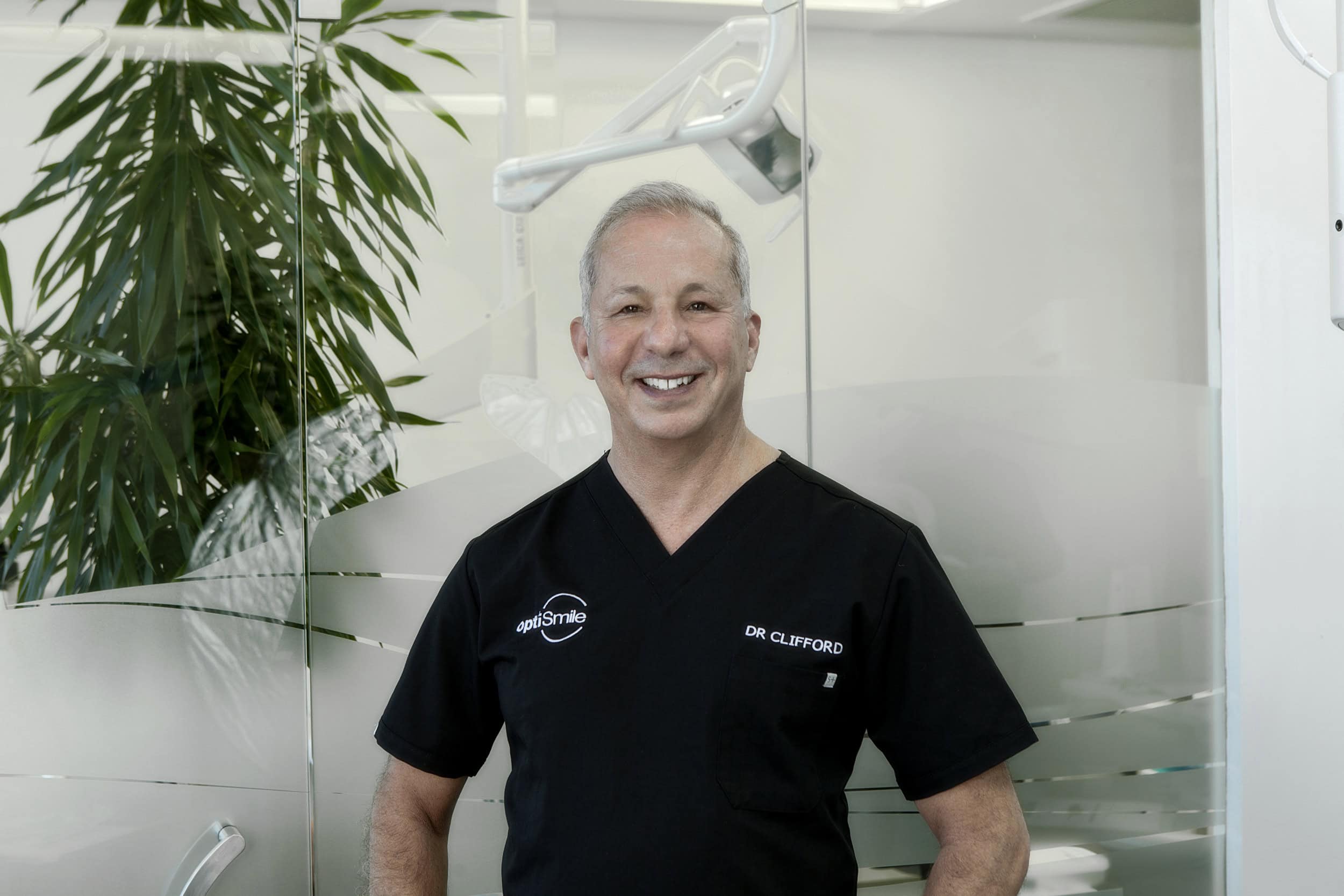
Dr. Clifford Yudelman
Founder & Principal Dentist, OptiSmile
As a globally recognised restorative and cosmetic dentistry expert, Dr Yudelman brings over 40 years of experience across four continents. A 1983 Bachelor of Dental Science graduate from the University of the Witwatersrand, his career has spanned private practices in London, San Diego, Perth, and Cape Town. Currently the founder and principal dentist at OptiSmile, he is celebrated for transforming dental visits into positive experiences and fostering patient confidence through superior dental health, with a commitment to the latest dental technology for improved patient outcomes.
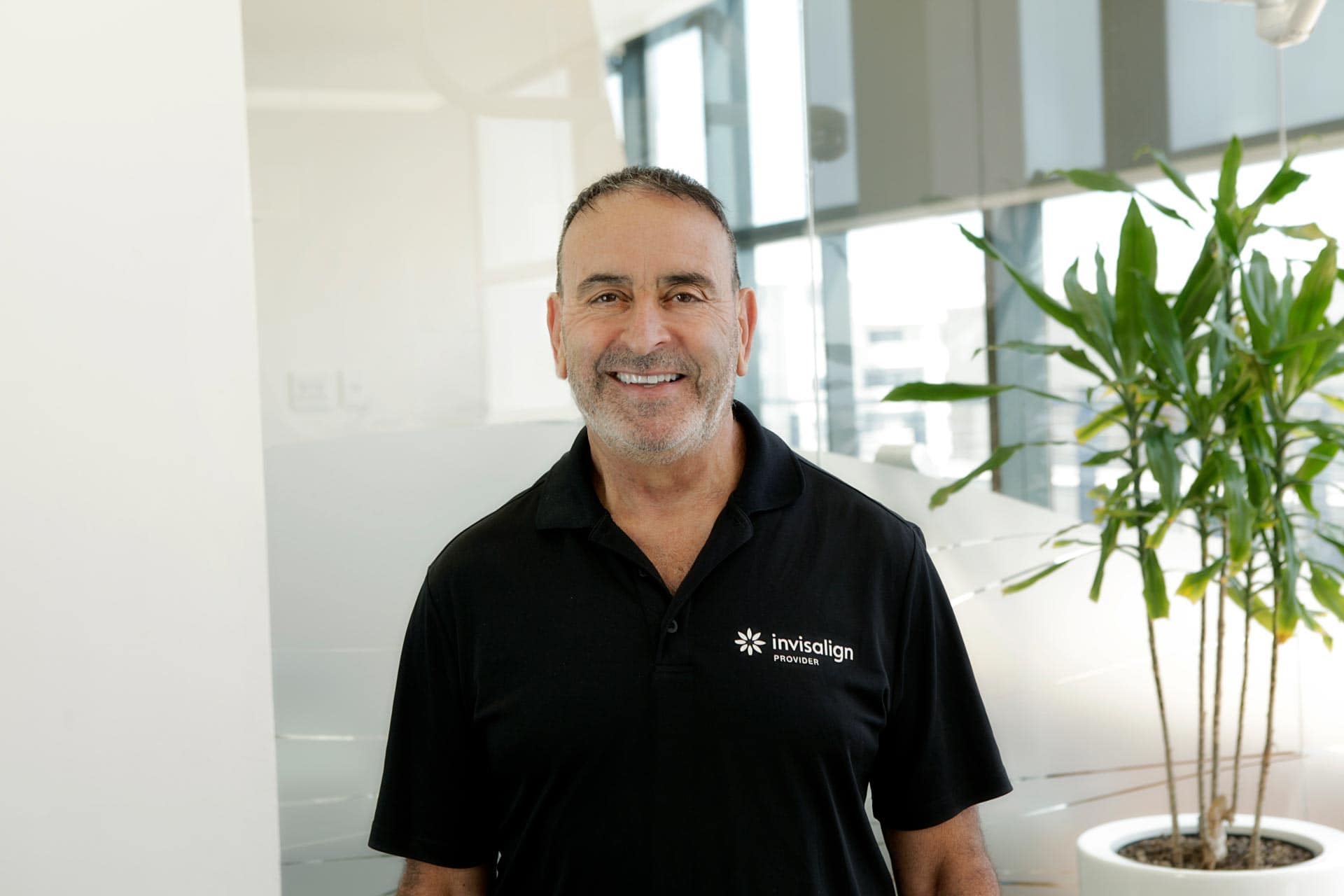
Dr Harris Smeyatsky
Dentist and Invisalign Expert, OptiSmile
🍪 Cookies for a Better Visit, Not Cavities! 🍪
Our website uses cookies to enhance your user experience. These cookies won’t harm your teeth—promise! By continuing to browse, you agree to our Privacy Policy.