Chapters
Introduction
[00:00:05]
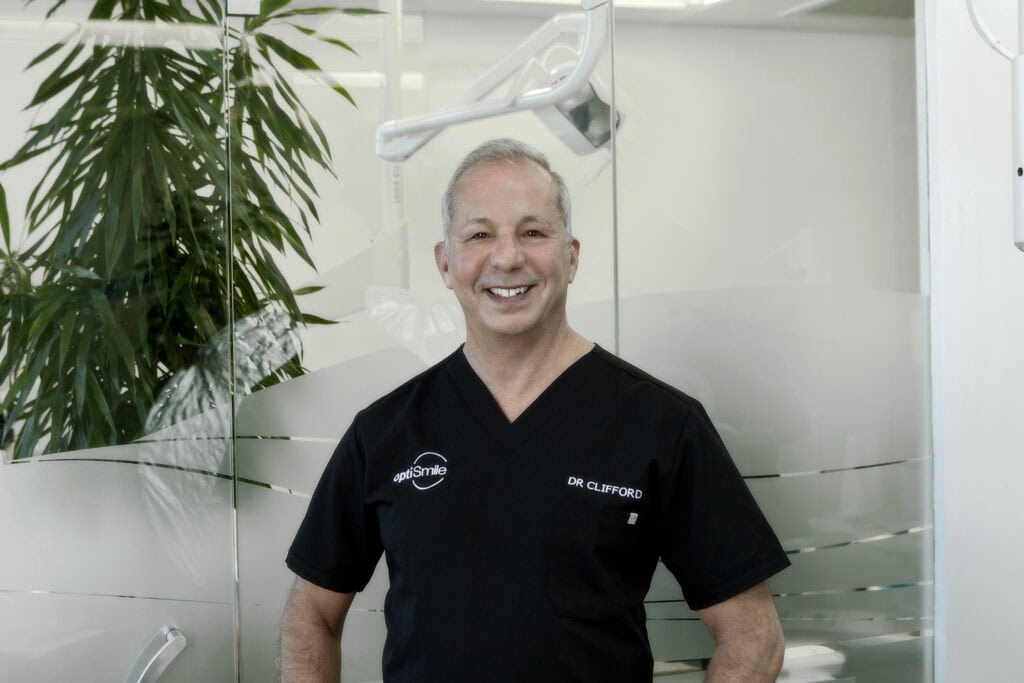
Eon Engelbrecht introduces Dr Clifford Yudelman and dives into the critical role of magnification in dentistry. From loupes to microscopes, these tools allow dentists to detect problems invisible to the naked eye, improving the quality and longevity of dental treatment.
Definition of Loupes and Dental Microscopes
[01:29 – 03:32]
Dr Yudelman explains that loupes are magnifying glasses worn like binoculars, offering 2–6x magnification with built-in lighting. Dental microscopes, mounted above the patient, provide even greater clarity and precision, improving the predictability and comfort of treatments.
Evidence Supporting Magnification
[03:46 – 05:26]
Magnification is not just a high-tech gimmick. Solid evidence shows it improves diagnostics and treatment quality, especially in root canals. OptiSmile requires all dentists to use loupes or microscopes as part of their standard equipment.
Treatments Benefitting Most from Magnification
[05:40 – 07:07]
Almost all dental treatments benefit, including root canals, small fillings, crowns, and veneers. Using loupes or microscopes ensures tighter margins, reducing the risk of bacteria intrusion and increasing the longevity of restorations.
Early Detection of Dental Issues
[07:16 – 07:55]
Magnification allows dentists to detect early warning signs like micro-cracks, enamel discolouration, and tiny gaps under old fillings—helping to avoid costly procedures like implants and root canals.
Impact on Treatment Duration and Costs
[08:07 – 09:47]
While magnification might slightly increase procedure time, the long-term benefits—fewer failures, longer-lasting results—make it worthwhile. OptiSmile does not charge extra for using this advanced technology.
How Common is Magnification in Dentistry?
[09:56 – 11:21]
Though not all dentists use magnification, it’s becoming more common. At OptiSmile, it’s non-negotiable. Patients are encouraged to ask whether their dentist uses loupes or a microscope to ensure high-quality, precise treatment.
Posture and Dentist Health
[11:33 – 13:05]
Using magnification improves the dentist’s posture, reducing fatigue and improving precision. A comfortable, healthy dentist delivers better results, contributing to long-term oral health for patients.
Digital Tools and Patient Education
[13:18 – 15:59]
Digital tools like 3D scanners and high-resolution cameras allow patients to see what the dentist sees. These technologies support co-diagnosis and build trust by offering transparent and understandable visuals.
Return on Investment for Patients
[17:42 – 18:25]
Magnification offers excellent ROI by improving the precision of fillings and root canals, catching issues early, and reducing emergency visits—saving money and preserving natural teeth.
Questions Patients Should Ask
[18:39 – 20:16]
Patients should ask: “Do you use magnification?”, “What kind?”, and “How does it help with diagnosis?” A well-informed dentist will explain the benefits for accuracy and long-term results.
Transcript
Eon Engelbrecht – E-Radio-SA (0:05 – 0:45) Welcome back to Save Your Money, Save Your Teeth and today we are exploring a part of dentistry that most people never think about. Yet, it has a huge impact on the quality and also the longevity of dental treatment. Magnification. From loupes to dental microscopes, these tools allow dentists to see details that are invisible to the naked eye. So we are, as always, joined by Dr Clifford Yudelman from OptiSmile to unpack how magnification works, also why it matters and how it can save patients both teeth and money. Dr Yudelman, welcome back.
Dr Clifford Yudelman – OptiSmile (0:46 – 1:09) Thanks, thanks for having me back and I’m sure like me you’re also looking forward to Christmas and we got just today and then next week and then we’ll take a break for a couple of weeks, let people think about something other than their teeth and their wallet. And then comes January. And then we’ll worry again.
Eon Engelbrecht – E-Radio-SA (1:11 – 1:28) Okay, so today very, very interesting topic that you’ve got here for us, Dr Yudelman. I want to ask you firstly, for people who have never seen loupes or a dental microscope, or maybe they know, maybe they’ve seen it, they just don’t know what it’s called. What exactly are they and how do they work?
Dr Clifford Yudelman – OptiSmile (1:29 – 3:32) So most people are surprised when they discover how incredibly small the working area is inside a tooth. If you look at your tooth in the mirror, you can see that your tooth is pretty small. And you know, we’re working in maybe one eighth or one tenth of your tooth or a quarter of the tooth. And so dentistry is done in not only in millimetres, but in fractions of a millimetre. And loupes look like a pair of glasses with binoculars on the front or they flip down over your glasses. And they allow the dentist to see anywhere from two to six times bigger than normal. And most loupes these days have got automatic or should I say built-in lighting that shines like almost from the tip of your nose or from between your eyes. So wherever you look is nice and bright. It’s like shining a torch in front of you. And then a dental microscope is even more powerful. So that’s my favourite at OptiSmile. We’ve got three microscopes. I’ve actually been using these same Leica microscopes since 2004. So for 21 years, I’ve been using these microscopes and they haven’t changed them. If you buy a Leica dental microscope today, it looks exactly the same only it’s probably about three times the price. And so a microscope sits above the patient. It’s often mounted into the ceiling. It can sometimes be mounted on the wall or on wheels, but it’s right above the patient. You swing it into place and it gives a magnified and illuminated view of the tooth in incredible detail. It’s like going from a standard photo to a high definition photo video. Once you’ve worked at that level of clarity, you can’t really imagine going back to naked eye dentistry. And it makes the work more precise, more predictable and ultimately more comfortable for the patient.
Eon Engelbrecht – E-Radio-SA (3:32 – 3:45) All right. And I also want to ask you, if we’re being honest, are magnification tools just a nice extra or does research show that they genuinely improve your dental treatment?
Dr Clifford Yudelman – OptiSmile (3:46 – 5:26) So there’s very solid evidence that magnification improves treatment quality. Studies have shown that dentists using loupes and microscopes can detect cracks and early cavities, gaps around old fillings far more accurately. In root canal treatment, microscopes significantly increase the ability to locate and clean all the canals, which improves long-term success. In fact, I would say, when I first started using microscopes back in when I was in Perth in 2004, there was only root canal specialists that had microscopes. So even then, it was unheard of for a root canal specialist to do a root canal without a microscope. And today, the very least, a dentist doing a root canal should have very strong loupes, not just standard loupes or preferably a microscope. And the evidence is overwhelming that magnification is not a gadget. It’s an essential part of modern dentistry because it lets us work with the level of precision that healthy teeth actually require. And one of the first questions I always ask a dentist when we’re interviewing for a position at OptiSmile, we’ve been open 10 years, and I’ve had a few dentists. I’ve got some excellent associates with me now. And my first question is always, how long have you owned your pair of [loupes] and if the answer is, I don’t have one, or I don’t own any, or what are loupes, then pretty much the interview is over.
Eon Engelbrecht – E-Radio-SA (5:27 – 5:39) Yeah, I can imagine. And which everyday treatments benefit the most from loupes or a microscope in your experience? And also, according to the evidence doctor?
Dr Clifford Yudelman – OptiSmile (5:40 – 7:07) Almost everything benefits. I use a microscope for every single thing. I don’t look in a person’s mouth without the microscope. And my associates either use a microscope and in some cases, loupes. A few areas stand out. We mentioned already root canals when you’re looking not only inside a tooth, but all the way down into a tiny little canal. That’s really a must. But small fillings, especially the ones in the grooves or hidden between the teeth, they’re all much more accurate under magnification. And yeah, look, when you’re doing a root canal and the canals are curved or split, you can actually see them clearly and you can treat them properly. Crowns, veneers, inlays all benefit because the fit of the margin is everything. And the joint between the tooth and the restoration will be much better if it’s even slightly off. Bacteria can sneak in and cause problems. And magnification lets us shape and polish those margins perfectly. And, you know, even gum treatments and cleaning, the hygienist will sometimes put on some loupes to see if they’ve got all the tiny little bit of calculus off under the gum. And, you know, we use it every day because it’s simply better results and longer lasting care.
Eon Engelbrecht – E-Radio-SA (7:07 – 7:16) All right. And then, doctor, I also want to ask you, how can magnification help find problems earlier before they become expensive to fix?
Dr Clifford Yudelman – OptiSmile (7:16 – 7:55) So magnification lets us catch the earlier warning signs. We can see a tiny crack before it becomes a split. We can see a slight colour change that indicates early enamel breakdown. We can see a tiny gap under an old filling before the cavity spreads underneath it. And these are the moments that save patients money. If we treat a problem early, we preserve more of the natural tooth. A tiny filling is inexpensive. A neglected tooth might need a root canal, a crown or even an implant. So early diagnosis is a real game changer. And magnification is the best tool we have to make that possible.
Eon Engelbrecht – E-Radio-SA (7:56 – 8:07) And is there any downside to magnification for patients such as longer appointments or increased cost? And what does the evidence say about that balance?
Dr Clifford Yudelman – OptiSmile (8:07 – 9:47) So there are almost no downsides. It’s one of those things that’s all good. I mean, magnification does make you slow down because you can see a lot better. So it may make a procedure a few minutes longer or maybe more than a few minutes because the dentist is being more careful and the long-term benefits outweigh that. The equipment is expensive for the dentist, but it doesn’t automatically mean higher fees for the patients. Some dentists will charge extra for using a microscope to help them towards the payments. I mean, these Leica microscopes I think new today are about 700,000 Rand each. Loupes, even simple loupes with a light can be 100,000 Rand. But we don’t charge extra. We see this as a standard and a necessity. I sometimes smile, I think about a dentist saying, you know, we’re going to do a root canal and the root canal is X. And then there’s another charge for 500 Rand to use the microscope. And then, you know, thinking with the patient, say, well, no, I don’t want you to use the microscope. I just don’t think if it’s something that’s not really an option, you know, don’t just include it in the fee. That’s my own personal opinion there. And, you know, the fact is treatment tends to last longer when it’s done under magnification, which means fewer replacements, fewer emergencies, and fewer complex procedures. And the evidence supports the idea that precision leads to longevity or how long something lasts. You pay once for something at last, instead of paying repeatedly for four repairs.
Eon Engelbrecht – E-Radio-SA (9:47 – 9:56) Okay. And doctor, do all dentists use loupes or microscopes? And should patients be asking about this when they choose a dentist?
Dr Clifford Yudelman – OptiSmile (9:56 – 11:21) The first part of that is not all dentists use magnification, although it is becoming more common, especially in South Africa. We may be a little bit slow to catch on, but I think now it’s because of so many good educators and lecturers, they’re always pushing microscopes and loupes. I think South Africa probably per capita probably has more microscopes used by general dentists than the average general dentist population, say, in America. Some will use basic loupes, but other practises like OptiSmile will also have at least one, if not, like in our case, three microscopes. And patients can certainly ask, you know, you don’t have to be technical. You can ask a simple question like, do you use magnification for precision work? I mean, the dentist should actually use it during the initial exam. And so, it’s okay to ask, or before you even go and see a practise, find out does the dentist use loupes or a microscope? And then the signals that the dentist value attention to detail. You know, like I said, OptiSmile magnification is non-negotiable. It’s part of our philosophy because we want every treatment to be accurate, comfortable, and long-lasting.
Eon Engelbrecht – E-Radio-SA (11:21 – 11:33) All right. Now, here’s another interesting question for you. How does magnification affect a dentist’s own posture and health? And also, why should that actually matter to the patients?
Dr Clifford Yudelman – OptiSmile (11:33 – 13:05) Yeah, that’s a great question. So, I always wore loupes even when I practised before I went to Perth. When I was practising in America, I started wearing loupes there back in the 90s, something called Oriscoptic. They were custom-made and had fantastic, like a halogen lamp. You know, the bulbs were expensive. But basically, when I went to Perth, I started getting a pinching nerve in my neck and a numb hand, and I looked into better posture, and I learned about microscopes. And, you know, dentists spend decades, in my case, already 42 years, you know, working in awkward positions. But luckily, for the last 21 years, I’ve been sitting nice and straight. Magnification actually helps us maintain a healthy posture. We no longer need to lean forward or kiss our necks to see, and the magnified image, you know, comes straight up to our eyes. And, you know, why should this matter to patients? Because actually, when your dentist is comfortable, relaxed, seeing clearly, the work is far more precise. You know, fatigue affects accuracy, and magnification keeps the dentist in a stable and ergonomic posture, which improves the quality of every procedure. We have special microscope or magnification stools with special armrests that are adjustable. And, you know, a healthy dentist, healthy teeth.
Eon Engelbrecht – E-Radio-SA (13:05 – 13:17) Exactly. And, doctor, how do digital tools like intraoral cameras and high-resolution scans work? Alongside magnification in modern dentistry?
Dr Clifford Yudelman – OptiSmile (13:18 – 15:59) So, magnification helps us perform treatment accurately. And the digital tools also help the patient understand what’s happening. We don’t actually use an intraoral camera per se. That’s like a little video camera that shows the tooth magnified up on the screen while you’re lying on your back, and the dentist is trying to point out something while your mouth is open, or takes like a very, very close-up picture. And it’s like a fuzzy video image. And I think those cameras are getting a bit better. But we actually use a normal camera with a special flash on it. And we take pictures in a mirror, and we get a picture of all your upper teeth in very high resolution. And we zoom in to those photos, and you can see pretty much the same as what we can see through a microscope. They’re very, very clear. We don’t use our cell phone to take pictures. We’ve got proper Canon full-frame cameras with macro lenses, and a patient should be able to see everything that we see. We did a whole episode called co-discovery or your first appointment and being able to, if a dentist says your tooth has got a crack, in many cases, unless it’s a crack tooth syndrome, but if it’s an actual crack or a broken filling, you should be able to see that in a photo. I would insist on being able to see it. And now, you know, with 3D scans, we can see so much more. We’re very excited. Tomorrow, we’re receiving a brand new scanner. We’ve been using iTero scanners at Optispile for a number of years. And now there’s some newer scanners that are way, way better. They have built-in, very, yes, I’m just setting up the laptop today. These scanners have got built-in AI that will actually tell us where the cracks are and where the cavities are. And then the patient can scan a QR code on their phone and get that scan on their phone. While we’re looking at it on the screen, they can get it on their phone and very exciting. You can see wear patterns, gum recession, bite issues, and you can pinch and zoom in. And it’s so clear on your phone, you know, and all of these magnification and being able to see, you know, behind your very last tooth or on the inside of your upper tooth or down next to your tongue in, you know, full colour and very magnified, you know, it creates crystal clear communication and the patients are no longer guessing what the dentists see. They can see it themselves. And at Optispile, we rely on digital tools every day because, you know, they build trust, they reduce anxiety, and they help patients make informed decisions.
Eon Engelbrecht – E-Radio-SA (15:59 – 16:03) So you must feel like a kid now at Christmas with a new toy.
Dr Clifford Yudelman – OptiSmile (16:03 – 16:08) Yeah, I hate to tell you how much one of these things cost.
Eon Engelbrecht – E-Radio-SA (16:09 – 16:11) Well, at least it makes you very happy.
Dr Clifford Yudelman – OptiSmile (16:11 – 17:06) If anyone’s got a spare 300,000, can they send it over? That’s for a little cordless scanner with a battery. It looks like a torch like that you’d use when you’re buying. It only weighs 180 grammes. It’s wireless. And it plugs in. We’ve got this new laptop that was 65,000 rand. It’s got an amazing graphics card and wonderful screen. So yeah, we’re going to be retiring one or two of the iTero’s, which we still need to keep for the Invisalign cases, which don’t need all of that AR stuff in it. But this new, I’ve been trialling scanners, new scanners for the last couple of months, and I’ve settled on a new one actually called the Shining. It’s amazing. And yeah, looking forward to it.
Eon Engelbrecht – E-Radio-SA (17:06 – 17:14) Nice. It’s good that you’re investing. And, you know, it’s a nice Christmas gift for the business and the patients.
Dr Clifford Yudelman – OptiSmile (17:14 – 17:15) Yes, 100%.
Eon Engelbrecht – E-Radio-SA (17:15 – 17:17) Yeah, it’s an investment. Definitely.
Dr Clifford Yudelman – OptiSmile (17:17 – 17:30) Everything we do is really in the end for the patients because if the patients can see what we see, then they want the treatment that they need and they understand. And it’s co-discovery and co-diagnosis.
Eon Engelbrecht – E-Radio-SA (17:31 – 17:41) Doctor, from a save your money, save your teeth point of view, where does magnification offer the biggest return on investment for your patients?
Dr Clifford Yudelman – OptiSmile (17:42 – 18:25) From a patient point of view, it really comes from the early diagnosis and the precise treatment fillings placed under magnification. We feel and we see in our hands, they fit better and they last longer. Root canals done through a microscope, it’s been proven over and over are much more complete and have fewer failures. You know, cracks are found early, which prevents catastrophic fractures. And all of this, you know, avoids the expensive treatments like the crowns, the extractions and the implants, but avoids the emergency visits. When dental work lasts, you save money and you preserve your natural teeth and magnification supports that outcome every time.
Eon Engelbrecht – E-Radio-SA (18:26 – 18:39) And then one final question for today. If someone wants to know whether the dentist is using magnification, what are three simple questions they can ask and what answers should reassure them?
Dr Clifford Yudelman – OptiSmile (18:39 – 20:16) You can quite simply before you book an appointment, unless it says something about microscopes, or there’s a picture of the dentist, they often will have the loupes, you know, around their neck in a photo. Or in my case, I like standing next to my microscope, it says Leica, which is a fancy brand and people know that stands for quality. But you could just ask, does the dentist use magnification for detailed work? I mean, even for the exam, if you go there for an exam, and the dentist is looking at your teeth without a microscope or without loupes, it’s unlikely they’re going to use that during treatment. You could also ask something if you want to presuppose that they already use magnification, you could say, what type of loupes or microscope does the dentist use? And they go, what’s that? And then the other one you can ask the dentist is, how does magnification help with accuracy or diagnosis? Like if you’re doing a video consult, and someone asked me that I’d be able to answer it. But if the dentist doesn’t even know what loupes or a microscope are, or the receptionist, then you know, you’re probably not in the right place. And if magnification is what you’re looking for, and you know, if you get a reassuring answer, you know, the bright lighting, the improved visibility, the attention to fine detail, these are the kind of answers you’re looking for. You don’t need a technical lecture, you just want to know that your dentist cares about precision, and he’s using the best tools available to achieve it.
Eon Engelbrecht – E-Radio-SA (20:16 – 20:34) And that’s it for today. Magnification is one of the hidden heroes of modern dentistry, because seeing more means treating more accurately and preventing bigger problems later on. Dr. Yudelman, thank you so much once again for shedding light on this important topic.
Dr Clifford Yudelman – OptiSmile (20:35 – 20:36) For putting it under the microscope.
Eon Engelbrecht – E-Radio-SA (20:37 – 20:40) Ah, yeah, that’s better, I like that one more.
Dr Clifford Yudelman – OptiSmile (20:41 – 20:43) Yes, leave it in.
Eon Engelbrecht – E-Radio-SA (20:44 – 20:51) Yeah, love it, love it. Thank you so much for putting it under the microscope for us today, your brand new one.
Dr Clifford Yudelman – OptiSmile (20:51 – 21:03) Yeah. Okay, great. And for any kids listening to this, don’t start fires using your little magnifying glass, we’re watching you.
Eon Engelbrecht – E-Radio-SA (21:03 – 21:11) Yes, but now that you mentioned kids, next week we’re talking about baby teeth for the final episode for 2025. That’s going to be interesting.
Dr Clifford Yudelman – OptiSmile (21:11 – 22:14) Yes, actually, funny you mentioned that. So, we’re going to do, next week, we’re going to talk about, I’ve had a lot of patients recently that are either pregnant or just had little babies. So, I’ve done one baby teeth big future, what parents must know from zero to three, that’s next week. And I’m going to sort of mix up the technology ones, like today we did magnification. And I think we should do one talking about scanners and some of the other high tech stuff, our magic wand that we use for numbing, we haven’t really done those things. And some of the softwares, but we’ll interlace them, we’ll do probably after zero to three, we’ll do one for three to six, and then six to 12. These are things where there’s, excuse the pun, there’s gaps, there’s gaps showing in some of, even though we’re up almost 90 or at 90 now, we got a few gaps to fill. So, chat next week and have a good one.
Eon Engelbrecht – E-Radio-SA (22:14 – 22:52) Looking forward to it. Dr. Yudelman, thank you so much. Until next week. And remember to our listeners, thank you for joining us for more episodes of Save Your Money, Save Your Teeth. Tune in on eRadio SA. You can check it out on Spotify, Apple Podcasts, or visit the OptiSmile website. The podcasts are everywhere. Also remember, while we strive to provide valuable insights, always consult with your own dental professional for advice tailored to your own personal health. And join us again next week for some more Save Your Money, Save Your Teeth. Until then, keep smiling and taking great care of your teeth.
Announcer (23:05 – 23:57) Discover the world of dental excellence with OptiSmile. Join us for a weekly podcast featuring Dr. Clifford Yudelman, a seasoned expert with 40 years of dental experience across four continents. Gain unique insights and expert dental advice by visiting OptiSmile.co.za for articles that illuminate the path to optimal oral health. If you’re seeking unparalleled dental care in Cape Town, get in touch with OptiSmile or book directly online on OptiSmile.co.za. OptiSmile, where global expertise meets local care.
Disclaimer: The content provided in this podcast, “Save Your Money Save Your Teeth” on Medical Mondays, is for informational and educational purposes only. It is not intended to serve as dental or medical advice. The insights and opinions expressed by Dr. Clifford Yudelman and any guests are designed to foster a better understanding of dental health, preventive measures, and general well-being, but should not be interpreted as professional dental or medical recommendations.Dr. Clifford Yudelman does not diagnose, treat, or offer prevention strategies for any health conditions directly through this podcast. This platform is not a substitute for the personalized care and advice provided by a licensed dental or healthcare professional. We strongly encourage our listeners to consult with their own dental care providers to address individual dental health needs and concerns.The information shared here aims to empower listeners with knowledge about dental health but must not be used as a basis for making health-related decisions without professional guidance. Your dental care provider is the best source of advice about your dental and overall health. Please always seek the advice of your dentist or other qualified health professionals regarding any questions or concerns about your dental health.