Chapters
Introduction
[00:00:05]
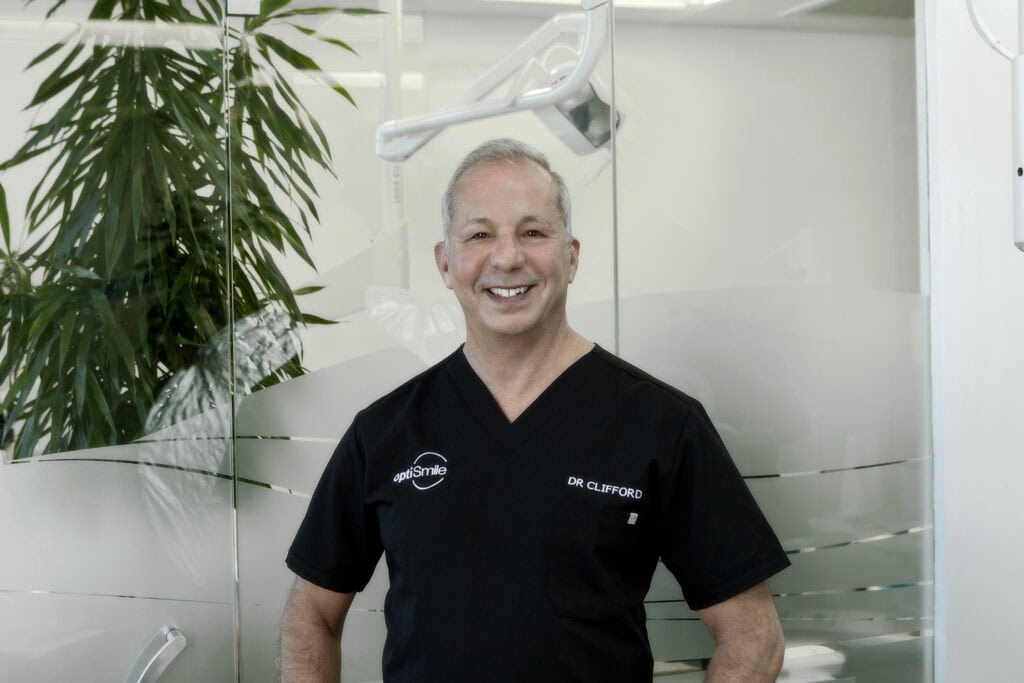
Welcome to *Save Your Money, Save Your Teeth*, the go‐to podcast where curiosity meets dentistry straight from the experts. Hosted by Eon Engelbrecht with guest Dr Clifford Yudelman – OptiSmile.
What Is Dental Tourism and Why Is It Popular?
[00:01:23]
Many South Africans seek cheaper dental treatments abroad, influenced by social media and exchange rates. Dr Yudelman discusses the appeal and hidden realities.
The Risks of Overseas Treatments
[00:02:51]
Language barriers, rushed procedures, and inconsistent standards can lead to unsatisfactory results, warns Dr Yudelman.
Hidden and Long-term Costs
[00:05:01]
Initial savings can be misleading as follow-up visits and corrective treatments often cost more than anticipated.
The Impact of Communication and Quality Standards
[00:07:27]
Misinterpretations and subpar materials may compromise dental work. Transparency in treatment quality is crucial.
Training, Accreditation, and Aftercare
[00:09:19]
Global dental training varies. South African dentists follow rigorous standards, ensuring superior care and follow-up.
Dangers of Rushed Procedures
[00:11:19]
Major treatments like implants and full-mouth makeovers need proper planning, healing time, and follow-ups to prevent complications.
The Crucial Role of Aftercare
[00:14:09]
A lack of follow-up can lead to expensive corrections. Proper aftercare is vital for long-term dental success.
Real-life Examples of Overseas Treatment Issues
[00:16:09]
Patients have returned with poorly executed dental work, requiring costly fixes due to rushed or low-quality treatments.
Key Questions to Ask Overseas Providers
[00:17:43]
Ensuring your dentist’s qualifications, experience, and post-treatment care can prevent future complications.
Balancing Cost with Quality
[00:19:53]
Cheaper overseas options may result in hidden costs. Investing in reliable, high-quality local care can be more cost-effective.
Call to Action
[00:25:35]
For expert dental care in Cape Town, visit OptiSmile.co.za. Subscribe, rate, and review our podcast on Apple Podcasts, Spotify, or YouTube.
Transcript
Eon Engelbrecht E-Radio (0:05 – 0:41)
Welcome to Save Your Money, Save Your Teeth, the go‐to podcast where curiosity meets dentistry straight from the experts. I’m Eon, and I’m joined again by Dr Clifford Yudelman – OptiSmile. We are ready to take a deep dive into the world of dental care from a consumer’s perspective. If you’re looking to brighten your smile or just protect your wallet, we’ve got you covered with practical advice and the latest insights.
So stick around for the next couple of minutes as we uncover the secrets to maintaining both your dental health and your finances. Dr Yudelman, welcome back.
Dr Clifford Yudelman – OptiSmile (0:41 – 1:23)
Thank you for having me back. We had a great response to last week’s episode about the Hollywood smile and, talking of Hollywood smiles, today we’re going to be discussing the dangers and the realities of dental tourism for South Africans – people going overseas in order to get a Hollywood smile, or what they think is a Hollywood smile, which perhaps is unaffordable for them here. So what could possibly go wrong? Well, let’s give me a star. You could start with that, but that comes – I think that’s question number six.
Eon Engelbrecht E-Radio (1:23 – 1:36)
Okay, we’ll get to it. So, doctor, what exactly is dental tourism and why has it become so popular among South Africans looking for cheaper treatments abroad?
Dr Clifford Yudelman – OptiSmile (1:37 – 2:51)
I was quite surprised, because you hear of people having difficulty getting care in the UK and then going overseas or to places like Bangkok and Thailand for dental treatment. One always imagines a British person from the UK going abroad for a Hollywood smile and ending up with Turkey teeth, yet I’ve learned that so many South Africans are now being hit with ads urging them to go to Turkey – and especially to Thailand, which is already a popular destination for South Africans due to the exchange rates. People see social media ads or hear success stories about cheap, quick fixes overseas.
The idea of combining a holiday with dental work is very tempting. There’s a perception that all dentists around the world follow the same standards, which can lead to unrealistic expectations. So be warned – whether you’re from the UK and heading to Thailand or Bangkok, or whether you’re from South Africa, this applies to both.
Eon Engelbrecht E-Radio (2:51 – 3:02)
And could you explain some of the main risks or drawbacks that people might face when travelling overseas, say to Turkey or Thailand for dental work?
Dr Clifford Yudelman – OptiSmile (3:03 – 5:00)
It’s interesting – although we’re talking about Turkey and Thailand, I practised in California for 16 years, and many Americans cross the border to Mexico. Dental tourism has been happening for well over 30 years.
I was in San Diego from 1986 to 2002, and when you go over the border to Tijuana, you’ll find painted donkeys, tequila places, tattoo parlours and even all sorts of backstreet dentists. It has become a lot more sophisticated since then, but the fact remains that dental tourism has been around for a long time. We saw, back then, that there were very different standards and regulations.
Different levels of safety and quality exist. Language barriers can often cause miscommunication about treatment plans. For me, a rush timeline is the biggest issue.
A rushed schedule can overlook important details such as healing or proper post‐operative care – or, if it’s a laboratory case, not giving the technician enough time to do a great job. Some work that would usually be done over a week or two is compressed into one or two days, and that can lead to problems. We mentioned in last week’s episode about Hollywood smiles because often people are going overseas for cosmetic or elective work.
There are many cases where patients are getting implants or having all their teeth extracted and then fitted with all‐on‐six or all‐on‐four dentures. In this instance, however, we’re mainly discussing cosmetic work and the risks of rushing into it. More on that later in this podcast.
Eon Engelbrecht E-Radio (5:01 – 5:10)
So, price is often the biggest attraction, but what hidden or long‐term costs should people consider before booking that flight?
Dr Clifford Yudelman – OptiSmile (5:11 – 7:26)
Follow‐up visits or corrective treatments can be more expensive in the long run. A significant problem, especially in the UK, is that people go to, say, Turkey, get extensive work done that sometimes isn’t executed properly, or they end up having their teeth over‐filed. They believe they’re getting veneers, but instead their teeth are filed into tiny points. If you Google ‘Turkey teeth’ or search on YouTube, you’ll find many videos showing teeth before crowns or veneers are applied – and they look like tiny little points.
Even if you’re having a crown done in South Africa or the UK, we would never file the teeth to that extent. Different standards exist, and when you return – say, from the UK – and a few of these teeth start bothering you, statistics show that it can cost a fortune to correct the problem.
In many cases, patients initially could not afford treatment at home, which is why they went overseas. They return, and the local dentists charge even more to fix the issues because it’s not feasible to fly back, or sometimes you must because you simply cannot afford to fix it locally. The same applies to South Africans.
You might fly to Bangkok, get treatment that saves you 30 or 50 per cent, only to find that flights, accommodation, and time off work add up – and if complications occur, such as needing a root canal or losing a tooth and requiring an implant, you could end up with 28 new veneers or crowns. Before you know it, two or three of those teeth might need to be pulled out.
What if it’s a front tooth? One implant in the front could cost you 14,000 rand for just one tooth – probably more than you paid for your flight and accommodation.
Eon Engelbrecht E-Radio (7:27 – 7:41)
Yes, exactly. Beyond cost, how can factors like language barriers or different medical standards impact the outcome of a patient’s treatment?
Dr Clifford Yudelman – OptiSmile (7:42 – 9:18)
Not fully understanding your dentist’s advice can lead to miscommunication about aftercare. Some clinics may use lower‐quality materials or take shortcuts to keep costs down. Much of this is commercially driven, especially when clinics are touting on Instagram or bombarding you with ads.
There are middlemen involved who might earn commissions. It should always be transparent – you might not mind paying an extra 6 or 8 per cent to someone who helps organise your trip or handle all the bookings, much like a concierge service. However, you must be cautious about kickbacks where someone might be receiving as much as 50 per cent of what you pay. You think you’re getting a deal, but in reality, you’re paying double the local rate.
In such cases, the clinic may be using lower‐quality materials and other shortcuts that you’re not aware of. So, just beware. And if something goes wrong, local legal protection or recourse may be far more limited than what you would have at home.
If a problem arises in South Africa, most dentists would be happy to correct a fault or redo a veneer or crown if it detaches a few weeks later. But if you return from Bangkok having had 20 veneers placed and three fall off, what are you going to do – fly back just to have them reattached? There’s a lot to consider.
Eon Engelbrecht E-Radio (9:19 – 9:31)
Absolutely. But I think some patients assume that the results will be the same everywhere. So what are the potential differences in training, materials, and follow‐up care, doctor?
Dr Clifford Yudelman – OptiSmile (9:32 – 11:18)
Dentists train under different curricula at university, and there are various accreditation bodies around the world. In South Africa, you undergo five and a half to six years of training at local dental schools.
You must register with the appropriate dental board – in South Africa, that’s the HPCSA, the Health Practitioners Council of South Africa. Even our dental assistants must be registered and complete at least a one‐year course.
If you’re a specialist, you must register as such. There’s extensive accreditation in South Africa. When you go to Turkey or Bangkok, you have no idea if the dentist has only attended a dental school in India for 18 months or two years.
You don’t know how they are registered. Sometimes they claim to have attended a fancy course in Las Vegas at the Las Vegas Institute, which might have been merely a one‐month course on veneers – not full dental training.
When dentists flaunt various courses and certificates to appear accredited, that’s when you must start asking questions. Even within Cape Town or Johannesburg, the quality of materials for veneers and implants can vary greatly between dentists. Aftercare and maintenance are crucial for most treatments – and these are often not included with a cheap deal.
You go in, get the work done, you return home, and then it becomes your problem.
Eon Engelbrecht E-Radio (11:19 – 11:39)
Now we come to that question finally. We often hear stories of patients rushing complex treatments into just a few days. Why can that be risky, doctor, especially for major procedures like implants or full‐mouth makeovers? What could possibly go wrong?
Dr Clifford Yudelman – OptiSmile (11:39 – 14:08)
That’s a good question. Major work always requires proper planning, healing and potential adjustments. It’s hard to condense these processes safely into a tight holiday schedule. We often conduct video consultations – increasingly so with patients from the US, and we’ve always had patients from the UK, Germany and Austria. People need to have realistic expectations. Many of the patients we see from overseas spend anywhere from three or four weeks up to three or four months here. They then return next year or the year after so that we can monitor and maintain their treatment – which is fantastic.
That’s what we’re going to discuss in our next episode, which focuses on patients coming from overseas to South Africa. If you’re going abroad and you haven’t sent scans and x‐rays ahead of time, arriving and having the dentist diagnose, quote, plan and treat you in one or two days is simply far too rushed. You cannot safely complete these procedures in just a few days.
Sometimes we can shorten treatment time in‐country by having patients send scans and x‐rays and by doing several video consultations. For example, I spoke to a gentleman from Ohio yesterday – originally from South Africa, living in Ohio for the last 35 years – who wanted to come here for five implants. He was a friend of my late father from the Johannesburg Camera Club, and after discussing everything, I referred him to a board‐registered prosthodontist specialist.
I provided him with the names of three specialists in Ohio for proper planning and treatment, and advised him to send all his x‐rays, scans, and quotes to us beforehand so we were all on the same page. Even then, we wouldn’t have him here for just one or two days. For such extensive treatments, I always try to persuade patients to have the work done at home.
Eon Engelbrecht E-Radio (14:09 – 14:27)
All right. Now, talking about aftercare – obviously very important – how crucial is it when someone returns home, and what happens if complications or adjustments are needed after they’ve left the clinic overseas?
Dr Clifford Yudelman – OptiSmile (14:27 – 16:08)
Proper aftercare often makes the difference between a successful outcome and chronic issues. Travelling back for minor tweaks can be costly and inconvenient, and local dentists might charge more to fix work they did not originally perform, adding to overall expenses. If we receive a patient who has had treatment overseas and later presents with problems – perhaps needing bite adjustments or replacements – it usually ends up costing far more than if the work had been done with us in the first place.
Even if the treatment was done two, three, four or even five years ago, we actually warranty our own work for five years, with a reduced warranty between five and ten years. I have a patient who had all his teeth done in my practise by one of my associates seven years ago. He enjoys eating lollipops and, despite being warned, has broken off a few veneers. He originally had traditional Emax veneers, which can detach if the instructions – such as not biting on lollipops – aren’t followed.
He has now broken another one, and although we’re not fixing it for free, he pays a very reduced fee. Had he had all his work done overseas, each broken veneer would have been at full price. If he had gone to Bangkok or Turkey and paid half price initially, he would still have ended up paying a significant sum.
Eon Engelbrecht E-Radio (16:09 – 16:23)
Absolutely. Also, doctor, could you share some examples – without naming names – where you’ve had to correct or fix issues from overseas dental treatments?
Dr Clifford Yudelman – OptiSmile (16:24 – 17:43)
As you’ll recall from last week when we discussed the Hollywood Smile, we’ve had patients visit who believed they had received veneers, only to find out they were fitted with crowns. In one instance, a renowned dentist – considered among the best in the world – had used a zirconia core with ceramic on top. Unfortunately, those veneers chipped very easily, and we ended up replacing many of them.
We also see poorly fitted crowns and veneers from clinics in Bangkok or Turkey, or even work done under the national health service in the UK. It isn’t always an overseas dentist; sometimes local work is substandard too.
If you get a large volume of work done that does not fit well, you may experience sensitivity, gum problems, infections or even bone loss – particularly with implants placed without proper scans. Corrective work is always much more complicated and costly than if it had been done correctly the first time.
Eon Engelbrecht E-Radio (17:43 – 17:54)
For those still set on going abroad, what critical questions should they ask to reduce the risk of ending up with poor results?
Dr Clifford Yudelman – OptiSmile (17:55 – 19:52)
Ask about the dentist’s qualifications, their training background and experience with similar procedures. Do not assume that a dentist who has a good reputation with veneers is equally adept at implants or root canals. It is generally safer to opt for a group practise where several well‐qualified dentists can review each other’s work. An individual dentist working alone has no one to look over their shoulder, and they may only post pictures on Instagram that show the front of the smile – you never see the back or the x‐rays.
I am always wary of too many before‐and‐after images. I prefer to conduct one‐on‐one sessions with potential patients from overseas and show them actual cases. I don’t post before‐and‐after photos on Instagram or Facebook; instead, I show my patients the before‐and‐after x‐rays and the complete picture, with their permission, in one‐on‐one consultations.
You must request a detailed breakdown of costs – including aftercare and any potential revisions – and find out how complications are handled. Will you have to fly back, or is there local support? Does the clinic have a colleague in your country? Is there an agreement in place? Some clinics may even offer insurance to cover corrective treatment, but such arrangements are rare.
Eon Engelbrecht E-Radio (19:53 – 20:04)
How can South Africans balance the appeal of lower prices overseas with the need for quality, safety and reliable follow‐up care?
Dr Clifford Yudelman – OptiSmile (20:08 – 24:35)
Research is key. Compare clinics carefully and do not rely solely on flashy online ads. I am a big fan of Google reviews – they verify that you were actually at the location, making it very hard to post fake reviews. I cannot simply hire someone in India to post 10, 20 or 30 reviews because Google checks the timeline and actual location data.
That’s impressive, as Google automatically deletes suspicious reviews, unlike TripAdvisor or other platforms where individuals may post their own reviews. For me, the gold standard is Google reviews – and we proudly have over 370. We received two or three just last week. It isn’t just about the number; you must read and filter the reviews for the specific procedures you’re interested in. Don’t simply rely on a friend’s recommendation from Turkey because your dental needs are unique. The same applies if you move to a new town – if you’re coming from Johannesburg to Cape Town, do not just choose the first cosmetic dentist with flashy before‐and‐after photos on Instagram.
Read the reviews, check what people have said, and ask for referrals if needed. You can even request a dentist to connect you with a previous patient – I have done this before, offering my number so they could speak directly via WhatsApp. Often, patients do not take up the offer, but knowing that real people can provide honest feedback is invaluable.
Be cautious of video testimonials where the person appears to be in a studio at the practise, extolling the doctor’s virtues. Often, these patients may have received a significant discount – perhaps R20,000 off a R100,000 treatment – in exchange for appearing in a video testimonial. Don’t be duped.
Weigh the total cost – including flights and potential redos – against local options, and prioritise a trustworthy, qualified dentist who offers ongoing support rather than a one‐off treatment. You might even be better off, for instance, with one of the top local dentists in Bangkok who isn’t solely focused on tourism‐based work, if you’re looking to take advantage of a favourable exchange rate. Use Google reviews, go where the locals go, and get a proper quote rather than relying on a clinic that is set up exclusively for dental tourism.
At OptiSmile, while we do treat dental tourists, we primarily care for locals. Many patients come to South Africa on a regular basis or by referral, and that sector is growing rapidly – especially since COVID. Next week’s episode will explain why South Africa, and why OptiSmile, can be a great option for overseas patients. Be sure to tune in next week as we examine the flip side.
Eon Engelbrecht E-Radio (24:35 – 24:41)
Looking forward to it. Once again, a very informative episode. Dr Yudelman, thank you so much.
Dr Clifford Yudelman – OptiSmile (24:42 – 24:47)
Thank you very much. I look forward to speaking with you again soon.
Eon Engelbrecht E-Radio (24:47 – 25:13)
Absolutely. Join us again next week and remember, while we strive to provide valuable insights, always consult your own dental professional for advice tailored to your personal health. Subscribe for more enlightening discussions as we continue to explore the fascinating intersection of dental health and financial savvy.
Until next time, keep smiling and take great care of your teeth.
OptiSmile Promotional (25:35 – 26:20)
Discover the world of dental excellence with OptiSmile. Join us for a weekly podcast featuring Dr Clifford Yudelman, a seasoned expert with 40 years of dental experience across four continents. Gain unique insights and expert dental advice by visiting OptiSmile.co.za for articles that illuminate the path to optimal oral health. If you’re seeking unparalleled dental care in Cape Town, get in touch with OptiSmile or book directly online at OptiSmile.co.za. OptiSmile – where global expertise meets local care.
Disclaimer: The content provided in this podcast, “Save Your Money Save Your Teeth” on Medical Mondays, is for informational and educational purposes only. It is not intended to serve as dental or medical advice. The insights and opinions expressed by Dr. Clifford Yudelman and any guests are designed to foster a better understanding of dental health, preventive measures, and general well-being, but should not be interpreted as professional dental or medical recommendations.Dr. Clifford Yudelman does not diagnose, treat, or offer prevention strategies for any health conditions directly through this podcast. This platform is not a substitute for the personalized care and advice provided by a licensed dental or healthcare professional. We strongly encourage our listeners to consult with their own dental care providers to address individual dental health needs and concerns.The information shared here aims to empower listeners with knowledge about dental health but must not be used as a basis for making health-related decisions without professional guidance. Your dental care provider is the best source of advice about your dental and overall health. Please always seek the advice of your dentist or other qualified health professionals regarding any questions or concerns about your dental health.