Chapters
Introduction
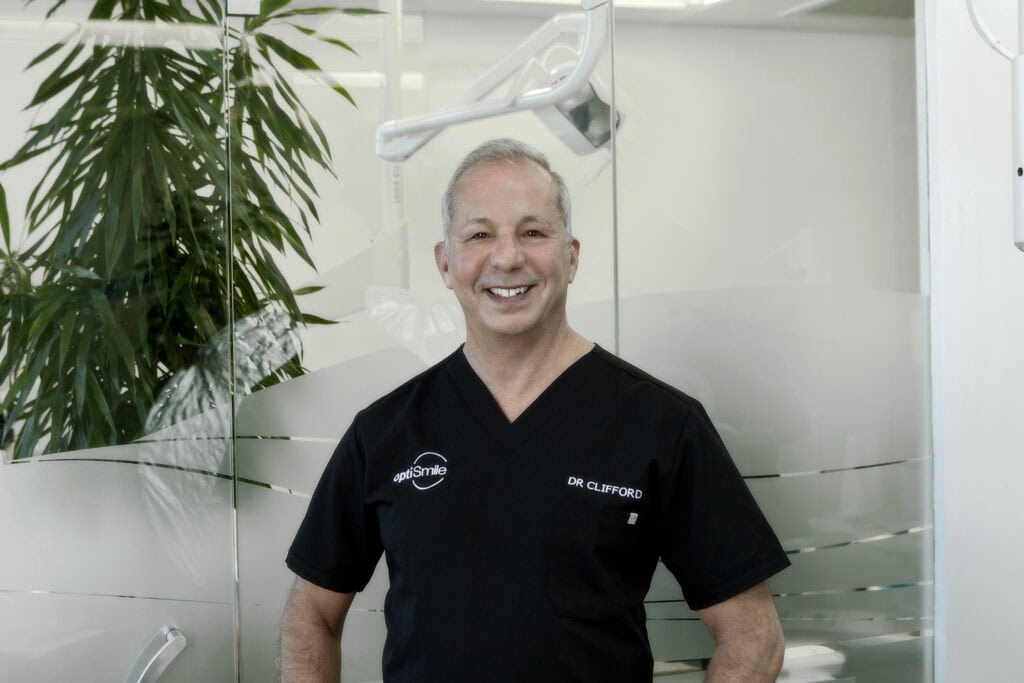
[00:00:05 – 00:00:45]Eon Engelbrecht welcomes listeners and introduces Dr Clifford Yudelman, teeing up an exploration of chronic dry mouth (xerostomia) and why saliva is essential for oral comfort.
Major Causes of Dry Mouth
[01:08 – 05:17]Dr Yudelman explains four leading culprits—dehydration, common medications, autoimmune disorders such as Sjögren’s syndrome, and head-and-neck radiation—illustrating each with real-life examples.
Oral Health Consequences
[05:25 – 07:20]Reduced saliva raises cavity risk, hampers speaking and swallowing, and invites candida infections. Untreated dryness can even lead to eventual root canal treatment if decay progresses.
Medications & Medical Conditions
[08:36 – 10:20]Diuretics, antihypertensives, antidepressants and conditions such as diabetes or Parkinson’s are singled out for their drying side-effects, with tips on reviewing prescriptions annually.
Diagnosing Xerostomia
[10:31 – 15:52]From unstimulated-lip “dew-drop” tests to saliva-flow measurement kits and specialist referrals, the hosts outline practical ways dentists confirm severity and underlying causes.
Habits & Products to Avoid
[15:59 – 17:58]Alcohol-based mouthwashes, smoking, excess caffeine and night-time mouth-breathing worsen dryness—and can intensify bad breath.
At-Home Relief Strategies
[18:06 – 20:58]Small sips of water, ice chips, xylitol gum, OTC saliva gels and bedroom humidifiers provide quick comfort while supporting natural remineralisation.
When to Seek Professional Care
[21:08 – 23:57]Persistent dryness, sudden clusters of new cavities or burning-mouth sensations are red flags to book a dental visit for tailored intervention.
In-Office Therapies
[24:09 – 26:53]Custom remineralising trays, prescription sialogogues, low-level laser stimulation and emerging PRF injections help restore gland function in stubborn cases.
Protecting Teeth & Gums Long-Term
[27:02 – 29:14]Use high-fluoride pastes, quarterly varnish applications and three-monthly cleans to stave off decay and bleeding gums.
Top Daily Habits
[29:24 – 29:58]Dr Yudelman’s trio: carry water, chew xylitol gum and review medications yearly to minimise drying side-effects.
Free Video Consultation
[30:09 – 31:42]OptiSmile offers a complimentary 30-minute tele-consult for anyone whose dry mouth disrupts life—complete with medical history review and personalised advice.
Outro
[33:34 – 35:23]The hosts recap key insights, tease next week’s episode on acid reflux, and remind listeners to subscribe for more dental wisdom and savings.
Transcript
[0:05 – 0:45] Eon Engelbrecht
Welcome back to Save Your Money, Save Your Teeth, the go-to podcast where curiosity meets dentistry straight from the experts. I’m Eon, and I’m joined once again by Dr Clifford Yudelman from OptiSmile, and we are here for the next couple of minutes to take a deep dive into the world of dental care from a consumer’s perspective. Now today, Dr Yudelman tackles chronic dry mouth, what sparks it, how it harms your teeth and gums, and evidence-based ways to find relief and also protect your smile. So let’s dive in. Dr Yudelman, welcome back.
[0:46 – 0:55] Dr Clifford Yudelman
Thank you. Thank you. And for those who haven’t listened to the show before, it’s not a couple of minutes, it’s usually 20 to 30 minutes, so stand by.
[0:55 – 1:08] Eon Engelbrecht
Not much. It goes by so quickly. So Dr Yudelman, dry mouth. What are the most common causes of chronic dry mouth?
[1:08 – 5:17] Dr Clifford Yudelman
So pretty much not in any particular order. The first one that comes to mind, which we’ve spoken about quite a bit recently, is dehydration from not drinking enough fluid or having too much caffeine or alcohol. This can reduce saliva production.
And I’ve mentioned before, I think a lot of us in South Africa are chronically dehydrated. When we go to numb a patient or we’re checking their teeth, their mouth doesn’t fill up with saliva, it’s just pretty dry. And when I was practising in America and Australia, where people walk around with their two-litre Evian and they’re drinking water all day…
Even today, we get a lot of Americans at OptiSmile, they lie back, they open their mouth, you have a look to check up and you need the suction standing by because they’ve got so much more saliva, because they drink a lot more water. So yeah, main one is dehydration, I think.
And the next one is a lot of patients my age. I’ll be 65 soon, and speaking for myself, I’m on blood pressure medication. Fortunately, I’m not on antidepressants, but antidepressants are a big one. And then there’s a lot of allergies and antihistamines, even the non-drowsy ones. These can all make your mouth dry, especially some of the mood enhancers or antidepressants.
So if you’ve got a dry mouth and you’ve recently changed medications or been prescribed medication, you can go on Google or ChatGPT and just look up what the side effects are. Sometimes you kind of get over it and especially by drinking more water, that can help. We’ll get into some other things you can do a little bit later.
And the other one is autoimmune disease that’s related to something similar to arthritis and it’s called Sjögren’s syndrome, which is spelt S-J-O-G-R-E-N, Sjögren’s syndrome. And this directly damages not only salivary glands, which leads to just a persistent dryness, it’s a terrible thing, but it can also lead to dry eyes and dryness elsewhere. And it’s not a pleasant situation.
I have had patients who have Sjögren’s. And the last one I want to mention, I’m sure there are many others, is if you’ve had radiation which targets your head and neck, if you’ve had a cancer removed from somewhere on your face, they might then do radiation and that can destroy your salivary tissue and symptoms appear during or soon after treatment.
My late dad lived to almost 95, and when he was in his 80s, he had radiation to one side of his face after having some cancer removed and he survived the surgery really well and the radiation. But unfortunately, it gave him a very dry mouth, especially on the side that had the radiation.
And from having very healthy teeth throughout his life up until his 80s, over the next few years, because of the dry mouth, he lost a number of old crowns and bridges and he ended up, even though you’re not supposed to have implants placed after any kind of radiation, he had very good specialists in Johannesburg and they placed implants and were able to give him back all his teeth. But obviously then the implants don’t get decayed like natural teeth.
But yeah, that’s on a personal side. I’ve seen what radiotherapy or radiation treatment can do to one’s saliva.
[5:17 – 5:25] Eon Engelbrecht
And Dr Yudelman, how does reduced saliva affect your oral health and comfort?
[5:25 – 7:20] Dr Clifford Yudelman
Yeah, so like I mentioned, it really increases your risk of cavities or caries. Your saliva is continually buffering any acid that goes on your teeth, and there are minerals in your saliva that are essential to remineralising your enamel. I mean, nature is amazing.
You’ve got calcium and phosphate and whatever you need in your saliva to stop your teeth from dissolving. So we really need saliva to have healthy teeth. It obviously makes speech and swallowing very difficult.
So since saliva lubricates your tissues, it helps in your digestion. And if you try and chew something with a very dry mouth, you just can’t even swallow it. You have to have little sips of water.
And we all know what it’s like when you’re nervous and you get a dry mouth and you can’t speak because your tongue sticks to the roof of your mouth. It’s not pleasant. And then oral infections, things like candida, which is a type of yeast organism that’s very common, especially in elderly people with dry mouths, because it loves a drier environment without all of your saliva, which has antimicrobial proteins in it.
The worst part of it, which my dad used to get, is mucosal discomfort, meaning the skin in your mouth just feels like it’s on fire and burning. And it’s very common when the protective film, your saliva, is missing. Saliva’s not only just water, it’s a little bit mucousy and it coats everything very nicely.
We definitely take saliva for granted until you have a dry mouth. It’s all very well having a dry mouth for an hour or two. But can you imagine having a permanently dry mouth? It’s a terrible thing.
[7:20 – 7:21] Eon Engelbrecht
Yeah, it must be absolutely terrible.
[7:22 – 7:25] Dr Clifford Yudelman
On that note, I’m going to have a sip of water. I’ve got a dry mouth.
[7:26 – 7:52] Eon Engelbrecht
Yes. Also, dry mouth is also common in people who are anxious. If you’re prone to anxiety or panic attacks, that’s also one of the symptoms that you’ll notice, especially let’s say you’re in a public speaking environment and you have to give a big speech now in front of a lot of people, you will notice that your mouth is incredibly dry.
I don’t know if you’ve noticed this, Dr Yudelman, but that’s definitely…
[7:52 – 7:53] Dr Clifford Yudelman
One hundred per cent.
[7:53 – 7:59] Eon Engelbrecht
Yeah. And then it’s difficult to talk then, you know. It’s just awful. You just want to drink something, you know.
[8:01 – 8:04] Dr Clifford Yudelman
At least then you’ve got a good excuse just to run away.
[8:05 – 8:06] Eon Engelbrecht
I would do that.
[8:06 – 8:25] Dr Clifford Yudelman
More people are scared of public speaking than scared of dying or coming to the dentist. I think it goes public speaking, then the dentist, then dying, and then who knows what, ex-boyfriends, girlfriends, ex-wives. Yeah.
[8:25 – 8:35] Eon Engelbrecht
Spot on. I also want to ask you, Doctor, which medications or medical conditions should raise concern?
[8:36 – 10:20] Dr Clifford Yudelman
Diuretics. So often people are on diuretics to help with blood pressure or people that get swollen legs and other cardiovascular drugs. So meaning there’s different medications to help with high blood pressure that we mentioned and that reduces fluid volume in general in your body and that reduces your salivary flow.
Then there’s neurological conditions like Parkinson’s disease, where part of your nervous system doesn’t function properly and that can impair or prevent your glands from putting out enough saliva. Another one that unfortunately is more and more common is diabetes, which affects your metabolism and people tend to get dehydrated. They go to the toilet more if they’re not drinking enough water because one of the early signs of diabetes is frequently going to the toilet more often than other people around you and also being very thirsty and drinking lots of water all the time.
So if you’re drinking lots of water and going to the toilet and you’ve got a dry mouth, that could be a sign that you need to get your blood sugar tested and also do an HbA1c, a haemoglobin test that tells you whether your blood sugar has been too high for the previous three months. That’s a good one to remember. And then also post-menopausal hormone shifts, which we were talking about last week, but basically after menopause, that can reduce saliva flow over time. They’ve found that especially if you’re not on hormone replacement, so there’s another good reason to find out if you could benefit from hormone replacement.
[10:20 – 10:31] Eon Engelbrecht
All right. And then moving on, Dr Yudelman, how do you diagnose the severity and source of xerostomia, if I pronounce that correctly?
[10:31 – 15:52] Dr Clifford Yudelman
Yes, that’s the medical name for dry mouth, “xerostomia”, from the Greek “xero” meaning dry, and “stomia” meaning mouth. So a thorough medical and medication history review will pinpoint any drugs that cause dry mouth or systemic diseases. It’s important to discuss it with the dentist.
Then we actually can measure your saliva. I used to have, in Australia it was a very big thing, they were selling us these kits and we had a whole bunch of tests that we could do. I’m sure there still are some dentists that will do saliva testing. We found it didn’t really change the treatment very much. If someone comes in and they had a dry mouth and they thought maybe their mouth was dry and they were drinking lots of water and they were on medication, you know, we could prove to them that their mouth is dry by doing some of these tests.
So one of them is like where you chew on a little piece of unflavoured wax, and you keep spitting into a little measuring cup and you see how many millilitres of saliva you can produce over a minute or over two minutes. And then we would also do a pH test on the saliva sample and a buffering test…
One of the most common ones I do to check for dehydration and medication is when the patient’s lying back I turn their lower lip inside out, I hold their lower lip down, and then I dry their lip. After a few seconds, there should be little dew drops forming on the inside of your lower lip. If you’ve got a very dry mouth, it just looks like tissue paper. It stays dry. But if you’re well hydrated and you’re not on these drugs, when you do that test, you see saliva running out of the surface of the skin. That’s called unstimulated saliva. That’s the saliva that keeps your mouth nice and moist.
And the one that you get from chewing gum or putting lemon on your tongue is stimulated saliva. The act of chewing causes your parotid glands to contract and squirt a lot of saliva into your mouth. There are also glands under your tongue. So those big glands are all affected by radiation and medication. You can hear I’m quite passionate about the subject. When we look in your mouth, generally, when I set someone back for a check-up, if their mouth isn’t filling with saliva after a few minutes, I might stop and say, “Oh, you don’t drink much water, do you?” or “You didn’t mention any medications, are you sure you’re not taking any medications that cause dry mouth?”
Every so often someone says, “Oh yeah, doc, I just… smoked some weed, hope it’s okay,” or something else that causes dry mouth, prescription or non-prescription. We also look for signs of fissuring or white patches, which could be candida. We may refer for blood panels or imaging, or to an oral surgeon or periodontist for autoimmune conditions like Sjögren’s. In Cape Town, for instance, we refer to Professor Jos Hiller at the university for complex cases.
[15:52 – 15:58] Eon Engelbrecht
Dr Yudelman, what daily habits or products make your dry mouth worse?
[15:59 – 17:58] Dr Clifford Yudelman
I usually recommend people use mouthwash without alcohol, or even avoid mouthwash altogether. Any kind of Listerine with alcohol can strip whatever moisture is left, and it makes it more uncomfortable. Smoking is really notorious for causing dry mouth. And if you drink too much coffee, well, two or three coffees a day probably isn’t too bad, but lots of coffees or energy drinks like Red Bull can dry you out.
Mouth breathing, especially during sleep, can make your mouth very dry. We’ve done an episode on lip or mouth taping and one on snoring and sleep apnoea. If you’ve got chronic allergies or nasal polyps, it’s important to get your nose checked by an ENT so you can breathe through your nose.
Sugary or acidic snacks will cling to your teeth. If you haven’t got much saliva and you add sugar, that’s when you get into real trouble. If your mouth is dry for one reason or another, sugar and acid push the risk of decay right up.
[17:59 – 18:06] Eon Engelbrecht
Okay. And then Dr Yudelman, which at-home remedies provide the best relief?
[18:06 – 20:58] Dr Clifford Yudelman
Take frequent sips of water. Carry a bottle with you and have a sip every 10 to 15 minutes. You can also keep water in a spray bottle and spritz your mouth, and ice chips or crushed ice can help too.
My personal favourite is sugar-free gum with xylitol, like Orbit Professional or any xylitol gum. It gets the saliva going and it helps prevent cavities.
Be careful with the throat lozenges that are sold for dry mouth. A lot of them are basically sweets, and I’ve seen elderly patients get really bad cavities from sucking on them all day.
The saliva substitutes you can buy over the counter have got a lot better. There are gels and sprays with glycerine and other things in them that act a bit like natural saliva. They feel a bit strange at first, but they coat the mouth better than water does. My late father used them a lot.
At night, think about a humidifier. I sleep with a CPAP machine, and it’s got a humidifier built in and a heated tube, so I don’t wake up with a dry mouth. A lot of people with CPAP machines don’t use the humidifier, and they end up with a dry mouth.
[20:59 – 21:07] Eon Engelbrecht
Yeah. I also want to ask you, when should a patient actually seek professional treatment for dry mouth?
[21:08 – 23:57] Dr Clifford Yudelman
If you’ve had a dry mouth for more than two weeks and you’ve tried all of this, go and see your dentist. You can start by Googling your medications, but ChatGPT with one of the high-thinking models is better than Google. Ask it to give you resources from journals, so you’re not just getting random websites.
If your dentist suddenly finds cavities, say you went a year with no decay and now you’ve got six cavities, tell them about your dry mouth. If you see yeast infections like candida patches, or your mouth feels like it’s burning, or it’s getting hard to speak and swallow, then you need to see someone.
People with dentures especially need to watch this. Saliva is what gives a denture its suction. It’s like two glass slides with a drop of water between them. If your mouth is dry, you’ll get sore spots from your denture, so see a denture specialist before it gets painful.
[23:57 – 24:08] Eon Engelbrecht
Yeah, it sounds very uncomfortable. Tell me, Dr Yudelman, what in-office therapies do you offer for persistent xerostomia or dry mouth?
[24:09 – 26:53] Dr Clifford Yudelman
Apart from what we’ve already mentioned, we can make custom trays for GC Tooth Mousse, which has fluoride, calcium and phosphate in it. You wear them like bleaching trays, but with a gel that remineralises your teeth.
There are prescription medications like pilocarpine that increase your saliva, but for those I refer to specialists, like Dr Jonathan Dutoy, who’s a periodontist.
There’s also photobiomodulation, which is low-level laser therapy on the salivary glands, once a week for 30 seconds. It’s shown some promise, and I refer those patients to dentists who know lasers well, like Dr Brian Scherr in Cape Town.
And then there’s platelet-rich fibrin, or PRF, injected into the salivary glands. That’s still experimental, but it can help in severe cases. They spin your blood and inject the fibrin part to stimulate the glands.
[26:53 – 27:01] Eon Engelbrecht
And then Dr Yudelman, how can patients safeguard their teeth and gums when saliva is actually low?
[27:02 – 29:14] Dr Clifford Yudelman
Use fluoride toothpaste twice a day, and just spit, don’t rinse. In some countries we prescribe a high-fluoride toothpaste like PreviDent 5000. Here we use Tooth Mousse. You can rub it on after brushing and flossing, swish it around and leave it on.
Get a fluoride varnish put on professionally every three months, and think about glass ionomer varnishes on the areas that are at risk. They release fluoride and they can remineralise early cavities.
Don’t miss your check-ups. Dentists who rush, or who don’t use magnification loupes, can miss early decay. If you’ve got a dry mouth, have your teeth cleaned every three months instead of every six.
[29:14 – 29:23] Eon Engelbrecht
Okay, and then finally, Dr Yudelman, what is your one best habit to prevent or manage dry mouth long-term?
[29:24 – 29:58] Dr Clifford Yudelman
I’ve actually got a few. Carry water with you and sip it every 10 to 15 minutes. Chew xylitol gum, or have xylitol lozenges. And once a year, go through your medications with your GP and see if anything that’s drying your mouth out can be changed.
[29:58 – 30:08] Eon Engelbrecht
Okay, and then I also believe that listeners can book a free video consultation with you if they feel that dry mouth is disrupting their daily life.
[30:09 – 31:42] Dr Clifford Yudelman
Yes, for sure. We offer a free 30-minute video consultation, usually for people from out of town who are thinking about coming in. We get patients from Langebaan, Hermanus, even Johannesburg and overseas. In the practice, we do a 90-minute digital consult with 3D x-rays, scans and photos, which is about R3,400, but the video consult is free and there’s no obligation.
Patients fill in their full medical history and send us photos, and we record the consult. It’s a proper telehealth appointment, it’s more than a WhatsApp chat. If anyone wants to try it, listen to our podcast on video consultations.
[31:43 – 31:46] Eon Engelbrecht
Yeah, there’s so many. We can just reference them all along.
[31:49 – 31:50] Dr Clifford Yudelman
That’s great.
[31:50 – 31:51] Eon Engelbrecht
Excellent.
[31:51 – 32:29] Dr Clifford Yudelman
This was number 72. Yes, that’s it. Looking forward to next week. We’ve got some great subjects coming up. You’d think I would have run out of things to say, but I’m just getting more and more ideas. Every time I see a patient and they have a particular question or there’s a particular… I make a note and I think, “Oh, I must do a podcast on that.” Next week, we’re going to talk about acid reflux and how it affects your teeth, how it causes tooth erosion.
[32:29 – 32:30] Eon Engelbrecht
Oh, yes.
[32:30 – 32:33] Dr Clifford Yudelman
That’s brilliant. Be sure. Yeah. Tune in.
[32:33 – 32:34] Eon Engelbrecht
Looking forward to that.
[32:34 – 32:35] Dr Clifford Yudelman
Often undiagnosed.
[32:35 – 32:48] Eon Engelbrecht
Yes. Fantastic. It just shows you, hey, regarding the topics, how vast the world is, the dental world. It’s just… it’s a very, very big, big world, the dental world.
[32:49 – 33:18] Dr Clifford Yudelman
Yeah, well, I’m learning all the time. I went to a course last Thursday about cosmetic dentistry and digital smile design and so on. Although I knew a lot of the basics, you always learn something. And after 42 years, I’m always learning and researching for some of our podcasts. Well, I research every one and I’m learning from my own podcast as we go as well.
[33:18 – 33:29] Eon Engelbrecht
Sure, that’s amazing. Yeah, you’re teaching all of us and we really appreciate it. So thank you once again for joining us here on Save Your Money, Save Your Teeth, Dr Yudelman.
[33:29 – 33:33] Dr Clifford Yudelman
Thanks for having me. And until next week, have a good one.
[33:34 – 34:17] Eon Engelbrecht
You too. And also a big thank you to our listeners for joining us. Remember to subscribe and share our podcast, especially on the Spotify platform. And a big thank you to our listeners for listening and for being with us. And remember, while we strive to provide valuable insights, always consult with your own dental professional for advice tailored to your personal health. And don’t forget to subscribe for more enlightening discussions. Join us next week as we continue to explore the fascinating intersection once again of dental health and financial savvy. Until then, stay hydrated and keep smiling.
[34:38 – 35:23] Announcer
Discover the world of dental excellence with OptiSmile. Join us for a weekly podcast featuring Dr Clifford Yudelman, a seasoned expert with 40 years of dental experience across four continents. Gain unique insights and expert dental advice by visiting OptiSmile.co.za for articles that illuminate the path to optimal oral health. If you’re seeking unparalleled dental care in Cape Town, get in touch with OptiSmile or book directly online on OptiSmile.co.za. OptiSmile, where global expertise meets local care.
Disclaimer: The content provided in this podcast, “Save Your Money Save Your Teeth” on Medical Mondays, is for informational and educational purposes only. It is not intended to serve as dental or medical advice. The insights and opinions expressed by Dr. Clifford Yudelman and any guests are designed to foster a better understanding of dental health, preventive measures, and general well-being, but should not be interpreted as professional dental or medical recommendations.Dr. Clifford Yudelman does not diagnose, treat, or offer prevention strategies for any health conditions directly through this podcast. This platform is not a substitute for the personalized care and advice provided by a licensed dental or healthcare professional. We strongly encourage our listeners to consult with their own dental care providers to address individual dental health needs and concerns.The information shared here aims to empower listeners with knowledge about dental health but must not be used as a basis for making health-related decisions without professional guidance. Your dental care provider is the best source of advice about your dental and overall health. Please always seek the advice of your dentist or other qualified health professionals regarding any questions or concerns about your dental health.