Chapters
Introduction: Geriatric Dentistry
[00:00:00 – 00:00:42]
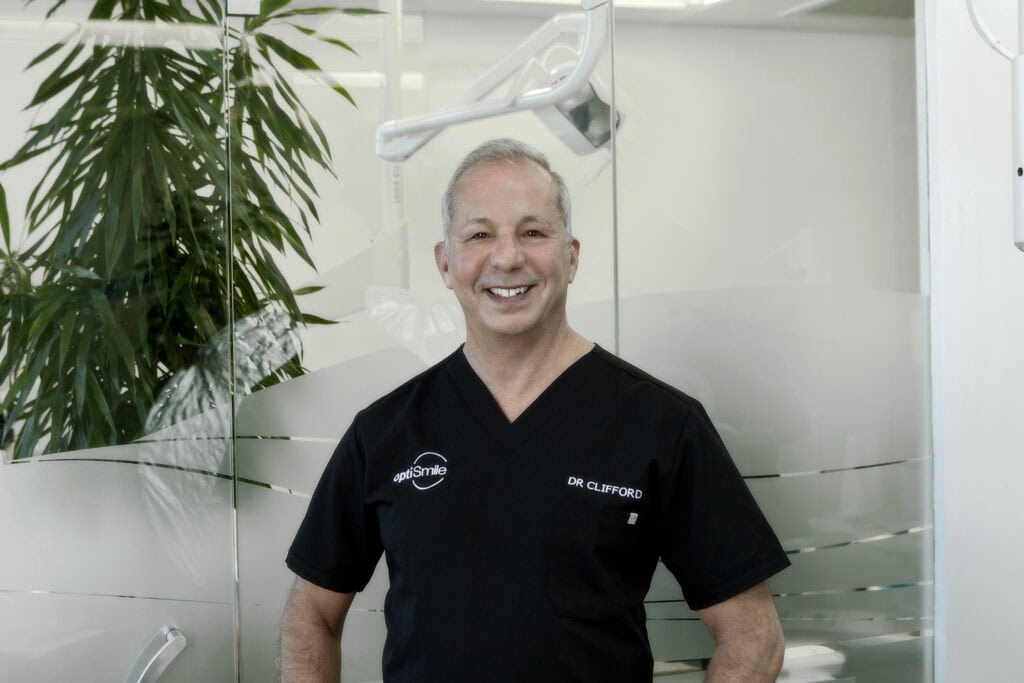
Eon Engelbrecht welcomes listeners back and introduces Dr Clifford Yudelman from OptiSmile to discuss geriatric dentistry and why tooth loss is not a “normal” part of ageing.
Is Tooth Loss Inevitable With Age?
[00:00:56 – 00:02:37]
Dr Yudelman explains that age does not “take teeth away” but disease and delayed care can. With consistent prevention, monitoring, and early intervention, many people keep their natural teeth well into their 80s and 90s.
Dry Mouth and Cavities
[00:02:37 – 00:04:47]
Dry mouth (xerostomia) is a major driver of dental problems in older adults, often caused by common medications rather than ageing itself. Less saliva means less natural protection, so cavities can develop quickly and quietly unless managed proactively.
Why Root Decay Increases in Seniors
[00:04:47 – 00:06:58]
As gums recede, softer root surfaces become exposed and are easier to damage with mild acid and plaque. Dr Yudelman highlights why root decay can spread fast and why regular professional checks help catch problems early.
Arthritis, Dexterity, and Daily Oral Hygiene
[00:06:58 – 00:09:08]
Arthritis can make brushing and flossing physically difficult, even for people who care about their oral health. Adaptive tools like electric toothbrushes and thicker handles can improve consistency and help maintain independence.
Dental Implants in Your 70s and 80s
[00:09:08 – 00:11:27]
Age alone is not a reason to avoid dental implants. Dr Yudelman explains that overall health, bone quality, smoking status, and the ability to maintain hygiene and follow-up care matter most, and even simpler implant-supported denture options can be life-changing.
Dementia and Caregiver Support
[00:11:27 – 00:13:58]
When dementia affects routine and cooperation, the focus shifts from ideal dentistry to practical prevention. Planning early, simplifying cleaning routines, and supporting caregivers can reduce pain, infection, and avoid dental emergencies later.
Why Teeth Darken or Yellow With Age
[00:13:58 – 00:15:44]
Teeth often darken as enamel thins from erosion, dentine naturally deepens in colour over time, and staining accumulates from tea, coffee, wine, and tobacco. Dr Yudelman notes that whitening and conservative cosmetic options can still be appropriate in older adults.
Aspiration Pneumonia and Oral Hygiene
[00:15:44 – 00:17:39]
Poor oral hygiene can increase the risk of aspiration pneumonia in frail older adults, especially when swallowing is compromised. Keeping teeth, gums, tongue, and dentures clean is not only about comfort, it can reduce serious medical complications.
Dentures: Do You Still Need a Dentist?
[00:17:39 – 00:18:59]
Denture wearers should still have regular check-ups, typically yearly, to assess fit, screen for oral cancer, and prevent infections like denture stomatitis. Having no natural teeth does not mean you no longer need dental care.
Cosmetic Dentistry on Aged Teeth
[00:18:59 – 00:20:31]
Cosmetic treatment can be safe and effective when it is conservative and tailored to the tooth’s condition. Dr Yudelman explains how whitening plus composite bonding can refresh worn or chipped teeth while preserving natural structure.
Conclusion and Next Episode
[00:20:31 – 00:22:31]
The episode closes with a reminder that prevention and the right tools help keep smiles healthy at any age, followed by a preview of the next topic: biomimetic dentistry.
Transcript
[00:00:00 – 00:00:42] Eon Engelbrecht – E-Radio-SA: Welcome back to another episode of Save Your Money, Save Your Teeth. I’m Eon Engelbrecht from E-Radio SA, and today, as always, we’re joined by Dr Clifford Yudelman from OptiSmile in the beautiful Sea Point in Cape Town. Today we’re tackling a topic that affects us all as the years go by: geriatric dentistry. Many people assume that losing your teeth is just a natural part of growing old, but Dr Yudelman is here to tell us why that’s an outdated myth and how you can keep your natural smile for life. Dr Yudelman, welcome back.
[00:00:42 – 00:00:56] Dr Clifford Yudelman – OptiSmile: Thank you. Thank you. Thanks for having me back. Great to hear your voice, and looking forward to chatting with you today.
[00:00:56 – 00:01:12] Eon Engelbrecht – E-Radio-SA: Absolutely. I want to start off by asking you, Doctor: is losing teeth inevitable as we get older, or can we possibly keep them for life?
[00:01:12 – 00:02:37] Dr Clifford Yudelman – OptiSmile: So, speaking as an elder, I’m already 65. I haven’t lost any teeth other than my wisdom teeth. But I guess, when we say “getting older”, maybe we’re talking about more like into your 80s, 90s, and beyond, because it seems like these days people are living a lot longer. So, I want to just say that losing teeth isn’t an inevitable part of ageing. That’s an old belief, and it does people a lot of harm.
You lose teeth because of disease, mainly decay and gum disease. Age itself doesn’t do it. What changes as you get older is that the risks add up. People collect fillings, medications, chronic conditions and habits over the decades, and each of those makes your teeth more vulnerable if nobody’s keeping an eye on them.
Long-term studies show that people who keep up regular dental care, keep the plaque under control with good brushing, and use fluoride toothpaste can keep most or even all of their natural teeth well into their 80s and 90s. A lot of it is about how you think about it. With older patients, the dentistry should be about preventing problems and seeing them coming, so you’re not just fixing things once they break.
We keep an eye on wear, on how well the gums are attached, on saliva flow and on the old fillings and crowns, so we can step in early and keep things small. From a financial point of view, keeping your natural teeth is almost always cheaper than replacing them. And biologically, nothing works as well as your own teeth. Getting older doesn’t take your teeth away. Neglect and putting off treatment do.
[00:02:37 – 00:02:48] Eon Engelbrecht – E-Radio-SA: So, Doctor, why do our mouths get drier as we age? And also, how does that cause cavities?
[00:02:48 – 00:04:47] Dr Clifford Yudelman – OptiSmile: I mean, Eon, as you know, we’ve done quite a few different podcasts that touch on this subject, but I thought it was a good place for this question here. So, dry mouth, or xerostomia, that’s spelt X-E-R-O-S-T-O-M-I-A, “xero” means dry and “stomia” means mouth, is one of the biggest causes of dental disease in older adults. And it’s mostly the medications that cause it, more than age itself.
A lot of the drugs people take for blood pressure, depression, anxiety, allergies, prostate problems and chronic pain reduce your saliva flow. Saliva is critical for neutralising acids, washing away bacteria, and supplying minerals that repair early enamel damage. When there’s less saliva, the mouth is acidic more often and for longer. That really pushes up the risk of decay, especially around the gum line and around your old fillings.
Then cavities in dry mouth patients often grow very rapidly and also painlessly until there’s a big hole and the damage is done. We see that a lot at OptiSmile in older patients with dry mouth. And a dry mouth is very strongly linked with more cavities in older adults, and it makes life a lot less pleasant.
So, if you manage the dry mouth early, by drinking enough water, using saliva substitutes, which we’ve spoken about, using fluoride and reviewing your medications, you can cut down a lot on the damage and the cost.
[00:04:47 – 00:04:57] Eon Engelbrecht – E-Radio-SA: Okay. And then root decay? Why does it happen more frequently in seniors?
[00:04:57 – 00:06:58] Dr Clifford Yudelman – OptiSmile: So, yeah, root decay is decay that forms on the exposed root surfaces, below the enamel crown. It’s particularly common in older adults because your gums naturally recede over time. That exposes the root or the root dentine.
Root dentine is much softer than enamel, and it demineralises at a higher pH. In other words, it takes less acid to cause damage. So when you’ve got exposed roots, a dry mouth and plaque sitting there, the decay can move very fast. Root decay gets a lot more common as people get older, especially if they’ve got a dry mouth, and also a lot of people as they get older have arthritis or just can’t use their hands as well, so they can’t brush their teeth properly.
Root decay is scarier than decay in the enamel. It can spread very quickly and often, as a dentist, if you find one, you’re going to find more than one. It undermines the tooth, especially next to or underneath the gum on old crowns. That’s where it’s the worst, and it’s more difficult to find because it doesn’t show on x-ray, because old crowns normally won’t show up on x-ray.
So, often it’s the hygienist that finds it. She’s cleaning along a tooth and then the instrument sort of sinks into the tooth. And that’s why it’s very important to see the hygienist.
Finding it early and preventing it are critical, especially using fluoride toothpaste. There are professional fluoride applications and also other things you can buy at your dentist that you can use to prevent cavities. Then really working on your oral hygiene as if you were a teenager or a kiddy. And yeah, that can avoid a lot of fillings and crowns, or even extractions.
[00:06:58 – 00:07:22] Eon Engelbrecht – E-Radio-SA: And when you’re older, you get things like arthritis, and that’s in your hands, and it affects your brushing ultimately. So, how does it affect your brushing, and also what tools can help seniors maintain hygiene even if they can’t hold that brush as they’re used to?
[00:07:22 – 00:09:08] Dr Clifford Yudelman – OptiSmile: Yeah, so arthritis affects your hand strength, your grip, and the fine control in your fingers, so brushing and flossing properly gets harder. It’s not that people don’t want to. It’s physically harder for them. And, you know, when brushing becomes physically difficult, the plaque builds up more and more, even in people who care a lot about their teeth. And over time, that leads to more gum inflammation, decay and tooth loss.
So the right tools make a big difference. Electric toothbrushes need less grip and do most of the work for you. I think these days that would be the way to go. You can get thicker handles, or you can get stuff to put, like plastic, that you can add onto a normal brush. Water flossers can help a bit. I’m not a big fan of water flossers. I think you still need to brush.
And, you know, all the evidence points towards these electric toothbrushes, especially for people who can’t use their hands properly, elderly people with arthritis, etc. You don’t have to be perfect, you just have to keep doing it. With the right tools, people can keep looking after their own teeth well into later life.
[00:09:08 – 00:09:20] Eon Engelbrecht – E-Radio-SA: Okay. And let’s talk about dental implants. Is this actually a safe option for people over 70 or even 80, Doctor?
[00:09:20 – 00:11:27] Dr Clifford Yudelman – OptiSmile: My favourite expression is “100%!” 100%. Age alone doesn’t rule out implants. Lots of healthy people in their 70s and 80s are excellent implant candidates. My late dad had implants when he was 87, and he lived another eight years and he was very happy to have his teeth and not to have a denture.
And in fact, in his case, he even had, because of cancer, radiation on his jaw, and you’re supposed to not get any kind of implants or extractions when this has happened. And some wonderful specialists in Joburg were able to place implants, and they worked fine. He had some special oxygen therapy when he was healing, and it healed well. And yeah, he kept those teeth up until when he passed away at 95.
So, someone who’s thinking, “Oh, I’m 70, I’m going to die soon” or “I’m 70, I’m too old for implants”, that’s just a nice personal story there. Someone who thinks, “Oh no, I’m 70, I’m too old”, age itself isn’t a factor. What matters more is your overall health, the quality of the bone in that particular area, your oral hygiene, whether you smoke, and whether you can come back for follow-ups.
When those things are in your favour, implants in older people last about as well as they do in younger patients. But implants still need looking after. You need very good oral hygiene, and we need to keep checking them.
And sometimes the simpler option is better, like sometimes doing nothing, or a plate that can be taken out and cleaned with the help of a carer. That’s if someone can’t use their hands well, or they’re getting dementia or Alzheimer’s. You’re not going to go and put in an implant that they’re not going to be able to look after, or that someone can’t help them to look after.
And also complex medical conditions, uncontrolled diabetes, etc. Diabetes is a big one. If it’s controlled, then diabetes isn’t really a factor. It always has to be decided person by person. Implants can make a huge difference to someone’s life, but you have to do them for the right reasons, and the patient has to understand they’ll need looking after for the rest of their life.
I think one of the best things a 70 or 80-year-old can get is for someone who’s had a denture for a long time, especially a lower denture, people seem to suffer with that. If the lower denture is sliding around because they don’t have any bone left, and if they don’t have the funds, because it’s very expensive to get, say, four or five implants on the lower and then get a permanent bridge screwed onto that, even getting one or two implants on the lower with a little clip that the denture can clip onto makes that denture work way better. The person can then eat meat and have a better diet, and they’ve shown that you then live longer because you can chew your food and you don’t just eat junk.
[00:11:27 – 00:11:42] Eon Engelbrecht – E-Radio-SA: And then in older patients also, how do we manage oral health if there’s dementia, or for caregivers?
[00:11:42 – 00:13:58] Dr Clifford Yudelman – OptiSmile: Yeah, shame. Actually, I’ve seen that a lot, especially when I was practising in America in the 80s, from ’86 to 2002. I spent 16 years in America, and my patients were already, in those days, if you were 70 or 75, you were getting on there. But by the time they got to 80, there was quite a lot of dementia. I think it was before we even knew much about Alzheimer’s.
And you can see patients who’ve had really good teeth their whole life, and then all of a sudden they come in and they’re not really looking after their teeth properly, and the care becomes inconsistent or upsetting for them. Then you stop aiming for perfect dentistry, and you focus on keeping things simple and preventing problems.
There’s special mouthwash with chlorhexidine. That can work well. You can even put it in a spray. Working with carers and caregivers is very important, and doing it at the same time every day, making sure that especially before bed their teeth get properly cleaned.
When these patients’ mouths aren’t kept clean, they end up with more pain and infections, and they can stop eating properly. And caregivers often underestimate dental pain because patients sometimes can’t speak properly or tell them.
So it’s important to plan early: fix any fillings or crowns that are failing, smooth off any rough edges, and take out hopeless teeth before the dementia gets worse. And obviously, you’re not going to do an implant if someone already has bad dementia.
[00:13:58 – 00:14:14] Eon Engelbrecht – E-Radio-SA: Doctor, I also want to ask you: why do teeth seem to darken or even yellow significantly with age? Is it just wear and tear?
[00:14:14 – 00:15:44] Dr Clifford Yudelman – OptiSmile: No, not wear and tear. Generally, they darken with age for several reasons. Your enamel gradually does thin out due to, I wouldn’t say wear and tear, it’s more due to erosion. We’ve spoken about acid erosion, especially, and that lets more of the darker dentine underneath show through. The dentine is the middle part of the tooth that’s quite dark. And also, the dentine keeps getting thicker and darker over time.
Decades of tea, coffee, wine and tobacco build up stains in the tooth. And some medications can also discolour your teeth.
It’s natural, and it doesn’t mean there’s anything wrong. But whitening, polishing and bonding can safely freshen up older teeth. It’s never too late to whiten your teeth. I’ve done whitening on 70 and 80-year-olds. I can’t remember if I’ve ever done a 90-year-old. In fact I have! My late dad would use his whitening trays and touch up his whitening into his early 90s. He wore his trays with his peroxide gel. We’ve done a whole podcast about that. So, age isn’t a limiting factor.
Cosmetic treatment in older adults does help people feel better when they look better. Just because you’re 80 doesn’t mean you don’t look in the mirror anymore. We just want to make things look better, without doing anything drastic. We would never go and do a whole bunch of veneers, although we’ve done injection moulding for 80-year-olds where we’ve replaced missing enamel, and a lot of the time it’s functional as well as cosmetic.
[00:15:44 – 00:15:58] Eon Engelbrecht – E-Radio-SA: Okay. And what’s the link between aspiration pneumonia and poor oral hygiene in the elderly?
[00:15:58 – 00:17:39] Dr Clifford Yudelman – OptiSmile: Yeah, so I mean in the 90s I developed a tongue scraper which I sold all over America, and I got a patent on that, and I was obsessed with this whole thing about oral hygiene, especially the tongue and aspiration pneumonia. And it’s a really important link between your mouth and your general health that a lot of people don’t know about.
Aspiration pneumonia is when bacteria from the mouth get breathed into the lungs, in frail or hospitalised elderly patients, especially if they have trouble swallowing. That’s called dysphagia, when you can’t swallow properly. The risk goes up a lot, and studies have shown that when you improve oral hygiene in elderly people, especially in care homes, you get less aspiration pneumonia.
The mouth acts as a reservoir, like a dumping ground, for bacteria, especially on the tongue. When plaque in the mouth isn’t controlled, you get more plaque on your tongue, and then it’s easier to sort of choke on that plaque. It can go down the wrong way.
So looking after the mouth in frail older people is about more than their teeth. It can actually save their life.
And what I was fascinated about and did so much research on, and this is before ChatGPT and, you know, Google was still very early, and I used to go to the medical library, is that when you inhale some of this you get like a toxic shock. And a lot of strokes, I believe, are caused by this, because people come into hospital with a fever, they have a stroke, but they also happen to have a fever. And then one or two days later they’re in hospital with a stroke, and the next thing they get what’s sometimes called “hospital-acquired pneumonia”, but they actually get the pneumonia before they have the stroke because they’re breathing in this junk that’s on their tongue and that builds up because their teeth weren’t clean. So it’s a bit of a downward spiral.
And you know, simple things like regular cleanings, keeping the dentures clean, and seeing a professional can make a big difference to these serious medical problems. And if someone’s in an aged care facility, they often have a dentist that will come round and check people’s teeth or do home care and teach the carers.
[00:17:39 – 00:17:51] Eon Engelbrecht – E-Radio-SA: Okay. And just getting back to dentures again, how often should denture wearers see a dentist, even if they have no teeth?
[00:17:51 – 00:18:59] Dr Clifford Yudelman – OptiSmile: I mean, the recommendation is once a year. Dentures change over time as your bone shrinks and the soft tissues change shape. Dentures that don’t fit properly can cause sores and infections and make you lose bone faster. Oral cancer can develop in a denture wearer and may go unnoticed without regular exams.
And that’s what I was going to say: a lot of the time when older people get oral cancer, it’s because they haven’t actually been to a dentist for two or three years. So the cancer goes unnoticed, whereas if you have even a few teeth left and you’re going to the dentist to look after those teeth and you get a small area that’s a bit suspicious, the dentist might send you for a biopsy and catch it very early. By “catch it”, I don’t mean like an infection, I mean find it early and treat it while it’s still tiny.
And you know, dentures themselves will harbour plaque and fungus if they’re not cleaned properly. There’s something called “denture stomatitis”, which is often painless. It’s common, especially if people sleep with a denture, and it isn’t good for you.
When you come in regularly, we can check the fit, check for oral cancer, go over how you’re cleaning, and replace or adjust the denture when it needs it. And you know, just because you’ve got no teeth of your own doesn’t mean you stop needing a dentist.
[00:18:59 – 00:19:15] Eon Engelbrecht – E-Radio-SA: Okay. And then just one more question for today: can we still do cosmetic procedures like bonding on aged teeth?
[00:19:15 – 00:20:31] Dr Clifford Yudelman – OptiSmile: Yes, and often very successfully, but conservatively. I had a patient in earlier today that we’re going to be doing some onlays to open up her bite, her back teeth are very worn down, and we’re going to do injection-moulded composite bonding to give her a lovely smile. She’s always wanted that. And a lot of the time it’s when the grandkids say, “Granny, why are your teeth so brown?” or “Why are your teeth broken?” That’s a very big motivator.
And so we do a lot of cosmetic dentistry on older people, especially older women. With composite bonding, we hardly have to remove any tooth, and we can fix teeth that are worn, chipped or discoloured. For discolouration, we usually whiten teeth first and then use composite bonding to change the size or the shape or the length, and keep everything that’s left of the natural teeth. We don’t drill the tooth down. I’m very much against veneers or crowns, no matter what the age of the patient. We always try and avoid veneers or crowns.
But you have to choose the cases carefully. Older teeth can have less surface to bond to, or cracks or big fillings, so we have to plan around that. The treatment has to make the teeth work better and feel comfortable, and it mustn’t put too much load on a weak tooth. If it’s done carefully, cosmetic dentistry in older people can really boost their confidence and help them chew better, without anything drastic.
[00:20:31 – 00:21:05] Eon Engelbrecht – E-Radio-SA: Dr Yudelman, thank you so much for your wonderful insights once again. It’s clear that with the right tools and a preventative mindset, a healthy smile has no expiry date. If you’d like to learn more or book a consultation at OptiSmile, remember you can visit OptiSmile.co.za. Thank you so much, Dr Yudelman.
[00:21:05 – 00:21:38] Dr Clifford Yudelman – OptiSmile: Thank you. And looking forward to Podcast number 96 next week, where we’ve now done with the teenagers and the ugly duckling and the toddlers and the males. We did all the way from baby teeth to now to geriatric dentistry. And next week we’re going to be talking about mimicking nature: biomimetic dentistry. So tune in next week.
[00:21:38 – 00:21:55] Eon Engelbrecht – E-Radio-SA: That sounds very, very interesting. Looking forward to it, Doctor. Thank you so much. And also don’t forget to tune in next time for more tips on how to save your money and your teeth. We’ll see you in the next episode.
[00:22:04 – 00:22:31] Announcer: Discover the world of dental excellence with OptiSmile. Join us for a weekly podcast featuring Dr Clifford Yudelman, a seasoned expert with 40 years of dental experience across four continents. Gain unique insights and expert dental advice by visiting OptiSmile.co.za for articles that illuminate the path to optimal oral health. If you’re seeking unparalleled dental care in Cape Town, get in touch with OptiSmile or book directly online on OptiSmile.co.za. OptiSmile, where global expertise meets local care.
Disclaimer: The content provided in this podcast, “Save Your Money Save Your Teeth” on Medical Mondays, is for informational and educational purposes only. It is not intended to serve as dental or medical advice. The insights and opinions expressed by Dr. Clifford Yudelman and any guests are designed to foster a better understanding of dental health, preventive measures, and general well-being, but should not be interpreted as professional dental or medical recommendations.Dr. Clifford Yudelman does not diagnose, treat, or offer prevention strategies for any health conditions directly through this podcast. This platform is not a substitute for the personalized care and advice provided by a licensed dental or healthcare professional. We strongly encourage our listeners to consult with their own dental care providers to address individual dental health needs and concerns.The information shared here aims to empower listeners with knowledge about dental health but must not be used as a basis for making health-related decisions without professional guidance. Your dental care provider is the best source of advice about your dental and overall health. Please always seek the advice of your dentist or other qualified health professionals regarding any questions or concerns about your dental health.