Chapters
Introduction
[00:00:00 – 01:04]
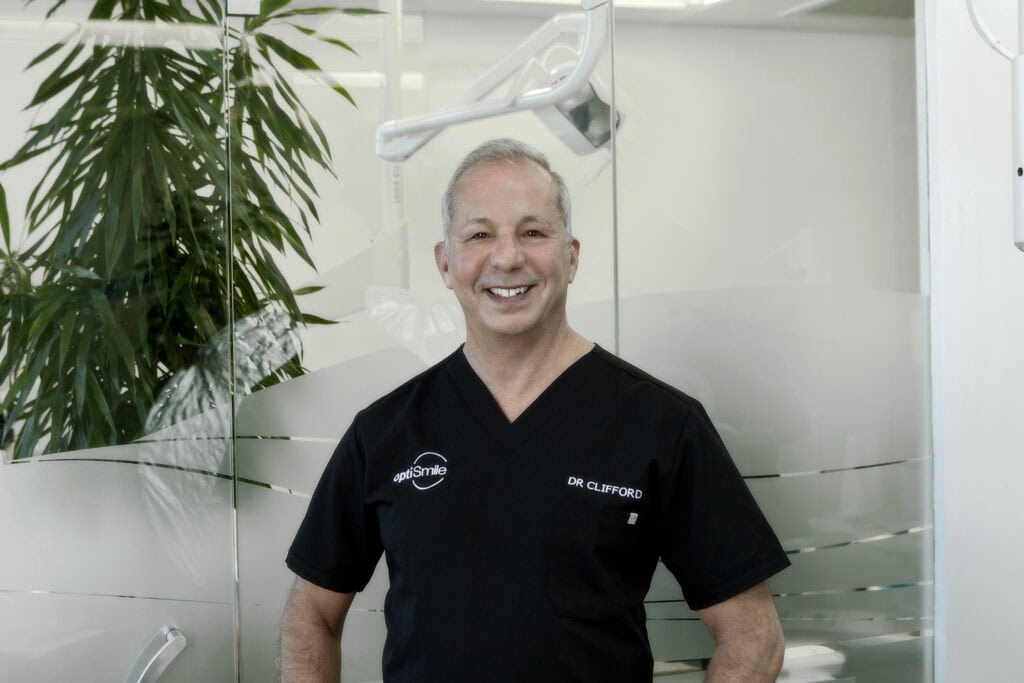
Eon Engelbrecht opens the episode with Dr Clifford Yudelman, teeing up a fact-filled conversation around fluoride use in toothpaste and how it protects your teeth from dental problems.
Is Fluoride Toothpaste Truly Necessary?
[01:25 – 02:44]
For nearly everyone, yes. Fluoride cuts cavity risk dramatically. Avoiding it often leads to root canal treatment or fillings, which are far costlier than basic toothpaste.
How Fluoride Protects Enamel
[02:45 – 04:44]
Fluoride reinforces enamel with acid-resistant fluorapatite, slows plaque acid production, and promotes daily remineralisation. Regular small doses are best.
Effectiveness of Fluoride-Free Toothpaste
[04:45 – 07:04]
Fluoride-free pastes remove plaque but cannot repair enamel. Studies show increased decay rates where fluoride is missing. Alternatives like nano-hydroxyapatite are promising but not as well studied.
Concerns Over Fluoride Safety
[07:05 – 08:26]
A small, supervised amount poses minimal risk. Use a pea-sized blob, encourage spitting, and limit rinsing to ensure safety without systemic effects.
Best Choice for Sensitive Teeth
[08:33 – 09:46]
Opt for toothpaste with fluoride and either potassium nitrate or stannous fluoride. These ingredients help seal dentine and reduce sensitivity.
Guidance for Well-Water Users
[09:54 – 10:23]
If your water already has high fluoride, choose a 1 000 ppm paste and skip additional rinses. Regular teeth cleaning checks help spot any early signs of fluorosis.
Natural Ingredients Like Hydroxyapatite
[10:24 – 12:35]
Some studies show short-term benefits similar to fluoride, but research is limited. A hybrid paste combining fluoride with hydroxyapatite may offer the best of both worlds.
Toothpaste Recommendations for Toddlers
[12:46 – 13:50]
Start brushing with a smear of 500–600 ppm fluoride paste from the first tooth. From age 3, increase to a pea-sized amount of 1 000 ppm. Avoid fluoride-free “safe-to-swallow” gels.
Is Fluoride Varnish Still Helpful?
[13:58 – 15:03]
Yes—it’s crucial for those with braces, dry mouths, or high decay risk. Varnish can prevent 40 % of new cavities by forming a long-lasting protective layer.
Toothpaste Shopping Guide
[15:13 – 16:56]
Look for fluoride content of 1 350–1 500 ppm and an official dental approval logo. For sensitivity, pick one with potassium nitrate or stannous fluoride and skip abrasive whitening options.
Closing Thoughts
[16:56 – 18:27]
Fluoride remains the most evidence-based ingredient for protecting teeth. Join us next time as we explore manual versus electric toothbrushes.
Transcript
Eon Engelbrecht – E-Radio-SA (0:05 – 1:04)
Welcome to Save Your Money, Save Your Teeth, the go-to podcast where curiosity meets dentistry straight from the experts. It’s Eon Engelbrecht – E-Radio-SA with you once again, joined by Dr Clifford Yudelman – OptiSmile, and we are ready to take a deep dive into the world of dental care from a consumer’s perspective. So we’re really, really looking forward to that.
Today we’re asking one simple question: fluoride or no fluoride? Supermarket shelves are bursting with charcoal, CBD and natural pastes and they all claim cavity protection without chemicals. But Dr Clifford Yudelman is here to separate fact from marketing fluff and give you a lightning-fast checklist for choosing the right tube. So stick around—this could save your enamel and your wallet. Dr Clifford Yudelman, welcome back.
Dr Clifford Yudelman – OptiSmile (1:04 – 1:25)
Thank you. Thanks for having me back and really looking forward to today’s episode. We get a lot of questions all the time about this and I’ve got some personal insights, you know, after forty-two years of practice, there’s a few stories that come to my mind.
I’ll drop them in depending on the question when you ask it. Yeah.
[1:25] Eon Engelbrecht – E-Radio-SA
Question 1: Firstly, is fluoride toothpaste truly necessary for everyone?
Dr Clifford Yudelman – OptiSmile (1:32 – 2:44)
By everyone, I think it’s hard to say everyone, but for around ninety-nine per cent of people, yes—it lowers cavity risk by about a third compared to non-fluoride toothpaste. And it’s really only people that have very high-fluoride borehole water maybe or people that have got a proven fluoride hypersensitivity. You know, these days, everybody’s hypersensitive to one thing or another, but proven, I think very few people get a test to prove that they’re allergic or sensitive to fluoride.
So there’s even some natural dental associations that endorse fluoride for daily prevention, especially in a high-sugar society like ours. And not only sugar, but now the whole thing is ultra-processed foods—that’s the new buzzword. You’ve got these micro- or nanoplastics and UPFs (ultra-processed foods). They lead to cavities and regular fluoride use is dramatically cheaper than paying for fillings or inlays or root canals or crowns later. So, save your money, save your teeth.
And for most people, fluoride is the answer.
[2:45] Eon Engelbrecht – E-Radio-SA
Question 2: How exactly does fluoride prevent cavities at the microscopic level?
Dr Clifford Yudelman – OptiSmile (2:52 – 4:44)
Fluoride actually swaps into your enamel matrix or enamel lattice, and it forms a fluorapatite that dissolves at a much lower pH than ordinary enamel. We spoke about pH and acids quite a lot lately: whenever you have anything acidic, there’s this hydroxyapatite (a calcium and phosphate lattice). Think of it as bricks and mortar—and you pull a few bricks out. Then, when you expose the teeth to fluoride, you’re putting in bricks that hold on a little bit tighter.
So instead of a pH of 5.5 where your teeth get soft, you may be able to withstand more acid. Also, fluoride interferes with some bacterial enzymes and reduces acid production. Every time you eat sugar, bacteria make acid—and fluoride has been shown to reduce those enzymes.
Saliva also holds a very low background level of fluoride, which constantly helps to remineralise or repair those very small, early lesions—white-spot areas you can’t even see yet. It can take a few years before they become an actual cavity. That’s what fluoride is doing. And the effect is topical, meaning we apply it onto the tooth.
Frequent low doses—like toothpaste or varnish—beat one-off tablets or ingested fluoride. Tablets mostly go into the body, not onto the tooth. I’m not a big fan of extra systemic fluoride, because we see teeth with white spots from over-exposure. But that’s a topic for another entire podcast.
[4:45] Eon Engelbrecht – E-Radio-SA
Question 3: Are fluoride-free toothpastes actually effective at cleaning teeth?
Dr Clifford Yudelman – OptiSmile (4:51 – 7:04)
They remove soft plaque mechanically, so gums can still look healthy—but without fluoride (or nano-hydroxyapatite), they can’t rebuild weakened enamel. Long-term studies show higher decay rates, especially in children and seniors.
Back in the early 1990s when I practised in California, I saw patients switch to “natural” pastes sold at health-food stores. Six months later, many returned with tiny black holes along their roots—like someone had taken a machine-gun to them. Even today, when I spot new gum-line decay, I ask, “When did you stop using your fluoride toothpaste?”
[7:05] Eon Engelbrecht – E-Radio-SA
Question 4: I’ve often wondered, can swallowing tiny amounts of fluoride daily cause systemic health issues?
Dr Clifford Yudelman – OptiSmile (7:12 – 8:26)
You ingest only a trace while brushing—far below levels linked to skeletal fluorosis or thyroid problems. Anything in excess is poisonous, but community-water studies over decades show no credible link to cancer or reduced IQ.
Children under six should use a low-fluoride children’s paste and be supervised—they swallow more. I’d avoid giving adult toothpaste to little ones until they’re older. They do make special kiddies’ pastes.
[8:26] Eon Engelbrecht – E-Radio-SA
Question 5: Which paste is best for sensitive teeth—fluoride or fluoride-free?
Dr Clifford Yudelman – OptiSmile (8:33 – 9:46)
Definitely one with fluoride. We prescribe MI Paste Plus (also called Tooth Mousse Plus), which combines casein with a little fluoride—and it outperforms the fluoride-free version. Desensitising formulas use potassium nitrate or stannous fluoride to seal dentinal tubules and calm nerves.
For severe cases, we add a high-fluoride night-time paste (e.g., Colgate Prevident 5000 where available) and have patients wear Tooth Mousse Plus in trays before bed.
[9:47] Eon Engelbrecht – E-Radio-SA
Question 6: What should patients on high-fluoride well water do about toothpaste choice?
Dr Clifford Yudelman – OptiSmile (9:54 – 10:23)
In communities with excess fluoride—identifiable by mottled or pitted teeth—people should still use a very mild fluoride paste but avoid supplements or fluoride mouthrinses. Routine dental checks will catch early fluorosis before cosmetic damage appears.
[10:24] Eon Engelbrecht – E-Radio-SA
Question 7: Are “natural” alternatives like hydroxyapatite proven to work?
Dr Clifford Yudelman – OptiSmile (10:32 – 12:35)
Small randomised controlled studies show nano-hydroxyapatite can remineralise early lesions similarly to fluoride over six weeks, but evidence remains limited and often industry-funded. Fluoride has a seventy-year track record.
Some dentists recommend hydroxyapatite for fluoride-allergic or ultra-natural patients. I personally favour pastes containing xylitol (a natural anti-cavity sugar alcohol), no SLS (soap foaming agent), a touch of fluoride and a bit of hydroxyapatite—they taste great and protect well.
[12:35] Eon Engelbrecht – E-Radio-SA
Question 8: How should parents choose toothpaste for toddlers and young children?
Dr Clifford Yudelman – OptiSmile (12:46 – 13:50)
From the first tooth, brush twice daily with a smear of child-specific low-fluoride paste (500–600 ppm). Once a child can spit reliably (around three), move to a pea-sized amount of a 1 000 ppm paste. Avoid “safe-to-swallow” zero-fluoride gels—they protect gums but not enamel.
[13:50] Eon Engelbrecht – E-Radio-SA
Question 9: Is fluoride varnish redundant if I already brush twice daily with fluoride paste?
Dr Clifford Yudelman – OptiSmile (13:58 – 15:03)
No. Varnish bonds for up to three months and can reduce new-cavity risk by forty per cent. We use it in township outreach, for brace-wearers, dry-mouth patients or heavy soft-drink consumers. Think of it as a booster shot, not a duplicate dose.
[15:03] Eon Engelbrecht – E-Radio-SA
Question 10: What simple test can listeners use to pick the right toothpaste in the supermarket aisle?
Dr Clifford Yudelman – OptiSmile (15:13 – 16:56)
Flip the box and look for “fluoride” or “sodium fluoride” at 1 350–1 500 ppm (less than 0.1 per cent). Check for a seal from SADA (South African Dental Association), BDA (British Dental Association) or ADA (American Dental Association). For sensitivity, seek potassium nitrate or stannous fluoride—though stannous can affect taste buds. Ignore flashy “whitening” claims: many are merely abrasive and can damage enamel.
Eon Engelbrecht – E-Radio-SA (16:56 – 17:11)
Fluoride still tops the evidence charts; fluoride-free can work, but only if you know its limits. Dr Yudelman, thank you as always.
Dr Clifford Yudelman – OptiSmile (17:11 – 17:34)
Thank you. Tune in next week when we tackle manual versus electric toothbrushes—hard versus soft bristles and more.
Eon Engelbrecht – E-Radio-SA (17:34 – 18:27)
And also remember, if you’d like a tailored plan to confirm your current paste is doing the job, you can book OptiSmile’s ninety-minute digital consultation or jump on a free thirty-minute video call with the OptiSmile team. While we strive to provide valuable insights, always consult your own dental professional for advice tailored to your personal health. Don’t forget to subscribe for more enlightening discussions—and until next time, keep smiling and keep saving, because healthy teeth shouldn’t cost the earth.
Narrator (18:48 – 19:32)
Discover the world of dental excellence with OptiSmile. Join us for a weekly podcast featuring Dr Clifford Yudelman, a seasoned expert with forty years of dental experience across four continents. Gain unique insights and expert dental advice by visiting OptiSmile.co.za for articles that illuminate the path to optimal oral health. If you’re seeking unparalleled dental care in Cape Town, get in touch with OptiSmile or book directly online at OptiSmile.co.za. OptiSmile—where global expertise meets local care.
Disclaimer: The content provided in this podcast, “Save Your Money Save Your Teeth” on Medical Mondays, is for informational and educational purposes only. It is not intended to serve as dental or medical advice. The insights and opinions expressed by Dr. Clifford Yudelman and any guests are designed to foster a better understanding of dental health, preventive measures, and general well-being, but should not be interpreted as professional dental or medical recommendations.Dr. Clifford Yudelman does not diagnose, treat, or offer prevention strategies for any health conditions directly through this podcast. This platform is not a substitute for the personalized care and advice provided by a licensed dental or healthcare professional. We strongly encourage our listeners to consult with their own dental care providers to address individual dental health needs and concerns.The information shared here aims to empower listeners with knowledge about dental health but must not be used as a basis for making health-related decisions without professional guidance. Your dental care provider is the best source of advice about your dental and overall health. Please always seek the advice of your dentist or other qualified health professionals regarding any questions or concerns about your dental health.