Chapters
Welcome and Introduction
(0:10 – 0:55)
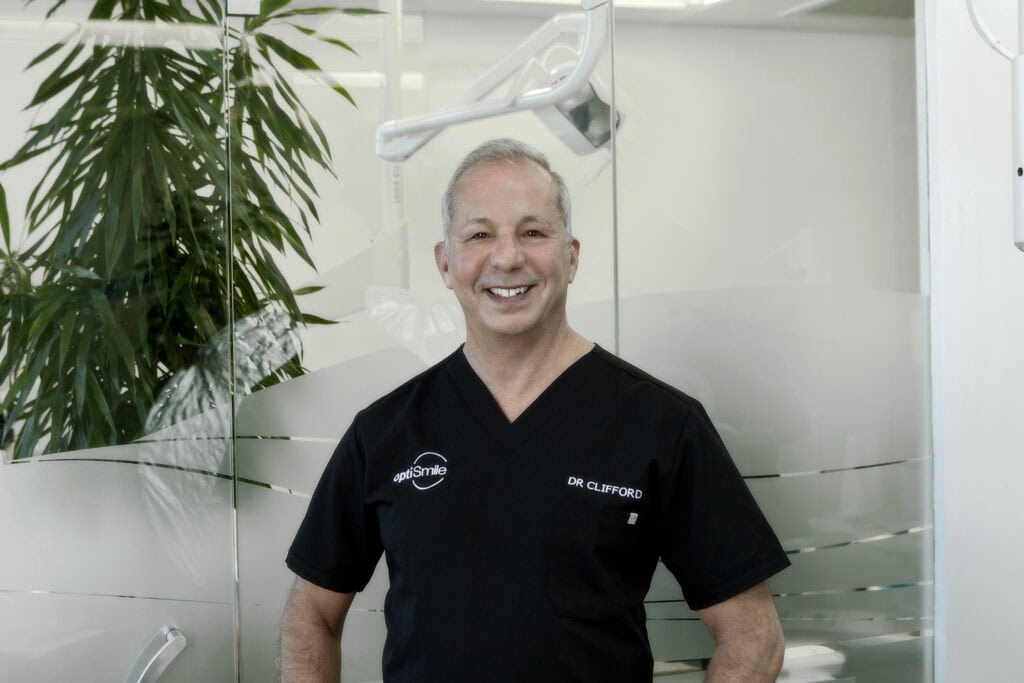
Welcome to another episode of “Save Your Money, Save Your Teeth” on eRadio. Hosted by Eon Engelbrecht, this episode features Dr Clifford Yudelman from OptiSmile. They discuss a deep dive into dental care, focusing on consumer perspectives and practical advice to maintain dental health and finances.
Overview of Orthodontics Series
(0:55 – 1:37)
Dr Yudelman shares a preview of the upcoming six-week series on orthodontics and teeth straightening. Topics will include understanding clear aligners, Invisalign, and comparisons with traditional braces.
Introduction to Orthodontics
(1:37 – 3:14)
An introduction to orthodontics, explaining its importance in improving both the aesthetic and functional aspects of dental health.
Importance of Orthodontics
(3:15 – 5:18)
Dr Yudelman elaborates on the significance of orthodontics in maintaining oral health, reducing the risk of cavities, gum disease, and overall improvement in aesthetics and psychological well-being.
Common Orthodontic Issues
(5:19 – 8:08)
Discussion on common orthodontic issues such as overbites, underbites, crossbites, and open bites. Dr Yudelman also talks about the problems caused by malocclusion and crowding of teeth.
Benefits of Straight Teeth
(8:08 – 10:47)
Exploration of how straight teeth improve oral hygiene, contribute to better chewing and digestion, and reduce jaw pain and headaches.
Differences Between Traditional Braces and Clear Aligners
(10:47 – 13:48)
Comparison between traditional metal braces and clear aligners, highlighting comfort, visibility, and maintenance.
Psychological Benefits of a Straight Smile
(13:49 – 16:28)
Discussion on the psychological benefits of having a straight smile, including boosted self-confidence, improved professional opportunities, and enhanced quality of life.
Orthodontics and Cosmetic Dentistry
(16:38 – 21:12)
Explanation of how orthodontics works hand in hand with cosmetic dentistry, emphasizing the importance of aligning teeth before cosmetic treatments like veneers or bonding.
Deciding Between Metal Braces and Clear Aligners
(21:13 – 23:44)
Dr Yudelman advises on what to consider when choosing between metal braces and clear aligners, noting the cost and the advanced technology involved in clear aligners.
Conclusion and Invitation
(23:45 – 24:39)
Dr Yudelman wraps up the episode, inviting listeners to book a free video consultation and visit OptiSmile for more information on orthodontic treatments. Invisalign clear braces and aligners in Stellenbosch.
OptiSmile Services and Expertise
(25:22 – 26:07)
An announcement about the comprehensive dental services offered by OptiSmile, highlighting their expertise and the use of advanced technology.
Transcript
[Eon Engelbrecht E-Radio-SA] (0:10 – 0:55)
Welcome again to Save Your Money, Save Your Teeth here on eRadio. It’s our go-to podcast where curiosity meets dentistry straight from the experts. I’m Eon, and every week, I’m chatting to Dr. Clifford Yudelman from OptiSmile. We take a nice deep dive into the world of dental care from a consumer’s perspective. So whether you are looking to brighten that smile or just protect your wallet, we’ve got you covered with practical advice and also the latest insights. So stay tuned and join us as we uncover the secrets to maintaining both your dental health and also your finances.
Once again, a very big welcome to Dr. Clifford Yudelman. How’s it going, doctor?
[Dr Clifford Yudelman OptiSmile] (0:55 – 1:34)
Good, how are you doing? I hope you haven’t been washed away with all the storms we’ve been having. The dams are looking really good so we can start toning down the rain a bit now, I think.
It’s a beautiful day in Cape Town and I look forward to chatting to you over the next six weeks all about orthodontics and teeth straightening. We’ve got a great episode today and maybe we can just tell people what’s in store for the next day, the next five episodes afterwards. Do you want to do it or would you like me to do it?
[Eon Engelbrecht E-Radio-SA] (1:35 – 1:37)
I’ll give you the honour.
[Dr Clifford Yudelman OptiSmile] (1:37 – 3:06)
Okay, so I know you’ve got some good questions for me today about orthodontics. We’ve been covering a lot of general subjects, toothaches, wisdom teeth, sensitivity, veneers, inlays, onlays, emergencies, all of that in past episodes and we encourage people who are only tuning in now to go back and to listen to those last 20 or so, 22 episodes. We’ve decided the time has come to start talking about orthodontics.
So today we’re just going to give an introduction to orthodontics, what it is, why it’s important and then next week we’re going to talk about understanding clear aligners and how they work, what they are. We’ll be talking in one of the episodes about Invisalign clear aligners versus other clear aligners. We’ll also be talking about Invisalign in another episode, Invisalign versus traditional braces and then for people that are interested in clear aligners, especially Invisalign, we’ll have an episode about the Invisalign journey, about deciding on treatment and then the last episode will be about life with Invisalign and beyond.
So today is introduction to orthodontics, so fire away.
[Eon Engelbrecht E-Radio-SA] (3:06 – 3:14)
Thanks, doctor, looking forward to it. Let’s start with the basics. What is orthodontics and why is it important?
[Dr Clifford Yudelman OptiSmile] (3:15 – 5:18)
So I’m going to answer that in four parts, Eon. So orthodontics, the definition and scope, orthodontics is a specialised field of dentistry focused on diagnosing, preventing and correcting misaligned teeth and jaws. It addresses both the aesthetic and functional aspects of dental health and orthodontics aims to improve the overall appearance and the functionality of your smile.
And it’s very important for oral health because properly aligned teeth are easier to clean, which significantly reduces the risk of cavities and gum disease. Misaligned teeth can lead to abnormal wear and tear, which we see a lot at OptiSmile. A lot of people come to us because their teeth are showing lots of wear and tear and it started off or was caused by not having their teeth straightened when they were younger and it potentially causes tooth loss and damage over time. And the third one is the impact on overall health.
So beyond aesthetics, orthodontic treatment can help alleviate issues like jaw pain, headaches and TMJ or temporomandibular joint disorders. That’s that popping of the jaw. When you’ve got proper alignment of your teeth, it improves the chewing and speech and it contributes to better nutrition and overall health.
And the fourth one today, if it doesn’t sound important enough to you yet, is the one that a lot of people think about most, which is aesthetic and psychological benefits. A well-aligned smile will help to boost self-esteem and confidence, influencing social interactions and your professional life positively. And we’ve done two or three entire episodes about this and so many of our patients talk to us about improvement in the quality of their life after treatment and feel more comfortable and confident in their appearance.
[Eon Engelbrecht E-Radio-SA] (5:19 – 5:30)
That was very interesting, doctor. I thought it was just about misaligned teeth, but now that we mentioned it, what are the common issues that orthodontics can correct?
[Dr Clifford Yudelman OptiSmile] (5:31 – 8:08)
So we talk about malocclusion or skew teeth. Orthodontics can correct things like overbites, where your teeth are biting too far over. Underbites, where you look like Bruce Springsteen and your lower jaw is in front of your upper jaw.
Crossbite, which is where your jaws cross over and your lower teeth are biting on the outside of your upper teeth and that can make your whole jaw develop crooked. And openbites, which is where when you bite together at the back, your front teeth don’t touch or vice versa. Some people hit in the front and the back teeth don’t touch.
And obviously, these conditions, if they’re left untreated, can cause problems with chewing, speaking, and maintaining oral hygiene. So that’s the types of malocclusions. You’ve got crowding, which is where the teeth overlap, making it difficult to clean between them and gives you a higher risk of getting cavities and gum disease.
And then the other thing which we see a lot of is people who have gaps between their teeth. Aside from aesthetic, having big gaps in the front doesn’t bother some people. I have a gap between my front teeth, but for some people that’s embarrassing and it causes a lack of confidence, but also gaps between the back teeth where food gets trapped and it leads to gum issues.
The last two are jaw alignment and protrusion. So I’ll talk briefly about jaw alignment. Orthodontic treatments can address jaw misalignment, which leads to problems, like we mentioned earlier, jaw pain, TMJ, and difficulty eating and speaking.
Correcting jaw alignment improves overall facial symmetry and function. And that’s why it’s very important. It’s very hard or impossible other than having surgery in an adult.
There are times where we can fix jaw misalignment, but usually you want to try and treat that as early as possible. Even now we have Invisalign first for kids and we can treat kids between eight and twelve is the sweet spot for fixing these things before the jaw grows in the wrong position. And protrusions in front teeth, if you look like Freddie Mercury and your front teeth are sticking right forward, it makes people susceptible to injury and affects a person’s bite.
And that’s one of the easiest things to sometimes fix with Invisalign or with braces is pulling those teeth back inside the mouth so the lips can protect them. And that’s very, very important.
[Eon Engelbrecht E-Radio-SA] (8:08 – 8:26)
It’s interesting that you mentioned that you should do it while you’re still young, you know, because the jaw changes a lot and then you get a lot of problems going forward into your teenage years, I suppose. How does having straight teeth benefit overall health, doctor?
[Dr Clifford Yudelman OptiSmile] (8:27 – 10:47)
Yeah, so we touched on it a little bit, but basically straight teeth improve oral hygiene. Straight teeth are easier to brush and floss, which prevent cavities and gum disease. And that’s what we’re all about on this podcast, save your money, save your teeth. It goes beyond the aesthetic, you know, proper alignment reduces the chance of food getting trapped.
When the teeth are crossed over, it’s very hard to keep them clean. When your teeth bite on each other, the top teeth are lined up properly with the bottom teeth, it allows for better chewing, better digestion, and maybe nutrient absorption. They say you should chew your food, I don’t know if it’s 10 times or a hundred times, but it’s definitely a lot more than what we do.
I’ve been concentrating on trying to chew my food more, and I think it does make a difference. It contributes to wellbeing. If you’re digesting your food properly, digestion starts with chewing.
And then of course, for people that get jaw pain and headaches, the misaligned teeth put a strain on the jaw and can cause pain and headaches. Straightening teeth can alleviate a lot of these issues. There are a lot of times where patients come to us because their teeth are crooked, and they happen to have some mild or moderate jaw pain. We do Invisalign for these patients, and we sort out their jaw pain and their headaches. It’s not always the case, and it depends on what’s causing the jaw pain in the first place.
You know, if it was from a rugby injury or something, there are other things that can be done. We definitely want to do a podcast just on TMJ and jaw pain. Every time we do a podcast, I get more ideas or further, so I don’t think we’ve run out of subjects.
And, of course, enhanced speech and pronunciation. Like me, I have a little bit of a lisp because of the gap between my front teeth; the air escapes. Correcting alignment improves the clarity and ease of speech, especially if your teeth are really sticking forward or you can’t make a P sound. It didn’t stop Freddie Mercury, of course. I love Freddie Mercury. I love his music. I love the movie. I thought they overdid his teeth in the movie, but when you actually watch actual footage, I think they were spot on with those teeth.
[Eon Engelbrecht E-Radio-SA] (10:47 – 10:57)
And I mean, he had so many opportunities and definitely had the money to change it, but he didn’t want to because he was worried it’s going to change his voice and the way he sounds. It’s incredible.
[Dr Clifford Yudelman OptiSmile] (10:58 – 11:02)
Yeah, they were sort of leaning forward and allowed that voice to come out.
[Eon Engelbrecht E-Radio-SA] (11:02 – 11:03)
Exactly.
[Dr Clifford Yudelman OptiSmile] (11:03 – 11:09)
If you pulled them back, it might have cut back on some of those octaves or whatever it is.
[Eon Engelbrecht E-Radio-SA] (11:09 – 11:21)
I think it would definitely make a difference. That’s incredible. Doctor, moving on, can you explain the differences between traditional metal braces and then also clear aligners?
[Dr Clifford Yudelman OptiSmile] (11:22 – 13:39)
Okay, so everyone thinks clear aligners are the latest and greatest thing from America, but you know Invisalign was the first brand of aligners to come along and it was developed about 25 years ago. They’ve now done over 17 million patients, 17 million patients with Invisalign. When we started doing Invisalign at OptiSmile in 2015, they were up at about, I remember, 9 million.
So, just in the last few years, they’ve done another 8 million, which is amazing. So, traditional metal braces, everyone’s familiar with. They’re very visible.
The clear aligners are nearly invisible. You can’t really see them when they’re in. They’re often preferred by adults and teens who are conscious about their appearance.
Comfort and maintenance, metal braces can cause discomfort and require careful cleaning around the brackets and wires. The clear aligners are smooth and comfortable and you take them out when you clean or when you eat, so it doesn’t interfere with your oral hygiene. The treatment process is different.
Metal braces are fixed appliances, which are glued to your teeth or they’re bands that go around the teeth, elastics, wires. Everyone’s familiar. We’ve all seen metal braces.
You have to keep going back to the orthodontic care practitioner to put another elastic on or to fix a broken bracket or wire. They pull teeth around generally, whereas clear aligners are a series of custom-made removable trays that gradually shift your teeth into place. They actually push on the teeth and we’ll get into detail about that in future episodes.
Dietary restrictions, metal braces require patients to avoid hard and sticky foods to prevent damage to the brackets, but with clear aligners, you take them out during meals and you can eat whatever you want. There are a lot of differences. Without trying to sell one over the other, I think the differences are quite clear, not to make a pun.
[Eon Engelbrecht E-Radio-SA] (13:41 – 13:48)
Doctor, you mentioned confidence earlier. What are the psychological benefits of having a straight smile?
[Dr Clifford Yudelman OptiSmile] (13:49 – 16:28)
There are four main benefits. The first one is boosted self-confidence. I think it speaks for itself.
If you’ve got a straight, beautiful smile and you look in the mirror, it enhances your self-esteem and your confidence, impacting your social interactions positively. Patients often are more comfortable and willing to smile after treatment. We see that if someone’s got, say, maybe 20 aligners and after 10 aligners, 10 weeks, they come back in so we can give them more aligners and carry on.
We often do with Invisalign what’s called an aesthetic start, where we’ll start moving some of the more visible teeth first, early on, so that the patient stays motivated and they can see that there’s something happening. We see it even after as little as 6 or 10 weeks. Every aligner moves the teeth 0.2 millimetres. So after 10 aligners, the teeth on the one side have moved 2 millimetres and the teeth on the other side have moved 2 millimetres. So if you imagine if you’ve got a 4-millimetre gap in just 10 weeks, you can actually close a 4-millimetre gap, theoretically, depending on the movements. Once your teeth are straight, improved professional opportunities, a confident smile, your professional interactions and opportunities, it’s easier to have a positive first impression and that enhanced confidence helps people do better in interviews and public speaking, standing up in front of their peers or in a business meeting.
A lot of people that have Invisalign teeth that feel self-conscious, they have social anxiety even though they manage to deal with that or hide it. Once they straighten their teeth and this anxiety is reduced or goes away, the overall mental health is improved. The last one, which basically leads back to all the previous ones, is the enhanced quality of life, psychological benefits of a straight smile, overall well-being, making people happier and satisfied with their appearance.
When you’ve got better mental health, you have better social relationships and there’s a smile and the world smiles back. If you’re embarrassed by your smile or you hate your smile and you’re not smiling and everyone around you is just grumpy, maybe you’re the one that needs to smile first. If it’s impossible because your teeth are crooked, there’s help out there.
[Eon Engelbrecht E-Radio-SA] (16:28 – 16:36)
Nice to know, doctor. How does orthodontic treatment work with cosmetic dentistry?
[Dr Clifford Yudelman OptiSmile] (16:38 – 21:12)
It’s unbelievable hand in hand. In fact, to try and do any kind of cosmetic dentistry without some orthodontics in many cases would be very difficult. I’ll explain all about that.
We use a combined approach. Orthodontics can be the first step in a comprehensive cosmetic dentistry plan. We align the teeth before any additional aesthetic improvements.
The combined approach gives optimal results. We can prepare the teeth for things like veneers or bonding. It makes it much easier to perform.
It gives a stable foundation for long-lasting cosmetic results. If we try to patch up a crooked bite by covering it up with ceramic or bonding, the patient, if they smash their own teeth, they’ll just smash the veneers or the bonding. We can enhance the smile design.
The orthodontic treatment helps to improve overall symmetry and balance of the smile. We can fix midlines, which you just cannot do with crowns or veneers. It allows for very precise adjustments to get the desired aesthetic outcome.
Maintaining your health and beauty, so the orthodontics not only improves your appearance, but it supports this long-term oral health and it makes cosmetic treatments more sustainable. The dual focus ensures that patients enjoy both the functional and the aesthetic benefits. So many times I tell patients about the S’s.
The first S being the shade or the colour. I don’t think we’ve done an episode on teeth whitening. Correct me if I’m wrong.
We may have. It would have been a while ago. Otherwise, we must remember to do that.
The shade or the colour, we like to just fix that with bleaching or teeth whitening. The shape or the size, we’ve spoken about bonding and veneers. If you’ve worn your teeth down or you have small teeth or broken or cracked teeth or there’s fillings that have messed up the shape of the teeth, we fix it with that.
But the situation or the position of the teeth, you can’t hide that with veneers or whitening. The teeth need to be in the correct space or place. Anybody who tries to do cosmetic dentistry without working hand-in-hand with an orthodontic care practitioner or who has not taken extra CE classes, extra courses and studied and been certified in a system like Invisalign or gone and studied how to do braces correctly cannot really consider themselves a cosmetic dentist.
I’m very, very adamant about that. If you’re looking for a cosmetic approach and your teeth are crooked and you see a dentist that says, well, we’ll just stick veneers on the front of these, then we’re back into turkey teeth territory. That tooth that’s sticking right forward, that’s not going to be moved back with braces or Invisalign.
The only way a dentist is able to make that tooth look straight is to drill the heck out of it. If there’s one thing that my entire series here of save your money, save your teeth, that would be the one main thing that I would want people to get out of this. If a tooth is crooked, don’t try and fix it with a crown or a veneer.
Go to an orthodontic care practitioner or go to a dentist. We obviously are very biased towards the oldest and the best system that is Invisalign. There’s numerous studies.
People who say it doesn’t work really don’t know. How can it not work if 17 million people have done it? It’s a very large company.
I know it sounds like I’m doing an advert for Invisalign, but don’t be duped if you’re looking at clear aligners. I think my message today would be start first with an Invisalign provider. If you want to get second opinions,
I think my message today would be to start first with an Invisalign provider. If you want to get second opinions, once you know what Invisalign can do and you want to get second opinions on cheaper South African copycat versions, first go for the quote on the Invisalign, get the treatment plan on the Invisalign, and then make sure you’re comparing apples to apples.
[Eon Engelbrecht E-Radio-SA] (21:13 – 21:27)
Now, doctor, for our listeners listening right now and wanting to maybe look at these options, what should they consider when they decide between metal braces and clear aligners?
[Dr Clifford Yudelman OptiSmile] (21:28 – 23:44)
We can’t hide the fact that metal braces can be quite a lot cheaper to start off with. We will do a whole episode on comparing Invisalign to braces. Maybe we can do that actually next week.
I was going to talk a lot more about clear aligners first, but maybe we can talk about the difference between the two in next week’s episode. But yeah, look, the little brackets and the wires and the springs and the elastics don’t cost the dentist very much. You’re mainly paying for the orthodontic care practitioner or the dentist’s time.
If they see you every month and they do a little tweak here or put an elastic on there, there’s not a lot of costs involved. Whereas to buy a 3D scanner like an Invisalign scanner, the dentist has to invest almost 2 million rand to buy a genuine iTero scanner that you have to have if you’re going to do Invisalign. So there is a big cost for the dentist there.
Once the dentist has done the plan on the special software, which is unbelievable, we’ll talk about it. It’s called ClinCheck and approves and orders the aligners. Depending on their level of experience and their relationship with Invisalign, just to get the clear aligners from the US, they’re printed at the moment in the US.
We will in the near future be getting them directly from a new factory in Poland. It takes about two weeks for us to get them. Just the printing and the manufacture and the planning can cost as much as braces.
So the dentist or orthodontic care practitioner is going to add their price on top of it. At OptiSmile, we do have payment plans similar to braces. I don’t know of too many orthodontic care practitioner or dentists that have payment plans on Invisalign.
But maybe we should do our next episode on that. That’s a whole other story. I think let’s finish up for today.
And if everyone can tune in next week, we’ll talk about the difference between Invisalign and braces.
[Eon Engelbrecht E-Radio-SA] (23:45 – 23:55)
Excellent, doctor. Thank you so much. That wraps up another episode of Save Your Money, Save Your Teeth.
We thank you for sharing your expertise with us once again.
[Dr Clifford Yudelman OptiSmile] (23:56 – 24:39)
My pleasure. And thanks for having me on. And if anyone’s listening, just a little plug.
I’m now going on a Wednesday to Stellenbosch, to Dorp Street Dental. A colleague of mine is a specialist there. He has a prosthodontist there and a root canal specialist.
And I’m doing Invisalign in Stellenbosch every Wednesday. And I’m doing video consultations purely just about Invisalign on all other days of the week. It’s a free video consultation.
If you’ve thought about braces or Invisalign, please don’t hesitate to come to our website and book a consultation or send us a WhatsApp.
[Eon Engelbrecht E-Radio-SA] (24:40 – 25:15)
That’s awesome news, doctor. Great stuff in Stellenbosch. Nice, nice to hear that.
And yes, that’s another episode. Remember, while we strive to provide valuable insights, you must always consult with your own dental professional for advice tailored to your personal health. So don’t forget to subscribe also to our podcast for more enlightening discussions.
And join us again next week as we continue to explore the fascinating intersection of dental health and financial savvy. Until then, keep smiling and taking great care of your teeth.
[Announcer] (25:22 – 26:07)
Discover the world of dental excellence with OptiSmile. Join us for a weekly podcast featuring Dr. Clifford Yudelman, a seasoned expert with 40 years of dental experience across four continents. Gain unique insights and expert dental advice by visiting OptiSmile.co.za for articles that illuminate the path to optimal oral health. If you’re seeking unparalleled dental care in Cape Town, get in touch with OptiSmile or book directly online on OptiSmile.co.za. OptiSmile, where global expertise meets local care.
Disclaimer: The content provided in this podcast, “Save Your Money Save Your Teeth” on Medical Mondays, is for informational and educational purposes only. It is not intended to serve as dental or medical advice. The insights and opinions expressed by Dr. Clifford Yudelman and any guests are designed to foster a better understanding of dental health, preventive measures, and general well-being, but should not be interpreted as professional dental or medical recommendations.Dr. Clifford Yudelman does not diagnose, treat, or offer prevention strategies for any health conditions directly through this podcast. This platform is not a substitute for the personalized care and advice provided by a licensed dental or healthcare professional. We strongly encourage our listeners to consult with their own dental care providers to address individual dental health needs and concerns.The information shared here aims to empower listeners with knowledge about dental health but must not be used as a basis for making health-related decisions without professional guidance. Your dental care provider is the best source of advice about your dental and overall health. Please always seek the advice of your dentist or other qualified health professionals regarding any questions or concerns about your dental health.