Chapters
How does menopause affect the mouth, teeth and gums?
[01:36]
Oestrogen reduction during menopause leads to inflamed gums, tooth sensitivity, and jawbone thinning. These changes can cause dentures to shift or no longer fit properly.
What is burning mouth syndrome and why is it linked to menopause?
[02:14]
Burning mouth syndrome feels like constant scalding despite no visible signs. It’s linked to hormonal nerve sensitivity changes and, while not dangerous, is highly uncomfortable.
Does lower oestrogen increase the risk of gum disease and bone loss?
[02:54]
Yes. Reduced oestrogen increases bone loss, including in the jaw, accelerating gum disease and tooth instability. Regular checkups and gum care are vital. Learn more about bleeding gums.
Why do many women experience more cavities and dry mouth during menopause?
[04:59]
Hormonal changes reduce saliva, which protects against cavities. Less saliva increases enamel erosion and decay risk. Hydration and teeth cleaning help mitigate this.
Can menopause cause changes in taste or sensitivity?
[06:00]
Yes, menopause can affect taste perception—metallic or bitter flavours are common—and increase sensitivity to hot or cold foods, altering daily eating pleasures.
What role does hormone replacement therapy (HRT) play in oral health?
[06:29]
HRT restores oestrogen, reducing gum disease and slowing bone loss. It’s not a cure-all but can make a significant difference when started early. Second opinions are encouraged.
Are there foods or lifestyle choices that help protect the mouth during menopause?
[07:29]
Calcium- and vitamin D-rich diets, hydration, reduced sugar, and exercise help maintain strong gums and bone health. Supplements like Menocal 7 are recommended.
What dental treatments are especially important for women in midlife?
[08:19]
Preventive care is key—gum checks, professional cleanings, and bone monitoring. Fluoride toothpaste and MiPaste Plus may prevent cavities. Learn about dental checkups.
How can women manage the confidence impact of oral changes during menopause?
[09:14]
Dry mouth and bleeding gums affect confidence. Cosmetic solutions like Invisalign, bonding, and whitening can help restore both function and self-esteem.
What is your best advice for women navigating menopause to protect their smile?
[09:51]
Speak up about symptoms. Choose a dentist who understands menopause-related issues and prioritises personalised care. Regular checkups and proactive prevention are essential for lifelong oral health.
Transcript
[Eon Engelbrecht – E-Radio-SA] (0:05 – 0:48)
Welcome to another episode of Save Your Money, Save Your Teeth and today we are focusing on a stage of life that brings changes far beyond hot flashes and mood swings. Menopause can have profound effects on your oral health, sometimes in ways women are never told. So from dry mouth to burning tongue to changes in gum health, these shifts can leave you more vulnerable to dental problems just when you should be enjoying your midlife with confidence.
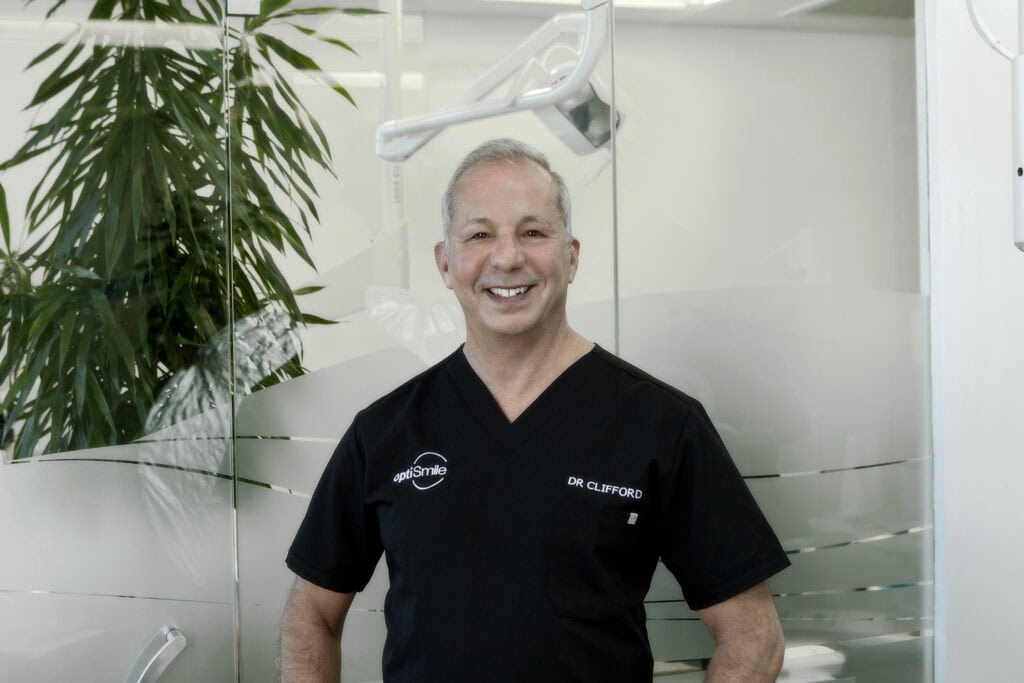
So joining us today from OptiSmile once again is Dr Clifford Yudelman to shed some light on the matter of menopause and your mouth. Dr Yudelman, welcome back.
[Dr Clifford Yudelman – OptiSmile] (0:49 – 1:35)
Thank you, thanks for having me back and I hope you had a great week and looking forward to today’s episode. I think a lot of people get misinformation about menopause or about hormone replacement therapy and yeah, it’s very topical at the moment. The FDA just voted or had a big hearing and removed the warning labels from oestrogen hormone therapy for women because for many years, they’ve been incorrectly saying that it causes all kinds of problems that it actually doesn’t.
I mean you could go on YouTube and put FDA hearing and the word oestrogen or HRT and it was just last week or two weeks ago.
[Eon Engelbrecht – E-Radio-SA] (1:36 – 1:45)
Very interesting, gonna check that out Dr Yudelman, but now I want to ask you our core question for today. How does menopause affect the mouth, teeth and gums?
[Dr Clifford Yudelman – OptiSmile] (1:46 – 2:13)
So menopause changes the balance of hormones, particularly oestrogen and that affects almost every part of the mouth. Gums can become more inflamed, teeth can feel more sensitive and the bone supporting the teeth may start to thin out a little and women sometimes notice their teeth moving slightly or dentures not fitting as well. That’s not in your head, these changes are real and connected to hormone shifts.
[Eon Engelbrecht – E-Radio-SA] (2:14 – 2:20)
And what is burning mouth syndrome and why is it linked to menopause?
[Dr Clifford Yudelman – OptiSmile] (2:21 – 2:53)
So this is a somewhat strange and very frustrating condition where women feel a burning sensation usually in the tongue or the roof of the mouth even though everything looks normal and we think it’s tied to changes in nerve sensitivity and hormone levels. It can feel like sipping on hot tea all day long but without the tea. It’s not dangerous but it can be very uncomfortable and it reminds us of how interconnected the body really is.
[Eon Engelbrecht – E-Radio-SA] (2:54 – 3:00)
And does lower oestrogen really increase the risk of gum disease and bone loss doctor?
[Dr Clifford Yudelman – OptiSmile] (3:01 – 4:58)
Absolutely, so oestrogen protects your bone density. My wife, she had quite late menopause and she was having regular bone density scans and her bone density was always 100% and then she didn’t go on to oestrogen. Her oestrogen went down to zero as it does with menopause and she was taking other medication for some of the symptoms like night sweats and hot flashes and some horrible things that can happen.
They kept telling her that oestrogen replacement will cause cancer and you’ve got some gene and it’s bad for you. I did a lot of research and she went and got some other opinions and she went on the oestrogen patches but in the meantime, she had another bone density scan and in just two years, she’s got 8% osteopenia. So it’s not osteoporosis but she lost 8% of her bone in a number of joints and even though she takes calcium and she’s on the hormones, so it hasn’t gone worse.
Another year on from that but once you lose bone, it’s very hard to make it go more dense or to make it grow unless you take some of these other quite hectic medications. So the oestrogen protects your bone density when the levels drop. Not only does your spine and your hip lose bone but your jawbone can also lose bone and your teeth and gums can be more vulnerable and gum disease can progress faster after menopause.
If you already have gum disease, that’s something to keep in mind. You should get it under control and your regular checkups are very important especially at this stage of life.
[Eon Engelbrecht – E-Radio-SA] (4:59 – 5:06)
And doctor, why do many women experience more cavities and dry mouth during menopause?
[Dr Clifford Yudelman – OptiSmile] (5:06 – 6:00)
So back on the dry mouth again, so basically hormonal changes can reduce your saliva production and without that natural moisture as we’ve said before, your mouth gets sticky and the saliva is what helps to buffer acids and protect your enamel and less saliva means more cavities. And it’s not that the women suddenly stop brushing, it’s a biology changing in the background and we’ve done quite a few podcasts now about hydration and dry mouth and it always comes back to that because saliva is so protective for your teeth. So women not only can get dry eyes but other parts of the body can also get dry and very irritated.
So that’s another way that hormone replacement can help you.
[Eon Engelbrecht – E-Radio-SA] (6:00 – 6:05)
And can menopause in any way cause changes in your taste or sensitivity?
[Dr Clifford Yudelman – OptiSmile] (6:06 – 6:29)
Yeah, so we get patients that tell us they notice metallic or a bitter taste and others find that sweet things just don’t taste as sweet anymore. You can get sensitivity to hot and cold foods that goes up, it makes your morning coffee or ice cream less enjoyable. These things can be unsettling and it’s all part of this hormone situation.
[Eon Engelbrecht – E-Radio-SA] (6:29 – 6:37)
Sure, and hormone replacement therapy or HRT, what role does that play in your oral health?
[Dr Clifford Yudelman – OptiSmile] (6:37 – 7:29)
Yeah, so as I’ve been beating around the bush with that, HRT is definitely very helpful. It restores your oestrogen levels, it can slow down the bone loss and reduce the severity of gum disease. It doesn’t solve everything but for most women, especially if you start it early enough, it can make a really big world of difference and you know everyone has to decide for themselves and listen to their own doctor and if your doctor is adamant, you know maybe get a second or third opinion.
There are gynaecologists and endocrinologists that belong to special groups. One is I think menopause.org or menopause.org.za. That’s part of an international group and they are specialists that keep up with all the latest on this.
[Eon Engelbrecht – E-Radio-SA] (7:29 – 7:37)
And are there particular foods or lifestyle choices that help protect the mouth during menopause, doctor?
[Dr Clifford Yudelman – OptiSmile] (7:37 – 8:19)
Yeah, definitely. A diet rich in calcium and vitamin D helps to support your bone health. Of course, you get vitamin D from being in the sun.
Now a lot of people don’t want to be in the sun. Vitamin D supplement, my wife takes Menocal 7 which has got lots of calcium and vitamin D and there are others that doctors recommend. Staying hydrated is a very big, big part of it.
It helps to prevent or reduce the dry mouth and cut back on sugary snacks. We’ve done a few podcasts on that. Exercise, believe it or not, also benefits the mouth by keeping circulation and bone density strong.
It’s all connected.
[Eon Engelbrecht – E-Radio-SA] (8:19 – 8:26)
And Dr Yudelman, what dental treatments are especially important for women in midlife would you say?
[Dr Clifford Yudelman – OptiSmile] (8:26 – 9:13)
Look, I mean as always preventive care is the best way to go. That’s why we call this Save Your Money, Save Your Teeth. Prevention, a stitch in time is worth nine.
I think the saying goes, you know, regular gum checks to check your gums, professional cleanings on a regular basis and monitoring your bone levels, gum probing depths, etc. There’s prescription strength toothpaste for people that are getting lots of cavities. We’ve mentioned MiPaste Plus or similar types of special toothpaste and fluoride rinses, etc.
And you know, if you’ve got a dry mouth, we usually recommend things for our patients and some lifestyle tweaks to keep you more comfortable.
[Eon Engelbrecht – E-Radio-SA] (9:14 – 9:21)
And how can women manage the confidence impact of oral changes during menopause? Do you have any tips?
[Dr Clifford Yudelman – OptiSmile] (9:21 – 9:51)
No, that’s often overlooked. You know, when your gums bleed and your mouth feels dry, your teeth are shifting, it can affect your confidence socially and professionally. There are cosmetic options like whitening, injection moulded bonding, even Invisalign.
We do a lot of Invisalign on older females. We’ve done it on people in their 60s or even 70s, male and female actually. But sometimes just managing the dryness or the sensitivity can make you feel like yourself again.
[Eon Engelbrecht – E-Radio-SA] (9:51 – 10:01)
Okay, and what is your best advice for women navigating menopause to protect both their oral health and their smile? Just lastly.
[Dr Clifford Yudelman – OptiSmile] (10:01 – 11:29)
So don’t suffer in silence. If your mouth feels different, speak up. Many women don’t connect their symptoms to menopause, but dentists see it all the time.
Stay consistent with checkups, ask about preventive care and don’t be embarrassed to mention burning mouth or dry mouth or sensitivity. It’s part of the journey. You know, dentists like myself, we went through the first three or four years of dental school combined with medical school.
I don’t know exactly what the curriculum is now, but back then we were with all the medical students right through to about fourth year when we then started learning more and more about making dentures and doing fillings, etc. So although the dentist might not be the one to treat it, some dentists have got a better medical knowledge than others depending on when they qualified and where, which university, etc.
Some are just only interested in finding cavities and filling them and other dentists are interested in helping you. So make sure the dentist that you choose is the one that’s right for you. With the right care, your smile can and will carry you confidently into the next chapter of your life, where you should be actually chilling and enjoying yourself and enjoying the grandkids if you’ve got them. I don’t have any grandkids yet, but maybe one day.
[Eon Engelbrecht – E-Radio-SA] (11:29 – 11:57)
Not yet. Okay, so menopause is a natural part of life, but its impact on oral health is just too often overlooked. By staying aware of the changes and being proactive with your dental care, you can sail through this stage without losing your confidence in your smile.
So Dr Yudelman, once again, a big thank you to you for joining us today and shedding some light on this matter. Much appreciated as always.
[Dr Clifford Yudelman – OptiSmile] (11:57 – 12:08)
Thanks very much and I really appreciate it and look forward to next week’s episode, which will be a surprise, because even I don’t know what it’s going to be.
[Eon Engelbrecht – E-Radio-SA] (12:09 – 12:56)
You’ll surprise us both. Thank you, Dr Yudelman. Until next time and also thanks to our listeners for joining us.
Remember, while we strive to provide valuable insights, always consult with your own dental professional for advice tailored to your personal health and don’t forget to subscribe to the podcast for more enlightening discussions. Join us again next time as we continue to explore the fascinating intersection of dental health and financial savvy. Ladies, remember, strong gums, healthy teeth and a confident grin are just as important in your 50s and 60s as in your 20s, so don’t let menopause rob you of that.
Book your checkup today, ask questions and most importantly, keep smiling brightly.
[Outro Voiceover] (13:18 – 14:02)
Discover the world of dental excellence with OptiSmile. Join us for a weekly podcast featuring Dr Clifford Yudelman, a seasoned expert with 40 years of dental experience across four continents. Gain unique insights and expert dental advice by visiting OptiSmile.co.za for articles that illuminate the path to optimal oral health. If you’re seeking unparalleled dental care in Cape Town, get in touch with OptiSmile or book directly online on OptiSmile.co.za. OptiSmile, where global expertise meets local care.
Disclaimer: The content provided in this podcast, “Save Your Money Save Your Teeth” on Medical Mondays, is for informational and educational purposes only. It is not intended to serve as dental or medical advice. The insights and opinions expressed by Dr. Clifford Yudelman and any guests are designed to foster a better understanding of dental health, preventive measures, and general well-being, but should not be interpreted as professional dental or medical recommendations.Dr. Clifford Yudelman does not diagnose, treat, or offer prevention strategies for any health conditions directly through this podcast. This platform is not a substitute for the personalized care and advice provided by a licensed dental or healthcare professional. We strongly encourage our listeners to consult with their own dental care providers to address individual dental health needs and concerns.The information shared here aims to empower listeners with knowledge about dental health but must not be used as a basis for making health-related decisions without professional guidance. Your dental care provider is the best source of advice about your dental and overall health. Please always seek the advice of your dentist or other qualified health professionals regarding any questions or concerns about your dental health.