Chapters
Introduction
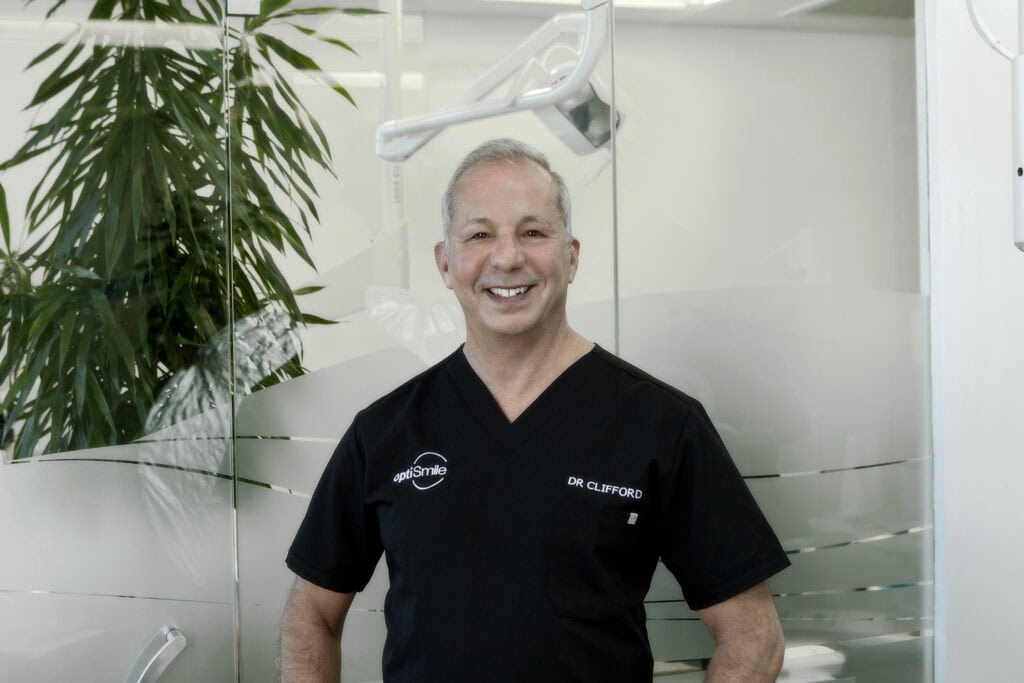
[00:00:00]Eon Engelbrecht introduces Dr Clifford Yudelman from OptiSmile to discuss how postmenopausal bone loss impacts jaw, gum, and dental implant health.
Osteoporosis and Jawbone Health
[00:00:58]Osteoporosis reduces alveolar bone height, causing loose teeth and gum recession. Routine dental check-ups with X-rays are vital for early detection.
Medications and Healing Risk
[00:02:13]Oral and IV bisphosphonates and denosumab can cause jaw necrosis. Patients should undergo dental assessments before starting these medications.
Warning Signs to Watch For
[00:05:03]Postmenopausal patients may experience loose teeth, sensitivity, or slow healing. These could be early indicators of reduced bone density.
Assessing Bone Health at the Dentist
[00:06:48]Dentists assess medical history, DEXA scans, and use X-rays or CBCT to evaluate bone density, especially before implants or surgery.
Interaction Between Dental Treatments and Osteoporosis
[00:08:25]Implants can stimulate bone, but care must be taken during extractions, especially with bisphosphonate users. Chronic inflammation worsens bone loss.
Preventative Strategies for Oral Bone Health
[00:10:16]Use extra-soft toothbrushes, PRF, and laser therapy. Frequent teeth cleaning and check-ups help monitor bone changes.
Planning Implants with Low Bone Density
[00:12:59]Customised implant planning may include special implants, longer healing, or avoiding implants entirely in high-risk patients.
Diet and Supplement Advice
[00:14:44]Calcium, Vitamin D, and hormone replacement therapy support bone health. Avoid acidic drinks that weaken enamel and bone.
Dental Visit Frequency for Osteoporotic Patients
[00:18:26]Patients should visit every 6 months — or more frequently if there’s active bone loss or gum disease. Regular X-rays are crucial.
Top Recommendation for Concerned Patients
[00:19:52]Ensure collaboration between dentist and doctor. OptiSmile offers digital and free online consultations to guide personalised care plans.
Outro
[00:22:30]Visit optismile.co.za or WhatsApp 071 140 0396 to book a consultation. Stay proactive about oral health during and after menopause.
Transcript
[Eon Engelbrecht – E-Radio-SA] (0:05 – 0:43)
Welcome to Save Your Money, Save Your Teeth, the go-to podcast where curiosity meets dentistry, straight from the experts. I’m Eon, and I’m once again joined by Dr Clifford Yudelman from OptiSmile, helping us uncover everything you need to know.
Today’s topic is how postmenopausal bone loss can affect your jaw, your gums, and even your dental implants — and what you can do to keep both your teeth and your bones strong. So let’s dive in.
Dr Yudelman, welcome back once again.
[Dr Clifford Yudelman – OptiSmile] (0:43 – 0:57)
Thank you. Thanks for having me back. Great to speak to you again.
Yeah, looking forward to getting going with the next 10 podcasts. Today is number 71 — we’ll be at number 80 before you know it.
[Eon Engelbrecht – E-Radio-SA] (0:58 – 1:08)
Excellent. Dr Yudelman, I want to start off by asking you, how does osteoporosis affect your jaw bone density and your overall dental health?
[Dr Clifford Yudelman – OptiSmile] (1:09 – 2:12)
There are a few important points to make. Osteoporosis reduces what’s called alveolar bone height — that’s the bone around your teeth.
If you lose a tooth, that bone disappears. So alveolar bone is the support bone surrounding each tooth. When it thins out, it leads to increased tooth mobility and root exposure — or recession.
Studies have shown that postmenopausal women with low bone density have much thinner mandibular cortices — that’s the thickness of their jawbone on X-ray. This loss can accelerate gum recession and complicate gum therapy.
The good news is, routine X-rays can often show these changes long before symptoms develop.
[Eon Engelbrecht – E-Radio-SA] (2:13 – 2:21)
Okay. And which osteoporosis medications most commonly impact oral tissues or healing?
[Dr Clifford Yudelman – OptiSmile] (2:22 – 5:02)
The most common are oral bisphosphonates — those are the drugs given to many patients with osteoporosis.
A key risk is something called jaw necrosis — technically MRONJ — medication-related osteonecrosis of the jaw. If you’re on these meds and you have a tooth extracted, the bone can literally die and not heal properly.
That’s why a proactive physician will refer a patient to the dentist before starting these medications — to ensure any extractions or root canals are handled first.
Another one is denosumab — harder to pronounce, but it carries an even higher risk of MRONJ.
Then there are intravenous bisphosphonates used for cancer — those carry the highest risk, and we generally avoid implants entirely in those cases.
If you’re already on oral bisphosphonates, a “drug holiday” (pausing the medication) hasn’t been shown to reduce the risk. So ideally, any dental treatment should be done before starting them.
If this applies to you, your mum, or your aunt — get a full dental check-up, preferably with 3D X-rays, before going on the medication. It’s much safer that way.
[Eon Engelbrecht – E-Radio-SA] (5:03 – 5:16)
And Dr Yudelman, any early warning signs that postmenopausal patients should watch out for in their mouths?
[Dr Clifford Yudelman – OptiSmile] (5:16 – 6:47)
Yes, definitely. Aside from the common menopause symptoms, women may notice teeth feeling loose or shifting — without signs of gum disease.
Gaps can start developing between teeth, especially as recession occurs. Sensitivity to cold or sweets may also increase.
And if healing is delayed after a deep clean or extraction — even without being on medication — that could be a sign of underlying bone issues.
We tend to think of osteoporosis as a “hip fracture” condition, but jawbone loss is very real, and it often shows up first in the mouth.
[Eon Engelbrecht – E-Radio-SA] (6:48 – 6:56)
And how do you assess bone health during a dental check-up? What do you look for?
[Dr Clifford Yudelman – OptiSmile] (6:56 – 8:24)
First, we go through the medical history thoroughly. Many women list “osteoporosis” but not the medications, so we always ask.
We also request their bone scan or DEXA results, or even contact their doctor if needed.
Then we examine X-rays — especially panoramic or bitewings — to evaluate bone loss. For complex cases, we use a CBCT 3D scan to get accurate measurements of bone volume and density.
If someone has osteopenia — low bone density but not yet osteoporosis — we’re extra cautious with implants and surgeries, and we may recommend pre-treatment planning or collaboration with their physician.
[Eon Engelbrecht – E-Radio-SA] (8:25 – 8:33)
Can dental treatments actually influence osteoporosis progression — or vice versa?
[Dr Clifford Yudelman – OptiSmile] (8:33 – 10:15)
Yes, in a few ways. One example is functional loading — we sometimes place a temporary crown after an implant that adds light pressure, which can stimulate bone growth.
But if someone is on bisphosphonates, extractions must be extremely careful — preferably done by a specialist — to avoid necrosis.
Also, chronic gum inflammation leads to bone loss. That’s why impeccable oral hygiene and regular professional cleanings are so critical in these cases.
[Eon Engelbrecht – E-Radio-SA] (10:16 – 10:29)
What preventative strategies can protect oral bone in patients with osteoporosis?
[Dr Clifford Yudelman – OptiSmile] (10:30 – 12:59)
Soft toothbrushes are key — and even with electric brushes, we recommend extra-soft heads.
Some patients benefit from chlorhexidine rinses, especially if arthritis affects dexterity.
We also use low-level lasers, PRF (platelet-rich fibrin) from your own blood to promote healing, and bite guards to prevent bruxism-related trauma.
Patients should also have more frequent X-rays — every 12 to 18 months instead of every 3 years — to track bone changes.
[Eon Engelbrecht – E-Radio-SA] (12:59 – 13:09)
How should implant planning be modified for someone with low bone density?
[Dr Clifford Yudelman – OptiSmile] (13:09 – 14:43)
If someone’s about to start bisphosphonates, we may fast-track implant placement first — or refer to a periodontist for staged treatment with bone grafting.
We also select implants designed for better osseointegration in compromised bone and allow longer healing times — 3 to 4 months or more.
But for patients already on IV bisphosphonates, we usually avoid implants altogether.
[Eon Engelbrecht – E-Radio-SA] (14:44 – 14:54)
Any dietary or supplement tips that support both bone and dental health?
[Dr Clifford Yudelman – OptiSmile] (14:54 – 17:58)
Yes, and I want to address hormone replacement therapy (HRT) too.
That old study linking HRT to breast cancer and heart disease was flawed — and today we know HRT can actually protect against bone loss, Alzheimer’s, muscle loss, and heart disease.
An oestrogen patch (changed twice weekly) and a progesterone pill (if you still have your uterus) are safe, effective, and affordable.
As for supplements:
- Calcium: 1200 mg/day
- Vitamin D: 2000 IU
- Possibly Vitamin K2
Also, chewing fibrous fruits and veg (like apples and carrots) helps stimulate bone.
Avoid acidic drinks like sparkling water, diet sodas, and fake orange juices — these can leach calcium from your teeth and bones.
[Eon Engelbrecht – E-Radio-SA] (18:26 – 18:36)
How often should someone with osteoporosis visit the dentist?
[Dr Clifford Yudelman – OptiSmile] (18:37 – 19:40)
At least every 6 months. But if you’ve got gum disease or fast bone changes, every 3 months may be needed.
X-rays every 12 to 18 months, and hygiene visits 3–4 times a year if there’s inflammation.
Unlike a healthy 25-year-old, someone with osteoporosis can lose bone rapidly — so close monitoring is essential.
[Eon Engelbrecht – E-Radio-SA] (19:41 – 19:51)
And finally, what’s your top recommendation for postmenopausal patients concerned about their smile and bone health?
[Dr Clifford Yudelman – OptiSmile] (19:52 – 22:15)
Make sure your dentist and doctor communicate — especially if surgery or medications are involved.
At OptiSmile, we offer a 90-minute digital consultation, including CBCT 3D scans. We even use AI to track bone levels over time.
If needed, we refer to top periodontists or oral surgeons in Cape Town, Joburg, or wherever you’re based.
And don’t forget — we offer a free 30-minute video consultation to guide anyone who’s unsure where to start. Just reach out.
[Eon Engelbrecht – E-Radio-SA] (22:30 – 22:55)
For bookings, visit optismile.co.za or WhatsApp 071 140 0396.
Dr Yudelman, thank you again!
Disclaimer: The content provided in this podcast, “Save Your Money Save Your Teeth” on Medical Mondays, is for informational and educational purposes only. It is not intended to serve as dental or medical advice. The insights and opinions expressed by Dr. Clifford Yudelman and any guests are designed to foster a better understanding of dental health, preventive measures, and general well-being, but should not be interpreted as professional dental or medical recommendations.Dr. Clifford Yudelman does not diagnose, treat, or offer prevention strategies for any health conditions directly through this podcast. This platform is not a substitute for the personalized care and advice provided by a licensed dental or healthcare professional. We strongly encourage our listeners to consult with their own dental care providers to address individual dental health needs and concerns.The information shared here aims to empower listeners with knowledge about dental health but must not be used as a basis for making health-related decisions without professional guidance. Your dental care provider is the best source of advice about your dental and overall health. Please always seek the advice of your dentist or other qualified health professionals regarding any questions or concerns about your dental health.