Chapters
Introduction
[00:00:04 – 00:58]
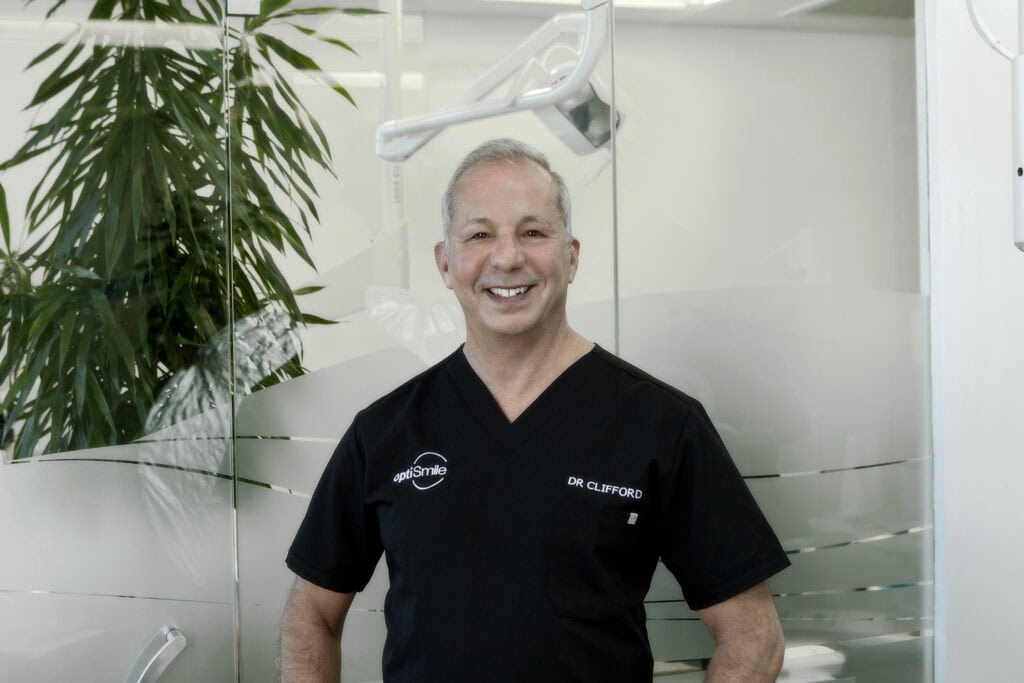
Eon Engelbrecht introduces Dr Clifford Yudelman and sets the tone for a practical oral health reset. Over 70 episodes are condensed into 10 essential habits to protect your teeth for life.
1. Sensitive Teeth & Enamel Erosion
[01:30 – 03:01]
Tooth sensitivity often means enamel thinning or root exposure. Look for translucent edges, yellow dentine, or cupped chewing surfaces. Causes include acidic diets, hard brushing, and grinding. Monthly self-checks, soft toothbrushes, and enamel-safe toothpaste help.
2. Menopause & Oral Health
[03:01 – 04:27]
Falling oestrogen reduces collagen and blood flow, leading to dry mouth, gum recession, and bone loss. Meticulous cleaning, xylitol toothpaste, and possibly HRT can help.
3. Acid Reflux & Tooth Erosion
[04:27 – 06:36]
Silent reflux dissolves enamel, especially on the upper palate and molars. Signs include “melted” enamel and morning hoarseness. Solutions include dietary changes and remineralisation treatments.
4. Dry Mouth Relief
[06:36 – 08:44]
Saliva is crucial for enamel repair and bacterial balance. Causes of dry mouth include medications, dehydration, and sleep apnoea. Hydration, xylitol gum, and alcohol-free rinses offer relief.
5. Oral Microbiome & Diet
[08:45 – 10:08]
Your mouth is a microbiome. Sugar, smoking, and antibiotics shift the balance towards harmful bacteria, causing bad breath and inflammation. Flossing, green tea, and fibre-rich diets help.
6. Bruxism (Tooth Grinding)
[10:08 – 12:09]
Bruxism is unconscious grinding that wears down teeth and causes headaches. Night guards, physiotherapy, and sometimes Botox can relieve symptoms.
7. Grinding in Adults & Children
[12:28 – 15:16]
Teeth grinding may stem from stress or airway issues like enlarged tonsils or sleep apnoea. Solutions include sleep studies and splints. Addressing root causes is key to long-term relief.
8. TMJ, Jaw Clicking & Posture
[15:17 – 16:37]
Jaw clicking or locking signals disc displacement or inflammation. Splints, TMJ physiotherapy, and orthodontics like Invisalign can help. Avoid surgery unless all conservative treatments fail.
9. Gum Disease & Systemic Health
[16:37 – 19:12]
Bleeding gums are the first sign of gum disease. Left untreated, it can lead to tooth loss and raise systemic risks like heart disease and diabetes. Daily interdental cleaning and professional scaling are vital.
10. Sleep Apnoea & Dental Clues
[19:13 – 23:27]
Dentists can spot sleep apnoea from signs like scalloped tongue, tooth wear, or morning headaches. Sleep studies and mandibular advancement devices offer relief.
Conclusion
[23:27 – 25:30]
These 10 habits form a powerful toolkit for long-term oral and overall health. Prevention is better than cure—book your digital consultation with Dr Clifford Yudelman at OptiSmile today.
Transcript
[Eon Engelbrecht – E-Radio-SA] (0:04 – 0:58)
Hello and welcome back to Save Your Money, Save Your Teeth, I’m Eon and today’s episode here on E-Radio SA is your Oral Health Reset Button. Over the past 70 plus episodes or so, we’ve covered everything from menopause and acid reflux to dry mouth, TMJ, grinding and even the dangers of whitening gone wrong. But what if you just want a short, practical guide to what matters most?
Well, that’s exactly what Dr Clifford Yudelman from OptiSmile is bringing us today, the 10 essential habits that can help you detect, reverse and protect your teeth for life. So if you’ve missed some of our earlier episodes, don’t worry, because we’re going to point you to the best ones as we go along. First of all, Dr Yudelman, welcome back.
[Dr Clifford Yudelman – OptiSmile] (0:58 – 1:30)
Hi, thanks. Great to be back. I hope you had a great week and looking forward to the next two episodes.
Today’s one on 10 essential habits to save your teeth for life. And then be sure to tune in next week, where we talk about how to avoid wasting money at the dentist with references to our previous podcasts. And yeah, we’ve got some great stuff.
So let’s go.
[Eon Engelbrecht – E-Radio-SA] (1:30 – 1:40)
So first of all, I want to ask you, Dr Yudelman, why do teeth become sensitive and what are the early warning signs of enamel erosion?
[Dr Clifford Yudelman – OptiSmile] (1:40 – 3:01)
So tooth sensitivity is the body’s way of telling you that enamel is thinning or the root surface is exposed. And, you know, one of the earliest clues, the earliest clues are quite subtle. The biting edges look a little bit glassy or translucent.
The teeth can maybe look a little bit more yellow as the dentine shows through. And you may notice like a shallow or like a scooped-out cup on the top of the chewing surface or some notches near the gum line. And common culprits include overzealous brushing with a hard brush, frequent acidic drinks and foods, and clenching or grinding that mechanically wears down your enamel.
My practical advice is to do a monthly self-check under a bright light and feel for rough or cupped areas with your tongue. Switch to a soft toothbrush, use an enamel-safe toothpaste that’s not too abrasive and reduce acid exposure, especially between meals, and address any grinding. So for a focused deep dive, you can listen to Episode 78, Sensitive Teeth and Erosion – Detect, Reverse and Protect.
So that would be the best one to listen to on the subject.
[Eon Engelbrecht – E-Radio-SA] (3:01 – 3:11)
OK, and then for the ladies, how does menopause change your oral health and why do oestrogen levels matter for your mouth?
[Dr Clifford Yudelman – OptiSmile] (3:11 – 4:27)
So that’s a great question and very, very topical. So falling oestrogen affects your collagen and your blood flow and the gums and the bone. And we regularly see postmenopausal patients with new onset dry mouth, burning mouth sensations, receding gums and in some cases, accelerated recession or bone loss around some teeth.
And that combination increases the risk of decay, sensitivity and mobility or loosening of your teeth. So supportive care makes a real difference. Meticulous home care, professional cleanings, using xylitol toothpaste to stimulate your saliva and having a calcium and vitamin D rich diet also helps, and making sure you do regular strength training and get good hydration.
And where medically appropriate, your GP or gynaecologist may consider HRT, which can improve mucosal comfort and bone density. And for details and other self-care strategies, you should listen to Episode 76, Menopause and Your Mouth. And onto the next one.
[Eon Engelbrecht – E-Radio-SA] (4:27 – 4:37)
What is the real connection between acid reflux and tooth erosion? And how can you tell if your teeth are being dissolved slowly but surely?
[Dr Clifford Yudelman – OptiSmile] (4:38 – 6:36)
Yeah. So in Episode 73, we speak about reflux bringing this highly acidic stomach acid contents into your mouth, usually at night when you don’t realise it. And that acid dissolves the enamel silently, typically on the palate side of your upper teeth and the chewing surfaces of your molars.
And unlike brushing where reflux erosion looks smooth and sort of glazed over, like almost like melted, your teeth look melted. And morning signs include a sour taste on waking up. If you’ve got a hoarse morning voice, remember our joke about you wake up feeling a little hoarse, or we’re going to have to call the SPCA on you.
And those translucent edges I mentioned earlier. Treatment is behavioural first. You can keep your head higher in bed with extra pillows, avoid late meals, cut back on alcohol and acidic drinks, especially in the evening, and consider sugar-free gum after meals to stimulate saliva.
I know for myself, if I eat a lot of fried food, like if I have too many chips in the evening, or if you drink, say, too much wine or gin and tonic and greasy food, then you can get reflux and heartburn at night. And if symptoms persist, you should see a gastroenterologist. Dentally, we protect vulnerable surfaces, we recommend remineralisation pastes, and we only restore the teeth if the disease or the reflux erosion is stabilised.
And like I mentioned earlier, Episode 73 is all about acid reflux and tooth erosion.
[Eon Engelbrecht – E-Radio-SA] (6:36 – 6:47)
Okay. And doctor, what causes dry mouth? Why is saliva so important? And how can you relieve this dryness at home?
[Dr Clifford Yudelman – OptiSmile] (6:47 – 8:44)
Yeah. So saliva is your natural buffer and repair system. It dilutes the acids, it carries calcium and phosphate to your teeth to remineralise your teeth, and it helps to keep your microbiome in balance, that’s the bacteria in your mouth.
If you’ve got a dry mouth, it’s most often due to medications like antidepressants, antihistamines, diuretics, blood pressure medication, dehydration, exercising in the heat without drinking enough water, autoimmune conditions like Sjögren’s syndrome, spelled S-J-O-G-R-E-N-S, with the two little dots there on the O. So that’s called Sjögren’s, with the S-J-O there. Mouth breathing.
And in some people, it can be caused by sleep apnoea, which is where you’re snoring, professional-grade snoring at night and you wake up with a very dry mouth. So start with the basics, lots of hydration, lots of water. You can chew xylitol gum or you can get xylitol lozenges, these really help.
Maybe a humidifier next to your bed. Alcohol-free mouth rinses can help, I would avoid anything with alcohol in it. Limit caffeine and alcohol.
In practice, you can get remineralising gels, you can get custom trays that you can target the therapies onto the teeth where you put them in these trays and you put them in and you can leave them in for an hour or two. But the aim is comfort and prevention and preventing a lot of decay in the long term. And for causes and solutions, you can go and listen to Episode 72, Dry Mouth Dilemmas, Consequences and Relief Strategies.
[Eon Engelbrecht – E-Radio-SA] (8:45 – 8:57)
Okay, and what exactly is the oral microbiome and how do sugar, antibiotics, smoking and diet tip the balance between the good and the bad bacteria?
[Dr Clifford Yudelman – OptiSmile] (8:58 – 8:59)
The good, the bad and the ugly.
[Eon Engelbrecht – E-Radio-SA] (8:59 – 9:00)
We are.
[Dr Clifford Yudelman – OptiSmile] (9:01 – 10:08)
So your mouth isn’t sterile, it’s a living ecosystem and a balanced microbiome protects you by outcompeting harmful bugs and moderating acidity. If you have frequent sugars, constant snacking, smoking, vaping, antibiotics, they all nudge that balance towards acid-producing and inflammatory type bacteria. And you’ll feel it as more plaque builds up, bleeding gums, bad breath.
We can reset this environment by reducing sugar exposure, making sure we floss in between our teeth or to use little brushes and go between your teeth instead of flossing. And eating more fibre-rich food and things like green tea help. Big point is that you don’t actually sterilise your mouth.
You actually help to create a healthy microbiome. And for more information on that, go to Episode 74.
[Eon Engelbrecht – E-Radio-SA] (10:08 – 10:17)
Alright, Bruxism. What is Bruxism or tooth grinding? Why is it so common and what treatments offer real relief, Doctor?
[Dr Clifford Yudelman – OptiSmile] (10:18 – 12:09)
Okay, so that’s going back about 30 episodes. Episode 42, we spoke about relief and recovery, managing Bruxism and TMJ. And then Episode 40 was called Grinding Through It.
So Bruxism is involuntary clenching or grinding. And it’s most often during sleep, although some people do it during the day as well. And it flattens the biting surfaces, it cracks fillings, and it can trigger severe jaw pain and headaches.
A properly fitted night guard or Bruxism splint is the cornerstone of treatment. It doesn’t cure the habit, but it protects your teeth and your joints from the force. And I often pair this with TMJ-aware physiotherapy.
We refer patients to Trish Lang here in Cape Town, who’s a specialist in this type of treatment. She got her master’s in TMJ and neck physiotherapy. And sometimes just ibuprofen, anti-inflammatories, and very occasionally Botox in the jaw muscles for severe masseter overactivity that can help to reduce the power.
That Botox shouldn’t be given by a beautician or somebody that doesn’t know about dental Botox. It’s very specialised. There’s jaw stretching and strengthening exercises.
We speak about stress management. And we also speak about the role of caffeine, alcohol, and sleep hygiene. It’s quite a big subject.
So I would recommend going back and listening to podcasts around that. Those podcasts, 41, 42, and there’s several others around that time from, well, that was like 30 weeks ago already.
[Eon Engelbrecht – E-Radio-SA] (12:10 – 12:16)
Sure, yeah. I can’t believe it’s like 30 plus podcasts ago. It’s unreal. I can’t believe it. Wow.
[Dr Clifford Yudelman – OptiSmile] (12:16 – 12:26)
Sorry, not 18 months. I guess that’s 30 weeks ago, which is… That’s long enough. I don’t know how much that is in dog… What’s that in dog weeks? I don’t know.
[Eon Engelbrecht – E-Radio-SA] (12:28 – 12:45)
Okay. But doctor, so, you know, talking about bruxism and tooth grinding, why do the children and adults especially grind their teeth at night? And what lifestyle or health factors could be driving this habit? Is it stress or what?
[Dr Clifford Yudelman – OptiSmile] (12:45 – 13:09)
Yeah, I mean, stress is a big one. Airway issues. So if I get an adult patient that’s got a complaint about grinding their teeth in their sleep or, you know, sore jaw, I always ask, I don’t ask them, you know, do you snore?
I say, do you get complaints about snoring? And often these patients, after questioning it, yeah, nobody snores, but they all know someone who snores.
[Eon Engelbrecht – E-Radio-SA] (13:09 – 13:11)
Yeah, it’s always in denial.
[Dr Clifford Yudelman – OptiSmile] (13:11 – 15:16)
My wife, yeah, my wife complains about my snoring, but you should hear her. That’s the other one. And I remember in the actual podcast where we said, you get a patient that says, no, I only snore when I drink red wine.
And then you ask them, how often do you drink red wine? It’s like every night. Yeah, yeah.
So often I’ll send those patients for a home sleep study. I say send, we actually have a lady from one of the sleep clinics that will come and meet patients at our practice. Her name is Melissa from Faree and Associates, Melissa Torelli.
And she’s a sleep technologist and she’ll give someone a home sleep study machine that they take away and they just wear it overnight in their own home. They don’t have to go to hospital to get a sleep study. And it tells us about how bad their snoring or sleep apnoea is.
And we have done podcasts on that as well around about the same time as the Bruxism and TMJ ones. But basically in children, enlarged tonsils and adenoids, nasal congestion can provoke clenching because they’re fighting to breathe. And a lot of the time, the nighttime forces exceed normal chewing forces.
And over months or years, they can thin out your enamel and crack your teeth. So like I said, we protect the teeth with a splint or even a special device called a mandibular advancement device, which is for another time. But we do speak about it in our podcasts.
The sleep study we mentioned already. But addressing breathing and sleep often reduces the drive to clench. And yeah, so a lot of people get these bite guards made and they never wear them.
But that’s because it wasn’t properly diagnosed or they don’t really realise what it’s doing to the jaw or what the cause is. So I think that’s a good tip right there. I hope this one helps a lot of people.
[Eon Engelbrecht – E-Radio-SA] (15:17 – 15:27)
Okay. And why does your jaw click or lock? And how do TMJ problems connect to headaches, posture and even stress, doctor?
[Dr Clifford Yudelman – OptiSmile] (15:27 – 16:37)
So clicking or locking usually means the joint disc is displaced or inflamed. The joint itself may be healthy, but overuse and muscle tension from clenching or from posture or stress-related, it can overload the system. And we start off conservatively with a splint, with TMJ-specific physiotherapy, anti-inflammatories.
And we mentioned earlier Botox, orthodontics, including Invisalign can help where there’s bite discrepancies, where the patient’s jaw is, where they have entrapment, where their lower teeth are locked in behind the upper front teeth. And they’re trying to sort of grind their way out of that. And then, you know, surgery is always a very last resort.
I don’t recommend that anyone consider surgery until they’ve had at least three opinions. I don’t recommend surgery for sleep apnoea or for any kind of TMJ problems. And I mean, the good news is that most people improve with a proper plan.
And again, that was Episode 42, which is managing Bruxism and TMJ disorders.
[Eon Engelbrecht – E-Radio-SA] (16:37 – 16:48)
Okay. And obviously, prevention is better than cure. So what are the earliest signs of gum disease? And how can regular care prevent tooth loss and even systemic illness, doctor?
[Dr Clifford Yudelman – OptiSmile] (16:49 – 19:12)
Oh, well, yeah. Now we’re going all the way back to Episode 13 about gum disease, early signs and how to recover from that. So basically, bleeding when you brush or floss is not normal.
It’s the earliest sign that the gums are inflamed. If you add persistent bad breath and puffy gums to that, then you’re on the gum disease spectrum and left unchecked. The inflammation undermines the supporting bone and the teeth can loosen or do loosen over time.
So daily brushing and inter-dental cleaning, which means using little brushes or dental floss, is non-negotiable. That means you just you have to do it. It’s like Nike, just do it.
But professional care is essential. You’ve got to get the tartar or the calculus removed, especially below the gum line. Some people go to their regular dentist and the dentist scratches around between the lower front teeth and gives their teeth a polish.
And it takes five, 10 minutes, maybe the hygienist. And that’s like a bit of a tell-tale sign that you’re not getting a proper cleaning. The dentist should use an ultrasonic scaler or some kind of machine to clean under the gum, between the back teeth.
They should pick around there afterwards as well. If you’ve got puffy or bleeding gums and you don’t leave there with a mouthful of blood, that means that you didn’t get a proper clean. And treating gum disease early not only saves teeth, but it reduces the inflammation in your body.
And this is associated now with heart disease and with diabetes. And I say associated now, I guess it’s always been associated. But there’s more and more and more studies that have proven that the bacteria in your gums can end up not only in your heart, but also now there’s implications with Alzheimer’s.
Wow. And certainly people with bleeding gums have a hard time controlling their blood sugar in diabetes and vice versa. Diabetics have a hard time controlling their gum health.
Wow. This is very, very interesting. Yeah.
Like I mentioned, that’s all around Episode 13. And there’s several other episodes about that.
[Eon Engelbrecht – E-Radio-SA] (19:13 – 19:26)
OK. And our final question for today, how does sleep apnoea show up in dental exams? And also, why should the dentists care about your breathing at night?
[Dr Clifford Yudelman – OptiSmile] (19:26 – 22:35)
So now we’re getting to around Episode 38, which is Snoring versus Sleep Apnoea, and Episode 39, which is Dental Solutions for Snoring and Sleep Apnoea. And Episode 40, which is Living with Sleep Apnoea. We did quite a few episodes on that back then. And yeah, so dentists are often first to spot clues. One of the things that I see quite often is a scalloped tongue, which means the sides of your tongue have got like indentations from your teeth, which means that your tongue is a bit too big for your mouth.
We see a narrow palate at the back. It’s called a Mallampati score. I’m not even going to try and spell that for you.
Heavy tooth wear, morning headaches, and dry mouth is often a problem. And untreated sleep apnoea will fragment or break up your sleep where you don’t actually get proper sleep. And it chronically lowers oxygen levels.
And that increases your heart or cardiovascular risks as well as your metabolic risks. It puts you more at risk for metabolic syndrome, which is that tyre around your stomach and low testosterone. It’s hard to control your blood sugar.
All of these things are related to sleep apnoea. And you know, my role as a dentist is to learn about this and to be aware and to screen my patients to ask them. I had a patient yesterday.
I did a video consultation with her. She’s a younger lady in her early 30s. And she came on the video.
And, you know, when I saw her age, I was wondering why she was asking about sleep apnoea or snoring. And then when I looked at her, I could see that she was a very large person. And I was very frank with her about getting a sleep study.
She’s on all kinds of antidepressants and medications for reflux and so many things. And nobody’s ever actually asked her about snoring or about sleep apnoea. So hopefully, you know, one of these free video consults helped somebody and she’ll get her sleep study.
And then we’ll maybe see her after that. So, yeah, I’ve got to refer people for these home sleep studies. In some cases, even for a hospital sleep study, but that’s very rare.
We can fit people with a mandibular advancement device, which is something that I specialise in. I’ve been making them for over 20. About, I would say, I got diagnosed when I was 48.
I’m now 65. So I’ve been interested in treating sleep apnoea for, what is that in dog years? About 17 years.
So that’s how long I’ve been involved with this type of treatment. Yeah, weight management helps. Making sure your nose is clear, that you can breathe through your nose.
And there’s also things with sleep position. But often we’ll refer patients to a sleep physician. Did I say sleep position or sleep physician?
[Eon Engelbrecht – E-Radio-SA] (22:35 – 22:36)
Physician.
[Dr Clifford Yudelman – OptiSmile] (22:36 – 23:27)
I guess the sleep physician will sort out. But yeah, position is where you don’t sleep on your back. You sleep on your side.
And in some cases that can really help. I actually had a patient come in a few weeks ago, wanting a mandibular advancement device. And when I looked at their sleep study, I could see that the snoring and the apnoea only happened when they’re on their back.
And I told them to do positional therapy, which means sewing a tennis ball into the back of a t-shirt or wearing a hydration pack to bed, so you can’t roll onto your back. So yeah, look, there’s so much to talk about. But that’s Episode 38, 39, 40, if somebody’s interested.
And I think that kind of wraps up for today. That was a good one.
[Eon Engelbrecht – E-Radio-SA] (23:27 – 24:25)
Absolutely. Dr Yudelman, thank you so much. These 10 habits could truly change your long-term oral health.
And also your wallet. Just to recap, if you want to learn more about sensitive teeth, revisit Episode 78. Episode 76 covers menopause in your mouth.
Episode 73 dives into acid reflux and erosion. 72 is all about dry mouth relief. And Episode 42 gives you the tools to manage bruxism and TMJ.
Also, while we strive to provide valuable insights, always consult with your own dental professional for advice tailored to your personal health. We will see you next time.
[Voiceover] (24:45 – 25:30)
Discover the world of dental excellence with OptiSmile. Join us for a weekly podcast featuring Dr Clifford Yudelman, a seasoned expert with 40 years of dental experience across four continents. Gain unique insights and expert dental advice by visiting OptiSmile.co.za for articles that illuminate the path to optimal oral health. If you’re seeking unparalleled dental care in Cape Town, get in touch with OptiSmile or book directly online on OptiSmile.co.za. OptiSmile, where global expertise meets local care.
Disclaimer: The content provided in this podcast, “Save Your Money Save Your Teeth” on Medical Mondays, is for informational and educational purposes only. It is not intended to serve as dental or medical advice. The insights and opinions expressed by Dr. Clifford Yudelman and any guests are designed to foster a better understanding of dental health, preventive measures, and general well-being, but should not be interpreted as professional dental or medical recommendations.Dr. Clifford Yudelman does not diagnose, treat, or offer prevention strategies for any health conditions directly through this podcast. This platform is not a substitute for the personalized care and advice provided by a licensed dental or healthcare professional. We strongly encourage our listeners to consult with their own dental care providers to address individual dental health needs and concerns.The information shared here aims to empower listeners with knowledge about dental health but must not be used as a basis for making health-related decisions without professional guidance. Your dental care provider is the best source of advice about your dental and overall health. Please always seek the advice of your dentist or other qualified health professionals regarding any questions or concerns about your dental health.