Chapters
Introduction
[00:00:00]
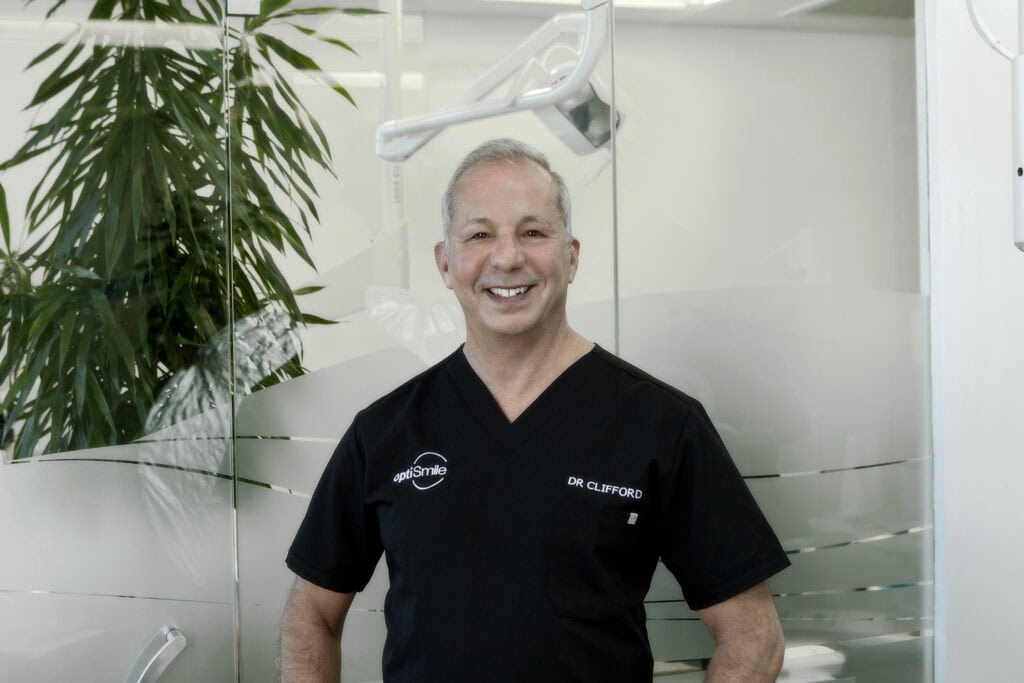
Eon Engelbrecht and Dr Clifford Yudelman discuss why understanding your bite—your occlusion—is more crucial than simply having straight teeth. A proper bite supports oral health, comfort, and longevity.
What Does “Bite” Mean in Dentistry?
[00:01:40 – 00:02:40]
“Bite” or occlusion refers to the complex biological system involving teeth, jaw joints, facial muscles, and nerves, capable of generating over 250kg/cm² of force. A balanced bite distributes this force to prevent long-term damage.
Why Care About Your Bite Without Pain?
[00:02:49 – 00:03:43]
Even in the absence of pain, a poor bite impacts chewing, tooth longevity, and can lead to gum recession and costly repairs. It often underlies seemingly random dental issues.
Straight Teeth ≠ Good Bite
[00:03:52 – 00:05:33]
Visually straight teeth may still mask poor bite alignment. A functional bite ensures even pressure distribution. Misaligned bites from generic aligners can lead to complex issues without visible signs.
Common Signs of a Bad Bite
[00:05:42 – 00:07:05]
Chipped teeth, worn edges, cracked fillings, and repeated repairs are key indicators. These symptoms are often early signs of occlusal disease—a stress-induced bite problem.
Unconscious Bite Damage
[00:07:10 – 00:08:53]
Clenching during workouts, nail-biting, grinding during sleep, and acid erosion can all silently destroy your bite. Changes happen gradually without obvious symptoms.
What Happens During a Bite Assessment?
[00:09:03 – 00:11:21]
OptiSmile uses 3D digital scans to assess bite pressure and contact points, joint sounds, and muscle tenderness. This modern approach is more accurate than traditional paper bite tests.
Can a Bad Bite Cause Pain?
[00:11:28 – 00:12:36]
Yes. A misaligned bite strains jaw muscles and nerves, often leading to headaches, migraines, and facial pain. Many patients experience relief after correcting their bite.
Treatment Options
[00:12:43 – 00:16:15]
Depending on the cause, treatment may include adjusting bite contacts, ceramic restorations, injection-moulded bonding, or 3D-printed occlusal veneers. Accurate diagnosis is essential.
Role of Clear Aligners like Invisalign
[00:16:23 – 00:18:35]
Invisalign enables precision correction of complex bite issues—like open bites, deep bites, and crossbites—while reducing clenching. It’s both corrective and preventive. Learn more about Invisalign.
Final Takeaway
[00:18:42 – 00:19:30]
Your bite protects your teeth for life. Addressing bite issues early prevents future complications. A digital bite assessment can identify problems before they become costly.
Transcript
Eon Engelbrecht – E-Radio-SA (0:04 – 0:48) Welcome to Save Your Money, Save Your Teeth, the podcast hosted by myself Eon Engelbrecht from E-Radio SA and in this episode, we’re joined by Dr Clifford Yudelman as always from OptiSmile to explore a topic that goes far beyond appearances: your bite. Now most people think straight teeth are the ultimate goal but as you discover, the way your teeth fit together affects your comfort, your health and even the longevity of your smile. So, whether you’ve never thought about your bite or you’re already curious, this episode will open your eyes to the science and importance of occlusion. Let’s welcome Dr Clifford Yudelman back. How are you, Doctor?
Dr Clifford Yudelman – OptiSmile (0:49 – 1:02) Good, how are you doing? Christmas is upon us. It’s getting so close. Yeah, very exciting everywhere, just traffic everywhere. It’s so nice to see people out having fun.
Eon Engelbrecht – E-Radio-SA (1:03 – 1:06) Yeah, it really is the most wonderful time of the year.
Dr Clifford Yudelman – OptiSmile (1:06 – 1:31) Yeah, I hope some people are not grinding their teeth because of all the traffic so maybe today… We did speak about bruxism and splints but I think there’s a lot more to bite. We’ve got a couple of episodes so let’s do today’s one. I’m all ready. It’ll be around 10 questions and I’m ready for your first one.
Eon Engelbrecht – E-Radio-SA (1:32 – 1:39) So you know most people think a bite is simply how the teeth meet. What does bite actually mean in dentistry, Doctor?
Dr Clifford Yudelman – OptiSmile (1:40 – 2:40) Bite is actually a whole biological system rather than just simple contact points. So dentists, the proper name what we call it is your occlusion and that refers to the way all the upper teeth, the lower teeth, the jaw joints, all your facial muscles and your jaw muscles and even the surrounding nerves work together. And you know studies have shown that the forces generated during chewing can exceed 250 kilograms per square centimetre. I looked that up. I knew it was a lot but that’s very high. That’s a lot of power that you’re generating and that’s in healthy adults. So even small imbalances can have significant consequences over time and a good bite distributes these forces evenly allowing the joints and the muscles to work with minimal strain. And if you’ve got a poor bite that creates areas of overload that can accelerate wear and trigger muscular or joint problems.
Eon Engelbrecht – E-Radio-SA (2:41 – 2:48) And why should the average person care about their bite? Surely this is only relevant for people with pain?
Dr Clifford Yudelman – OptiSmile (2:49 – 3:43) Even without pain, your bite influences comfort, chewing efficiency and long-term tooth survival as well as how long your dental treatments will last. And research shows that teeth exposed to uneven load are more likely to fracture by far. They’re far more likely to fracture. They develop gum recession. We’ve spoken about abfractions and those little notches that you get at the gum line and they cause chronic muscle tension. A stable bite reduces the likelihood of future dental emergencies and the cost of long-term care. And since we’re talking about Save Your Money, Save Your Teeth, I thought today was a very important subject because people often think dental problems are random but in many cases the root cause, excuse the pun, is the way that the functions.
Eon Engelbrecht – E-Radio-SA (3:44 – 3:52) Wow. Okay. Very interesting indeed. I also want to ask you, is having straight teeth the same as having a good bite?
Dr Clifford Yudelman – OptiSmile (3:52 – 5:33) No, not at all. Straight teeth are cosmetic. You talk about the social six, which is the six front teeth or maybe even the eight or 10 upper front teeth. But you can have straight teeth but your bite is more about the functional. Functional bite is mechanical and you can straighten teeth beautifully, yet still have poor force distribution. And we see that with people that have had generic aligners. They’re happy, their front teeth are straight, but then they develop all kinds of bite problems. We had a young lady in, I’d say young, she’s like in her 30s… when you’re 65, that’s young. A young lady who had these type of aligners and they didn’t give her proper retainers and her back teeth, second molars and wisdom teeth kept growing. And now her teeth don’t even actually come together. She’s only biting on the back teeth and she’s very distraught. So a proper bite involves front teeth that guide the jaw and back teeth that support the sort of vertical or the biting load and smooth movement patterns that prevent grinding. A well-aligned bite reduces microtrauma and modern orthodontic research shows that function and alignment are not the same. Aligners or braces can assist but only when planned with occlusion in mind. You need someone who’s experienced. If you go and get aligners with a dentist that hasn’t done too many or done enough courses and doesn’t know much about occlusion, you may think that you’ve had a good job done, but then your bite can be all messed up.
Eon Engelbrecht – E-Radio-SA (5:34 – 5:42) Wow. Okay. Well, that’s interesting. I also want to ask you, what are the most common signs that someone’s bite is not ideal?
Dr Clifford Yudelman – OptiSmile (5:42 – 7:05) So some of them can be subtle and people don’t even know that it’s related to their bite. The one that we see a lot at OptiSmile is chipping of the front teeth, worn edges, teeth that appear shorter, cracked fillings, people keep getting a filling down in the front tooth and their main complaint is it keeps coming out. That’s one of the biggest things that leads us to recommend some minor orthodontics or Invisalign to get their bite more even and then we can build up their teeth without worrying about it breaking. We’ve spoken about that in ABC: aligning, bleaching, composite bonding, injection moulded composite bonding… trying to do crowns or veneers to fix your bite. That’s like if all you’ve got is a hammer, then the whole world looks like a nail. I heard that one again yesterday. It’s an old one, but I like it. So we don’t want to hammer those teeth, they’re not nails. But these are consistent with what we see in patients with what we’re now calling occlusal disease, which means the bite is creating excessive stress. And again, studies have shown that patients with uneven occlusal contacts often or always have significantly higher rates of enamel fractures and muscle discomfort. We’ll talk about that a little bit more shortly.
Eon Engelbrecht – E-Radio-SA (7:05 – 7:10) So can someone damage their own bite without even realizing it?
Dr Clifford Yudelman – OptiSmile (7:10 – 8:53) I mean, that’s often what happens. Habits like clenching during exercise, we’re right next door to a very amazing gym, Sweat 1000 BUC down in Cape Town. And when you go and you, if you watch people doing say a bench press or a squat, they’re crunching their teeth together with huge force, probably more than 250 kgs. Their teeth are taking more pressure than their quads. One of the worst ones that I see especially amongst some of my family members is chewing cuticles or chewing fingernails. People that sort of, they’ve got like three or four kids at home below the age of five, and they’re literally clenching or grinding away their teeth because they’re pretty stressed out, most of them. And then a biggest one or the most common one is grinding your teeth all night, which affects your bite. We’ve spoken about sleep apnea. So if I get patients that come in that are grinding at night and they got a large neck and I ask them if they get complaints about snoring, we did a whole few episodes about snoring and sleep apnea and devices like a CPAP, etc. There’s acid erosion from diet. We’ve done episodes about that. So that softens the enamel and then it makes it easier for the whole bite to actually collapse, which means, you know, you’re just grinding away all your teeth and basically your chin is getting closer to your nose over time and the teeth are just getting shorter and shorter. You know, all of this happens gradually, often without any noticeable symptoms until real damage occurs.
Eon Engelbrecht – E-Radio-SA (8:53 – 9:03) That’s quite scary actually. But I also want to ask you what exactly happens during a bite assessment at OptiSmile?
Dr Clifford Yudelman – OptiSmile (9:03 – 11:21) So we always start all new patients that come in… we spend an hour and a half and part of that is looking at their bite. We always take a digital scan of the teeth and that shows the bite in three dimensions. And on this, all these new scanners these days, you can actually see the contact points. It’s equivalent to putting a little bit of blue paper on the teeth. So those points, we can see which teeth are hitting harder and which ones are not hitting at all. We can turn off the colour on the scan and make it look like a plaster cast. And then you can see flat and worn out edges or areas that have chipped like much more easily. And of course, we’re zooming in, it’s all touchscreen and we make it really large on the screen. And it’s very easy to see these things that, you know, when you look in your mouth, they don’t look like much. And obviously, we check how your jaw moves, any joint sounds like… it’s called crepitus. It’s a nice word, actually, because it kind of sounds like what it actually is. It’s like crunching and sounds in your joints. That’s called crepitus. Muscle tenderness. If you push on the patient’s jaw muscles, they wince like a dog that, you know, you step on a dog’s tail by mistake or you push on someone’s jaw muscles when they’ve been doing this. They can often like, you know, jump out of the chair, which… so we don’t like to do that too often or too hard. And then you can see wear patterns. We use digital software. We can actually simulate the patient’s bite in, you know, in a normal bite and show them how it would look if their bite was normal and show them where there’s overload. And, you know, actually now all the research and the way it’s going, you know, we just got our trademark: Leading Digital Dentists. So that’s part of our logo now. And one of the things that we… why we’re proud of that is because like now research shows that the use of these digital occlusal analyses or analysis is being a lot more accurate than using articulating paper, which is that blue or red paper. And it allows us to show the patients exactly what’s going on on the screen, which is so much easier and better than a mirror.
Eon Engelbrecht – E-Radio-SA (11:21 – 11:27) Doctor, can a poor bite really cause headaches and facial pain?
Dr Clifford Yudelman – OptiSmile (11:28 – 12:36) Absolutely. The jaw muscles are connected to the temples, to the neck, to the base of the skull. When they contract excessively due to a bad bite, they fatigue and you get these like tension type headaches. And studies support links between bruxism, which is heavy clenching or grinding, muscle hyperactivity, and chronic facial pain. So if patients have got like pain under the eye or they get even migraine headaches and so on, a lot of the time it can be caused by the bite. And we get so many patients that come because their teeth are chipped and they get Invisalign and then we fix the chips or they come because their teeth are crooked, but they also have a problem with headaches and clenching. And after the Invisalign, they’re actually not living on Panados or Myprodol or whatever it is that people take. There’s a lot of prescription drugs for migraines and for headaches. So treating the bite often reduces symptoms without the need for future medications.
Eon Engelbrecht – E-Radio-SA (12:37 – 12:43) Okay. And what are the treatment options if someone has a bite issue?
Dr Clifford Yudelman – OptiSmile (12:43 – 16:15) Obviously, it’s completely customized. We did mention clear aligners like Invisalign. Sometimes we do, in fact, quite often during my work week, I do what we call selective contact adjustment, which is you get a patient coming in and they complain about cold sensitivity and the tooth has been hurting for a few weeks and it comes and goes. It’s getting better and it’s worse. Or they might have even come from another dentist that told them, “Oh, you’re going to need a root canal on that tooth.” But there’s nothing visibly wrong with the tooth. And when we do a bite assessment, we actually see that the little dots on the scanner, all the red marks, which is where the heavy occlusion or bite is, is all on that tooth in a particular spot, often hitting it from the front or from the side in a way that it’s not designed for. So that tooth is getting banged sideways, basically. If it’s used to taking pressure on all four wheels, like if you think of a truck and then all of a sudden, you’re just loading it on the one side, your suspension is going to give in and then you get symptoms like sensitivity to cold and so on. So that’s an in-depth explanation. I wanted to talk about that quite a bit on this question because if you’re not in Cape Town, you don’t come to OptiSmile and you have a symptom like where a tooth, maybe you’re eating some almonds or you bought a lot of tough biltong and you overdid it and the next few days, your one particular tooth gets sore. We call it a bruised ligament and just filing down that tooth or the one above it, just the smallest amount. We can usually hear when the patient bites on paper that their bite is a lot more solid and then we see blue dots and red dots either on the scan or with paper on all the other teeth and all of a sudden, they say, “Oh yeah, that feels so much better,” and then we know we’re on the right track. If after a few days, that tooth starts hitting too hard again, then we know there’s probably something else going on like a possible root canal infection brewing that’s pushing the tooth up out of the socket or they didn’t follow instructions to avoid biltong and nuts or anything hard for a few days until it feels better. Obviously, there’s also back to the question about treatment options. If someone has a bite issue, there’s restoring worn teeth either with ceramic, we spoke about inlays and onlays or we prefer now 3D printed, very thin 3D printed little, we call them occlusal veneers like a thin layer we can put on the top of the teeth or injection moulded composite. But the choice will always depend on, those are all digitally… If a dentist doesn’t have a scanner or doesn’t do anything digital, you’re not going to find that type of treatment that I just mentioned at that dentist. You need to find a digital dentist. The choice will depend on the underlying cause. We address all the structural, the mechanical and the functional aspects so the system works in harmony. There’s evidence that shows that restoring the vertical dimension and improving functional guidance, which is how your front teeth guide your jaw and your canines, your eye teeth guide your jaw. They’ve shown that this really improves long-term comfort and reduces future breakages of your teeth.
Eon Engelbrecht – E-Radio-SA (16:16 – 16:22) Where do clear aligners fit into a functional bite treatment, Doctor?
Dr Clifford Yudelman – OptiSmile (16:23 – 18:35) Some of the better clear aligner systems, generally the ones that come from overseas like Invisalign and there’s one or two others now available in South Africa. These aligner systems, if they are very precise and they’ve done a lot of research like Invisalign, they allow very precise control of tooth movements. Every time you put a new aligner in, it will move a tooth 0.2 of a millimetre in any given direction that you want it to. We can correct deep bites. We can correct open bites. A deep bite is where your lower teeth are biting too far into your palate and your upper teeth are biting over your front teeth where you can’t even see your lower teeth. An open bite is where your front teeth don’t touch and you’re biting on your back teeth and your front teeth. That’s often from tongue thrust or from thumb sucking. A cross bite, that’s where on the one side your lower teeth bite on the outside of your upper teeth. The normal bite where your upper teeth bite on the outside of your lower teeth. Sometimes you get a cross bite. We can fix that with Invisalign. A lot of the cheaper or generic aligners can’t fix any of that. Invisalign allows for planning with, it’s called the elastics and buttons. We can actually give you elastics similar to braces. There’s other things in addition to the actual aligners when you get Invisalign. Crowding can disrupt normal function. We can sort all of that out. The aligners also reduce the way people clench at night, almost like getting a bite guard. A lot of people find that their teeth feel better almost immediately as soon as they start wearing their aligners. It’s a powerful preventive tool. We find patients can’t bite their nails when they got aligners in. It is a good preventive tool. It’s not only cosmetic. The research shows that improving occlusion or your bite is associated with a reduced dental wear and fewer fractures over the long term.
Eon Engelbrecht – E-Radio-SA (18:36 – 18:42) Finally, what is the most important message that you want our listeners to remember?
Dr Clifford Yudelman – OptiSmile (18:42 – 19:30) Just remember your bite is more than just straight teeth. It’s all very well and it’s beautiful if you have got straight teeth, but you could still have a bite problem on the back teeth or on the side teeth. It’s a complex system that protects your teeth for life. Early diagnosis prevents major problems later. A digital bite assessment is one of the most valuable checks anyone can have. If you address small issues early, you avoid the long-term cascade of wear and fractures and joint discomfort, and in many cases, quite costly dental work. We will talk more about that next week. I don’t want to give away all the secrets today.
Eon Engelbrecht – E-Radio-SA (19:30 – 19:36) Excellent. Dr Yudelman, thank you so much for another very enlightening discussion. We appreciate it.
Dr Clifford Yudelman – OptiSmile (19:36 – 19:41) Thank you and looking forward to speaking to you again next Monday.
Eon Engelbrecht – E-Radio-SA (19:41 – 20:19) Absolutely. And yes, remember your bite is more than just straight teeth. It’s a complex system that protects your teeth for life. So early diagnosis and attention to small issues can prevent major dental problems down the line. If you found this episode helpful, don’t forget to share it and consider a digital bite assessment for yourself. Remember also while we strive to provide valuable insights, always consult with your own dental professional for advice tailored to your personal health. Stay tuned for more ways to save your money and your teeth.
Announcer (20:39 – 21:24) Discover the world of dental excellence with OptiSmile. Join us for a weekly podcast featuring Dr Clifford Yudelman, a seasoned expert with 40 years of dental experience across four continents. Gain unique insights and expert dental advice by visiting OptiSmile.co.za for articles that illuminate the path to optimal dental care. OptiSmile, where global expertise meets local care.
Disclaimer: The content provided in this podcast, “Save Your Money Save Your Teeth” on Medical Mondays, is for informational and educational purposes only. It is not intended to serve as dental or medical advice. The insights and opinions expressed by Dr. Clifford Yudelman and any guests are designed to foster a better understanding of dental health, preventive measures, and general well-being, but should not be interpreted as professional dental or medical recommendations.Dr. Clifford Yudelman does not diagnose, treat, or offer prevention strategies for any health conditions directly through this podcast. This platform is not a substitute for the personalized care and advice provided by a licensed dental or healthcare professional. We strongly encourage our listeners to consult with their own dental care providers to address individual dental health needs and concerns.The information shared here aims to empower listeners with knowledge about dental health but must not be used as a basis for making health-related decisions without professional guidance. Your dental care provider is the best source of advice about your dental and overall health. Please always seek the advice of your dentist or other qualified health professionals regarding any questions or concerns about your dental health.