Chapters
Introduction to the Ugly Duckling Phase
[0:04 – 1:10]Eon Engelbrecht introduces the topic of the “ugly duckling phase” in children aged 6 to 12, reassuring parents about the normal appearance of mixed dentition.
Why Teeth Look “Ugly” but are Actually Normal
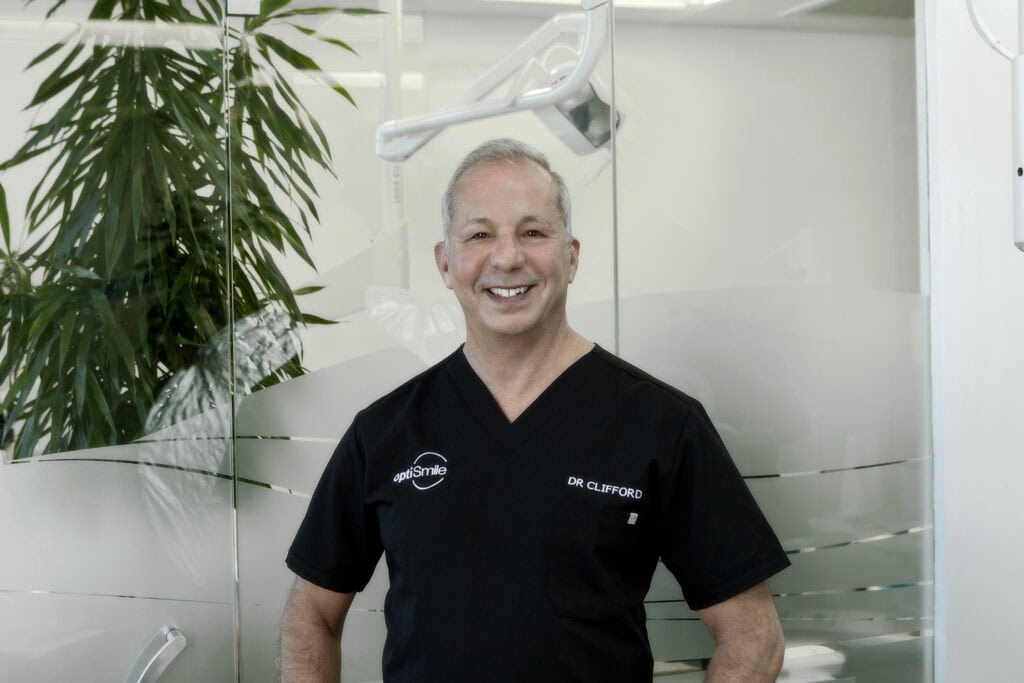
[1:40 – 5:00]Dr Clifford Yudelman explains why large, spaced, or yellow-looking teeth are a healthy and temporary part of development, and highlights when parents should seek dental checkups.
Age 7: The Magic Number for Orthodontic Screening
[5:00 – 7:24]Age seven is ideal for orthodontic screening, allowing early detection of issues such as cross bites or crowding. Invisalign First can help guide development early and reduce the need for future braces.
Shark Teeth: Adult Teeth Behind Baby Teeth
[7:35 – 9:16]“Shark teeth,” where permanent teeth erupt behind baby teeth, are often harmless and self-correcting. Intervention is only needed if progress stalls or discomfort arises.
Protecting Six-Year Molars with Sealants
[9:25 – 12:19]Six-year molars are vulnerable to decay. Dr Yudelman recommends fluoride-releasing sealants, particularly glass ionomer, to protect them during the eruption phase.
Mouth Guards for Sports
[12:27 – 14:49]Properly fitted custom mouth guards offer the best protection against sports injuries and long-term dental costs. Boil-and-bite options are better than nothing, but less reliable.
Electric Toothbrushes for Kids
[14:57 – 16:07]Electric toothbrushes help kids clean more effectively, especially during the transition to independence. Combined with fluoride toothpaste and good habits, they prevent decay.
Ectopic Eruption and Early Intervention
[16:15 – 17:45]Early detection of ectopic eruption—teeth erupting in the wrong place—can prevent crowding and reduce the need for complex orthodontic treatment later.
The School Tuck Shop Dilemma
[17:54 – 20:16]Frequent sugary snacks at school increase cavity risk. Dr Yudelman advises parents and schools to structure diets and promote tooth-friendly snacks like cheese, yoghurt, and nuts.
Emergency: Knocked Out Tooth (Avulsion)
[20:28 – 24:52]If a child knocks out an adult tooth, act fast: handle it by the crown, rinse gently with milk or saliva, and reinsert it quickly. Saving the tooth can avoid lifelong dental work.
Flossing: The Best Dental Insurance
[25:00 – 26:08]Flossing becomes essential once adult teeth touch. It prevents cavities between teeth and is described by Dr Yudelman as the best dental insurance in a small white box.
Conclusion
[26:08 – 27:04]Parents are encouraged to stay calm but proactive during the ugly duckling phase. Monitoring and early intervention can save significant costs and discomfort later.
Transcript
Eon Engelbrecht (0:04 – 1:10)
Hello and welcome to Save Your Money, Save Your Teeth, with me Eon Engelbrecht and Dr Clifford Yudelman from OptiSmile. Today’s episode is all about the so-called ugly duckling phase. That’s roughly ages 6 to 12, when kids have a mix of baby teeth and adult teeth. It’s the stage where parents often start worrying, because those teeth can look really big, but yellow even, uneven or spaced out and it can feel like something has gone horribly wrong.
But this is also one of the most important windows to get right, because it is when the first adult molars arrive, when crowding patterns start to show and also when a few smart decisions can prevent a lot of future work. So, we’re going to cover what is normal, what is not, what to watch for and what parents can do to protect kids’ teeth during this changeover period, the ugly duckling phase. Dr Yudelman, looking forward to this. Welcome back.
Dr Clifford Yudelman (1:11 – 1:23)
Thank you very much and number two for this year, number 92 out of all of our podcasts and that was such a great intro. I think you covered everything there.
Eon Engelbrecht (1:24 – 1:39)
But listen, I’ve seen this ugly duckling stage in so many kids, you know, and the parents often worry, you know, they say, oh my goodness, look at her front teeth, it’s huge. And then a lot of people say, no man, she’s going to grow into it. Yeah, that’s a good one.
Why Teeth Look “Ugly” but are Actually Normal
Dr Clifford Yudelman (1:40 – 5:00)
Yeah, look, it’s normal, it’s normal, absolutely normal for teeth to look like that. I know it’s a very unkind name for something that’s actually a healthy and predictable phase. I’m not sure how it got started, I think because little ducklings can be so ugly and then they grow into beautiful swans. After I lived in Perth, we would see swans on the Swan River and all of those black swans apparently belong to the queen. Now that she’s gone, I don’t know who owns all those swans. Probably King Charles.
Yeah, now they belong to the king. But yeah, look, between age 7 and 11, the children are in what’s called mixed dentition, meaning they have a combination of baby teeth and permanent teeth. The permanent front teeth often erupt, looking bigger and more square, sometimes more yellow than baby teeth. And that’s because baby teeth are naturally whiter and more opaque, which is I think why we call them milk teeth, because they were kind of milky, they looked like milk.
Permanent enamel can look slightly darker or yellower, partly because the enamel is more translucent and you see more of the underlying dentine colour, but it doesn’t mean that they decayed. And yeah, this ugly duckling phase also refers to the spacing and the flaring of the upper front teeth, often with a midline gap, and that’s commonly part of normal development as the lateral incisors or the side front teeth, and then the canines erupt and their roots influence the position of the front teeth. And in many children, the gap reduces naturally as the canines come down.
And the key point to this is a midline gap or diastema, we call it. I like that word, diastema. Anyway, in the mixed dentition, it’s completely normal. Unlike myself, I’m 65 and I still have my ugly duckling phase here with my gaps. But it must still, it should be assessed.
One should actually look that the midline is in the middle of the face when you pull up the lip, that that little frenum is in the middle, that it lines up more or less with the middle of the nose. If the teeth are one way or another of the midline and doesn’t look like it’s coming right, that’s a very good time to see the dentist or especially a dentist that’s experienced with kids and orthodontics. I wouldn’t leave a midline that’s not coming in the middle, especially if the kid lost one or two teeth on one side but not on the other. Yeah, it’s very important that this gets checked out. Yeah, my advice is calm but not complacent if parents are worried.
A quick clinical exam, a few photos that can assure you get a baseline, you’re documenting it. Sometimes we’ll do a 3D scan and we can see how the teeth are growing and often an x-ray to see how many teeth there are and that there’s no missing teeth or extra teeth. This can prevent any unnecessary early cosmetic interventions, etc. So yeah, it’s a good start. Go see your dentist.
Age 7: The Magic Number for Orthodontic Screening
Eon Engelbrecht (5:00 – 5:08)
And then, you know, why is age seven the magic number for a first orthodontic screening, doctor?
Dr Clifford Yudelman (5:09 – 7:24)
So it’s not magic. Age seven is actually practical timing. By around age seven, most children have their first permanent molars and at least some permanent incisors. And that combination lets an orthodontist or orthodontically trained dentist evaluate the jaw relationship, cross bites, crowding, eruption pathways, all while the growth is still highly modifiable. The American Association of Orthodontists recommends that children have an orthodontic checkup by age seven.
And that’s largely because of this early detection, which can reduce the complexity of later treatment or even prevent it becoming more invasive. It doesn’t mean that every seven-year-old needs braces. In fact, many do not. Screening is about spotting the small number of issues where timing does matter, such as a cross bite where the teeth are crossing over or severe crowding where one tooth is being blocked out or habits and airway-related patterns that are affecting jaw development.
You know, from a save your money and save your teeth perspective, screening is like checking the foundation before the walls go up. If we can guide the eruption, protect vulnerable teeth and intercept high-risk patterns like thumb sucking, sometimes kids at six and seven are still sucking their thumbs, sucking their thumbs. And we often save families years of cost and stress later.
And to add to that, you know, now in South Africa, we get Invisalign Kids or Invisalign First for kids. And there’s actually Invisalign for like age seven or eight upwards. I spoke to an orthodontist in Joburg. He’s one of the other top Invisalign providers in South Africa. He was down visiting us, we’re friendly with him. And he’s doing a lot of kids. We’re seeing more and more kids, but he only does orthodontics, so he’s got second and third generation. And he loves Invisalign First. As I say, we’ve done cases and we’re very experienced. Dr Harris is experienced with that. But a short course of Invisalign very young like that can prevent future braces and even future Invisalign.
Shark Teeth: Adult Teeth Behind Baby Teeth
Eon Engelbrecht (7:24 – 7:35)
And then there’s something called shark teeth, I believe. What are shark teeth? And should parents panic if adult teeth grow behind baby teeth? I’ve seen that before as well.
Dr Clifford Yudelman (7:35 – 9:16)
Especially it looks really strange when the permanent teeth come out. Usually it’s like on the lower front teeth, the permanent teeth come in a little bit back and then the baby teeth are forward and it’s very noticeable because it’s in the front. So, you know, it looks dramatic, but there’s no need to panic. In many cases, a baby tooth is just simply not loose enough. Lower front tooth coming in behind the baby teeth is fairly common and normal. And once the baby tooth finally loosens and comes out, the tongue and the lips help to guide the permanent tooth forward over time. You don’t always have to get the dentist to take that baby tooth out.
In fact, I tend to leave them for as long as possible and let them fall out naturally if that’s called for. And what matters is the pattern and whether things are moving. If the baby tooth is still firm and the child is uncomfortable and the permanent tooth is erupting quite far behind or it’s been there for a long time, months or longer without any change, then one would monitor it and maybe remove it if it’s blocking a permanent tooth. But the money-saving part is avoiding delaying any crowding and gum issues from trapping plaque around double rows of teeth. And the teeth-saving part is making sure that the permanent tooth has a clean eruption pathway and that we don’t damage any enamel with home attempts to wiggle out teeth or pull teeth out with pliers. That’s definitely a no-no.
Protecting Six-Year Molars with Sealants
Eon Engelbrecht (9:16 – 9:25)
And why are the six-year molars so vulnerable to decay, Doctor? And also, how do sealants help?
Dr Clifford Yudelman (9:25 – 12:19)
Yeah, so great. We’re talking about sealants again. So the first permanent molars usually erupt around six to seven, and they are the teeth that get quietly destroyed without anyone noticing. They’re vulnerable for three big reasons. Firstly, parents often mistake them for baby teeth because they erupt behind the baby molars. Secondly, the enamel in a newly erupted tooth, the surface is still maturing in the mouth. And while the grooves on the biting surface are deep, they collect plaque. And also, the eruption is a messy phase. A partly erupted molar is harder to brush, and the gum can cover it partly, and the plaque just sits there.
And during the actual eruption, that’s when a lot of people can get cavities. So I used to see a lot more kids when I was in Australia, and I used to use a special type of sealant that released fluoride called a glass ionomer. And I’m a big fan of those because it’s moisture tolerant, and you can put them on teeth that are just erupting or partially erupted, and they actually fluoridate those grooves and eventually wear away or come away, leaving a nice, firm, strong tooth without a sealant in it that can later get loose or leak and cause that cavity that I spoke about last time.
And, you know, sealants work generally by physically sealing the deep pits and fissures so the bacteria can’t get in. And there’s a lot of studies about sealants. And like I said, I’m a fan of, now they have fluoride-releasing resin sealants, but I’m a fan of glass ionomer myself. And, you know, practically it means if a child is at moderate or high decay risk, if they had any cavities in their baby teeth or if they had lots of cavities in their baby teeth, then sealing newly erupted or even erupting first molars can be one of the biggest returns on investments and preventive steps.
In fact, sometimes only one molar’s in, and a lot of dentists will say, oh, just wait until all four are in, and we’ll seal all four at the same time. And there’s no actual reason for that other than the dentist wants to save their time and maybe make a bit more per hour by doing all four, or if three are in and the other one’s taking its time. Those three, the longer they stay in a vulnerable mouth without sealants, the worse off you’ll be once you do seal them, that the sealants could dislodge or there could be cavities underneath. So I’ve even been known to seal one and a month later, the other one, and two months later, another two or as they come. So that’s a very important tip. Yeah, that also, again, this is for the consumer. A lot of dentists may not actually agree with what I just said.
Mouth Guards for Sports
Eon Engelbrecht (12:19 – 12:26)
How do we protect teeth during primary school sports? Is a boil and bite guard enough?
Dr Clifford Yudelman (12:27 – 14:49)
They are getting better and better. A mouth guard is one of the simplest ways to prevent a lifetime of dental costs from one quick moment or accident on a sports field. So boil and bite night guards or mouth guards are better than no guard, but they’re often bulky or poorly fitted. And the kids either chew on them or spit them out. They can’t breathe well with them. The best protection generally comes from properly fitted custom mouth guard because it’s more comfortable, it stays in place, and it distributes impact forces more effectively.
Think of it like this. If the mouth guard is not comfortable, it will not be worn consistently, and inconsistent protection is basically no protection because injuries are not scheduled. And the save your teeth message here is blunt, a fractured tooth, a knocked out tooth. We see so much of this or adults that come in, they’ve had their front teeth, they could be 40 now and they’ve had their front teeth veneered and bonded and crowned and root canaled and had so much stuff just on their two front teeth generally because of something like this. So the save your teeth message is just to avoid it in the first place.
And a jaw joint injury or one of these fractures can cost you more than more in years of prevention and it can be emotionally traumatic for a child. And the save your money message is equally blunt. Prevention here is cheaper than repairs and repairs are rarely once off. We speak about the best dentistry is no dentistry and if you fix a tooth once, you’re going to need to fix it again in three years or five years or 10 years, but it’s not going to last forever. And so yeah, boil and bite can be the smart option for low risk casual sport or much younger kids that are still losing baby teeth. But as soon as they get to between nine, 10, 11 and most of their permanent teeth are in, they’ve only got a few left to lose. Then speak to the dentist about a custom guard in South Africa. MAX Mouthguards is very popular. And yeah, and especially if they’ve got orthodontic appliances, you want to make sure that they’ve got a proper mouth guard to protect those.
Electric Toothbrushes for Kids
Eon Engelbrecht (14:49 – 14:57)
And I also want to ask you, can an electric toothbrush help children with dexterity issues at this stage?
Dr Clifford Yudelman (14:57 – 16:07)
You know, dexterity means how well you can use your hands. So it’s not only for dexterity. Electric toothbrushes can genuinely improve plaque removal in kids, especially if the technique is, if their technique is inconsistent. And there’s been big studies that have found that electric toothbrushes were more effective than manual toothbrushes. And they’ve found that this can really help. This matters for six to 12 year olds when the independence increases and supervision decreases and the diet risk often increases. It’s like a perfect storm and the toothbrush needs to be, you know, more forgiving when the child’s technique is rushed and messy.
And, you know, that said, a toothbrush is not a magic wand. The best approach is a powered toothbrush plus coaching and parents oversight for at least one brushing a day if possible, preferably for bed. And if you combine that with fluoride toothpaste and you reduce frequent sugary snacking, you’ll often see dramatic reduction and a lot of kids won’t get any new cavities ever.
Ectopic Eruption and Early Intervention
Eon Engelbrecht (16:07 – 16:15)
And then what is an ectopic eruption? And how does early detection save money on braces later?
Dr Clifford Yudelman (16:15 – 16:25)
That sounds like one of those pimples you get on your chin before the matric dance, doesn’t it? It’s always like before the matric dance on the tip of your nose.
Eon Engelbrecht (16:26 – 16:26)
Always, always.
Dr Clifford Yudelman (16:29 – 17:45)
So this type of ectopic eruption we’re talking about here is when a tooth comes in an abnormal position or it gets totally impacted, often the upper canines can be totally impacted. In mixed dentition, the classic example is the upper first molar comes too far forwards and it gets locked in behind the baby molar and causes resorption of the baby molar. And, yeah, look, if we catch it early, we could correct it. And, you know, if it’s not found, then you can lose space. You can get crowding. It can lead to premature tooth loss and more complex orthodontics later.
Yeah, in the literature, it’s quite common. I think unless you’re seeing lots and lots of kids or you’re an orthodontist, I mean, personally, I don’t see a lot of it. But the main thing is avoiding the domino effect. That’s a big cost saving effect there. You know, one tooth erupting in the wrong place can steal a lot of space. And once that space is gone, then you’ve got to have orthodontics. And, you know, the save your money advice is routine checkups during eruption is not a luxury. It’s risk management.
The School Tuck Shop Dilemma
Eon Engelbrecht (17:45 – 17:54)
I think a lot of parents would also like to ask you this one. How does diet need to change now that the child has access to the school tuck shop?
Dr Clifford Yudelman (17:54 – 20:16)
Yeah, that’s a big one. And I think if anyone listening to this is on a parent teacher association or in charge of the tuck shop, you know, keep listening before we even get into the full answer. You know, basically, it’s not it’s not only one sweet thing. It’s the frequency. How often they actually eating these things. Every sugary snack and drink creates an acid attack that drops the pH. We’ve done full podcasts about this. It’s especially important for these ugly ducklings. Or they’ll be a lot more ugly before they know it. Demineralise the enamel.
And when this happens repeatedly throughout the day, the teeth spend too much time in the danger zone and they don’t have enough time to remineralise. And one of the worst things is sour, sour worms. The kids love those. And sherbet and any sour anything, any gummies that are very fruity, tutti fruity, you know, different brightly coloured gummies and sour sweets. I don’t know all the names of them. Those things are terrible for your teeth. And there’s a lot of evidence that links higher intake of these sugars to and frequent snacking to increased decay risk. I think it’s quite obvious.
And so the practical plan for a tuck shop environment is not perfection. It’s structure, you know, keep the sugary foods to meal times, if possible, rather than grazing them throughout. Choose water or even milk over sugary snacks. And if your child does have something sweet, follow up with water and sip the water slowly over the next hour and focus on tooth friendly snacks like we mentioned before. Cheese yogurt without any added sugar and nuts, whole fruit rather than dried fruit and, you know, savoury options that we’ve mentioned before. And even some cut up carrots or celery. Sometimes kids love celery and cut up cucumber sticks.
You know, from OptiSmile’s philosophy, we combine prevention with digital accuracy. And if a child’s risk is increasing, we track changes early with proper exams and imaging like photos, et cetera, when indicated. And we rather intensify the prevention rather than waiting for holes.
Emergency: Knocked Out Tooth (Avulsion)
Eon Engelbrecht (20:16 – 20:27)
And now, doctor, you know how rough children can be or sometimes they get into a fight. If a child knocks out an adult tooth, what are the immediate steps to save it?
Dr Clifford Yudelman (20:28 – 24:52)
Yeah. So this is a true dental emergency and every minute matters. The international guidelines for traumatic dental injuries emphasize prompt management for a knocked out or what we call an avulsed, A-V-U-L-S-E-D, avulsed permanent tooth. So the priorities are number one, confirm it’s a permanent tooth. A knocked out baby tooth is generally not re-implanted or replanted because it can damage the developing adult tooth. Save the child six or seven or eight and it’s a front tooth, that’ll be a permanent tooth.
Find the tooth and handle it by the crown only. Try not to touch the root. The root will usually be the part that’s covered with blood and it’s got little fibers and the crown will look really white compared to the root. I think everyone knows what a crown or an actual tooth looks like and the root can sometimes be very long. Often the root is twice the length of the crown. Do not touch the root if you can avoid it and don’t scrub the root. It’s going to look like it’s got all kinds of stuff on it but those are the fibers that were holding the tooth in. If the tooth is dirty, if it got knocked out and ended up in some sand in the playground, you can rinse it briefly with some milk or some saline if available. You or the patient, you can even sort of clean it in the patient’s mouth. I know that sounds gross or you can use some spit, even your own spit.
I think that’s probably better than nothing but milk would be the safest thing if there’s any milk around or even just a quick rinse under the tap. I think it would be good advice if there is dirt on it or gently, if there’s a bit of grass or something, try and pick it off but don’t do too much to the root. There are a lot of guidelines that are updated over what to rinse with but the key principle is gentle handling and don’t damage the root. Ideally, you want to replant it immediately and have the child bite gently on a cloth to hold it in. Every minute counts, especially if it goes 10, 15, 20 minutes, that already decreases the chance of the tooth taking.
An hour is definitely way too long. If you’re there and you see it happen, check the root, check that there’s no grass, no sand, give it a bit of a spit or just rub it inside the kid’s cheek quickly to get any dirt off and just jam it straight back in while the child is still surprised without making any fuss. The quicker you can get it back in before a clot forms, then it’s harder if there’s a clot inside there and then the tooth won’t go all the way in. Normally, if you push it back in exactly where it came from, it will actually fit quite firmly. That would be the best bet. If replantation is not possible, you store it in a medium, either milk or a special solution.
So in the US and in Australia, in the schools, the sports master or sports mistress would have a little emergency kit with a little special bucket or a special solution that if a tooth did get knocked out, you could put it straight in there and it saved the root and then you can wait longer before re-implanting it and getting to a dentist or to an emergency room where they often have an oral surgeon on call. I went a bit longer on this question because I think this is a very important point. The save your money part is huge that even a successfully replanted tooth will need some follow-up and may need a root canal in some cases. But saving the natural tooth often avoids lifelong replacement cycles. I’ve had so many patients over the years who have maybe a slightly discoloured tooth where the nerve is still alive and they say, yeah, they’ve got completely knocked out and my mother put it straight back in or my brother or this stuff works and it saves a lot of issues later.
Flossing: The Best Dental Insurance
Eon Engelbrecht (24:52 – 25:00)
And my final question to you today, Dr Yudelman, is flossing non-negotiable once the adult teeth start touching?
Dr Clifford Yudelman (25:00 – 26:08)
Yeah, 100 percent. Once the teeth touch, once you get your 12-year molars, the toothbrush bristles can’t reliably clean in the contact area. When all your premolars start coming in and when you lose those last few baby teeth and they start touching, then interdental cleaning or cleaning between your teeth is very important. There’s a bit of controversy about flossing in the last few years but systematic reviews show that flossing in addition to brushing will reduce gingivitis and can definitely reduce cavities. Focus on that becomes a very high-value habit for long term. I don’t really like floss picks and interdental brushes for kiddies. I just think if you wait until there’s a cavity between the teeth, then you’ve missed the cheapest moment to intervene. Cleaning between the teeth is one of those small habits that quietly prevents expensive dentistry. And I’ve been saying for years that the best kind of dental insurance or medical aid comes in a little white box and it’s called dental floss.
Conclusion
Eon Engelbrecht (26:08 – 27:04)
Good one. That’s so true. Dr Yudelman, thank you so much once again for another great informative episode.
Dr Clifford Yudelman (26:15 – 26:18)
Looking forward to speaking to you next week.
Eon Engelbrecht (26:18 – 27:04)
Likewise. And that was this week’s Save Your Money, Save Your Teeth with Dr Clifford Yudelman from OptiSmile. And if you’re a parent listening to this and you’re worried about how your child’s teeth look right now, maybe he or she looks like Spongebob, the big message is, the big message is this. Stay calm, but do not ignore it. This is the stage where monitoring prevention and early checks can stop small issues turning into expensive long-term treatment. If you found this episode helpful, please share it with a friend or family member with kids in primary school, because this is exactly the age where prevention pays off the most. Thanks for listening. Catch us again next time and stay well.
Voiceover (27:24 – 28:09)
Discover the world of dental excellence with OptiSmile. Join us for a weekly podcast featuring Dr Clifford Yudelman, a seasoned expert with 40 years of dental experience across four continents. Gain unique insights and expert dental advice by visiting OptiSmile.co.za for articles that illuminate the path to optimal oral health. If you’re seeking unparalleled dental care in Cape Town, get in touch with OptiSmile or book directly online on OptiSmile.co.za. OptiSmile, where global expertise meets local care.
Disclaimer: The content provided in this podcast, “Save Your Money Save Your Teeth” on Medical Mondays, is for informational and educational purposes only. It is not intended to serve as dental or medical advice. The insights and opinions expressed by Dr. Clifford Yudelman and any guests are designed to foster a better understanding of dental health, preventive measures, and general well-being, but should not be interpreted as professional dental or medical recommendations.Dr. Clifford Yudelman does not diagnose, treat, or offer prevention strategies for any health conditions directly through this podcast. This platform is not a substitute for the personalized care and advice provided by a licensed dental or healthcare professional. We strongly encourage our listeners to consult with their own dental care providers to address individual dental health needs and concerns.The information shared here aims to empower listeners with knowledge about dental health but must not be used as a basis for making health-related decisions without professional guidance. Your dental care provider is the best source of advice about your dental and overall health. Please always seek the advice of your dentist or other qualified health professionals regarding any questions or concerns about your dental health.