Chapters
Introduction
(0:09 – 1:08)
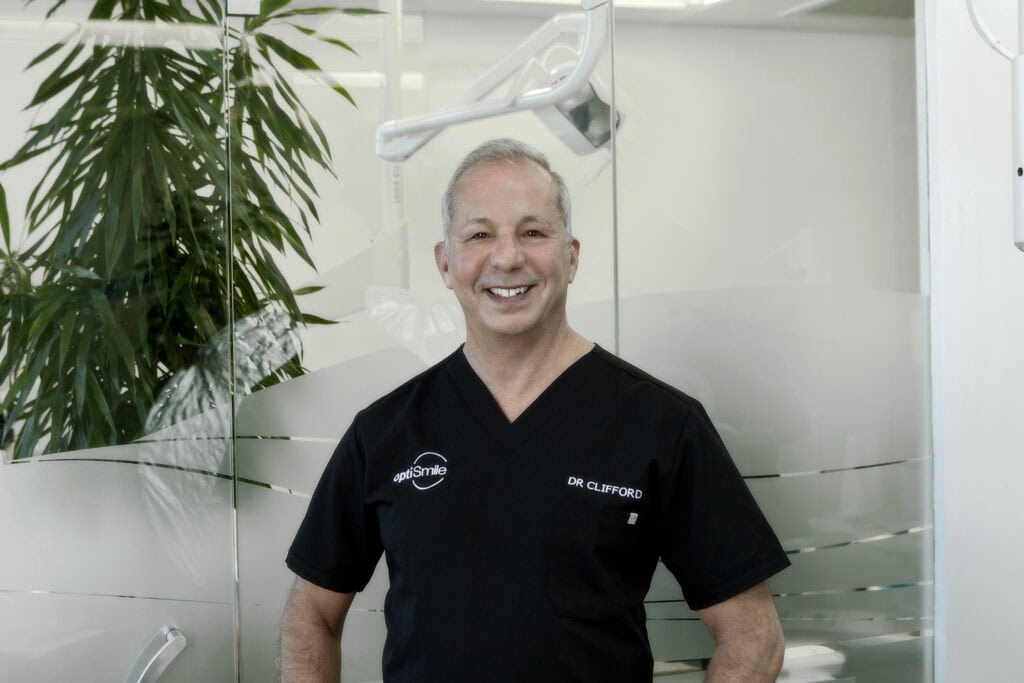
- Host: Eon Engelbrecht welcomes listeners to “Save Your Money, Save Your Teeth,” the podcast offering dental care advice from Dr. Clifford Yudelman.
- Topic: Today focuses on dental inlays and overlays, exploring their differences from traditional fillings and crowns.
What are Dental Inlays and Overlays?
(1:09 – 2:16)
- Dr. Yudelman Explains that inlays and overlays (also called onlays) are alternatives to traditional fillings and crowns for larger cavities.
- Differences: Inlays fit within the cusps of the teeth, while overlays cover one or more cusps. They are custom-made, providing superior strength, durability, and aesthetics.
When to Consider Inlays or Overlays
(2:21 – 6:16)
- Criteria: Suitable for extensive tooth damage that is too severe for fillings but not severe enough for crowns.
- Preference: Dr. Yudelman prefers inlays and onlays over crowns to preserve more of the natural tooth structure.
- Procedure: Detailed explanation of when inlays or overlays are recommended, emphasising the conservation of tooth structure and natural aesthetics.
Steps Involved in Getting Inlays or Overlays
(6:17 – 6:26)
- Diagnosis: Examination, photos, and x-rays determine if an inlay or overlay is needed.
- Process: Use of digital impressions and CAD-CAM technology to create and fit the inlay or overlay in one visit, avoiding temporary fillings and multiple appointments.
Preservation of Tooth Structure and Overall Dental Health
(6:27 – 7:08)
- Minimal Removal: Conservative approach in removing only necessary tooth material.
- Strengthening: Inlays and overlays fit precisely and tightly, reducing the risk of further decay and maintaining tooth integrity.
Materials Used for Inlays and Overlays
(7:21 – 8:55)
- Traditional vs. Modern: Transition from gold to modern materials like Emax (lithium disilicate) and LISI, which are strong, durable, and aesthetically pleasing.
- Biocompatibility: These materials bond well with the tooth and are biocompatible, with no adverse reactions.
Advanced Technology in Inlay and Overlay Treatments
(9:17 – 10:25)
- Digital Impressions: Precise digital scanners replace traditional methods, reducing human error and improving accuracy.
- Efficiency: Same-day procedures with CAD-CAM technology enhance patient comfort and convenience.
Aesthetics and Functionality Enhancement
(10:35 – 11:53)
- Natural Look: Inlays and overlays blend seamlessly with natural teeth, avoiding the dark appearance of amalgam fillings.
- Durability: They restore tooth functionality and can last 10 to 20 years, boosting patient confidence.
Difference Between Inlays and Crowns
(12:01 – 13:37)
- Coverage: Inlays and onlays fit into the tooth, whereas crowns cover the entire tooth.
- Invasiveness: Inlays and onlays are less invasive, preserving more tooth structure than crowns.
- Recommendation: Dr. Yudelman prefers inlays and onlays over crowns for molars, advising patients to discuss alternatives with their dentist.
Longevity and Durability of Inlays and Overlays
(13:53 – 15:24)
- High-Quality Materials: Emax and other materials have a long lifespan, often over 10 years.
- Maintenance: The importance of oral hygiene and regular dental check-ups is to ensure the longevity of the restorations.
Recovery Process
(15:32 – 17:20)
- Immediate Functionality: Patients can eat and chew normally after the procedure, with possible mild sensitivity initially.
- Bite Adjustment: Follow-up visits ensure proper bite alignment and comfort.
- Care Tips: Regular flossing and dental check-ups help maintain the restorations.
Cost and Value
(17:27 – 18:46)
- Expense: Inlays and overlays are costly due to the advanced technology and materials.
- Prevention: Emphasis on preventive care to avoid the need for expensive dental procedures.
Conclusion
(18:48 – 19:17)
- Advice: Consult your dental professional for tailored advice and maintain good oral hygiene to save money and avoid extensive dental work.
- Subscription Reminder: Encouragement to subscribe for more dental health discussions.
Transcript
Eon engelbrecht E-Radio SA (0:09 – 1:08)
Welcome once again to “Save Your Money, Save Your Teeth”, the go-to podcast where curiosity meets dentistry straight from the experts. I’m Eon, and every week, I’m chatting to Dr. Clifford Yudelman. We take a nice deep dive into the world of dental care from a consumer’s perspective.
So whether you are looking to brighten that smile or protect your wallet, we have got you covered with practical advice and the latest insights. Stick around as we uncover the secrets to maintaining both your dental health and also your finances. Today’s topic is dental inlays and overlays.
We’re going to ask Dr. Yudelman to tell us all about it. Dr. Yudelman, once again, welcome back.
Dr Clifford Yudelman OptiSmile
Thank you.Thanks very much for having me back, Jan. I hope you had a great week, and it was lovely to chat with you again.
Eon engelbrecht E-Radio SA
So, doctor, what are dental inlays and overlays? How do they actually differ from traditional fillings?
Dr Clifford Yudelman OptiSmile (1:09 – 2:16)
So when you have a cavity in a tooth, or you have an old filling, and we take the filling out, if the tooth is still quite well preserved and all you’re doing is filling something in, with a filling, then a filling is usually the way to go. But once the filling starts getting to a larger size, we start looking at dental inlays or overlays, or some people we call onlays. So, inlays fit within the cusps.
So, the inlays are placed in between the cusps of the teeth. The cusps are the pointy bits. Overlays cover the cusps or one or more cusps.
They are custom-made and precise. They are made to fit the tooth’s exact contour. So you know how if a tooth is cleaned out, you put a filling into the tooth. Well, an inlay or onlays are made outside of the mouth, and then it’s bonded.
We’ll get into that shortly. They have superior strength. They provide better strength and durability compared to traditional fillings.
And they’re more aesthetic. They can look better and blend seamlessly with the natural teeth.
Eon engelbrecht E-Radio SA (2:16 – 2:20)
So, when should I consider getting an inlay or overlay?
Dr Clifford Yudelman OptiSmile (2:21 – 6:16)
So, a patient should consider getting an inlay or an onlay instead of a filling or a crown when there’s extensive damage, such as when the tooth damage is too extensive for a filling but not severe enough for a crown. So I’m very keen on inlays and onlays.
I really don’t like doing crowns on molars. At OptiSmile, we really try to save as much of your natural tooth as possible. And while, you know, 8 out of 10 dentists might say, oh, that’s got a big filling, we’re going to do a crown on it.
Doing a crown involves removing a lot more of the tooth. And while a crown might work, we worry about what’s going to happen in 10 or 15 years time if, and when that crown fails, you’ve got even less tooth. An inlay or onlays saves more of the tooth.
So that’s when you’ve got this extensive damage. When there’s decay or fractures, inlays and onlays can work really well. If you’ve got a tooth that’s got a big filling and part of the tooth is fractured, you can do an inlay, and then you can just overlay or onlay the one cusp that’s broken.
I mentioned, you know, they’ve got a more natural look. You’re not just putting a cap right over the tooth. It’s actually getting the tooth back to how it used to look.
They last a very long time and preserve the tooth structure like I said, whereas with a crown, you’re filing away a lot of teeth.
Eon engelbrecht E-Radio SA
Doctor, can you talk to us about the steps involved?
So the dentist would look at your tooth, take some photos, take x-rays, and diagnose it. Okay, this tooth needs a filling; this tooth is fine. This tooth needs an inlay because the filling is really large. We could do a filling, but it may not last as long as an inlay.
So we recommend an inlay. If you’ve got a dentist who’s recommending lots of inlays, I would ask the dentist, are you sure you can’t put a filling in there? Because the fillings are getting better and better.
And if the tooth is at an inlay stage, to be honest, a lot of time, a filling may work, and the inlay could be an unnecessary expense. But the thing is just to ask the question, and if the dentist hums and haws, then maybe go with the filling and see how it goes. But when you get to the point where you need an inlay because you can see the side of the tooth is missing or the tooth has a crack, that’s when you want to go with the inlay.
So that’s part of your examination and diagnosis. So you would come in, and we would numb the tooth. We would use a scanner, an iTero scanner, an Omnicam CEREC scanner, and digital impressions. We use CEREC technology.
It’s a CAD-CAM machine for making inlays and onlays. In practice, it’s a little, and it’s not quite a 3D printer. It’s called CAD-CAM, and it’s computer-aided design and computer-aided machining.
If a dentist doesn’t have that in the practice, and he has to put a temporary in, then you’d come back. The labs are all making the inlays and onlays using CAD-CAM at the lab. So the process is the same; it’s just that we do it in one visit, whereas other dentists may put in a temporary inlay and then do it in two visits.
Then you would fit the inlay or onlay to the tooth, try it in, take it back out, prepare it, put special chemicals on the tooth and on the onlay, and then bond it into place. Then you check the bite, polish it up, and get the patient back in in a day or two just to double-check everything, that all the cement is clean and that the bite is good. Yeah, they work really well.
We’ve done hundreds of inlays and onlays. OptiSmile, we’re in our 10th year. And if we get one or two patients a year come back because of a problem with the inlay or onlay out of literally hundreds, if not a thousand, it would be a lot.
We really don’t see problems with these.
Eon engelbrecht E-Radio SA (6:17 – 6:26)
Okay. And in terms of preservation of tooth structure and overall dental health, how do the inlays and overlays contribute?
Dr Clifford Yudelman OptiSmile (6:27 – 7:08)
So, as we said, minimal removal of healthy tooth material is needed. I’m super conservative. When I take out the filling, I smooth off the edges and just change the shape a little so that my CEREC machine can mill the inlay out.
I’m very careful not to remove any more tooth substance than needed. And a lot of other dentists are like that as well. They strengthen the tooth by fitting precisely to the damaged area, and they seal very tightly.
They reduce the risk of further decay and maintain the integrity of the tooth by bonding to the cusps. And they also help prevent further damage and complications in the future.
Eon engelbrecht E-Radio SA (7:09 – 7:20)
Okay. And then, in terms of materials, what materials are used for dental inlays and overlays, and why are they preferred over traditional materials?
Dr Clifford Yudelman OptiSmile (7:21 – 8:55)
So traditionally, inlays and overlays were done with gold, which lasted a very, very long time. And gold is not very popular these days. People don’t want gold showing on their back teeth.
So since 2007, we’ve had a very durable material called Emax, which is a lithium disilicate. There are now other lithium disilicate materials available. We use a lot of what’s called LISI, which is short for lithium disilicate.
It’s an amazing material. They provide a perfect colour match. They’re very strong.
They bond to the tooth. They are known for their long-lasting strength and resilience. They’re biocompatible with oral tissues.
There are no adverse reactions, and they look amazing. They look better than gold inlays or silver amalgams. We used to make them out of something called feldspathic porcelain back in the early days before Emax.
In fact, I’ve had some of those earlier weaker ones in my own mouth for almost 20 years. We’ve been using CAD-CAM. I was doing these in Perth in 2004.
I was starting to do them, and I had some done in my own teeth. Only recently did one of the dentists in the practice replace two of them for me with newer material. I got the LISI blocks. We use a little block, and the computer mills the block into the shape of the tooth.
It takes about eight to ten minutes for the computer to make the inlay, and then we polish it and glue it in.
Eon engelbrecht E-Radio SA (8:55 – 9:16)
It’s amazing technology. Now, we’re going to carry on with the technology because we’re talking about advanced technology. How does this advanced technology, like digital impressions and CEREC, enhance the accuracy and efficiency of inlay and overlay treatments?
Dr Clifford Yudelman OptiSmile (9:17 – 10:25)
The precision of digital impressions these days is part of the traditional, the goopy stuff that we put in our mouth, and then we wait for it to set, and then we take it out. There can be a lot of human error. Maybe the assistant doesn’t mix it properly, the dentist doesn’t leave it long enough, or it’s a very cold day or a very hot day, whereas the digital scanners are very, very accurate these days and very precise. If a dentist has a CEREC on the same day, the efficiency is amazing.
You get inlay, and onlays are made the same day and placed. If you need one or two of these, you come in, we scan you, we numb you, we take out your filling, we make the restorations, we bond them in place, and two hours later, you leave with a permanent restoration. There are no multiple appointments, there are no temporaries, it’s more comfortable, you don’t have to have more numbing the next visit.
They customise for a perfect fit, and it reduces the likelihood of any human error in traditional methods of making inlays and onlays.
Eon engelbrecht E-Radio SA (10:26 – 10:35)
How do inlays and overlays actually enhance the overall aesthetics and functionality of a patient’s smile?
Dr Clifford Yudelman OptiSmile (10:35 – 11:53)
That’s a great question. A lot of the upper molars have big dark amalgam silver fillings in them, and the amalgam shows through the side of the tooth. And if you see a dentist that has a similar philosophy to what we have at OptiSmart that wants to preserve most of your tooth, rather than filing the whole tooth down and covering it with a crown, a lot of the time, those crowns don’t look or blend seamlessly with your tooth.
But if we take out the filling from inside the tooth and all the greyness is gone, and we put the inlay or onlay inside the tooth, and it’s got a naturally high translucency, the tooth just looks like a normal tooth. In fact, sometimes, when we’re done, you look at it, or you take a photo, and it’s hard to see what’s tooth and what’s inlay. They really blend nicely.
You got improved. There’s seamless integration, and there’s an improved function that restores the functionality. You can bite on them right away.
It’s durable and long-lasting. They can last 10 to 20 years and maintain the tooth’s original structure and appearance. It boosts your confidence because you get a great smile, and the patient is more confident without all those dark black fillings.
Eon engelbrecht E-Radio SA (11:54 – 12:01)
Doctor, can you tell us more about the difference between inlays and crowns? Yeah.
Dr Clifford Yudelman OptiSmile (12:01 – 13:37)
So, the inlay and onlay fit into the tooth, or they just replace the missing bits. As I said before, the crown covers the entire tooth, which means that once the dentist drills all the way around the tooth, you have to decide where to finish the crown. And a lot of the time, we want to finish it under the gum line.
So we have to put a string, push a piece of string or retraction cord, and push your gum out of the way. And then the gum can bleed and be sore, or we have to laser your gum, which if we’re concerned about the lab or the digital scanner being able to see the edge of the crown, whereas, with an inlay or onlay, it’s less invasive like we said. If a tooth is really completely, there’s hardly anything left, then you have no choice but to put the retraction cord or laser the gum, prepare the whole tooth, and scan the whole tooth.
And the CEREC, you can make a crown on the same day as well. So if someone comes in with a crown already on a tooth and the crown has now decayed or has come loose, we can do a crown the same way. Basically, you choose between them depending on the extent of the damage.
But in keeping with the theme of “save your money, save your teeth”, anytime a dentist tells you you need a crown on a molar, I would always ask him what about doing an inlay or an onlay would generally be more suitable. Do I have to have a crown? Like I said earlier, I’m not a big fan of crowns wherever possible.
I think inlays or onlays are better.
Eon engelbrecht E-Radio SA (13:38 – 13:52)
And then how long do these dental inlays and overlays typically last, doctor? And maybe you can also give us some tips there on what factors will influence how long they last and also in terms of durability.
Dr Clifford Yudelman OptiSmile (13:53 – 15:24)
Yes. So, high-quality materials like EMAX can last very long. In fact, EMAX they’ve done literally tens of millions of restorations worldwide.
It’s a famous material. EMAX has been used in millions of restorations worldwide. EMAX used to come with a five-year warranty against breakage from the manufacturer.
They’ve increased that to a 10-year warranty. They’re so confident if it’s more than one millimetre thick, that it won’t break. You can pull them out if they’re not properly bonded and the dentist doesn’t follow all the correct procedures.
Suppose someone pulls it out on a very sticky toffee or something, that can be cleaned up and re-cemented. So that increases their usage. Oral hygiene is very important.
Regular brushing and flossing is important because you’ve still got your tooth, so you can get a cavity next to the inlay or onlay. You want to have routine dental check-ups to ensure that all your fillings and crowns and inlays and onlays are looked after. The precision of the placement is crucial for longevity.
If a dentist has poor equipment or does a bad impression or the lab is a bit, if the dentist is using a really cheap lab or sending them somewhere overseas and the work isn’t great, then they’re not going to fit very well, and they won’t last very well either.
Eon engelbrecht E-Radio SA (15:25 – 15:31)
And doctor, our final question for today is, what should patients expect during the recovery process?
Dr Clifford Yudelman OptiSmile (15:32 – 17:20)
That’s a good question. Normally, when we do them in a single visit, the anaesthetic wears off, and the patient can eat and chew normally. There can be mild sensitivity to very cold things, especially if you’re taking out a big filling or the tooth had a crack or some issue before, and you know you’re putting chemicals on the teeth and rinsing it off and then sealing it.
So mild sensitivity is, I wouldn’t say common, but it can be expected. If someone gets an inlay or onlay and it’s fine the first and second day. And after three or four days, it starts to get more and more sensitive.
It means that they need a bite adjustment. I always bring patients back in the next day, or if there’s a weekend, we bring them back in on a Monday just to check their bite. Because when they’re numb, you can’t always bite properly.
And it’s important just to make sure that it’s biting evenly. You get an immediate function improvement. So a tooth that had a big filling that was broken or it had poor contour, we built it up to its proper shape and contour.
And a lot of the time, it’s because people have a food trap; there’s space between the teeth. Inlays and onlays are great for those. If someone’s had a big filling replaced two or three times and it keeps breaking or the dentist can’t stop the food from getting stuck there, that’s when you want to ask the dentist, hey doc, what about an inlay or onlay here instead of another filling?
Yeah, follow-up care and learning how to floss properly help it to last longer. Coming in every six months or every year for oral hygiene and getting your check-ups those are all important and things that we’ve discussed before. That’s to help any of your dental restorations last.
But wow, you had some really good questions there. Thank you.
Eon engelbrecht E-Radio SA (17:20 – 17:27)
Once again, thank you to you, doctor, for sharing your expertise with us. We really, really appreciate it.
Dr Clifford Yudelman OptiSmile (17:27 – 18:46)
My pleasure. Hopefully, people listening to this don’t need too many inlays or onlays because they are expensive. The equipment to make them or the lab laboratory fee alone can be three to four thousand Rand.
That’s before the dentist charges one cent. The equipment, CEREC, scanner, and mill needed to make a CEREC can cost upwards of close to two million Rand or more. So, if a dentist is doing one or two of these a week or three or four a week, it can take five years to pay that machine off.
So there’s going to be a cost involved, which is obviously passed on to the patient. So people need to understand that the best inlay or onlay or crown is the one you don’t need. Floss every day.
Make sure if you have got smaller fillings that you look after them so they don’t become bigger fillings or that if you have had a bout of cavities and they’ve all been fixed, look after your teeth so you don’t end up with too many expensive inlays, onlays, crowns, root canals, implants. If they’re done properly, these things can be very pricey, and the best thing is to avoid them.
Eon engelbrecht E-Radio SA (18:48 – 19:17)
Exactly. And that’s another edition of Save Your Money, Save Your Teeth. Remember, while we strive to provide valuable insights, always consult with your own dental professional for advice tailored to your personal health.
Don’t forget to subscribe also for more enlightening discussions and then join us again next week as we continue to explore the fascinating intersection of dental health and financial savvy. Until then, keep smiling and taking great care of your teeth.
[Speaker 3] (19:30 – 20:14)
Discover the world of dental excellence with OptiSmile. Join us for a weekly podcast featuring Dr Clifford Udelman, a seasoned expert with 40 years of dental experience across four continents. Gain unique insights and expert dental advice by visiting OptiSmile.co.za for articles that illuminate the path to optimal oral health. If you’re seeking unparalleled dental care in Cape Town, get in touch with OptiSmile or book directly online on OptiSmile.co.za. OptiSmile, where global expertise meets local care.
Disclaimer: The content provided in this podcast, “Save Your Money Save Your Teeth” on Medical Mondays, is for informational and educational purposes only. It is not intended to serve as dental or medical advice. The insights and opinions expressed by Dr. Clifford Yudelman and any guests are designed to foster a better understanding of dental health, preventive measures, and general well-being, but should not be interpreted as professional dental or medical recommendations.Dr. Clifford Yudelman does not diagnose, treat, or offer prevention strategies for any health conditions directly through this podcast. This platform is not a substitute for the personalized care and advice provided by a licensed dental or healthcare professional. We strongly encourage our listeners to consult with their own dental care providers to address individual dental health needs and concerns.The information shared here aims to empower listeners with knowledge about dental health but must not be used as a basis for making health-related decisions without professional guidance. Your dental care provider is the best source of advice about your dental and overall health. Please always seek the advice of your dentist or other qualified health professionals regarding any questions or concerns about your dental health.