Chapters
Introduction
[00:00:00]
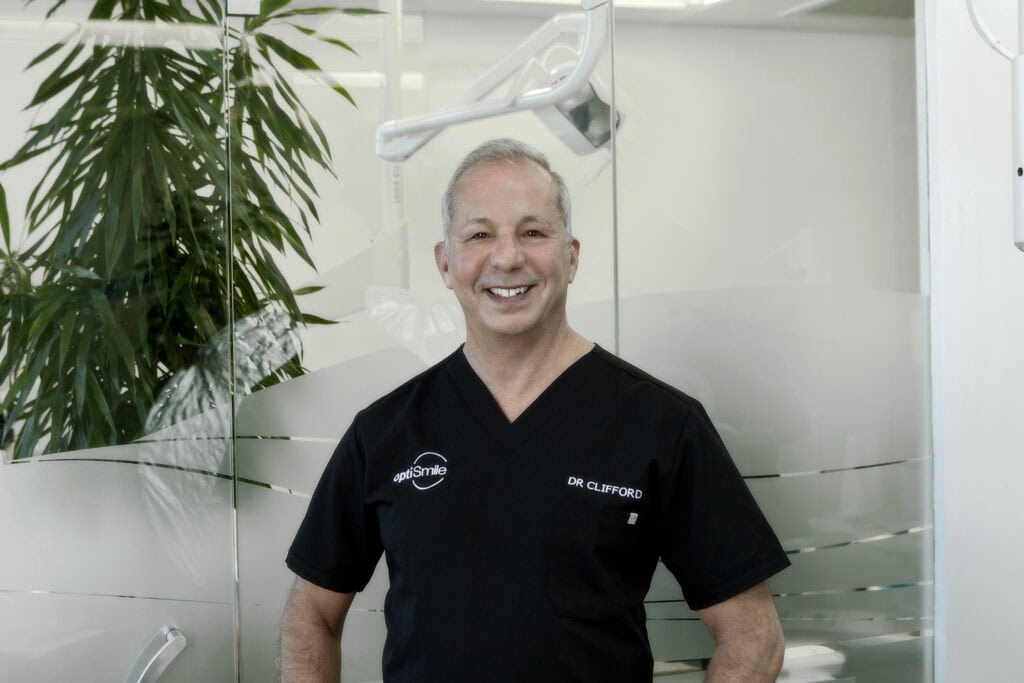
Eon Engelbrecht introduces Dr Clifford Yudelman and sets the stage for a conversation on how digital smile design and emotional dentistry transform patient care. The focus shifts from just appearance to how a smile makes a person feel.
What is Emotional Dentistry?
[00:00:03]
Dr Yudelman explains that emotional dentistry is about how a smile impacts self-esteem and identity. It empowers patients emotionally, helping them feel confident and understood.
What is Digital Smile Design?
[00:02:01]
Digital smile design uses tools like SmileCloud, 3D scans, and facial photos to create simulations before treatment. It allows patients to co-create their new smile collaboratively with their dentist.
The Power of Visualising Results
[00:04:03]
Seeing a digital preview removes fear and builds trust. Patients can visualise realistic outcomes, reducing uncertainty. This encourages deeper emotional connection and motivation for treatment.
Technology Meets Empathy
[00:08:02]
Combining advanced tools with patient stories, the process starts with listening. By understanding how patients feel about their smile, dentists can shape designs that are both aesthetic and meaningful.
Digital Tools Used at OptiSmile
[00:09:22]
OptiSmile employs high-speed 3D scanners, SmileCloud 3DNA, 3Shape, 3D printing, and a dedicated photo studio to provide accurate, patient-aligned smile designs.
Emotional Reactions to Smile Previews
[00:11:05]
Patients often react emotionally—crying, laughing, or even stunned silence—when they see their digital smile. These reactions highlight how deeply a smile is tied to personal identity and confidence.
Impact on Final Outcomes
[00:14:11]
When patients feel emotionally involved, they give better feedback. This ensures a result that reflects their personality. Sometimes, even intentionally imperfect smiles can be the most natural and fitting.
Real Transformation Stories
[00:16:58]
Instead of traditional before-and-after photos, OptiSmile shares patient testimonials focusing on confidence and how patients feel post-treatment, underscoring the emotional journey over aesthetics.
The Present and Future of Cosmetic Care
[00:18:57]
Emotional dentistry isn’t a futuristic concept—it’s the current standard. Patients seek personalised, emotionally resonant designs, not generic Hollywood smiles. Digital previews support this modern approach.
Final Message to Patients
[00:20:38]
Dr Yudelman advises patients to seek authenticity over perfection. Modern tools such as Invisalign, bonding, and teeth whitening allow you to co-create a natural smile that feels right for you.
Conclusion
[00:23:13]
The episode wraps up with encouragement to embrace your natural smile and explore digital consultations at OptiSmile. With empathy and cutting-edge tech, your dream smile is within reach.
Transcript
[Eon Engelbrecht – E-Radio-SA] (0:03 – 0:32) Welcome to another edition of Save Your Money, Save Your Teeth. Cosmetic dentistry is no longer just about looks. So in this episode, Dr. Clifford Yudelman from OptiSmile will be joining me to explore how digital smile design and emotional dentistry are transforming the way people feel about themselves. It’s a deep dive into technology, empathy, and the emotional impact of seeing your new smile before treatment even begins.
[Dr Clifford Yudelman – OptiSmile] (0:32 – 0:53) Thank you. Thanks for having me back.
I’m really excited and looking forward to today’s podcast. Sorry, I thought I was saying, are you looking forward to your visit? It’s going to hurt me more than it hurts you.
[Eon Engelbrecht – E-Radio-SA] (0:54 – 0:57) That’s a nice one. I feel better already.
[Dr Clifford Yudelman – OptiSmile] (0:57 – 1:02) Okay, good. See, we’re done already. You can go and pay now.
[Eon Engelbrecht – E-Radio-SA] (1:04 – 1:11) Dr. Yudelman, you know, most people think cosmetic dentistry is just about looks. What exactly is emotional dentistry?
[Dr Clifford Yudelman – OptiSmile] (1:12 – 2:00) Yeah, I’m looking forward to this. So emotional dentistry focuses on how a smile makes a person feel, not just how it looks. It’s about self-esteem, confidence, and even a person’s identity.
So many patients come to us saying they’ve stopped smiling in photos or since they were a teenager, they’ve never smiled in photos, even to the point where some people have avoided social situations because of embarrassment. When we restore that confidence, it’s often very emotional, deeply emotional. I’ve had patients burst into tears when they see their smile or even how it could be.
And digital tools now help us to communicate that vision more clearly and compassionately.
[Eon Engelbrecht – E-Radio-SA] (2:01 – 2:08) So what on earth is digital smile design? And how has it changed the way that you plan your treatments?
[Dr Clifford Yudelman – OptiSmile] (2:08 – 4:03) We should just clarify, it’s a trademark name or a business called DSD and it’s become quite a generic thing, digital smile design. If you use it as DSD, there’s a special DSD logo. But even at OptiSmile, we don’t use the official DSD software.
We use something called SmileCloud and we also use a fantastic lab, a shout out to Bosch Lab. They use a software called 3Shape to do these smile designs. So it uses high resolution 3D scans and facial photos and design software that will simulate the end result before we start treatment.
So patients can see a realistic preview of their new smile in their face, aligned with their facial features, the proportions, and even the patient’s personality.
We take that into account and it makes the dentistry collaborative and not prescriptive. And I’d like to repeat that again. If you’re doing something that’s elective, like changing your smile, it’s not like treating gum disease where it’s like, I think I’ll make my gums healthy.
That’s not elective. That’s something we spoke about last week. That’s to save your heart, save your brain.
We’re not prescribing it. It’s elective, which means it should be collaborative. You and the dentist should design your smile together or at least you should have an input.
But the patient can visualise the smile ahead of time. They can approve it and they can feel part of the creative process.
[Eon Engelbrecht – E-Radio-SA] (4:03 – 4:09) So why would you say visualising that result is so powerful for the patient?
[Dr Clifford Yudelman – OptiSmile] (4:09 – 8:01) The fear and uncertainty disappear when you can see the destination. If I say, yeah, jump in the car, I’m going to put a blindfold on you and it’s the middle of the night.
And I say, trust me, the last thing you’re going to do is trust me. But if you’re sitting in the front, you’ve got the map and I point and say, this is where we’re going. We’ve got good lights on or it’s the middle of the day.
All of a sudden, you’re going to feel like you’re part of the journey. So many people hesitate when they can’t imagine the outcome. And that often happens.
Sorry to talk about turkey teeth again, but people go off to Turkey. And I always say you don’t have to go to Turkey to get turkey teeth. You can get them right here in Cape Town or in Johannesburg.
So be careful that the dentist you see does collaborate with you. Never trust someone that says, just trust me. We’ve done a whole podcast on that.
People go to Turkey, get their teeth filed down, then get something put on their teeth and have no idea what it will look like until it’s permanently glued in. Alternatively, there are many practices, not just OptiSmile, some DSD registered, and many others using SmileCloud or 3Shape.
We show a 3D rendering or an overlay of the future smile. And the patient can connect emotionally. It’s like seeing a better version of themselves.
And it builds motivation and trust before treatment even begins. And what’s even more amazing is in the last few months, with SmileCloud, we can sit and do this in minutes. It uses AI. I sit with a patient, show them a few ideas, and they give input.
One case I finished today: she only wanted her two small side front teeth bonded. She wanted them to look natural. There wasn’t enough space unless she did Invisalign. So we had to make them cross slightly in front.
She whitened her teeth for a month after seeing the design. Today we did the treatment. Even though she visualised it before, she had tears when she saw the final result.
And now, instead of just a still image, we can create a movie of you speaking with the before and after side by side. Your head moves, your eyes blink, and it’s from a still image of your actual teeth.
At your first one and a half hour consult, you can walk away knowing what your teeth will look like. We convert that into a 3D blueprint and then work towards that final smile. It’s called beginning with the end in mind.
[Eon Engelbrecht – E-Radio-SA] (8:02 – 8:07) Doctor, how do you combine technology with empathy in this process?
[Dr Clifford Yudelman – OptiSmile] (8:08 – 9:21) I’ll probably jump the gun with the last question. But we start the conversation by understanding what the patient feels when they smile. Sometimes my associates and I go through the new patient form.
We have a very different form at OptiSmile. We ask philosophical questions about how confident you feel when you smile, not just where it hurts. And then we have a conversation lasting 10 to 15 minutes, sometimes an hour.
A recent complicated case: a patient had two huge front teeth done when she was very young, with very small side teeth. You have to figure out what patients are looking for and how they feel.
When you translate emotions into shape, proportion and symmetry, it’s not just data. It’s guided by empathy. The patient’s story informs the smile design.
[Eon Engelbrecht – E-Radio-SA] (9:22 – 9:30) Can you take us behind the scenes and tell us what digital tools or technologies make this possible at OptiSmile?
[Dr Clifford Yudelman – OptiSmile] (9:30 – 11:04) A really good 3D scanner that’s very quick. We’ve been using iTero from Invisalign. We’re about to get a new cordless scanner that weighs almost nothing.
If you looked at it, you wouldn’t believe it costs over 300,000 rands. Hopefully we don’t drop it. Make sure it’s insured.
It scans teeth in seconds and is very accurate. We’ve got a new studio with digital flashes and light boxes, so we get very clear photos.
We use SmileCloud and are beta testers for their 3DNA version. Then we do 3D printing.
In the case I mentioned, we printed a model. She returned for bleaching trays and we tried on the new smile. It’s called additive because there’s no drilling, just adding material.
We printed a mock-up so patients can try their new smile before bonding, drilling or Invisalign. Combining AI design and human artistry gives accurate and predictable results.
[Eon Engelbrecht – E-Radio-SA] (11:05 – 11:16) So how do your patients typically respond when they see their digital smile preview? Is it a smile? Crying? Fainting maybe?
[Dr Clifford Yudelman – OptiSmile] (11:16 – 11:19) Oh, you just answered the question. All three of those.
[Eon Engelbrecht – E-Radio-SA] (11:19 – 11:20) Shame, man.
[Dr Clifford Yudelman – OptiSmile] (11:20 – 14:11) I don’t think anyone’s ever fainted, but I’ve had patients get emotional. Sometimes they literally jump like a child.
I take videos of patients if they’ve gone through a whole process: whitening, Invisalign, bonding. I never give them a mirror while they’re still in the chair. I set them up, face them toward the window, and take a video of them speaking.
Then I show them the video. It’s very different from looking close up in a mirror.
I walk with them to a long mirror in the hallway. I ask them to wave from a distance, then walk towards the mirror and watch their expression. I often film from behind.
They get closer, pull back their lip, turn side to side. Then they turn around and react. Some laugh, some cry, some shake their head in disbelief.
I have hundreds of these videos but I don’t believe in sharing those private moments. You’ll never find them on our social media.
I sometimes show them to colleagues involved in the case, but it’s personal. It’s the beginning of a new world for the patient.
I’m uncomfortable with dental practices that use emotional moments to sell cosmetic dentistry. That’s just my feeling.
[Eon Engelbrecht – E-Radio-SA] (14:11 – 14:19) I also want to ask, how does emotional dentistry influence the final outcome?
[Dr Clifford Yudelman – OptiSmile] (14:19 – 16:57) When patients feel heard and emotionally involved, they give better feedback and are more invested in the process. This leads to better results, both clinically and emotionally.
A technically perfect smile may not reflect the patient’s personality, and that misses the point. Like the patient I did today: I actually made her teeth crooked, but they looked amazing. It balanced with her face.
Another young lady had very big front teeth done when she was young and tiny side teeth. I did a SmileCloud design in 2D and made the proportions perfect. She shook her head and said, oh no, oh no, that’s not for me.
Then I changed the proportions to a happy medium. I could make three or four smiles in front of her because the software uses AI. It chooses natural teeth shapes from real scans.
When her front teeth got slightly bigger, but not as big as they are now, she was excited. She also had been told she needed an implant because of a crack, but we realised we could save the tooth.
She wasn’t excited about saving the tooth. All she cared about was finally getting her front teeth sorted out. And we haven’t even done anything yet.
So the emotional aspect is crucial. The dentistry must feel right for that patient.
[Eon Engelbrecht – E-Radio-SA] (16:58 – 17:05) That’s amazing. Can you also share a memorable story of a patient who experienced this transformation?
[Dr Clifford Yudelman – OptiSmile] (17:06 – 18:42) I can go even one better. I’ve mentioned that I don’t believe in before-and-after photos. Someone who spends months doing Invisalign, whitening and bonding shouldn’t have to look at their old smile unless they choose to.
Friends and family may not even know they’ve had treatment. Close-up retracted before-and-afters can feel invasive. I personally don’t like it.
Instead, in the last few weeks, we’ve posted three patient testimonial videos on our YouTube channel. These are patients who volunteered to talk about their journey.
There are no before photos, just them speaking about how they felt before treatment and how they feel now. It’s more about confidence and emotion.
One of the videos already has over 160 views in less than two weeks.
[Eon Engelbrecht – E-Radio-SA] (18:43 – 18:57) And hopefully even more after this. Just a small plug.
[Dr Clifford Yudelman – OptiSmile] (18:57 – 20:37) It’s the present, not the future. Any dentist doing elective work on front teeth should be using these tools.
If someone breaks a tooth or has cavities, that’s different. But if you’re changing your smile to feel better, today’s standard of care involves digital visualisation.
Patients want authenticity, emotional connection and personalised design. Emotional dentistry integrates precision technology with human understanding.
And it’s not just OptiSmile. I have colleagues in Cape Town, some DSD certified, who do amazing work.
[Eon Engelbrecht – E-Radio-SA] (20:38 – 20:43) Doctor, what final message would you give to someone considering cosmetic dentistry?
[Dr Clifford Yudelman – OptiSmile] (20:43 – 21:56) We did an episode recently on Hollywood smiles versus real smiles. I encourage people to listen to that.
We’ve also done episodes on whitening, injection moulded bonding, Invisalign, implants and more.
Don’t chase perfection. Chase authenticity. A confident, natural smile that feels like you is more powerful than a perfectly white, perfectly straight Hollywood smile, unless that’s truly what you want.
Modern tools like digital smile design and SmileCloud allow you to co-create your transformation safely and predictably.
[Eon Engelbrecht – E-Radio-SA] (21:57 – 22:07) Dr. Yudelman, thank you so much. Another great episode of Save Your Money, Save Your Teeth. Thank you for sharing your wisdom with us.
[Dr Clifford Yudelman – OptiSmile] (22:07 – 22:13) Pleasure. And maybe we should rename it: save your money and put your money where your mouth is.
[Eon Engelbrecht – E-Radio-SA] (22:13 – 22:18) That’s brilliant. Very clever.
[Dr Clifford Yudelman – OptiSmile] (22:18 – 23:12) Stop talking about it and get it done. And maybe don’t feel pressured to fix your smile immediately if you can’t afford it right now.
You might be placing more emphasis on it than those around you. You smile with your whole face and your heart. Some people with great smiles may even be missing a tooth.
Confidence and healthy emotions matter. You can work on those while you save your money. Then come put your money where your mouth is. I said it again.
[Eon Engelbrecht – E-Radio-SA] (23:13 – 23:50) Emotional dentistry isn’t about changing your face. It’s about revealing your best self.
To visualise your dream smile, you can book a digital consultation at OptiSmile.co.za and see your future confidence before treatment begins.
While we strive to provide valuable insights, always consult your own dental professional for personalised advice. Don’t forget to subscribe and share.
Join us again next time. Until then, keep smiling and take good care of your teeth.
[Narrator] (24:10 – 24:55) Discover the world of dental excellence with OptiSmile. Join us for a weekly podcast featuring Dr. Clifford Yudelman, a seasoned expert with 40 years of dental experience across four continents.
Visit OptiSmile.co.za for articles to guide your oral health journey. If you’re seeking unmatched dental care in Cape Town, get in touch or book online at OptiSmile.co.za. OptiSmile, where global expertise meets local care.
Disclaimer: The content provided in this podcast, “Save Your Money Save Your Teeth” on Medical Mondays, is for informational and educational purposes only. It is not intended to serve as dental or medical advice. The insights and opinions expressed by Dr. Clifford Yudelman and any guests are designed to foster a better understanding of dental health, preventive measures, and general well-being, but should not be interpreted as professional dental or medical recommendations.Dr. Clifford Yudelman does not diagnose, treat, or offer prevention strategies for any health conditions directly through this podcast. This platform is not a substitute for the personalized care and advice provided by a licensed dental or healthcare professional. We strongly encourage our listeners to consult with their own dental care providers to address individual dental health needs and concerns.The information shared here aims to empower listeners with knowledge about dental health but must not be used as a basis for making health-related decisions without professional guidance. Your dental care provider is the best source of advice about your dental and overall health. Please always seek the advice of your dentist or other qualified health professionals regarding any questions or concerns about your dental health.