Chapters
What Are Disclosing Tablets?
[00:04 – 02:19]
Disclosing tablets are small, inexpensive tablets containing a harmless dye that stains dental plaque, making it visible to the naked eye. Because plaque is soft, sticky, and nearly transparent, it is easy to miss even when brushing twice a day.
To use them at home, simply chew a tablet — or even just a quarter of one — let it dissolve, and swish it around your mouth. The dye binds to plaque and stays put even after rinsing, leaving you with a clear picture of exactly where you need to clean.
Why Dentists Use Dye During Hygiene Visits
[02:20 – 03:32]
During a professional clean, a hygienist will often swab a disclosing dye onto the teeth before rinsing and photographing the result. This is not about shaming patients — it is about making the invisible visible.
Most patients brush before their appointment, yet the dye still reveals areas consistently being missed. Showing patients these spots in the mirror makes brushing and flossing instruction far more effective, giving them a specific target rather than a general motion.
How to Read the Colours
[03:38 – 04:46]
Many disclosing tablets distinguish between new and old plaque by colour. Fresh plaque typically shows up as a lighter pink, while plaque that has been present for more than 24 hours — and is therefore more mature and more damaging — appears as a darker blue or purple.
Because the dye binds specifically to plaque rather than to the tooth surface, a rinse will wash away the loose dye but leave the stained plaque clearly visible. You can then brush it away and see the improvement immediately.
Understanding Your Plaque Score
[04:46 – 05:47]
A plaque score measures the percentage of tooth surfaces that still carry plaque after cleaning. A score below 20 per cent is considered good; many people start at 50 per cent or higher.
Tracking this score over time monitors progress rather than demanding perfection. For patients prone to gum problems or cavities, reviewing the score at each three- or four-monthly visit provides strong motivation and allows the dental team to confirm that previously vulnerable areas are stabilising.
Why the Gum Line and Gaps Are Always Stained
[05:48 – 06:30]
Bacteria thrive in sheltered, moist areas — particularly along the gum line and between teeth — where toothbrush bristles frequently fail to reach. The solution is not to brush harder, which can cause damage, but to use gentle, targeted pressure alongside interdental cleaning tools.
Disrupting plaque in these areas before it matures is the key to preventing both decay and bleeding gums.
Can Food Colouring Do the Same Job?
[06:31 – 06:58]
While food colouring can stain plaque to some degree, it is not a reliable substitute. Commercial disclosing agents are formulated to bind selectively to plaque and rinse away cleanly from other surfaces, whereas food colouring tends to stain indiscriminately and gives poor feedback.
Proper disclosing tablets or drops are inexpensive and widely available, making it worth using the right tool.
Does Invisible Plaque Still Cause Damage?
[06:59 – 07:48]
Invisible plaque is often the most biologically active. It produces acids that attack enamel and chemicals that cause gums to bleed — frequently well before any visible symptoms appear.
Because these processes can continue silently for years, waiting for pain or visible damage is a risky strategy. Disclosing agents expose this hidden activity early, when the damage can still be reversed without costly treatment.
How Often Should You Test at Home?
[07:49 – 08:43]
When first establishing a routine, testing every few days is helpful for identifying persistent problem areas. Once technique improves, retesting every two to four weeks is sufficient to recalibrate without becoming obsessive about it.
For children aged around seven to ten, more frequent checks — every two or three days — help embed good habits during the years when they are most receptive. By the time they reach their teens, the correct technique should already feel natural.
How Quickly Does Plaque Harden Into Tartar?
[08:44 – 09:49]
Plaque begins mineralising into tartar surprisingly quickly, particularly near the salivary ducts. The duct beneath the tongue and the parotid duct inside the cheek both release saliva rich in calcium, meaning the areas closest to them — behind the lower front teeth and on the outer surfaces of the upper back teeth — are especially prone to rapid tartar build-up.
Once plaque hardens, it can no longer be removed at home and requires professional scaling. Staying on top of soft plaque with disclosing tablets saves time, money, and potential discomfort at the dental chair.
Disclosing Tablets as a Tool for Patient Empowerment
[09:50 – 10:58]
Disclosing tablets replace guesswork with objective, visible evidence. Patients who can see exactly where plaque remains are better placed to make informed decisions about their cleaning routine and are less likely to need unnecessary treatment over time.
As the episode closes, the takeaway is straightforward: if you can see the problem, you can fix it. A cheap tablet and a mirror may be among the most honest and cost-effective tools available for protecting both your teeth and your finances.
Transcript
Eon Engelbrecht – E-Radio-SA (0:04 – 1:18)
Welcome back to Save Your Money, Save Your Teeth, the podcast that looks at what genuinely protects your teeth and also your wallet. Last time we went into the gaps between the teeth and today we’re doing something even more useful. We’re going to make the enemy visible.
Here’s the uncomfortable truth. The plaque that does the most damage is soft, sticky, and almost transparent. You cannot see it, you often cannot feel it, and that is exactly why people who brush twice a day still end up with cavities and gum disease.
They’re not lazy, they are just brushing blind. So today we’re talking about disclosing tablets, a cheap little dye that stains plaque bright and shows you precisely where you are missing every single time. We’ll get into plaque scores, what number you should be aiming for, whether food colouring does the same job, how often you should test yourself at home, and why this might be the single most honest tool in dentistry.
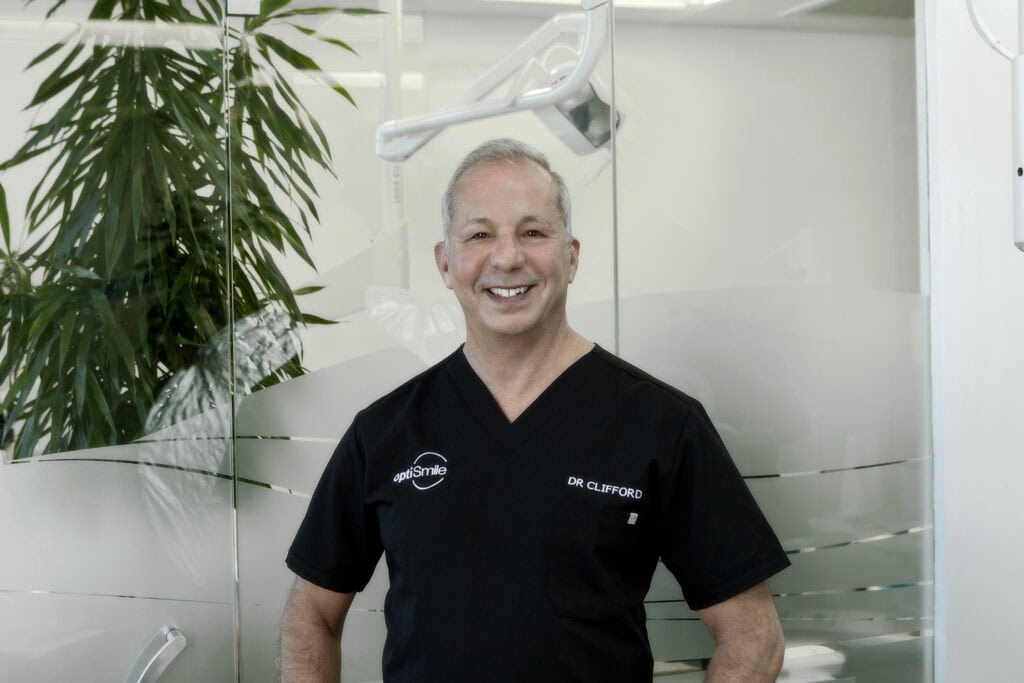
We’re joined as always by Dr Clifford Yudelman from OptiSmile. Dr Yudelman, welcome back. Doctor, what on earth are disclosing tablets and are they just for kids?
Dr Clifford Yudelman – OptiSmile (1:18 – 2:19)
Thank you. Thanks for having me back.
We use them a lot for kids. They are cheap, effective tools that use a harmless dye to stain the plaque and make it visible to the naked eye, and they work really well for adults as well because the plaque is often transparent and, as you know, it’s what causes cavities and gum disease, and it shows you the bits that you’re missing between your teeth. So these tablets will actually help you check on your brushing and your flossing, and I highly recommend it.
You just chew on them, let them dissolve in your mouth, swish it around and all the plaque that’s on your teeth is visible, so you can remove it. Or you brush and floss as best as you can, and then you do the plaque disclosing, either drops or little tablets, and you can see how well you did and then get the rest of it.
Eon Engelbrecht – E-Radio-SA (2:20 – 2:26)
Doctor, why do dentists sometimes paint purple or blue dye on teeth during a cleaning?
Dr Clifford Yudelman – OptiSmile (2:26 – 3:32)
It’s to reveal the invisible plaque. It’s like a pilot that uses instruments or radar, you need to see where you’re going. In our practice, the hygienist always starts off by swabbing your teeth with this special dye and then rinsing your mouth, and then we’ll take a photo for your records, and then may show you in the mirror the areas that you’re missing.
And that’s not to shame you, but just to make you aware of how much plaque there is, because a lot of people have brushed their teeth before they come, they’re hoping for the best. It’s not like someone comes in who hasn’t brushed for two days. So it just shows people where they’re missing and then it makes them more aware.
So when we show them how to brush properly or how to use floss or tell them about interdental brushes, it’s much easier for them to get a visual feedback and to actually do a better job long term. And then they’ve also got a target to aim at, rather than some kind of random motion.
Eon Engelbrecht – E-Radio-SA (3:32 – 3:38)
Doctor, how can I use these tablets at home to check my own brushing technique?
Dr Clifford Yudelman – OptiSmile (3:38 – 4:46)
So the tablets are quite big and, to be honest, you really don’t have to use a whole tablet if you manage to break it in half or even into four pieces. You just take a little quarter of one of these tablets and you bite on it a few times and it’s got a nice taste. It dissolves in your mouth.
You don’t swallow it. It turns your whole mouth pink. Depending on the tablet, the fresh plaque shows up as a lighter pink colour.
Then the old plaque that’s been there for more than 24 hours, the more mature and more damaging plaque, shows up in a darker blue or purple. So you swish it around, and it stains your new and your old plaque.
Then you rinse your mouth out. Because the plaque is stained, it doesn’t rinse out. So all that’s left is the plaque on your teeth that’s now visible and you can just brush it away.
So it’s a really good way to make sure you’re doing a good job and to prevent expensive treatment in the future.
Eon Engelbrecht – E-Radio-SA (4:46 – 4:52)
Doctor, what is a plaque score and what percentage should I be aiming for?
Dr Clifford Yudelman – OptiSmile (4:52 – 5:47)
So a plaque score quantifies the remaining amount of plaque. So if you’ve got anything under 20 percent, like if you’ve got 10 percent plaque, that’s actually a very good score. Many people start with as much as 50 percent plaque left on their teeth after they’ve brushed.
So this monitors the trend rather than perfection. It’s really great when people have a gum problem or a cavity problem. Some of those patients come in every three or four months and it really keeps up the motivation, because they come in and they ask the hygienist, you know, what’s my score today?
And they know they’re doing a much better job, and the bleeding has gone away, and we can see where they were getting cavities. These cavities are now mineralising. So, like I said earlier, it’s like a pilot flying with radar.
You know where you’re headed, you know what you’re doing.
Eon Engelbrecht – E-Radio-SA (5:48 – 5:54)
And doctor, I also want to ask you, why does the dye stick more around the gum line and between teeth?
Dr Clifford Yudelman – OptiSmile (5:55 – 6:30)
So the plaque, or the bacteria, thrives in these sheltered, moist areas where the bristles often miss. It doesn’t mean that your gums are fragile. It means that these spots require better tools and angles.
And instead of brushing harder, which can cause damage, you use gentle, targeted pressure and interdental cleaning. So when you disrupt the plaque there, or you break it up early before it actually matures, that’s the key to preventing decay and bleeding gums.
Eon Engelbrecht – E-Radio-SA (6:31 – 6:35)
Can I make my own disclosing solution at home with food colouring, doctor?
Dr Clifford Yudelman – OptiSmile (6:36 – 6:58)
Look, food colouring can stain plaque, but it’s not recommended. The commercial disclosing agents are designed to bind specifically to plaque and rinse away cleanly, whereas food colouring can stain everything and it doesn’t give good feedback. So using proper tablets or liquid is inexpensive and it avoids confusion or the wrong method.
Eon Engelbrecht – E-Radio-SA (6:59 – 7:04)
If I cannot see the plaque with my naked eye, does it really matter if it is there?
Dr Clifford Yudelman – OptiSmile (7:04 – 7:48)
Yes, of course it matters. The invisible plaque is often the most biologically active, and this is the plaque that produces acids that cause cavities and produces chemicals that cause your gums to bleed long before any damage is actually visible. So relying on symptoms like that is risky, and sometimes these problems can go on for years, and the disclosing tablets or liquids will expose this hidden phase and allow you to reverse these things before costly treatment becomes necessary, thus saving your money and saving your teeth.
Eon Engelbrecht – E-Radio-SA (7:49 – 7:53)
And how often should a patient do a plaque test at home to stay on track?
Dr Clifford Yudelman – OptiSmile (7:54 – 8:43)
I mean, most people only need to do this in the beginning. You can do it every few days, but after that, you only need to do it every two to four weeks. The goal is just to recalibrate your technique, not to get obsessive.
There’s no harm doing it more often. The tablets are not expensive, but they’re not free, and you don’t have to do it all the time. The helpful tactic is to just adjust your brushing and your flossing, your dental cleaning, and then you retest.
So, with kids, you can check them every two or three days when they’re getting into that seven, eight, nine, ten year old period, because then by the time they’re teenagers and they’re not listening to you, they’re already in the habit of doing it properly.
Eon Engelbrecht – E-Radio-SA (8:44 – 8:49)
Does plaque turn into tartar if I miss these spots for just a few days?
Dr Clifford Yudelman – OptiSmile (8:50 – 9:49)
Yeah, so plaque actually begins mineralising into tartar surprisingly quickly, especially near your salivary ducts. We’ve spoken a lot about your saliva. There’s a saliva duct underneath your tongue.
That saliva that comes out of there has got a lot of calcium in it. So a lot of people will start building up tartar between the teeth and behind the back teeth. And also on the upper molars, on the outside, there’s a parotid duct, which is the saliva gland in your cheek.
So the concentration of calcium is much higher right near the duct. And once these areas, once the plaque is hardened, you can’t remove it at home and it requires professional help. Staying on top of the soft plaque will save you time and cost, and also sometimes discomfort, when you’re getting the tartar removed.
Eon Engelbrecht – E-Radio-SA (9:50 – 9:55)
OK, and is this the ultimate tool for co-discovery so that patients can see what you see?
Dr Clifford Yudelman – OptiSmile (9:55 – 10:25)
Yeah, 100 percent. The disclosing tablets give patients power by providing them visible evidence and replace guesswork with something objective. That gives them ownership and understanding, and it leads them to make better decisions.
It reduces unnecessary treatment and, of course, gives long-term protection of both your teeth and your finances.
Eon Engelbrecht – E-Radio-SA (10:26 – 10:58)
Dr Yudelman, thank you so much. What I love about today’s topic is that it takes the guesswork out. You do not have to take my word for it, or your dentist’s word for it.
You chew a tablet, you look in the mirror, and the evidence is right there in colour. Dr Yudelman, thank you so much for joining us. And remember, to find out more or book an appointment, you can visit OptiSmile.co.za. Thank you. And this has been Save Your Money, Save Your Teeth. Remember, if you can see it, you can fix it. Until next time.
Announcer – OptiSmile (11:19 – 12:03)
Discover the world of dental excellence with OptiSmile. Join us for a weekly podcast featuring Dr Clifford Yudelman, a seasoned expert with 40 years of dental experience across four continents. Gain unique insights and expert dental advice by visiting OptiSmile.co.za for articles that illuminate the path to optimal oral health. If you’re seeking unparalleled dental care in Cape Town, get in touch with OptiSmile or book directly online on OptiSmile.co.za. OptiSmile, where global expertise meets local care.
Disclaimer: The content provided in this podcast, “Save Your Money Save Your Teeth” on Medical Mondays, is for informational and educational purposes only. It is not intended to serve as dental or medical advice. The insights and opinions expressed by Dr. Clifford Yudelman and any guests are designed to foster a better understanding of dental health, preventive measures, and general well-being, but should not be interpreted as professional dental or medical recommendations.Dr. Clifford Yudelman does not diagnose, treat, or offer prevention strategies for any health conditions directly through this podcast. This platform is not a substitute for the personalized care and advice provided by a licensed dental or healthcare professional. We strongly encourage our listeners to consult with their own dental care providers to address individual dental health needs and concerns.The information shared here aims to empower listeners with knowledge about dental health but must not be used as a basis for making health-related decisions without professional guidance. Your dental care provider is the best source of advice about your dental and overall health. Please always seek the advice of your dentist or other qualified health professionals regarding any questions or concerns about your dental health.