Damaged teeth can affect how you eat and speak and make you uncomfortable in everyday situations. Without treatment, the problem can compound and even lead to serious health issues.
Restorative dentistry at OptiSmile addresses the cause, repairing decayed, broken, or missing teeth to improve your long-term oral health. Our approach is to retain your natural smile while ensuring the best results.
Restorative dentistry is driven by a structural problem that requires treatment. Cosmetic dentistry is driven by aesthetic preference; your teeth are healthy, but you want to improve their appearance. That is the clearest way to separate the two.
The approaches are often part of the same conversation. We consider both, ensuring the functional result is sound before any cosmetic refinements are discussed.
Restores full chewing function:
Damaged or missing teeth make eating painful and restrictive. Restorative treatment restores your ability to eat without discomfort or avoidance.
Relieves pain and sensitivity:
Decay, infection, and cracked teeth can cause persistent pain and sensitivity. Treating the source removes the problem rather than masking it.
Protects surrounding bone and tissue:
Missing teeth cause the jawbone to resorb over time. Replacing them maintains bone density and facial structure.
Prevents further damage:
Restoring a tooth early stops decay from reaching the nerve, and prevents neighbouring teeth from shifting or deteriorating.
Preserves your natural teeth:
A restorative approach prioritises saving what you have. Extracting a tooth is always a last resort.
Improves speech and comfort:
Damaged teeth affect how you pronounce words and how your jaw sits at rest. Restoring them returns normal function and comfort.
Enhances the appearance of your smile:
Many restorative treatments use tooth-coloured materials that blend naturally, improving aesthetics as a direct result of the repair.
Supports long-term oral health:
Restorative treatment addresses the underlying cause of dental problems, not just their symptoms, reducing the likelihood of repeat issues.

Custom-fitted caps that cover damaged or weakened teeth, restoring their shape, strength, and function. Crowns protect teeth that have suffered significant decay or fracture, and we use them when decay or fracture is extensive, but the root and surrounding structure are still intact.

Dental Implants are a durable, long-term dental solution in which a titanium post is anchored into the jaw to serve as a root for a natural-looking replacement tooth. Implants are the closest modern dentistry gets to replacing a natural tooth; they function, feel, and look like real teeth.
Root canal treatment removes infected or damaged pulp from inside the tooth, relieving pain and saving the natural tooth from extraction. It’s also possible to complete it in one or two comfortable appointments, saving you time at the dentist.
Custom-made restorations for teeth with moderate decay that do not require a full crown. Precisely fitted to preserve as much healthy tooth structure as possible. Both inlays and onlays preserve more natural tooth structure than a crown and are fabricated from durable, tooth-coloured ceramic.

Removable partial or full dentures replace multiple missing teeth and restore full chewing function and facial appearance. Modern dentures are more comfortable and natural-looking than ever.
1

2


3
4


Is restorative dentistry painful?
Modern restorative dentistry is far more comfortable than most patients expect. Local anaesthesia ensures you feel no pain during procedures, and we offer additional comfort measures for anxious patients. Some mild sensitivity following treatment is normal and typically resolves within a few days.
How long do dental restorations last?
Longevity of a dental restoration depends on the type of restoration and how well it is maintained. Dental implants can last a lifetime with proper care. Porcelain crowns and bridges typically last 10–15 years or longer. Composite fillings generally last 7–10 years.
How do I know if I need restorative dentistry?
Common signs of needing restorative dentistry include tooth pain or sensitivity, visible cracks or chips, dark spots or visible decay, difficulty chewing, or a missing tooth. However, early-stage decay and damage are often symptom-free, which is why regular check-ups are important.
What happens if I leave a damaged tooth untreated?
Untreated decay and infection can progress quickly. What begins as a simple filling can become a root canal, and an untreated infection can spread to surrounding teeth and bone. Delaying treatment almost always increases the complexity and cost of eventual repair.
What is biomimetic restorative dentistry?
Biomimetic restorative dentistry treats damaged and decayed teeth in a manner that mimics the natural properties of healthy tooth structure. The word itself means “copying life” — and in practice, that means using materials and techniques designed to replicate how natural enamel and dentine behave, rather than simply filling or capping what remains.
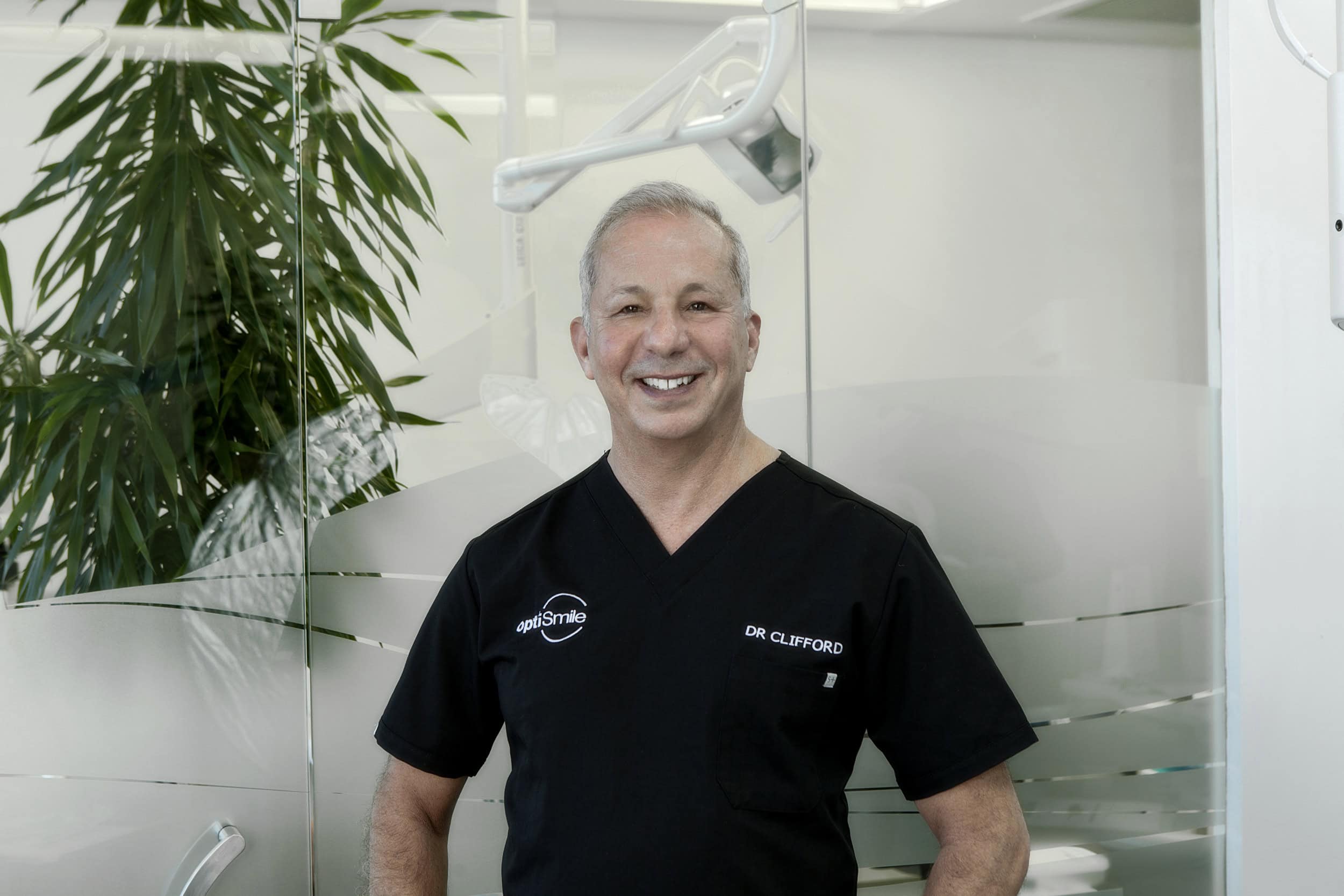
Dr. Clifford Yudelman
Founder & Principal Dentist, OptiSmile
As a globally recognised restorative and cosmetic dentistry expert, Dr Yudelman brings over 40 years of experience across four continents. A 1983 Bachelor of Dental Science graduate from the University of the Witwatersrand, his career has spanned private practices in London, San Diego, Perth, and Cape Town. Currently the founder and principal dentist at OptiSmile, he is celebrated for transforming dental visits into positive experiences and fostering patient confidence through superior dental health, with a commitment to the latest dental technology for improved patient outcomes.
🍪 Cookies for a Better Visit, Not Cavities! 🍪
Our website uses cookies to enhance your user experience. These cookies won’t harm your teeth—promise! By continuing to browse, you agree to our Privacy Policy.