Chapters
Introduction
[00:00:00 – 00:00:51]
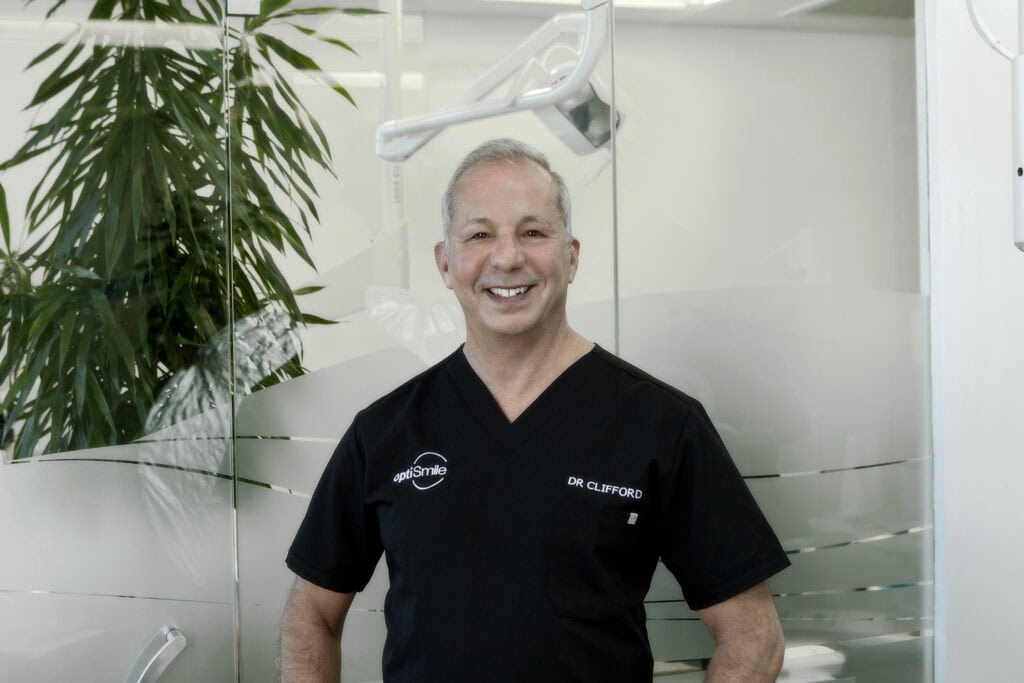
Eon Engelbrecht welcomes Dr Clifford Yudelman back to Medical Monday, setting the focus on general dentistry and preventative care, with a nod to last week’s episode on bad breath.
Essential Daily Practices for Good Oral Health
[00:00:51 – 00:06:00]
Dr Yudelman covers the foundations: brush twice daily with a soft bristle toothbrush to reduce abrasion, and use fluoride toothpaste as a non-negotiable for decay prevention. He also reinforces flossing for plaque control, tongue scraping to reduce odour and bacterial load, staying well hydrated to support saliva, and chewing sugar-free gum after meals to stimulate saliva when you cannot brush.
Professional Dental Cleaning and Why It Matters
[00:06:00 – 00:08:59]
Even with excellent home care, tartar can build up above and below the gumline and needs professional removal. Cleanings also help with stain management and provide an opportunity for early detection of cavities and lifestyle factors that harm teeth. Regular dental check-ups allow conservative intervention, including fluoride varnish where appropriate, especially for patients prone to decay.
Diet, Acid Exposure and Enamel Protection
[00:08:59 – 00:13:19]
The key dietary risk is frequent acid exposure, which softens enamel and can lead to sensitivity and erosion, particularly with habits like sipping acidic drinks or grazing on citrus and grapes over long periods. Dr Yudelman advises avoiding repeated acidic “bathing” of teeth, delaying brushing after acidic intake, and being cautious with sticky toffees and very hard crusts that can damage restorations or crack teeth.
Fluoride Misconceptions and Safe Use
[00:13:19 – 00:17:07]
Fluoride is explained as safe and effective when used correctly, strengthening enamel and improving resistance to acid attacks. Dr Yudelman warns against non-fluoride toothpastes, which can increase cavity risk, and clarifies the importance of age-appropriate children’s toothpaste to reduce the risk of fluorosis from excess swallowing. The emphasis is on correct dosage and supervision rather than avoiding fluoride altogether.
Overcoming Dental Anxiety and Gag Reflex
[00:17:07 – 00:22:59]
Dental anxiety often stems from past negative experiences or learned fear, while gagging can relate to airway sensitivity and previous choking or “can’t breathe” events. Practical strategies include using a mirror to maintain visual reassurance, opting for digital scanning where possible, and discussing short-term medication support for severe anxiety with your dentist. For selected cases, sedation dentistry may be an option to help patients access care safely and calmly.
Preventative Dentistry in the Clinic
[00:22:59 – 00:27:28]
Preventative dentistry is positioned as “a stitch in time saves nine”: finding early cavities when they can still be reversed, using tools like fluoride varnish and remineralising products, and guiding better home techniques. Dr Yudelman also discusses evidence-based decisions around sealants and fluoride application, plus modern options like injection moulded composite bonding to rebuild lost enamel with minimal intervention when erosion is present.
Conclusion
[00:27:28 – 00:27:55]
Eon wraps up the episode on daily oral health and preventative care, previewing next week’s topic on the link between oral health and overall health, and thanking Dr Yudelman for practical guidance.
Transcript
[00:00:00] Eon Engelbrecht (eRadio SA): This is Medical Monday on eRadio. Joining us again today is Dr Clifford Yudelman from OptiSmile. Today the spotlight is on general dentistry and preventative care. Hello to you, Dr Yudelman. How’s it going?
[00:00:20] Dr Clifford Yudelman (OptiSmile): Happy Monday morning to you. It’s going really well. I hope you had a great Valentine’s Day last Wednesday on the 14th, and your breath was nice and fresh, and that our tips on last week’s episode for fresh breath really helped you and some of the listeners out. So today, when we talk about oral health, I’m not going to be talking too much about bad breath. If people want to hear that, they need to go back to last week’s podcast. What do you think about that?
[00:00:51] Eon Engelbrecht (eRadio SA): Yeah, absolutely. So, Doctor, what are the most essential daily practices for maintaining good oral health?
[00:01:02] Dr Clifford Yudelman (OptiSmile): There are some, Eon, that are very obvious that everybody knows, like brushing your teeth twice a day. Some people think that if you use a soft bristle toothbrush, it doesn’t really get your teeth clean, so they buy a medium or hard brush, which I would recommend against.
They do last much longer — six months later you can scrub the toilet with it and it would still work — but you have to remember that even though enamel is the hardest substance in your body (I’ll say that again), it is subject to abrasion. Even a diamond cutter can use another diamond to cut diamonds and make those beautiful facets.
If you use a very hard brush and then use a smoker’s toothpaste or a whitening toothpaste that’s not approved, you can actually brush away some of your tooth. So that’s my bit on toothbrushes.
You can buy very soft toothbrushes from the dentist. Some of them do tend to wear out quite quickly. My preferred one at the moment is a really cheap one I get at Clicks. It happens to be a Colgate — I’m not sponsored by Colgate — I think it’s around 69 rand. It’s a charcoal bristle toothbrush. But the charcoal, I think, is just a gimmick. It’s got nice black bristles, but they’re very soft and very thin at the end.
If you’ve never used something like this, just be careful, because the thin, soft bristles go under the gum and clean plaque from under the gum.
[00:02:49] Dr Clifford Yudelman (OptiSmile): That’s my feeling when I use it. I haven’t even read any research, but I love that brush. It’s my favourite and it does last. I change it every month. You do have to change your toothbrush every month.
The next one that’s very obvious is: please, please — and I’ll say please again — don’t use a non-fluoride toothpaste. There is a lot of talk about fluoride causing bones to be brittle and debate about fluoride in water, but it’s something that’s non-negotiable.
I’ve seen a lot of problems with patients who have gone to a health food shop or purchased some multi-level marketing toothpaste where the main thing on the front says “doesn’t contain fluoride”. You’re just heading for disaster. You really need a tiny bit of fluoride in your toothpaste.
And when it comes to toothpaste, there are special toothpastes for kids. It is true: if you get too much fluoride, you can get fluorosis. If it’s mild from a child swallowing toothpaste, it can show as little white spots. If it’s severe — for example, if a child eats toothpaste every day and the parent uses too much — it can cause brown spots or even little pits.
That’s a lot just about the basics: soft bristle toothbrush and fluoride toothpaste. I’ll whip through some of the others. Last week we spoke extensively about scraping your tongue. Just Google how to scrape your tongue and buy a tongue scraper.
[00:04:25] Dr Clifford Yudelman (OptiSmile): It’s been part of Ayurvedic medicine for 3,000 years or so, and in Chinese medicine. The back of your tongue is where there’s a lot of stuff that smells bad. It also helps prevent plaque transferring back onto your teeth.
If you brush your teeth and floss, and then you don’t scrape your tongue, you close your mouth and wait five minutes and a lot of plaque returns — your teeth start feeling furry again.
So: brushing and flossing. Just Google how to floss. You can use thin plastic floss. My preferred one is a thicker floss. Start off with any floss you want. I think thicker floss does a better job, personally.
I’m not a big fan of mouthwash, but if you’ve got bad breath, a chlorhexidine mouthwash can really help — or definitely a non-alcohol mouthwash. We spoke about that last week. We also spoke about chewing sugar-free gum after meals to stimulate saliva. I like Orbit gum in the little jar — the spearmint one. The flavour lasts a long time. Chew it for five minutes after meals, especially if you haven’t had a chance to brush. It gets your saliva going.
Then drink lots of water, especially after eating sugary or acidic foods. Make sure you’re well hydrated and you’ve got lots of saliva. Wow — that’s already an episode on its own.
[00:06:00] Eon Engelbrecht (eRadio SA): Yes. Well, let’s talk about the process and the importance of a professional dental cleaning, Doctor.
[00:06:09] Dr Clifford Yudelman (OptiSmile): Even if you’re very good at brushing and flossing — and you brush twice a day and floss twice a day — the most important thing is to make sure, when you go to bed, you’ve flossed out the bits of food and plaque.
Even if you’re doing all of that and you’re not consuming too many acids, you will build up tartar. There’s tartar above the gum line and tartar below the gum line. The tartar above the gum line is that white, chalky stuff you get behind the lower front teeth. People pick it off with a fingernail, and eventually there’s too much, and you have to go to the dentist to clean it off.
The gums can be reasonably healthy underneath that. You go every six months and there’s a bit of tartar on the outside of your upper molars — we clean it off and you have a good polish.
And about visiting the dentist every six months: we do get patients who come after six months and there’s really no tartar because they’ve been flossing. They may not need to come every six months. Even after a year, some people don’t have a lot of tartar or stain.
Stain is different. We can remove stain with a special machine (EMS or Woodpecker). It squirts warm water with a powder — very gentle — almost like a sandblaster, but mild. Or traditionally we use a little bristle brush or rubber cup with gritty paste.
Cleanings are also important because that’s when your dentist checks your teeth, finds issues early, and the hygienist might call the dentist in to check something. If you’re coming in regularly, we can also pick up lifestyle habits like smoking or vaping that damage teeth.
In some cases, I haven’t been a big fan of applying fluoride routinely, but fluoride varnishes can be useful for people who get lots of cavities. They can help early cavities reverse. So if you’re getting lots of cavities, consider the varnish.
[00:08:59] Eon Engelbrecht (eRadio SA): Okay. How does diet affect oral health, and what foods should be avoided or consumed for a healthy smile?
[00:09:08] Dr Clifford Yudelman (OptiSmile): People say, “When I was pregnant I got cavities because the baby took calcium out of my teeth.” I want to clear that up: once your teeth are fully formed, the calcium in the teeth is stable.
Enamel is made of hydroxyapatite crystals — basically calcium and phosphate — and what dissolves crystal structures is acid. Neutral pH is around 7. Anything below about 5.5 starts to be erosive. Lemon is around pH 3. Battery acid is around 1.5. Carbonated water can be below 5.5. Sour sweets, sherbet — all of these can melt your teeth.
I also mentioned hot water and lemon. Some people drink hot water with a couple of lemons in the morning. I don’t know the health benefit, but I can tell you your teeth will be sensitive. If you’ve got sensitive teeth when you breathe, or when the dentist blows air along the gum line, it’s not necessarily from brushing too hard — it can be a sign you’re consuming acid regularly throughout the day.
If you eat a lot of naartjies (tangerines), citrus, or you snack on grapes over an hour or two, you’re bathing your teeth in acid the whole time. That’s terrible.
Eating calcium-rich foods like dairy and leafy greens for “strong teeth” — I’m not a big believer in that. I think we get enough calcium, and saliva already contains calcium and phosphate. If acid has softened your teeth, don’t brush immediately — you’ll remove some tooth each time.
[00:11:57] Dr Clifford Yudelman (OptiSmile): I mentioned pregnant patients with repeated morning sickness, regurgitation, vomiting, or reflux — we’ll cover that next week when we discuss the link between oral health and overall health.
For now: avoid acidic foods, and avoid very sticky foods like toffees. If you have crowns or bonded restorations, you can pull them off — they’re made to resist biting forces, not toffees.
Also avoid biting your nails. And if you have bonded restorations, veneers, or crowns, don’t bite into very crunchy baguettes or extremely hard crusty sourdough.
[00:13:12] Eon Engelbrecht (eRadio SA): Break a window with it. Yeah, I know.
[00:13:15] Dr Clifford Yudelman (OptiSmile): You can use a sourdough loaf for self-defence.
[00:13:19] Eon Engelbrecht (eRadio SA): You get those, lol. What would you say are the common misconceptions about fluoride, and how does it actually benefit our teeth?
[00:13:29] Dr Clifford Yudelman (OptiSmile): Fluoride is safe and effective at preventing tooth decay when used properly. Not all bottled waters contain fluoride, and tap water can be variable.
If you prefer not to ingest fluoride, that’s fine — as long as you’re using fluoride toothpaste. Your teeth will tell you if you’re getting enough fluoride.
When I practised in California from 1986 to 2002, people went on fad diets and at the same time bought non-fluoride toothpaste. I had patients who’d never had cavities, or hadn’t had a filling in ten years, come in with tiny black holes everywhere. I could often tell they’d stopped using fluoride before they even said it.
Fluoride binds into the hydroxyapatite crystal, helping it hold onto calcium and phosphate during acid attacks, making teeth more resistant. Excess fluoride in kids can cause fluorosis, so dosage matters.
[00:15:13] Dr Clifford Yudelman (OptiSmile): Use child-friendly toothpaste. There are age-specific kids’ toothpastes with the correct fluoride levels. Kids often prefer flavours like strawberry rather than mint, which helps with compliance.
There’s a difference between low fluoride and no fluoride. Babies under two may use very low fluoride because they swallow it. Over six, kids can generally use standard toothpaste as long as they’re supervised and not swallowing.
Topical fluoride includes toothpaste and fluoride varnishes. That’s probably enough about fluoride.
[00:17:05] Speaker 3: Yeah.
[00:17:07] Eon Engelbrecht (eRadio SA): Next question: people should go for check-ups, but they’re too scared. How can individuals overcome dental anxiety to ensure more regular visits?
[00:17:29] Dr Clifford Yudelman (OptiSmile): When we’re born, we’re very trusting unless someone hurts us. So fear often comes from a bad childhood experience, an impatient dentist, or even hearing parents’ horror stories repeatedly.
Another issue is gagging. Some people have a strong gag reflex unrelated to dentistry. In my experience, it can be linked to near-drowning, choking, being dumped by a wave, or anything where you felt you couldn’t breathe. After that, the body develops a protective gag response.
What helps is using a mirror. If the dentist needs to take a mould (we mostly scan digitally now), the patient watches and can see their airway is open. The moment their eyes drift away, gagging often starts. The mirror keeps them grounded.
For severe anxiety in adults, short-term medication like alprazolam can help when prescribed appropriately. For children with repeated traumatic experiences, sometimes an anaesthetist and sleep dentistry is needed. Adults can also consider sedation options.
We also use headphones, but for nervous patients, open-ear bone-conduction headphones are useful because they distract without breaking communication.
[00:22:04] Eon Engelbrecht (eRadio SA): You unlocked a memory — as a kid I had a dentist who was impatient and forceful. One day I bit him. (Laughs
[00:22:21] Dr Clifford Yudelman (OptiSmile): And there you go. You could have vomited on him as well — same effect.
[00:22:25] Eon Engelbrecht (eRadio SA): That was the last time my parents took me to him. I remember biting him really hard.
[00:22:37] Dr Clifford Yudelman (OptiSmile): Good for you. If patients are biting you, the problem isn’t the patient — it’s you.
[00:22:50] Eon Engelbrecht (eRadio SA): (Laughs) Oh my word.
[00:22:51] Dr Clifford Yudelman (OptiSmile): Send your patient to a dentist who’s good with kids. If you’re not good with kids, don’t see kids.[00:22:59] Eon Engelbrecht (eRadio SA): Preventative dentistry plays a big role in avoiding major dental issues later in life, right?
[00:23:11] Dr Clifford Yudelman (OptiSmile): Yes — a stitch in time saves nine. Prevention is what we talk about a lot. Preventative dentistry is also what we can do when you come in: finding cavities while they’re small, sometimes even reversing early decay without a filling.
Fluoride varnishes, showing you how to clean properly, and products like Tooth Mousse or MI Paste can help early lesions. If we see erosion, there are things we can do. Injection moulded composite bonding can rebuild tooth structure with minimal drilling. I’ve got a patient coming in tomorrow where we’ve scanned the tooth, designed the ideal shape digitally, and we’ll use a silicone mould to add new composite “enamel” onto the tooth
[00:24:41] Dr Clifford Yudelman (OptiSmile): We can also use sealants in very deep grooves where brushing can’t reach. Not every child needs sealants. One of my pet peeves is placing sealants on a tooth that’s already been in the mouth for 3–4 years with no decay — if it was going to get a cavity, it often would have by then.
We aim for evidence-based treatment. The same applies to giving every patient fluoride treatments just because medical aid covers it. If someone has never had cavities and has excellent hygiene, routine fluoride in-chair may be unnecessary. We need to do what’s best for the patient.
[00:26:00] Dr Clifford Yudelman (OptiSmile): I also send patients for hypnosis if they smoke. My mother died from smoking-related heart disease, so I feel it’s on me to mention it and encourage change. There’s a hypnotist in Cape Town called Hypno Smoking (https://hypno-smoking.co.za/) — we can include that in the show notes. Smoking increases oral cancer risk. We can talk more about that another time, including the role of HPV in some cancers.
That’s probably enough about preventative dentistry.
[00:27:28] Eon Engelbrecht (eRadio SA): Dr Yudelman, thank you so much. That’s it for another Medical Monday. Next week we’ll be talking about the link between oral health and overall health, so make sure you tune in. As always, thank you for your time and advice.
[00:27:49] Dr Clifford Yudelman (OptiSmile): My pleasure. Thank you very much, and thanks for having me on the show again.
[00:27:53] Eon Engelbrecht (eRadio SA): Big pleasure. Until next week
[00:27:55] Speaker 3: Bye.
Disclaimer: The content provided in this podcast, “Save Your Money Save Your Teeth” on Medical Mondays, is for informational and educational purposes only. It is not intended to serve as dental or medical advice. The insights and opinions expressed by Dr. Clifford Yudelman and any guests are designed to foster a better understanding of dental health, preventive measures, and general well-being, but should not be interpreted as professional dental or medical recommendations.Dr. Clifford Yudelman does not diagnose, treat, or offer prevention strategies for any health conditions directly through this podcast. This platform is not a substitute for the personalized care and advice provided by a licensed dental or healthcare professional. We strongly encourage our listeners to consult with their own dental care providers to address individual dental health needs and concerns.The information shared here aims to empower listeners with knowledge about dental health but must not be used as a basis for making health-related decisions without professional guidance. Your dental care provider is the best source of advice about your dental and overall health. Please always seek the advice of your dentist or other qualified health professionals regarding any questions or concerns about your dental health.