Chapters
Introduction to the Series
[00:00 – 00:47]
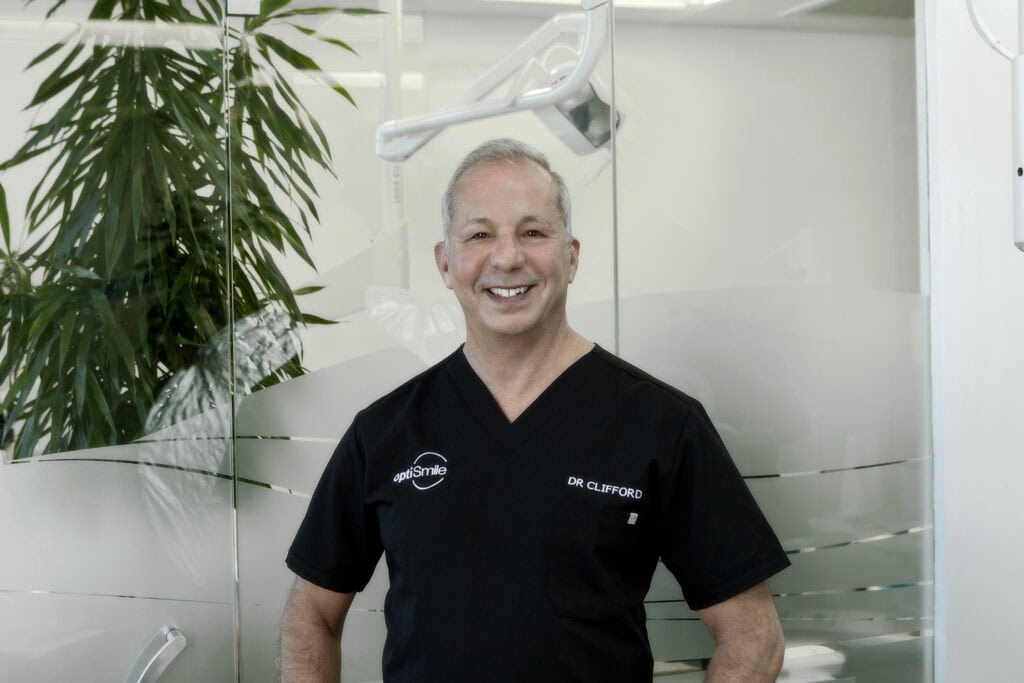
Introduction by Eon Engelbrecht and Dr. Clifford Yudelman, highlighting the focus on practical advice for dental health and finances. This episode is the final installment of the six-part series on orthodontics, with a particular focus on Invisalign.
Overview of Invisalign Treatment in Cape Town
[00:48 – 01:30]
Dr. Yudelman provides an overview of what to expect during Invisalign treatment, emphasizing the importance of understanding the process and what patients should anticipate.
First Week with Invisalign
[01:31 – 04:33]
Dr. Yudelman explains the first week of Invisalign treatment, detailing the experience from receiving the aligners to the initial sensations and adjustments patients may go through.
Daily Life with Invisalign
[04:34 – 06:07]
Discussion on how Invisalign integrates seamlessly into daily routines, with tips on managing speech adjustments and maintaining a regular eating and drinking schedule.
Maintaining Oral Hygiene
[06:08 – 07:21]
Dr. Yudelman discusses tips for keeping aligners clean and ensuring good oral hygiene throughout the treatment.
Handling Discomfort
[07:22 – 10:00]
Guidance on managing any discomfort or issues that may arise with the aligners, including the use of chewies and avoiding anti-inflammatory medications.
Follow-Up Care and Retention
[10:01 – 13:32]
Details on the importance of regular follow-up care and maintaining oral hygiene during and after treatment, with an explanation of Vivera retainers and long-term retention.
Long-Term Benefits of Invisalign
[13:33 – 15:49]
Exploration of the long-term benefits of Invisalign, including improved oral health, boosted confidence, and aesthetic enhancements.
Impact on Facial Aesthetics
[15:50 – 18:05]
Discussion on how Invisalign can positively affect facial aesthetics, particularly for patients with previous orthodontic extractions or crowding.
Confidence and Lifestyle Improvements
[18:06 – 20:19]
Real-life examples of significant lifestyle improvements and increased confidence after undergoing Invisalign treatment.
What to Do if You Lose an Aligner
[20:20 – 22:44]
Practical advice on steps to take if an aligner is lost or damaged, including the importance of keeping previous aligners as backups.
Common Mistakes to Avoid
[22:45 – 26:12]
Dr. Yudelman outlines common mistakes patients make during Invisalign treatment, such as neglecting oral hygiene and failing to wear aligners for the required 22 hours per day.
Importance of Retainers Post-Treatment
[26:13 – 27:21]
Discussion on the crucial role of retainers in maintaining the results of Invisalign treatment, with an emphasis on long-term commitment.
Support and Patient Reviews
[27:22 – 28:20]
Dr. Yudelman talks about the support provided to patients and the significance of patient reviews in helping others make informed decisions.
Transcript
[Eon Engelbrecht E-Radio] (0:05 – 0:47)
Welcome again to Save Your Money, Save Your Teeth here on eRadio. It’s the go-to podcast where curiosity meets dentistry straight from the experts. I’m Eon Engelbrecht, and I’ll be chatting to Dr Clifford Yudelman from OptiSmile. We’re taking a deep dive into the world of dental care from a consumer’s perspective. So whether you’re looking to brighten your smile or just protect your wallet, we’ve got you covered with practical advice and the latest insights. So stick around as we uncover the secrets to maintaining both your dental health and your finances.
Dr Clifford Yudelman, welcome back once again.
[Dr Clifford Yudelman – OptiSmile] (0:47 – 1:30)
Thank you. Thanks for having me back and looking forward to episode six today in our orthodontic series. Today, we’ll focus specifically on Invisalign, some of the things to expect if you are going to start Invisalign treatment. Hopefully, patients by now or potential patients or the public have got a very good idea about what’s involved in straightening your teeth with clear aligners, specifically Invisalign in the case of OptiSmile.
And we hope to answer a few more questions, and that will wrap up our orthodontic series.
[Eon Engelbrecht E-Radio] (1:31 – 1:41)
Excellent. So let’s get going with the first question. What should patients expect during their first week with the Invisalign, doctor?
[Dr Clifford Yudelman – OptiSmile] (1:42 – 4:33)
Imagine for a minute, Eon, you came in a few weeks ago, and we did your outcome simulation and made financial arrangements with you. You were very happy, and it was all a go because you could see what your teeth were going to look like. It was all very exciting. We then ordered a ClinCheck.
We’ve done the ClinCheck, which is where we plan exactly how your teeth are going to look. We have now ordered the aligners after you approve it. We get a big box with either 14 aligners or 20 aligners.
Now comes your first visit where you come in, and we show you how to take them in and out. Most patients are very surprised how clear and comfortable they are. One thing that sets Invisalign apart is that it’s laser trimmed above the gum line.
It doesn’t push on the gums. Generic aligners and other aligners often trim and cover the gums, making your teeth harder to clean.
When patients first put them in, they don’t really notice much. We show them how to use chewies. Some patients might notice that when they speak, it sounds like they have a little bit of a lisp, but people around them can’t really notice it, and they get used to it very quickly.
If there is a bit of a lisp, it goes away quickly. Some patients are very sensitive to having something in their mouth, and they salivate a bit more than usual in the first few hours. We show them how to use the chewies, which are very easy.
Especially that night before they go to bed, we get them to use the chewies for 10 minutes. That helps the aligners to seat fully over the teeth so they can do their job, and it reduces discomfort. We usually recommend that patients, over the first day or two, take something if there is any mild discomfort.
Some patients are very sensitive and say they do feel the pressure. Other people don’t notice anything. That first week, getting used to the aligners is important. Other than water or a clear drink like vodka and soda or something similar, generally, you take your aligners out when you’re eating or drinking.
You rinse your mouth, and you pop them back in, or you brush and floss your teeth and then pop them back in. People get used to that very quickly. You’ve got a special little case that you put your aligners in.
If you wrap them in a tissue, they get thrown away. So, we recommend that you always put them in your mouth or in this very discreet little case, which is a beautiful little case that is very convenient. It fits in your pocket or in your purse.
Yeah, the first week, patients usually do really, really well.
[Eon Engelbrecht E-Radio] (4:34 – 4:41)
Okay. And how does daily life change when using Invisalign aligners?
[Dr Clifford Yudelman – OptiSmile] (4:41 – 6:07)
Like I mentioned, maybe a little bit of a change in speech, which people get used to. Since they are removable, you’re going to eat and drink and brush your teeth just like normal. So, they seamlessly integrate into your daily life right there.
Wearing them for 22 hours a day becomes a natural part of the routine. It doesn’t really disrupt you. Unless you’re a person who’s used to going to the fridge, if you work at home and you’re always going to grab a carrot or a naartjie and you’re snacking all day, you have to condense that into your normal three meals a day.
Most people are eating three meals a day and maybe a quick snack in the afternoon or mid-morning. If you’re a person who sips on cold drinks or coffee, well, that’s going to stop. You’re going to have to get used to doing that during your meal times or during those snack times, because otherwise, they’ll be out of your mouth more than they’re in.
On the Invisalign app, there’s a little timer so you can keep track. When you take them out, you hit the app, and it starts timing and keeps track weekly of how good you are. Most people don’t even notice that someone’s wearing aligners.
They expect everyone to see it, but they don’t notice.
[Eon Engelbrecht E-Radio] (6:08 – 6:13)
I like the timing function on the app. I think that’s very handy. Very, very nice.
[Dr Clifford Yudelman – OptiSmile] (6:14 – 7:14)
Yes. When we use it in combination with virtual care, which is where you take a photo with your app at the end of every aligner before you change to the next one, we get a report that shows us how well the aligner is fitting and also how many hours a day you’ve been wearing it. It uses AI. If it sees that you’re wearing them for long enough and it doesn’t see any gaps between the aligner and the tooth, it automatically goes green and sends you a message.
We customise those messages, but it says, keep up the good work. Best regards, Clifford. If it’s an orange or a red, I get an email right away.
It gives you a red or a yellow warning and says, wait for further instruction. We’re able to really monitor and track. We’re using digital tools and AI all the way.
You’re not alone. It’s an amazing system.
[Eon Engelbrecht E-Radio] (7:14 – 7:21)
Wow. What are some tips for maintaining oral hygiene with Invisalign?
[Dr Clifford Yudelman – OptiSmile] (7:21 – 8:52)
The aligners are very easy to keep clean. You just brush them. When you take them out, you rinse them to get any saliva off.
Then once a day, you just brush them with lukewarm or cold water and some dish soap and a soft toothbrush. There are products you can soak them in, but since you’re changing them weekly, they don’t really get a chance to pick up stains or get funky.
Other aligners that you’re wearing for two or more weeks and that are just single-layer, generic-type aligners, can get really foul after a week or two of wearing them. You don’t get that with Invisalign. There are also Invisalign cleaning crystals, and other foams and gels, especially for aligners, that you can use if you want to.
It’s not always necessary. You’re just brushing and flossing like normal because you’re taking them out. The little attachments that we put on your teeth, the little tooth-coloured bits of plastic, are just little bumps.
They’re nowhere near the gum and don’t get in the way of any flossing or brushing. We recommend that patients have a little portable dental hygiene kit with a toothbrush and floss. If they want to brush and floss after lunch and they’re at work, they’ve got that with them, but it’s not always necessary.
We find patients’ oral hygiene really, really improves a lot as their teeth get straighter.
[Eon Engelbrecht E-Radio] (8:53 – 9:00)
How should patients handle any discomfort or issues with their aligners?
[Dr Clifford Yudelman – OptiSmile] (9:00 – 10:00)
There really shouldn’t be any major discomfort or challenges. Using the aligner chewies properly to help seat the aligners fully and reduce any pressure points is very important. As mentioned, avoiding anti-inflammatories like ibuprofen is crucial because they can affect bone remodelling.
There shouldn’t be any sharp edges or anything that bothers the tongue. If there is a little edge or something, it can be polished with a nail file or even trimmed, but it’s very rare that we have to do that for a patient.
We tell people to reach out to us, contact us immediately if there’s any concern about fit, function, or discomfort. They really shouldn’t have any problems whatsoever.
[Eon Engelbrecht E-Radio] (10:01 – 10:09)
Okay. Well, that’s good to know. Then what kind of follow-up care is necessary during and after Invisalign treatment?
[Dr Clifford Yudelman – OptiSmile] (10:11 – 13:32)
During Invisalign treatment, we make sure patients are getting their regular oral hygiene cleanings if their treatment is longer than four to six months. A lot of patients, as I said, their oral hygiene is really good. After three or four months, there’s no tartar or plaque, and they just keep going.
Every so often, at certain periods during a treatment, we do the progress assessment with the iTero. We always, from the beginning, explain to patients that whether you have braces or any type of aligners, once your teeth are straightened, you need to wear retainers. That’s a very important part of any orthodontic treatment—sleeping with clear retainers.
Invisalign has its own brand of retainers called Vivera retainers. That’s V-I-V-E-R-A. They’re unique in that they last up to a year each.
At the end of the Invisalign treatment, we scan you and order three sets of Viveras. You will stay on your last aligner for a couple of weeks until your Viveras arrive. They are exactly like the Invisaligns.
They’re very comfortable, but they’re a little bit thicker and harder-wearing. They don’t flex, and they obviously don’t put any pressure on your teeth—they just keep them in the correct position.
Initially, you will wear them overnight, plus a couple of hours in the morning and the evening for the first several months. Then you can progress to wearing them only at night. After seven or eight months, you don’t have to wear them every single night.
You can leave them out every second or third night. If a patient has been in retention or finished their Invisalign treatment for a year or two and they get a bit lazy with their Viveras and leave them out for a week, when they put the Vivera back in, it can be quite tight, and they can feel like their teeth have already started to move. They will need to wear it every night until it doesn’t feel so tight. This will guarantee that your teeth won’t ever move.
Three or four years later, if you need more Viveras, they can be ordered from the original scan. We don’t have to rescan you. We’ve had patients who live overseas, and we just order more for them. Then they get shipped to the patient.
If someone’s having crowns, veneers, or injection-moulded composite bonding after their Invisalign treatment, we’ll make sure that we finish that treatment before we scan and order their Viveras, because we need it to fit over the new dental work. They’re fantastic because they do protect your injection moulding or your veneers. For a lot of patients who grind their teeth, it protects your teeth against wear.
We’re now seeing patients coming back three and four years later. In some cases, even five years later, where they’ve had Invisalign, they’ve had whitening, they’ve had injection moulding, and they’ve been wearing their retainers, and everything looks exactly like it did five years ago, which is truly amazing.
[Eon Engelbrecht E-Radio] (13:33 – 13:40)
That really is amazing. Doctor, how can patients ensure the best results from their Invisalign treatment?
[Dr Clifford Yudelman – OptiSmile] (13:41 – 14:03)
You want to make sure you come to all your appointments. You’ve got to use your chewies. You’ve got to make sure that you wear them for 22 hours a day.
If you don’t, then you’re just cheating yourself. Keeping your teeth clean is also crucial. I think we’ve covered most of that. It’s just so easy.
If you do what we say, then no one gets hurt.
[Eon Engelbrecht E-Radio] (14:05 – 14:15)
Yes, exactly, exactly. What long-term benefits can patients expect after completing their Invisalign journey?
[Dr Clifford Yudelman – OptiSmile] (14:16 – 15:37)
The amazing thing is the improved oral health because, at OptiSmile, we’re all about optimising your oral health and then enabling you to smile with confidence. The oral health is really a big plus. Teeth that are crossed over are very hard to clean.
Once those teeth are straight, we find that patients are able to clean them much better. Their gums are much healthier. We see, and we’ve discussed this before, that a huge boost in confidence, both in personal and professional settings.
A lot of times, the patient has a more comfortable bite. Their teeth were locked in a difficult position, which caused strain on their jaw, and in some cases, even headaches and TMJ pain. That can be quite complex, but we do see a lot of patients with sore or stiff jaws that, after Invisalign treatment, their jaw feels a lot more comfortable.
In some cases, people who were getting headaches find that their headaches go away. They can maintain their retainers, knowing that they’ve made a long-term investment in their dental health and that very little or nothing is going to change, and life will continue to be amazing.
[Eon Engelbrecht E-Radio] (15:38 – 15:49)
I’m also wondering, can it make your jaw appear a little bit more prominent or a bit more square or more attractive after using Invisalign?
[Dr Clifford Yudelman – OptiSmile] (15:50 – 17:57)
Yes. That’s a very big benefit, especially for patients who have crowding or who have had extraction orthodontics when they were younger. We see many female patients—I’m yet to see a male who’s had lip fillers—getting injections in their lips to make their lips thicker.
However, some patients haven’t gone that route because they think it looks fake or unnatural. Instead, they’ve read about or heard how moving your teeth into a better position can help support the lips and give them a better shape. This is one of the big benefits we see, especially with older female patients in their 40s or 50s.
A lot of the wrinkles around the mouth disappear, and they have a much fuller smile. Especially if they have injection moulding as well, where we’re improving the length of the teeth using digital smile design. We’ve done several— I think, four—podcasts about veneers and injection moulding.
Basically, it can change the appearance of the entire lower third of the face, and it really goes beyond just inside the mouth—the whole jaw. If someone’s had a crossbite, and we’ve uncrossed the teeth, we can fix centre lines. There’s often, before we start, some asymmetry.
The nose can look crooked because the teeth are in the wrong place. Once you line the nose and the teeth up, the whole face looks a lot straighter. We always look at the patients’ ears, nose, and the line between their pupils, and we look at something called a cant—C-A-N-T.
We go as far as we can to address that and to make everything look level. That’s where, in nature, beauty comes from—symmetry and balance. That’s a good question.
Thanks for that.
[Eon Engelbrecht E-Radio] (17:58 – 18:05)
It really impacts your confidence and lifestyle in all ways possible.
[Dr Clifford Yudelman – OptiSmile] (18:06 – 20:07)
Yes. We see it, and we have patients tell us how much it’s affected their lives. As I say, a lot of people who don’t have partners bring their partners in for Invisalign, whitening, or just to get a cleaning.
These are people who, when they first came to us, were going through changes—either had never had a relationship or were going through a divorce and wanted to fix their appearance so they could get back out there and socialise. It’s been very successful for many of those patients. In other cases, of course, it’s just someone who has a little thing that bugs them and it’s not as noticeable.
I don’t want to exaggerate the benefits, but most of the time, when someone goes through that financial and time commitment, it’s usually something that’s going to mean a lot to them. No matter how small we think the problem is, it’s really about what the patient thinks. If they feel less self-conscious as they go through the treatment, they sort of come out of their shell.
I’ve also said it has the other benefit of inspiring people to take better care of their overall health and appearance. We see people doing things with their hair, starting to wear makeup, or going for laser treatment to remove little blood vessels in their cheeks or nose—just general improvement in their appearance and personality. They become a lot more outgoing and positive influences in their relationships.
Like I said, their self-esteem increases, and they always have a big smile on their face when they come in. We see them every six months afterward for cleanings. In every case, people who were very quiet and reserved seem to become the life of the party.
[Eon Engelbrecht E-Radio] (20:08 – 20:19)
Okay. Well, that’s terrific. Now, doctor, let’s say there’s a bit of a scenario.
What should patients do if they lose or damage an aligner?
[Dr Clifford Yudelman – OptiSmile] (20:20 – 22:30)
One of the reasons why we don’t give people all their aligners at once is just in case they lose them, which can happen. We’ve had patients who have gone overseas and had all their aligners in a backpack that got stolen, or something similar happened. We’ve heard all kinds of stories.
In general, we give patients anywhere from two aligners during the first visit. They come back for visit number three, and we put on any attachments. Then, depending on when they need the IPR or the polishing, we’ll give them anywhere from four to maybe six or eight aligners.
But if somebody’s on, say, aligner number seven and they’ve been wearing it for four or five days, and for some reason the dog chews it, or they lose it, they can go to number eight. Number eight might feel a little bit tighter than usual on the first day, but they can continue with number eight. If you’re on number seven and you’ve only had it for a day and you lose it, you could try number eight, but it might be too tight, in which case, you can go back.
You always keep your aligners until the end of treatment, but if you don’t keep all of them, at least keep the last one. You can go back to number six in that case and then get in touch with us, and we can advise. There are times where we can order a spare aligner or a replacement because Invisalign has digital records of everything.
Or, if you’re on number six and you’ve lost numbers seven, eight, nine, and ten, we can order those for you. We don’t want people to skip aligners if possible. But yeah, you wear the previous one or go to the next one.
It’s not really a big deal. It doesn’t happen very often. You’d think with teenagers and kids, it would happen a lot, but we really find that it doesn’t happen much in South Africa, maybe in other countries, but we don’t have that experience here.
[Eon Engelbrecht E-Radio] (22:31 – 22:44)
Okay, well, that’s good. And our final question for today: some more tips from you, Dr Yudelman. What are the common mistakes that patients make during their Invisalign treatment, and how can these be avoided?
[Dr Clifford Yudelman – OptiSmile] (22:44 – 26:01)
That’s a good way to wrap up because people need to know these things. Although we might have hinted at it before, it’s very important to maintain good oral hygiene, especially if you have braces or generic aligners, even Invisalign. You don’t want to neglect your oral hygiene. You need to make sure that you brush and floss regularly, especially if you have braces, as it can be very difficult.
Otherwise, the braces come off, and there are cavities or gum issues. So, it’s very important to brush and floss and have regular checkups. We’ll always check your oral hygiene when you come in for your aligner changes and make sure that you keep up with your regular hygienist visits for a clean and polish.
Not cleaning your aligners properly, like just taking them out and leaving them with some debris or food, is another common mistake. Since you’re changing Invisalign aligners weekly, you can’t go too wrong, but we have had patients come in who had a previous aligner in for only a week, and it can be a bit stinky or stained because they were maybe eating a chocolate bar or doing something we told them not to do. So obviously, maintaining aligner hygiene is crucial. You don’t want to rinse your aligner under very hot water because you can melt it.
Skipping aligner changes or appointments is also a mistake. It’s very important that you change your aligners on track. We put you on a 10-day, 7-day, or 14-day schedule, and the app will remind you when it’s time to change to your next aligner.
That helps. And then if you’re on number eight and at number ten, we’re supposed to do some IPR or change an attachment, which we don’t often do—normally, all the attachments go on at the beginning—but if you happen to have numbers 11 and 12 and just keep going without coming in to see us, you’ll start going off track, and sometimes we have to backtrack.
The biggest mistake people can make is not wearing them 22 hours a day or close to that, or leaving them out for one day here and one day there. I did a video consult with a patient a few days ago, on Wednesday, from the U.S. He’s coming here on a church mission to Zimbabwe, and he’s also coming to Cape Town on holiday. In his new patient form, he mentioned that he had Invisalign, and it was the biggest waste of time and money because he didn’t wear them. When I spoke to him during his video consult, he admitted that he was really bad about it—only wearing them at night—and they didn’t work. He knew it was his fault.
But we’ve never had that in South Africa, where people pay a lot of money and don’t listen. Maybe these things happen elsewhere. I know this podcast is available all over the world.
So, maybe someone in the U.S. or the U.K. is listening. My best advice is: don’t do that.
[Eon Engelbrecht E-Radio] (26:02 – 26:12)
Lots of self-discipline, and I mean, you’re making the investment in improving yourself, so you’ve got to follow through. But it sounds like you’re really supported.
[Dr Clifford Yudelman – OptiSmile] (26:12 – 27:11)
And the biggest mistake someone can make if they’ve had braces or any kind of aligners is not wearing their retainers. At least with Invisalign, there’s a warranty. If you have Invisalign comprehensive and haven’t worn your retainers and it’s now two years down the road and your teeth have gone crooked and your case hasn’t expired, you can come back to OptiSmile, or if you’re overseas, you can get your case transferred, and we can order additional aligners to get your teeth back into position again at no charge.
Invisalign won’t charge you. There’s a guarantee. The dentist, whether it’s us or another dentist, will have some charges because of clinical chair time and so on.
You’ll obviously have to pay for new retainers again at the end. But that’s the biggest mistake anyone could make—if you get your teeth straightened, you’ve got to wear retainers for the rest of your life. So, I just had to add that in at the end of all this.
[Eon Engelbrecht E-Radio] (27:11 – 27:21)
Yeah, but I think the support you give your patients is incredible, and it helps a lot. You’re really with them every step of the way. I think that’s so important.
[Dr Clifford Yudelman – OptiSmile] (27:22 – 28:20)
Yes, of course. And that’s something that we pride ourselves on. Right now, we’ve got over 350 five-star reviews on Google.
And it’s not just that we’ve got so many five-star reviews; it’s the wonderful things that people have written about us, especially people who were nervous about straightening their teeth or any other treatment. Once they finish the treatment, they take the time to write these reviews.
We really appreciate that type of feedback from our patients. I encourage anyone who is sitting on the fence about dentists or any kind of treatment to go and read reviews, find out success stories from other patients who have had similar treatments. In the reviews, people might mention Invisalign or teeth whitening, and you can get an idea of actual people’s experiences.
[Eon Engelbrecht E-Radio] (28:21 – 28:38)
And that wraps up the Invisalign series—six episodes of Invisalign content. That was here on the Save Your Money, Save Your Teeth podcast. Dr Yudelman, thank you so much. This has been very, very informative.
[Dr Clifford Yudelman – OptiSmile] (28:39 – 28:53)
Thank you. I really appreciate it. Look forward to talking to you next week with a big surprise episode.
We won’t reveal it until the day before.
[Eon Engelbrecht E-Radio] (28:54 – 29:39)
Yeah, I don’t even know what it’s about. So, I’ll find out with the listeners. That sounds interesting.
Thank you so much once again, Dr Yudelman, for sharing your expertise with us. And also, a big thank you to our listeners for tuning in.
Remember, while we strive to provide valuable insights, always consult with your own dental professional for advice tailored to your personal health. And don’t forget to subscribe to the podcast for more enlightening discussions. Join us again next week as we continue to explore the fascinating intersection of dental health and financial savvy.
Until then, keep smiling and taking great care of your teeth.
[Announcer] (29:52 – 30:37)
Discover the world of dental excellence with OptiSmile. Join us for a weekly podcast featuring Dr Clifford Yudelman, a seasoned expert with 40 years of dental experience across four continents. Gain unique insights and expert dental advice by visiting optismile.co.za for articles that illuminate the path to optimal oral health. If you’re seeking unparalleled dental care in Cape Town, get in touch with OptiSmile or book directly online at optismile.co.za. OptiSmile, where global expertise meets local care.
Disclaimer: The content provided in this podcast, “Save Your Money Save Your Teeth” on Medical Mondays, is for informational and educational purposes only. It is not intended to serve as dental or medical advice. The insights and opinions expressed by Dr. Clifford Yudelman and any guests are designed to foster a better understanding of dental health, preventive measures, and general well-being, but should not be interpreted as professional dental or medical recommendations.Dr. Clifford Yudelman does not diagnose, treat, or offer prevention strategies for any health conditions directly through this podcast. This platform is not a substitute for the personalized care and advice provided by a licensed dental or healthcare professional. We strongly encourage our listeners to consult with their own dental care providers to address individual dental health needs and concerns.The information shared here aims to empower listeners with knowledge about dental health but must not be used as a basis for making health-related decisions without professional guidance. Your dental care provider is the best source of advice about your dental and overall health. Please always seek the advice of your dentist or other qualified health professionals regarding any questions or concerns about your dental health.