Chapters
The Vitamins That Build Strong Teeth
[00:00:04 – 00:05:37]
Enamel and dentine are living structures while a child’s teeth develop, and clean brushing alone does not build them well. Alongside calcium and phosphate, they depend on the fat-soluble vitamins D3 and K2. D3 helps the gut absorb calcium, and K2 directs that calcium into bones and teeth instead of soft tissue.
Vitamin K2 works like a traffic controller for calcium, and research increasingly links it to the proteins behind bone and tooth mineralisation. During growth this can influence jaw arch width, tooth spacing and facial development. Nutrition does not override genetics here, though it can shape how those genes express.
Vitamin D3 deficiency is common even in sunny climates, because so much of modern life happens indoors. Low levels leave minerals poorly absorbed, which can show up as soft discoloured teeth, delayed eruption and weaker jaw bone. There is growing interest in how D3 affects airway development and muscle tone as well.
Chewing and Jaw Growth
[00:05:37 – 00:07:49]
Chewing is exercise for the jaw. When you load bone it responds by building density and muscle, so tougher foods that need real chewing encourage the jaw to grow wider. Soft processed meals ask very little of it.
Children who eat fibrous vegetables, crunchy fruit and good proteins tend to develop wider jaws and less crowding than those raised on mostly soft food. Swapping a mushy snack for carrots or celery in the lunchbox is a small daily change with a long payoff. It will not guarantee a child avoids braces, though it plays a larger part than many parents realise.
Reducing the need for complex teeth straightening later is where the money adds up, especially across two or three children.
Why Sugar Frequency Matters More Than Amount
[00:07:49 – 00:10:10]
How often sugar reaches the teeth matters more than the total amount. Each time you eat or drink something sugary, plaque produces acid that attacks enamel for roughly 20 to 30 minutes. One can of cola with lunch is a single acid attack.
The same can sipped slowly through the morning keeps the mouth acidic for hours and does far more damage over the years. Grazing works the same way, whether it is juice or a naartjie broken into segments and eaten one piece at a time. Eating something in one sitting and finishing it is kinder to the teeth.
Anything that is both sugary and acidic, such as sour sweets or citrus fruit, raises the risk further, and constant acid exposure is what drives most everyday dental problems.
Vegan Diets and Cod Liver Oil
[00:10:10 – 00:13:54]
A vegan diet can support developing teeth, but it needs planning. The nutrients that run short are B12, D3, calcium and K2, and the problem is the deficiencies that go unnoticed during key growth windows. A well-meaning family can miss the link between a gap in the diet and a child’s weak enamel later.
Cod liver oil has a long history here, and it is rich in vitamins A and D, both important for enamel and dentine. Evidence suggests it can support mineralisation when it sits alongside good hygiene and low sugar. It is low cost, often cheaper than buying separate supplements.
Cod liver oil is not vegan, and it supports prevention without replacing the basics. You still need to brush and use a fluoride toothpaste.
Mouth Breathing and Oral Health
[00:13:54 – 00:15:10]
Mouth breathing usually points to a blocked airway or nasal trouble, and it causes problems inside the mouth too. Breathing through the mouth dries it out, which shifts the bacteria, reduces the protective role of saliva and makes enamel erosion worse.
Sleep quality also suffers, and that affects how the body releases growth hormone at night, which matters for a growing child. A chronic mouth breather with restless sleep can develop rapid decay despite a reasonable diet.
Checking that a child breathes properly, with allergy tests or a visit to an ENT, can help the teeth and jaw growth, and there is interest in its role in cognitive development as well.
Can Nutrition Reverse Early Decay
[00:15:10 – 00:17:30]
The earliest decay shows up as white spot lesions, and these can stabilise or even remineralise under the right conditions. That means good plaque control, brushing, flossing and fluoride, supported by tooth mousse or a special toothpaste and the nutrition already covered. Not every cavity heals, only the ones caught early.
In practice, some cavities are watched instead of drilled. A patient with good hygiene might be fitted with the same trays used for teeth whitening, this time to hold tooth mousse, then reviewed with x-rays at intervals. Areas compared across several years can look exactly the same, which shows that not every dark speck on an x-ray needs a filling.
It is worth asking questions when a dentist points to eight fillings on an x-ray, because early decay does not always call for immediate drilling.
Weston Price and Evidence-Based Dentistry
[00:17:30 – 00:21:28]
Weston Price observed that traditional unprocessed diets lined up with lower decay rates and wider jaws in the groups he studied. His methods were not perfect by modern standards, though several of his observations do fit current nutritional science. The sensible reading is balance, where nutrition matters and works alongside evidence-based dentistry.
That balance has limits. Some families lean entirely on diet, avoid fluoride and trust that the body can heal any cavity, whatever its size. Once decay reaches the dentine, no theory of this kind holds up against evidence-based care.
Building teeth well the first time is where the saving sits. The cheapest fillings and orthodontics are the ones a child never needs, and a strong jaw and sound enamel in childhood can mean decades of avoided restorative dentistry.
Transcript
Eon Engelbrecht – E-Radio-SA (0:04 – 0:44)
Welcome back to Save Your Money, Save Your Teeth, the podcast that looks at what genuinely protects
your teeth and your wallet. Now everyone knows sugar is the enemy, but almost nobody talks about what
actually builds a strong tooth in the first place. So today we’re talking vitamins, we’re talking chewing, we’re
talking whether a vegan diet puts a growing child’s teeth at risk, and also whether that old bottle of cod
liver oil your granny swore by actually did anything.
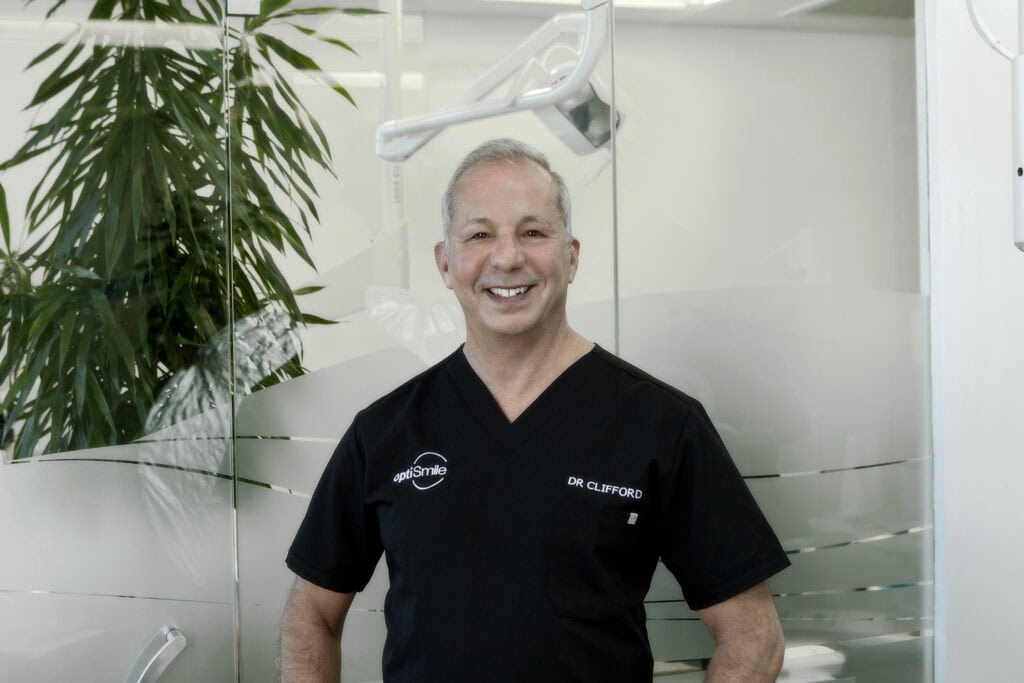
Joining us is Dr Clifford Yudelman from OptiSmile in Sea Point in Cape Town. Dr Yudelman, welcome back.
Dr Clifford Yudelman – OptiSmile (0:45 – 0:54)
Thanks Eon, great to be back and looking forward to today’s podcast. It shouldn’t be a very long one, but
let’s see how we go.
Eon Engelbrecht – E-Radio-SA (0:55 – 1:03)
Yeah, also looking forward to it. So doctor, we know sugar is bad, but what nutrients actively build strong
enamel in the first place?
Dr Clifford Yudelman – OptiSmile (1:04 – 3:17)
So especially we’re talking now like during kids when teeth are developing. So enamel and dentine are
living structures during development. So the dentine is the softer inner layer of the tooth and they need
minerals, basically calcium and phosphate, and then things called fat-soluble vitamins, which is vitamin D3
and K2.
So D3 helps absorb calcium from the gut and K2 directs that calcium into the bones and the teeth rather
than into your muscles. So yeah, very important. An example is a child brushes perfectly, but then gets
enamel defects or early decay.
And if you look into it deeper and you look at the research, you find that low sun exposure. So obviously in
Africa where people live outside and especially in poorer areas, people attending to cattle or walking long
distances to school or work, you may see that people have got naturally much stronger teeth. And that’s
actually from exposure to the sun, getting lots of vitamin D, which is what your skin makes when you get
sun.
And then poor dietary fat and a processed diet. So that would be like a kid in the States or maybe in South
Africa that sits indoors all day, plays TV games, never goes outside, eats chips made with processed oils and
all these terrible fats, trans fats, and a lot of processed food. So that’s the type of kids that get this.
And especially like in the UK, there’s something called molar incisor hypomineralisation. It’s like where the
front teeth and the molars are just crumbly. And teeth that are built well in childhood resist decay.
They resist cracking and strong foundations will save decades of fillings and crowns and root canals and
other trauma.
Eon Engelbrecht – E-Radio-SA (3:18 – 3:25)
Doctor, what is vitamin K2 and why is everyone suddenly talking about it for jaw development?
Dr Clifford Yudelman – OptiSmile (3:26 – 4:21)
So think of K2 as a traffic controller for calcium. Without it, the calcium circulates, but it doesn’t necessarily
end up where it’s needed. And there’s more and more research now that K2 activates certain proteins
involved in bone and tooth mineralisation and your jaw bones.
And this can influence the way your arch, which is basically the width of your lower and upper jaw, develop
tooth spacing and facial development during growth. And a real example is that narrow jaws and crowding
in kids, despite a low sugar intake, that nutrition doesn’t override genetics, but it influences how the genes
express. And anything that can reduce the odds of complicated orthodontics later is a long-term financial
win.
Eon Engelbrecht – E-Radio-SA (4:21 – 4:29)
And how does vitamin D3 deficiency affect a child’s teeth and even their airway?
Dr Clifford Yudelman – OptiSmile (4:29 – 5:37)
So, you know, D3, we just spoke about sun, but it’s surprisingly common, even in sunny places, like I
mentioned, you know, people don’t go outside as much anymore. They sit inside, play TV games, etc.
Watch Netflix, who knows.
When you’ve got low D3, the minerals don’t absorb. You get these soft brown teeth, delayed eruption,
weaker jaw bone. There’s a lot of interest now in D3, how it affects how your airway develops and also your
muscle tone.
So in a child with frequent chest infections or mouth breathing or bad enamel, sometimes getting some
sunshine and getting more vitamin D3 can actually help both your systemic, meaning your whole body, and
your mouth be more resilient. And, you know, if you’ve got good oral health, good airway health, your
immunity is also linked in there. You know, go out and get a bit of sun.
Eon Engelbrecht – E-Radio-SA (5:37 – 5:48)
And, Doctor, does chewing tougher foods, you know, like carrots or biltong, actually influence your jaw
growth and maybe reduce the chance of needing braces later?
Dr Clifford Yudelman – OptiSmile (5:48 – 7:49)
Yeah, so biltong, for people listening, we’ve got a lot of listeners now on Spotify and Apple and YouTube all
over the world. So biltong, if you don’t know what it is, it’s beef jerky, and carrots or carrots. But at least
you know what biltong is.
Come and visit South Africa and try our wonderful biltong. Just a side note, my wife is vegetarian, but she
does eat biltong because I don’t know if you know biltong is not actually meat. So go figure.
This one’s for her. But chewing is exercise for the jaw. Basically, when you load any kind of bone, it
stimulates bone density and muscle development.
So if you’ve got crunchy, tough foods that need a lot of chewing, as opposed to like these soft processed
foods, it makes your jaws grow bigger. And it’s not about hardness for its own sake. It’s about functional
use of your jaw while you’re growing.
And they’ve shown that kids that rely on soft processed diets like junk food, basically, or baby food, or just
really a bad diet, versus those that eat very fibrous vegetables like celery and carrots and all those apples,
things that you’ve got to chew, and good proteins, they’ve got a big difference in their jaw width and later
on crowding. And it won’t guarantee that you’re going to eliminate the need for braces or Invisalign, but it
does play a big part, more than people realise. And if you want to save money, reducing complex
orthodontics and or avoiding it can save you, save the family if you’ve got two or three kids, and you make
sure you just give them some carrots and celery every day in their lunchbox, versus like something mushy,
you know, you could save lots of time and money.
Eon Engelbrecht – E-Radio-SA (7:49 – 7:58)
Doctor, just getting back to sugar, is it how much sugar a child eats or how often that really drives cavities?
Dr Clifford Yudelman – OptiSmile (7:58 – 10:10)
So the frequency, how often you do it, matters more than the actual quantity. Every time you have sugar,
your teeth, your plaque on your teeth make acid and the acid attacks the enamel for about 20 to 30
minutes. We’ve done quite a few podcasts on this.
When you sip on a sugary drink, even if you use a straw, I don’t think that does very much. But if you sip on
something, say over an hour, say I have a Coke, a can of Coke with lunch and I eat my lunch and I wash it
down with a Coke, you know, it’s going to make my mouth acidic for 20 or 30 minutes. And then you also
have a can of Coke, but you pour it, you know, 10 o’clock in the morning with some ice and you put it in
your Stanley cup or whatever, and you keep it nice and cold.
And then you just sip on it every, you know, in between each, when you’ve got to talk in between playing
an LP or a track. I’m not sure you play LPs anymore, but then you have another sip to clear your, you know,
to wet your whistle there. And before you know it, after a few years of sipping on Coke every half an hour,
your teeth will be in way worse shape than mine.
So it’s got to do, and also it’s not just Coke. It’s like, you know, you’re going to eat a naartjie, which for
overseas people, that’s a tangerine, or any kind of citrus, just eat the whole thing, get it over with. Don’t
break it up into little pieces.
I think we’ve mentioned that before. And then every 20 minutes popping another little segment of orange
or naartjie tangerine in your mouth. When you graze all day, you’re drinking juice.
You just keep covering your teeth in acid. So it’s not just how much sugar, it’s how often the child or
teenager is eating it or putting it in the mouth. And it goes without saying that if it’s something acidic, if it’s
sugar and acid, like a sour lolly, or, like I said, citrus fruit, then that’s way worse.
Eon Engelbrecht – E-Radio-SA (10:10 – 10:18)
And doctor, is a vegan diet safe for developing teeth or are supplements essential?
Dr Clifford Yudelman – OptiSmile (10:19 – 12:02)
Now I’m even more scared than the amalgam debate because, you know, don’t mess with vegans. If you’re
a vegan and you listen to my podcast, thank you very much. I love vegans.
I’ve got some family members that are vegans and even one who’s not vegan, but she’s vegetarian, but she
eats biltong, as I mentioned. So yeah, vegans don’t do that. Apparently if you eat the fat, then that’s not
meat.
So no, I’m just kidding. Maybe we’ve got to cut that one out. Yeah.
The key nutrients that vegans can run short on, when I was researching this, it’s hard on a vegan diet to get
enough B12, D3, calcium and K2. So it’s not the veganism itself. When you say veganism now, it starts
sounding like a bit of a religion, but it’s the unrecognised deficiencies.
You’re not supposed to laugh. The deficiencies during critical growth windows. So, you know, a wellmeaning ethical vegan family can be completely unaware that the child’s bad enamel and having dental
problems for the rest of their life can trace it back to some gap in the nutrition.
So if you are vegan or you’re bringing your child up vegan, you know, look into things that have high levels
of these. They sometimes, I won’t list them here, but basically it’s much cheaper and better to look into
that and to make sure the kid’s getting enough of that than having enamel problems later.
Eon Engelbrecht – E-Radio-SA (12:02 – 12:14)
And doctor, we mentioned earlier about grandma and her cod liver oil. Does cod liver oil actually help
prevent cavities or is it just an old wives’ tale?
Dr Clifford Yudelman – OptiSmile (12:15 – 13:54)
I don’t know about you, but like when we used to swear, they threatened or sometimes did give us
something really foul. I could swear it was cod liver oil. So maybe there was a method behind the madness.
And if you’re vegan and you’re listening to this, cod liver oil is not vegan. It sounds like it’s made from the
liver of a cod fish, which is probably correct. It’s actually very rich in vitamin A and D, which is very
important for enamel and dentine.
It’s a historical use long before modern supplements. So, you know, grandmothers weren’t entirely wrong.
In fact, they did have a point, those days, those things developed over years.
They might’ve seen that kids that had a spoon of cod liver oil, maybe they used to swear after grandma
gave it to them. Who knows? Maybe that’s where swearing came from.
Anyway, you know, it supports mineralisation alongside good hygiene and low sugar exposure, but, and it’s
very low cost. It can be lower cost than buying supplements. Have you bought supplements lately?
They can be so expensive. So like if you’re living on a farm somewhere and you’ve got some cod liver oil,
give it to the kids rather than going out and buying all of those supplements. But, you know, it just supports
the prevention.
You still have got to brush and use fluoride toothpaste. And yes, of course there is a podcast all about that.
If not one, there’s quite a few.
Eon Engelbrecht – E-Radio-SA (13:54 – 14:02)
And doctor, how does mouth breathing tie into all of this? I mean, does it affect your oral health beyond
just your airway?
Dr Clifford Yudelman – OptiSmile (14:02 – 15:10)
Yeah. So mouth breathing usually talks to airway obstruction and nasal issues, but then that can go on to
cause problems in the mouth. You get dry mouth from breathing through the mouth and that changes the
bacteria in your mouth and it reduces the saliva’s role and it makes enamel erosion worse.
And then sleep quality also suffers, which affects how your body releases growth hormones at night when
you’re sleeping well, which matters for a developing child. And the chronic mouth breather that has restless
sleep can get rapid decay despite being on a decent diet. You know, making sure that the child is breathing
properly, taking them for allergy tests or to an ENT, it not only can help the teeth and the growth, but even
brain development and intelligence.
And I say, sorry, when I say intelligence, I mean, it’s a big word, cognitive development, the way your critical
thinking and your brain develops, which I guess does lead to more intelligence.
Eon Engelbrecht – E-Radio-SA (15:10 – 15:18)
And then doctor, can nutrition actually reverse small cavities in children? Or is that just wishful thinking?
Dr Clifford Yudelman – OptiSmile (15:18 – 17:22)
So early cavities, very early decay, we call them white spot lesions. They can stabilise or remineralise under
the right conditions with good plaque control, brushing, flossing, using fluoride. There’s other things we’ve
spoken about before, so I won’t go into too much, things like tooth mousse or special toothpaste and all the
nutritional support that we just mentioned.
They all go together. And it doesn’t mean that every cavity will heal, only the ones that are caught early. I
did see a patient yesterday that had a whole lot of cavities visible on x-ray.
And when we discussed it in our group meeting, every Tuesday, the dentists will discuss different cases. We
decided to leave most of them alone and monitor them because he’s 19 now and his oral hygiene is really
good. He did have quite a few big cavities filled when he was younger.
And so a lot of this damage happened earlier on, but now he’s very good. And we made him some teeth
whitening trays, but not to whiten his teeth, but to put tooth mousse in, and we’ll x-ray them at regular
intervals to make sure that they don’t go away. And then funnily enough today, I saw a patient who’s now
25.
And when she was 18, we found a very big hole in one of her teeth and she comes in and every few years
we x-ray. And today I saw a couple of cavities on her x-rays and I went back to compare them to her
previous x-rays and in 2018 and 2023 and today, those areas looked exactly the same. So not every cavity
needs a filling.
And yeah, I think you need to ask questions of your dentist when they say, oh, you need eight fillings, I can
see all these black specks on the x-ray. We did do a podcast not long ago about diagnosing your own x-rays.
And I think that was a great podcast to go back and to listen to. But what was the question?
Eon Engelbrecht – E-Radio-SA (17:30 – 17:40)
Doctor, just, we have one more for today. What is the Weston Price theory and does modern dentistry
actually support any of it?
Dr Clifford Yudelman – OptiSmile (17:41 – 20:23)
Yeah. So I don’t think anyone in South Africa has heard of this. So this one is for our overseas patients and
they, you know, Weston Price said that traditional unprocessed diets correlate with lower decay rates and
wider jaws in the populations that he studied.
But apparently his methodology wasn’t perfect by modern research standards, but there are several
observations that do align with current nutritional science. And, you know, modern dentistry doesn’t reject
fluoride or preventive tools because of this, you know, basically nutrition matters, but it works alongside
evidence-based dentistry. It’s not a replacement for it.
And sadly, I had a young patient in, when I say young, he was in his late teens and his mother was actually
from California and she didn’t believe in fluoride toothpaste. And maybe they were doing something we
mentioned before, oil pulling, and everything was diet related. And recently I’ve been doing more research
for my book and, you know, there are these people that believe that any cavity, no matter what size, that
the body can heal it.
And sadly, once the cavities go bigger and they’re in the dentine, you know, there’s no amount of any kind
of theories that can live up to evidence-based dentistry. And everyone today, because of the internet,
should be practising evidence-based medicine or evidence-based dentistry. A couple of weeks ago, I was at
the South African Dental Association Congress or convention with everybody at OptiSmile.
We sat for three days and listened to lectures on all the latest research. And a few weeks before that I was
in America for three days at another conference to keep up on all of the latest facts and figures based on
evidence-based dentistry. And by law dentists need to take a certain number of hours of these types of
courses worldwide.
There’s no dentist that qualifies and doesn’t have to do these kinds of studies and earn continuing
education points and to be able to keep their license. It’s something that needs to be done. Sadly, you
know, dentists, we don’t learn much about nutrition.
But yeah, look, I did say I’d keep today a bit shorter and I think we pretty much covered it. What do you
think?
Eon Engelbrecht – E-Radio-SA (20:24 – 20:51)
Absolutely. Yeah, certainly. And I think if there’s one thing that parents can take from this podcast today,
it’s that dentistry has spent decades telling people what to avoid and almost nothing about what to actually
eat, you know?
None of this obviously replaces brushing or fluoride or a proper check-up, but get the nutrition right early
and you’re not fighting an uphill battle for the next 15 years. I’m sure you agree.
Dr Clifford Yudelman – OptiSmile (20:52 – 21:11)
Yes, no, a hundred percent. You know, if you build it right the first time, the cheapest orthodontics and the
cheapest fillings are the ones you never needed. And a well-built jaw and strong enamel in childhood is
decades of avoided restorative dentistry.
Eon Engelbrecht – E-Radio-SA (21:12 – 21:22)
So true. Dr Yudelman, thank you so much as always. It was great talking to you and that’s it for this week’s
Save Your Money, Save Your Teeth.
Dr Clifford Yudelman – OptiSmile (21:22 – 21:27)
Brilliant and looking forward to speaking to you next week. Thank you very much.
Eon Engelbrecht – E-Radio-SA (21:27 – 21:28)
Same here. Take care.
OptiSmile Announcer (21:47 – 22:32)
Discover the world of dental excellence with OptiSmile. Join us for a weekly podcast featuring Dr Clifford
Yudelman, a seasoned expert with 40 years of dental experience across four continents. Gain unique
insights and expert dental advice by visiting OptiSmile.co.za for articles that illuminate the path to optimal
oral health. If you’re seeking unparalleled dental care in Cape Town, get in touch with OptiSmile or book
directly online on OptiSmile.co.za. OptiSmile, where global expertise meets local care.
Disclaimer: The content provided in this podcast, “Save Your Money Save Your Teeth” on Medical Mondays, is for informational and educational purposes only. It is not intended to serve as dental or medical advice. The insights and opinions expressed by Dr. Clifford Yudelman and any guests are designed to foster a better understanding of dental health, preventive measures, and general well-being, but should not be interpreted as professional dental or medical recommendations.Dr. Clifford Yudelman does not diagnose, treat, or offer prevention strategies for any health conditions directly through this podcast. This platform is not a substitute for the personalized care and advice provided by a licensed dental or healthcare professional. We strongly encourage our listeners to consult with their own dental care providers to address individual dental health needs and concerns.The information shared here aims to empower listeners with knowledge about dental health but must not be used as a basis for making health-related decisions without professional guidance. Your dental care provider is the best source of advice about your dental and overall health. Please always seek the advice of your dentist or other qualified health professionals regarding any questions or concerns about your dental health.