Chapters
Introduction
[00:00:00]
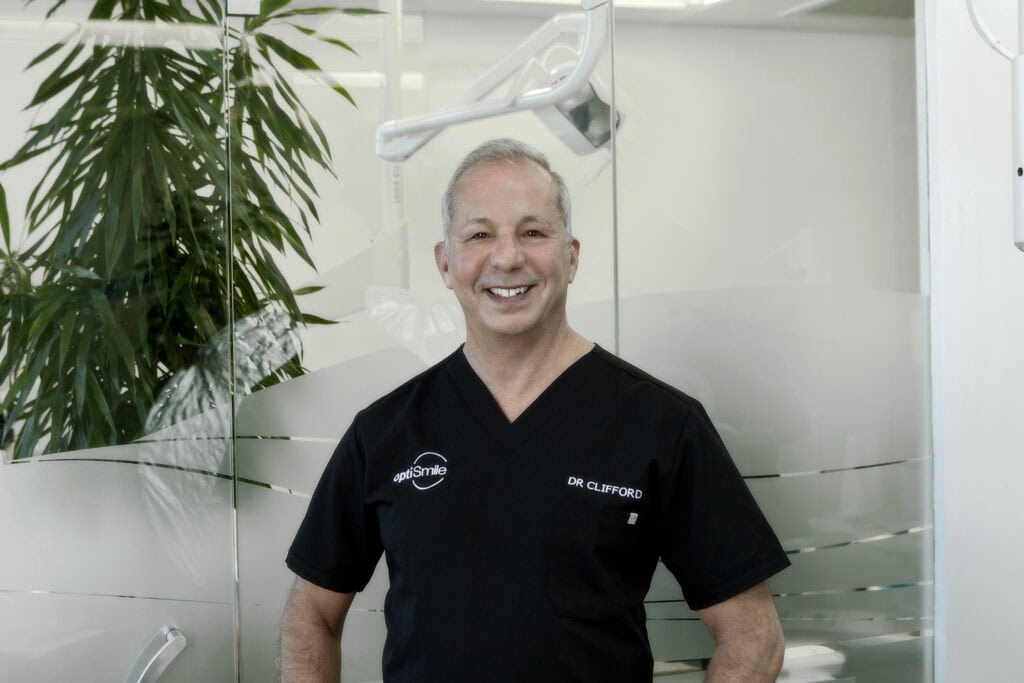
Dr Clifford Yudelman and Eon Engelbrecht celebrate OptiSmile’s 10-year anniversary by exploring how a preventative mindset can help save money and protect oral health. They revisit advice from earlier episodes to reinforce the value of early detection and daily habits.
How does catching cavities early save you money?
[02:14]
Detecting cavities when they’re small leads to quick, affordable fillings. Ignoring them can result in costly root canals or implants.
Should you have a professional cleaning every six months?
[04:48]
Yes, ideally. Six-monthly teeth cleaning removes plaque build-up and prevents gum disease. Skipping can lead to deeper, pricier treatments.
What are the warning signs that you need a check-up?
[06:08]
Pain, bleeding gums, lingering sensitivity, or mouth sores that don’t heal are all signs to visit your dentist. “If in doubt, check it out.”
How does brushing, flossing, and mouthwash help avoid costly treatments?
[07:13]
Daily brushing and flossing, plus staying hydrated, prevents decay and gum disease. It’s simple and “effectable”.
Should you rely on dental insurance or save for care yourself?
[09:07]
Medical aid often offers poor dental cover. Many patients save more by creating a personal dental fund while maintaining good oral habits.
Why is flossing a game changer?
[11:19]
Flossing cleans between teeth where brushes can’t reach. It prevents decay and gum disease, often saving thousands in future dental work.
What’s the danger of dry mouth?
[13:14]
Reduced saliva flow from medication, stress, or ageing allows bacteria to thrive. Staying hydrated and chewing sugar-free gum can help.
Are sports drinks and sodas harmful to your teeth?
[14:12]
Absolutely. They erode enamel through acid and sugar. Water is a far better option to protect your smile and budget.
Are sealants necessary for kids and adults?
[15:11]
Sealants are effective for children’s newly erupted molars. Adults usually need preventive restorations instead of sealants.
Why is gum disease such a big concern?
[16:32]
It progresses painlessly but leads to bone loss, tooth loss, and costly surgery. Early treatment of bleeding gums can save teeth and money.
Outro
[18:38]
Prevention isn’t just smart — it’s a lifestyle choice that saves money, pain, and stress. Book your personalised consultation at OptiSmile or message via WhatsApp to get started.
Transcript
Eon Engelbrecht – E-Radio-SA (0:04 – 0:47)
Welcome to our OptiSmile podcast, Save Your Money, Save Your Teeth, where you learn how to brighten your smile, protect your wallet, and make the smartest dental choices for your health. I’m Eon, and today’s episode is all about preventative mindset – outsmarting dental costs. I’ll be putting ten important questions to Dr Clifford Yudelman, and if you want to know the real way to save your money and your teeth, you’re in the right place. So welcome along, and welcome to Dr Clifford Yudelman from OptiSmile – and more importantly, happy ten years, Dr Yudelman.
Dr Clifford Yudelman – OptiSmile (0:48 – 1:54)
Thank you, thank you. Yes, October 2025 – it’s our tenth anniversary. I moved back to South Africa in 2014 after being away for 32 years overseas in America, Australia, and London, and I came back at the end of 2014. It took about nine or ten months to build OptiSmile.
So we opened in October of 2015, so this year is ten years, and our podcast today, and the next three in the tenth anniversary month of October, will be a nice recap since we’re on podcast number 81. The ten questions today that you have for me refer back to previous episodes, and I will give references that will be in the show notes. So if you hear any questions today and you want to learn more, there’s an entire podcast on that subject.
Each of these questions we’re doing today and the next three episodes will relate back to a full podcast on that topic.
Eon Engelbrecht – E-Radio-SA (1:54 – 2:01)
Brilliant! But yes, congratulations and well done on a whole decade of OptiSmile, Dr Yudelman. I think that’s amazing.
Dr Clifford Yudelman – OptiSmile (2:02 – 2:04)
Oh, thank you. It sounds like a lot when you say a decade.
Eon Engelbrecht – E-Radio-SA (2:05 – 2:09)
Yes, it is a decade – ten years! That’s a long time.
Dr Clifford Yudelman – OptiSmile (2:12 – 2:14)
Yeah, it goes to the next decade.
Eon Engelbrecht – E-Radio-SA (2:14 – 3:02)
Absolutely! Fantastic. Okay, so recently, this time I can really speak from personal experience. I went to the dentist last week and said my mouth was feeling very sensitive. I asked him to check for cavities, and he said, “I can’t really see massive cavities with my eyes, but let’s do an x-ray.” So he did an x-ray, found some holes, and we did two fillings, which isn’t bad. He said, “We’re catching these cavities early and fixing them because it’s going to save you thousands down the line.” And that’s one of my questions to you to start off with today – how does catching cavities early actually save you thousands down the line?
Dr Clifford Yudelman – OptiSmile (3:02 – 4:03)
Yes, sure. About 20 podcasts ago – number 61, General Dentistry and Preventive Care – I explained in detail that catching cavities early is the best money-saving strategy in dentistry. When decay is small, the fix is quick – usually a conservative, relatively inexpensive filling with minimal or no discomfort.
But if you put it off, bacteria keep spreading and suddenly what could have been a tiny filling becomes a major procedure like a root canal, a crown, or even losing a tooth and needing an implant. That costs much more and is a bigger physical and emotional ordeal. I tell all my patients: if you want to save both your teeth and your money, act fast at the first sign of trouble. Even a tiny bit of sensitivity can be your wallet’s best friend when you listen to your mouth and see the dentist early rather than putting things off.
Eon Engelbrecht – E-Radio-SA (4:03 – 4:48)
Yeah, because that’s exactly what he said to me as well! He said, “Do you want a massive hole and a root canal, or do you just want to quickly put in the filling?” And obviously, I said, “Let’s put in the filling.” So that’s how you save money down the line. Also, listen to your body, because you can feel when something’s wrong – especially that sensitivity you get when eating ice cream or drinking something cold. That feeling that makes you go “Ow!” – that’s your sign.
Okay, Dr Yudelman – moving on. Is it really necessary to go for a professional cleaning every six months, or is once a year enough?
Dr Clifford Yudelman – OptiSmile (4:48 – 5:57)
In Podcast 17: Professional Dental Cleaning Explained, we discussed this in depth. Some people feel once a year is enough, but research and experience show that every six months is ideal for most. Plaque and tartar harden and accumulate even when you brush and floss well, and after six months, professional tools are the only way to remove it before it irritates your gums or damages your teeth.
Skipping visits may save money short term, but I constantly see patients who return after a year or more needing much deeper, more expensive cleans or gum treatments. Some people can get away with once a year if they’re lucky and don’t build up much tartar, but consistent six-month cleanings are the best investment. You avoid gum disease, catch hidden issues early, and keep your breath and teeth feeling amazing.
Eon Engelbrecht – E-Radio-SA (5:58 – 6:08)
What warning signs should make you book a check-up right away instead of waiting it out? I imagine pain or discomfort?
Dr Clifford Yudelman – OptiSmile (6:08 – 7:07)
100%! I think you’re an expert now after nearly two years of these podcasts. That takes us back to Podcast 16: Simple Dental Check-Ups. The mouth rarely gives false alarms. Persistent pain, bleeding gums, sensitivity that doesn’t settle, swelling, or a sore that doesn’t heal – these are all signals to go now, not wait. Even a change in how your teeth fit together or sudden bad breath can mean trouble.
I’ve seen too many people ignore these signs, hoping they’ll resolve, only to need far more extensive and costly care later. My mantra is: if in doubt, check it out. It’s quicker, cheaper, and avoids those “I wish I’d come sooner” moments.
Eon Engelbrecht – E-Radio-SA (7:08 – 7:12)
Yeah – if in doubt, check it out. I like that one!
Dr Clifford Yudelman – OptiSmile (7:12)
Yeah.
Eon Engelbrecht – E-Radio-SA (7:13 – 7:22)
Dr Yudelman, how can your home routine – brushing, flossing, mouthwash – help you avoid expensive work later at the dentist?
Dr Clifford Yudelman – OptiSmile (7:23 – 8:41)
We’ve done several episodes about this. One of them is Podcast 65: Hydration and Oral Health. Your home care is the backbone of dental health and by far the cheapest way to protect your teeth.
Brushing twice daily does most of the heavy lifting, but flossing hits those places the brush can’t reach. Fluoride mouthwash can help occasionally, but the main thing is to stay well hydrated. A hydrated mouth has plenty of saliva, which limits bacteria, acids, and debris that lead to decay and gum disease. Over the years, it’s these simple routines that separate people who breeze through check-ups from those needing treatment after treatment. Preventive care at home is key.
It’s effective and affordable – or as I like to say, effectable! I’m going to trademark that.
Eon Engelbrecht – E-Radio-SA (8:42 – 8:46)
Love it! Effective, affordable, and effectable.
Dr Clifford Yudelman – OptiSmile (8:46 – 8:55)
Exactly. And it lets you spend your money and your time on things you truly enjoy – and I’m sure going to the dentist isn’t one of them!
Eon Engelbrecht – E-Radio-SA (8:55 – 9:07)
Yeah. But doctor, something else I want to ask you – do you really need dental insurance, or are there times when it’s better to save for care yourself?
Dr Clifford Yudelman – OptiSmile (9:07 – 11:18)
You’re starting to sound like an American now – you mean medical aid! Look, dental insurance or medical aid is like life insurance. I don’t think they call it life aid, because normally you’re dead. It’s funny – they don’t pay much for medical aid, but when you die, they pay very quickly.
So I’m looking forward to that. I won’t be the one spending the money! You make jokes like that when you hit 65.
This comes up all the time. In Podcast 57: Economics of Preventive Dentistry, I talk about the pros and cons of medical aids. They’re great for people with complex needs, frequent accidents, or unpredictable health. But generally, if you’re healthy, keep up with maintenance, and have good habits, you’re often better off putting aside what you’d spend on premiums into your own dental fund.
For example, vision and dental cover on medical aids can add a lot to your monthly cost, and it’s very hard to get much back. You might go for an eye test that costs R700 and get glasses for R10,000 – but try getting that back from your medical aid! People love to hate medical aid, but it helps when you have it. If you don’t, for dental, you might not be missing too much because they don’t always pay much anyway.
That way, your money stays in your pocket, not the insurer’s, and it goes toward care, not red tape. The key is knowing what you need, monitoring your spending, and making sure you’re never unable to get the care you need when it matters.
Eon Engelbrecht – E-Radio-SA (11:19 – 11:29)
All right. And Dr Yudelman, why is flossing so often the difference between tiny fillings and a lifetime of dental repairs?
Dr Clifford Yudelman – OptiSmile (11:30 – 12:56)
In Podcast 51: Gum Disease Advice, I said flossing is almost like a force field for your teeth. Most dental problems between teeth are missed by brushing alone. Bacteria sneak in, erode the enamel, and soon you’ve got decay in the hardest-to-fix, most expensive areas.
Once gum disease sets in, it becomes chronic if ignored – costing not only fillings but sometimes the teeth themselves. I’ve seen patients who start flossing regularly literally reverse their dental fortunes. It takes just one or two minutes a night, and it saves thousands of rands and years of treatment.
The best medical aid comes in a little white box – dental floss! That’s the best insurance. And there’s an old dad joke: don’t floss all your teeth, just the ones you want to keep.
Eon Engelbrecht – E-Radio-SA (12:57 – 13:13)
It’s true! In the long run, it really makes a difference. And Dr Yudelman, how does dry mouth lead to more cavities and bigger dental bills later? Because saliva is important – we learned that in the series.
Dr Clifford Yudelman – OptiSmile (13:14 – 14:11)
Yes – in Podcast 72: Dry Mouth Dilemmas, I explained how saliva is your best natural defence against decay. People often don’t realise that medication, stress, and ageing can shrink saliva flow, leaving your teeth exposed to acids and bacteria all day and night. That means a higher risk of very fast decay – even under crowns or bridges. It can get bad unless you tackle the root cause early.
Solutions like drinking more water, using sugar-free gum, or saliva substitutes, and reviewing meds with your doctor are all practical ways to prevent expensive problems.
Eon Engelbrecht – E-Radio-SA (14:12 – 14:22)
As a soda drinker, I have to ask – are sport drinks and sodas really as bad for your teeth as people say?
Dr Clifford Yudelman – OptiSmile (14:22 – 15:11)
Yes. In Podcast 73: Acid Reflux and Tooth Erosion, we explained that these drinks are a double whammy: the acid erodes your enamel, and the sugar feeds bacteria. We see young patients with surprising erosion and decay, almost always tied to these drinks. Rinsing with water afterwards and not sipping them all day – just as an occasional treat – makes a massive difference. It’s one of the easiest ways to protect your teeth and your wallet.
Eon Engelbrecht – E-Radio-SA (15:11 – 15:21)
Should you get sealants for your kids – and do adults benefit too?
Dr Clifford Yudelman – OptiSmile (15:22 – 16:32)
In Podcast 61: General Dentistry and Preventive Care, we discussed sealants as one of the best preventive steps, especially for children. The deep grooves in molars are perfect hiding spots for bacteria that brushing can’t reach. I’m not a big fan of sealants on adult teeth, though – they work best within 6–12 months of the teeth erupting.
If teeth have been in for years and have stains or early decay, they need preventive restorations rather than sealants. I often remove old sealants – I call them “pop-offs”! For sealants to work, they must be applied properly and kept dry, ideally with an assistant helping. When done well and maintained, they’re fantastic.
Eon Engelbrecht – E-Radio-SA (16:32 – 16:40)
And finally, what’s the big deal about gum disease? Does it really cost you your teeth and your money?
Dr Clifford Yudelman – OptiSmile (16:40 – 18:38)
Yes. Unfortunately, in Podcast 51: Gum Disease Advice, we discussed that gum disease is insidious – it creeps up pain-free, which doesn’t mean you get free pain! I’ve had patients with bad gum disease, even pus coming out of their gums, completely unaware. If caught early, we can treat it simply with scaling, hygiene instruction, and special toothpaste or mouthwash.
If it gets worse, we refer to a periodontist. But if you leave it, you risk losing bone, teeth, and facing expensive surgery. One bone graft can cost R30,000–R40,000. I’ve seen photos of patients needing bone grafts – it’s intense surgery. So prevention really is worth it. One of my biggest regrets is seeing people lose teeth and thousands of rands to something that started as bleeding gums. Act now and you can save yourself years of trouble.
Eon Engelbrecht – E-Radio-SA (18:38 – 18:50)
That’s hectic! Dr Yudelman, thank you for sharing all these practical tips. We really appreciate it.
Dr Clifford Yudelman – OptiSmile (18:51 – 19:03)
Pleasure. The rest of this month’s episodes are really great, and I’m looking forward to them.
Eon Engelbrecht – E-Radio-SA (19:03 – 19:59)
Same here. And remember, if you want to take action and discover how you can save your money and your teeth, book a comprehensive 90-minute digital consultation with OptiSmile for a full assessment and personalised plan. Or, if you’re just getting started, book a free online video consultation.
Message OptiSmile on WhatsApp or visit OptiSmile.co.za to book your spot. And while we strive to provide valuable insights, always consult your own dental professional for advice tailored to you. Don’t forget to like, subscribe, and share this episode – let’s help everyone enjoy healthier smiles and smarter choices. We’ll see you next time.
Narrator (20:19 – 21:04)
Discover the world of dental excellence with OptiSmile. Join Dr Clifford Yudelman, a seasoned expert with 40 years of experience across four continents. Gain unique insights and expert advice by visiting OptiSmile.co.za for articles that illuminate the path to optimal oral health. If you’re seeking exceptional dental care in Cape Town, get in touch with OptiSmile or book online. OptiSmile – where global expertise meets local care.
Disclaimer: The content provided in this podcast, “Save Your Money Save Your Teeth” on Medical Mondays, is for informational and educational purposes only. It is not intended to serve as dental or medical advice. The insights and opinions expressed by Dr. Clifford Yudelman and any guests are designed to foster a better understanding of dental health, preventive measures, and general well-being, but should not be interpreted as professional dental or medical recommendations.Dr. Clifford Yudelman does not diagnose, treat, or offer prevention strategies for any health conditions directly through this podcast. This platform is not a substitute for the personalized care and advice provided by a licensed dental or healthcare professional. We strongly encourage our listeners to consult with their own dental care providers to address individual dental health needs and concerns.The information shared here aims to empower listeners with knowledge about dental health but must not be used as a basis for making health-related decisions without professional guidance. Your dental care provider is the best source of advice about your dental and overall health. Please always seek the advice of your dentist or other qualified health professionals regarding any questions or concerns about your dental health.