Chapters
Custom mouthguards versus boil and bite
[00:00:04 – 00:03:29]
A well-built tooth still needs protecting from the outside, and every winter sports season a knocked-out front tooth is a common and largely preventable injury.
A boil-and-bite guard from the chemist is better than nothing, though the difference only shows once something has already gone wrong. It tends to be bulky and fits poorly, so children clench just to keep it in place and often stop wearing it.
A custom guard is made from an accurate scan of the teeth, or from an impression where the practice has no scanner. It fits snugly, lets you breathe and talk, and that comfort is what makes people actually wear it.
What a mouthguard can and cannot prevent
[00:03:30 – 00:05:18]
The reliable job of a mouthguard is protecting the teeth, lips and jaw. There is some evidence it can soften jaw forces travelling up into the skull, so it is not a guarantee against concussion and you can still be knocked out.
What it does prevent is the kind of blow that leads to a lifetime of restorative dentistry. In boxing the guard is treated as essential, and a fight is paused until a dislodged one goes back in.
Braces do not rule a guard out. Special orthodontic versions fit around the brackets, and they matter because those brackets can tear the lips on impact.
Which sports actually need one
[00:05:19 – 00:07:03]
Rugby, hockey and cricket are the obvious ones, and boxing or MMA call for a professional triple-laminate guard matched to the weight class. Water polo belongs on that list too.
Less obvious are BMX, skateboarding and other stunt sports, where the risk comes from falling onto your face. Cyclists, horse riders and trail runners rarely wear one, though it can still save a tooth in a fall.
One trail runner who trained at night landed on a single tooth and drove it up into her face, ending in a hospital removal. A tooth lost that way is the kind of gap dental implants are later used to fill. Any time a fall onto the face is possible, a guard is cheap cover against years of treatment.
The first minutes after a tooth is knocked out
[00:07:04 – 00:08:56]
When a permanent tooth comes out whole, pick it up by the white crown and keep your fingers off the root, which carries the fibres it needs to reattach. If it is clean, push it straight back into the socket, which is often undamaged.
When it is dirty, rinse it gently with no scrubbing and then reseat it. If you cannot get it back in, store it in milk or the child’s own saliva, never water, and reach an emergency dentist within the hour.
The sooner the tooth is back in place the better, ideally inside the first five to fifteen minutes. Save-A-Tooth kits are uncommon in South Africa, though they do get used where sports teams keep them.
Baby teeth, loose teeth and getting help fast
[00:08:57 – 00:10:14]
The advice changes completely for a baby tooth. Do not push it back into the socket, since that can damage the adult tooth forming underneath. It still needs to be checked.
A tooth that is only loose or pushed in should be left in place and handled as little as possible. Give the child a soft diet and go straight to a dentist, or to a children’s hospital where an oral surgeon may be on call.
Speed matters here too. Splinting the neighbouring teeth on the night of the injury can be what saves them, and leaving it until Monday can cost more than one tooth.
The gym, growing mouths and protruding teeth
[00:10:15 – 00:12:19]
Heavy lifting brings its own risk, because the clenching forces build up over time and can crack teeth and large fillings. A thin cushioning guard gives you something to bite against without the damage.
A growing child’s guard usually needs replacing about once a year, and sooner the moment it stops fitting snugly. For young children still losing baby teeth, a well-fitting boil-and-bite can be the sensible choice, since replacing a custom guard every few months adds up.
Children whose front teeth stick out past the lip need extra care, as those teeth are the most likely to be knocked out. Early teeth straightening moves them back and helps both protection and jaw development.
Scuba regulators and medical aid
[00:12:21 – 00:13:58]
Scuba diving is another case for a custom fit. A standard regulator, even a snorkel, can strain the jaw muscles and joints, and a custom mouthpiece makes long dives far more comfortable.
Cover from medical aid varies, so check with your own plan. The cost of a guard is small against the cost of trauma and long-term treatment, and protection is worth arranging whatever the reimbursement rules say.
The takeaway
[00:13:59 – 00:15:16]
A mouthguard sits closer to insurance than to sports kit, and it is among the cheapest protection in dentistry. One saved front tooth can cover decades of what a knock would otherwise cost.
Get the right guard for the sport, wear it whenever a fall or a blow to the face is on the cards, and replace it as soon as it stops fitting. Protect the tooth before you have to replace it.
Transcript
[Eon Engelbrecht – E-Radio-SA] (0:04 – 1:09)
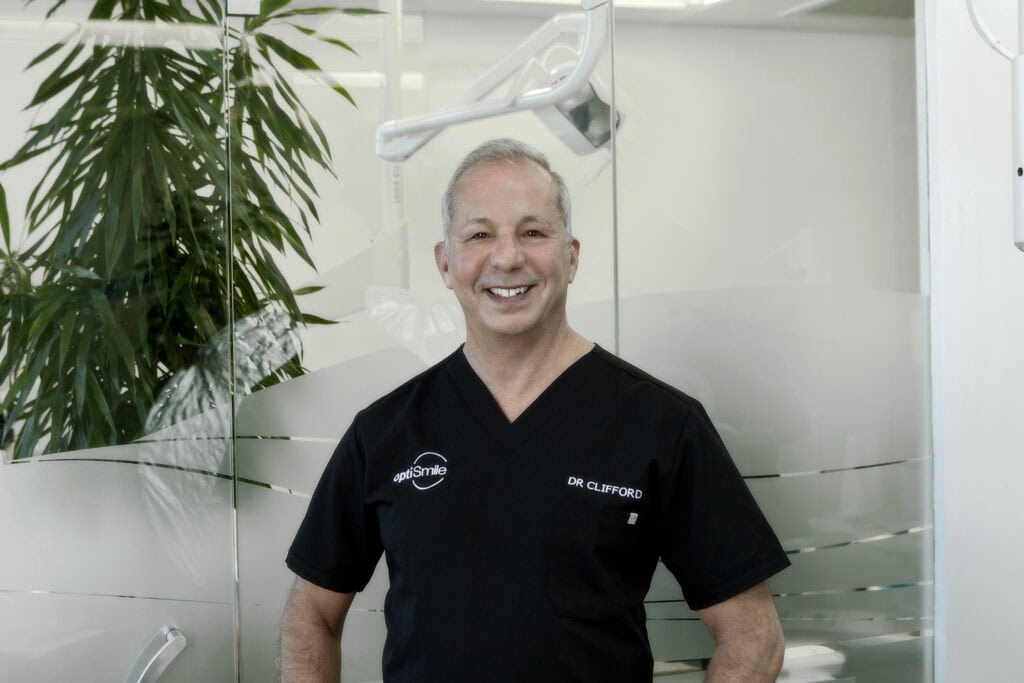
Welcome back to Save Your Money, Save Your Teeth, where we look at what genuinely protects your teeth and your wallet. Now last time we spoke about building strong teeth from the inside, that’s nutrition, vitamins, chewing. Today we’re talking about protecting them from the outside, because it doesn’t matter how well built a tooth is if it meets a hockey stick at speed. Every winter season the same thing happens. A child comes off the field with a front tooth in their hand, or worse, in the grass somewhere, and almost every one of those injuries was preventable for the price of a decent mouthguard. So today: custom versus the boil and bite from the chemist, whether a mouthguard can really protect against concussion, what to do in the first 10 minutes when a tooth is knocked out, and why weightlifters and scuba divers should be paying attention too. Joining us as always is Dr Clifford Yudelman from OptiSmile in Sea Point, Cape Town. Dr Yudelman, welcome back.
[Dr Clifford Yudelman – OptiSmile] (1:09 – 1:22)
Thanks Eon, thanks for having me back. Great to be back here. We’ve been going like two and a half years now, we’re at number 125, soon we’ll be at 150.
[Eon Engelbrecht – E-Radio-SA] (1:22 – 1:26)
Yes, yes, now we’re going, going like a Boeing.
[Dr Clifford Yudelman – OptiSmile] (1:28 – 1:33)
Speaking of Boeings, what about that aeroplane flying over the rugby, wow.
[Eon Engelbrecht – E-Radio-SA] (1:33 – 1:40)
Yeah, people are still talking about it and they actually made a computer game. Did you see they made a computer game? It’s crazy.
[Dr Clifford Yudelman – OptiSmile] (1:40 – 1:44)
To see if you can get closer. Yeah, yeah, yeah, yeah.
[Eon Engelbrecht – E-Radio-SA] (1:44 – 2:01)
The goal of the game is to get as close as you can, as low as you can, but not to crash into the stadium. I think it’s brilliant. I promise you, I’ll send you the link. Oh, it’s brilliant. But anyway, Dr Yudelman, getting back to today’s discussion.
[Dr Clifford Yudelman – OptiSmile] (2:01 – 2:08)
Yes, well, it’s very on topic, because we’re talking about sports, you know, the rugby, they’re all wearing mouthguards.
[Eon Engelbrecht – E-Radio-SA] (2:08 – 2:09)
That’s right.
[Dr Clifford Yudelman – OptiSmile] (2:09 – 2:10)
Okay, good one.
[Eon Engelbrecht – E-Radio-SA] (2:11 – 2:19)
But why is a custom made mouthguard so much better than the boil and bite ones from the shop? I mean, isn’t a mouthguard a mouthguard?
[Dr Clifford Yudelman – OptiSmile] (2:20 – 3:29)
So look, it’s better than nothing, the boil and bite, but the difference only shows up after something’s already gone wrong. You know, boil and bite is generic. It’s bulky. It doesn’t usually fit properly. The kids end up clenching just to keep it in. For proper sports, if you’re playing high school rugby or hockey, like you mentioned, or netball, any of those things where you could get an elbow in your jaw, an actual proper bite guard or sports guard made by a dentist is way better. A custom one is made from an actual scan, a very accurate scan of your teeth, or if a dentist doesn’t have a scanner, with a goop that goes in your mouth. These days most things are done with scanners if the dentist is up to date, but the goop worked for many years and it still does. They fit very snugly. You can still breathe, you can talk, and people actually wear it. The kids won’t wear it if it doesn’t fit properly and it’s not comfortable.
[Eon Engelbrecht – E-Radio-SA] (3:30 – 3:35)
And can a mouthguard actually prevent concussion, or is it really just about the teeth?
[Dr Clifford Yudelman – OptiSmile] (3:36 – 4:53)
So you have to be a bit careful here. The mouthguard reliably protects your teeth, your lips and your jaw. That’s the real job. There is evidence that shows it can soften jaw-related forces going up into the skull, but it’s not a guarantee that if you wear a sports mouthguard you’re going to prevent a concussion. You can still get knocked out. But if you think of a case like you mentioned, hockey, if you get hit in the mouth, that can save you from a lifetime of crowns, root canals, implants. It’s mainly to protect your teeth. I know in boxing they always wear them in any professional match. In fact, I’ve been to watch quite a bit of boxing because my son is a professional boxer, and if the mouthguard comes out during the fight, they stop the fight until the mouthguard goes back in. Sometimes the newer boxers don’t have properly fitting mouthguards and they don’t stay in, and those guys often get knocked out even with a mouthguard in place. So at least their teeth survive.
[Eon Engelbrecht – E-Radio-SA] (4:54 – 5:02)
Okay. And let’s say my child has braces, can they still wear a mouthguard for rugby or hockey?
[Dr Clifford Yudelman – OptiSmile] (5:02 – 5:17)
Yes, there are special orthodontic mouthguards that can work around the braces. And yeah, it’s very important, because the brackets can tear up your lips. You really want to protect the mouth when you’ve got braces.
[Eon Engelbrecht – E-Radio-SA] (5:19 – 5:28)
Which sports actually need a mouthguard? Is it just rugby, or should cricketers and cyclists and skateboarders be wearing them too, doctor?
[Dr Clifford Yudelman – OptiSmile] (5:28 – 7:03)
So look, rugby and hockey are obvious. Cricket, with fast balls coming in. Obviously boxing and MMA, you need a professional one depending on your weight class. Even if the dentist makes one, it can’t just be the same as for, say, high school netball. You need a professional grade. It’s called a triple laminate. A properly fitting one for water polo is important too. Less obvious is if you’re doing enduro, doing stunts on bicycles, skateboarding. I don’t think cyclists, horse riders and trail runners generally wear them, but it can definitely protect your teeth in those cases. And that’s normally from falling. If you can fall on your face, then it can help. I recently had a patient who is a trail runner and she runs at night, and she landed on one tooth and knocked it clean out. It didn’t actually come out, it got pushed right up into her face somewhere, and she had to go to the hospital and get it removed. If she was wearing a mouthguard when she was running, she could have avoided that. So any time you feel like you’re in danger of falling or landing on your face, it’s much better to wear one, because of the lifetime of treatment and the pain, all of that. It’s kind of a no brainer, as we say in South Africa.
[Eon Engelbrecht – E-Radio-SA] (7:04 – 7:19)
I know we spoke about this before, but just for our new listeners, we have a situation where a tooth gets knocked out on the field. Can you walk us through the first 10 minutes or so? And also, are those Save-A-Tooth kits worth having at schools?
[Dr Clifford Yudelman – OptiSmile] (7:20 – 8:56)
Yeah, so I haven’t seen too many Save-A-Tooth kits in South Africa, but as I mentioned in the podcast we did about this, when I was in California our dental practice used to donate a Save-A-Tooth kit to all the local sports teams, and they did get used on various occasions. But the first 10 minutes is very, very important. If the tooth gets knocked out completely, you pick it up by the crown, which is the white part, not by the red bit, which is the root. You should try not to touch the root at all. It’s got little hairs or fibres on it. If it’s clean, you can put it straight back in. Otherwise, if it’s got sand on it or soil, you rinse it gently and then you pop it straight back in the socket. Often the socket isn’t damaged when a tooth gets knocked clean out. If you can’t get it straight back in where it belongs, then you can put it in milk, or even the child’s own saliva, but not in water. So even if the child is bleeding and there’s a lot of saliva, they can spit. If you spit into a little Tupperware or a glass and put the tooth in that, it will nourish the tooth until you can get to a dentist. If it’s saved properly like that and you get to the dentist within an hour, it could possibly be re-implanted, but the ideal is to get it back in within the first 5, 10, 15 minutes. The sooner the better.
[Eon Engelbrecht – E-Radio-SA] (8:57 – 9:05)
And what if it’s a baby tooth that’s knocked out, or the tooth isn’t out but it’s loose or pushed in? Does the advice change?
[Dr Clifford Yudelman – OptiSmile] (9:06 – 10:14)
100%. So a baby tooth knocked out, don’t put it back in. You can damage the underlying adult tooth. You must still get it checked. If a baby tooth is just loose or pushed in, don’t try and wiggle it or fix it yourself. Give the child a soft diet and call your dentist, go straight to the dentist. If it’s a very young child and you’re in Cape Town, you can go to the children’s hospital. They almost always have, well, they’re supposed to have an oral surgeon on call or on duty depending on the day and the time of day. If it’s during the day, there are usually oral surgeons operating at these various hospitals. That example I gave you before about my own patient who fell was on a Saturday night. I sent her straight to Christiaan Barnard. I contacted the emergency room, they got the oral surgeon on duty to give me a call, and he went in to splint her other teeth that could be saved. That’s very important. You don’t want to wait until Monday and then call your dentist, because then you could lose more than one tooth.
[Eon Engelbrecht – E-Radio-SA] (10:15 – 10:21)
Yeah. And for the gym bunnies, should people who lift heavy weights in the gym be wearing a mouthguard as well?
[Dr Clifford Yudelman – OptiSmile] (10:21 – 10:54)
Yeah, that often surprises people. When you do heavy lifting, there are enormous clenching forces over time. We do see patients that crack their teeth and their fillings, and any teeth that have big fillings get cracked. You can get a special one. It doesn’t have to be a very thick mouthguard, it just gives you some cushioning when you’re lifting very heavy weights, so that you can clench if you want to without damaging your teeth.
[Eon Engelbrecht – E-Radio-SA] (10:54 – 10:59)
Okay. And how often should a growing child’s mouthguard be replaced?
[Dr Clifford Yudelman – OptiSmile] (10:59 – 12:19)
It depends on the age of the child and whether they’re still losing teeth, or how they’re growing. But normally it’s once a year. The teeth do move fast. You should replace it the moment it stops fitting snugly. Depending on the impact and the type of sport kids are playing, if they’re that young and they’ve still got baby teeth, a very well-fitting over-the-counter boil and bite may be okay, because if you’ve got to replace it every three to six months it could be more cost-effective, and they’re not normally playing such hectic sports with that much contact at that age. So I take back what I said earlier, that was more to do with high school and people whose teeth are already fully in and not growing. The kids you’ve got to be careful with are the ones with the so-called bucky teeth that stick forwards and the lip doesn’t cover them when they’re speaking or smiling. They need extra care. In fact, I would say children whose teeth stick forward should get very early orthodontics to move them back in. It’s not only for cosmetic and jaw development considerations, they’re very prone to getting those front teeth knocked out. And I don’t mean by bullies either.
[Eon Engelbrecht – E-Radio-SA] (12:21 – 12:32)
Okay. And then something completely different now, if we can talk about scuba diving regulators. Do they cause jaw pain, and is there a custom option?
[Dr Clifford Yudelman – OptiSmile] (12:33 – 13:14)
So I haven’t made one since I’ve been in South Africa, but in Australia I did make custom scuba regulators. I used to dive a lot. I haven’t dived in about 15 years, unfortunately. Those regulators come in different qualities, and if you don’t have your own regulator, even if you go snorkelling, they can strain your jaw muscles and your joints. If you do a lot of scuba diving, you should speak to a dentist about a custom scuba regulator. I think it would make diving much more fun and more comfortable.
[Eon Engelbrecht – E-Radio-SA] (13:14 – 13:23)
And just finally, Dr Yudelman, does medical aid cover a sports mouthguard as a preventative benefit?
[Dr Clifford Yudelman – OptiSmile] (13:23 – 13:59)
So it varies a lot. I don’t actually bill medical aid, so the honest answer is I don’t really know. When we make them for patients, we give them a statement or an invoice and they probably send it in to their medical aid. I would think that the medical aid should cover it, because the cost of a mouthguard is trivial against the cost of any kind of trauma and long-term treatment. Prevention shouldn’t wait for reimbursement rules. I think we shouldn’t let the medical aid dictate to us what we should or shouldn’t do with our bodies or our mouths.
[Eon Engelbrecht – E-Radio-SA] (13:59 – 14:17)
I think if there’s one thing we can take away from this today, it is that a mouthguard is not sports equipment, it is insurance. And it’s the cheapest insurance in dentistry, because one saved front tooth pays for decades of protection. I’m sure you agree, Dr Yudelman.
[Dr Clifford Yudelman – OptiSmile] (14:18 – 14:50)
Yes, 100%. That’s why we do these podcasts, to help people save their money and save their teeth. And hopefully people listening to today’s podcast go out and do the right thing. Over the next several years, or however long the podcasts are online, and these days I think everything is going to be online forever, so until someone records a better podcast about mouthguards, this one will hopefully save lots of teeth.
[Eon Engelbrecht – E-Radio-SA] (14:51 – 15:16)
Let’s hope so. But Dr Yudelman, thank you so much once again for all your time. We appreciate it. Thank you very much, and I’ll speak to you next week. Absolutely. And next week we’re talking about stress and the oral cavity: cortisol, gums and more. We’ll see about that in next week’s podcast. This has been Save Your Money, Save Your Teeth. Protect it before you have to replace it.
[OptiSmile Announcer] (15:36 – 16:20)
Discover the world of dental excellence with OptiSmile. Join us for a weekly podcast featuring Dr Clifford Yudelman, a seasoned expert with 40 years of dental experience across four continents. Gain unique insights and expert dental advice by visiting OptiSmile.co.za for articles that illuminate the path to optimal oral health. If you’re seeking unparalleled dental care in Cape Town, get in touch with OptiSmile or book directly online on OptiSmile.co.za. OptiSmile, where global expertise meets local care.
Disclaimer: The content provided in this podcast, “Save Your Money Save Your Teeth” on Medical Mondays, is for informational and educational purposes only. It is not intended to serve as dental or medical advice. The insights and opinions expressed by Dr. Clifford Yudelman and any guests are designed to foster a better understanding of dental health, preventive measures, and general well-being, but should not be interpreted as professional dental or medical recommendations.Dr. Clifford Yudelman does not diagnose, treat, or offer prevention strategies for any health conditions directly through this podcast. This platform is not a substitute for the personalized care and advice provided by a licensed dental or healthcare professional. We strongly encourage our listeners to consult with their own dental care providers to address individual dental health needs and concerns.The information shared here aims to empower listeners with knowledge about dental health but must not be used as a basis for making health-related decisions without professional guidance. Your dental care provider is the best source of advice about your dental and overall health. Please always seek the advice of your dentist or other qualified health professionals regarding any questions or concerns about your dental health.