Chapters
Introduction
[00:00:06]
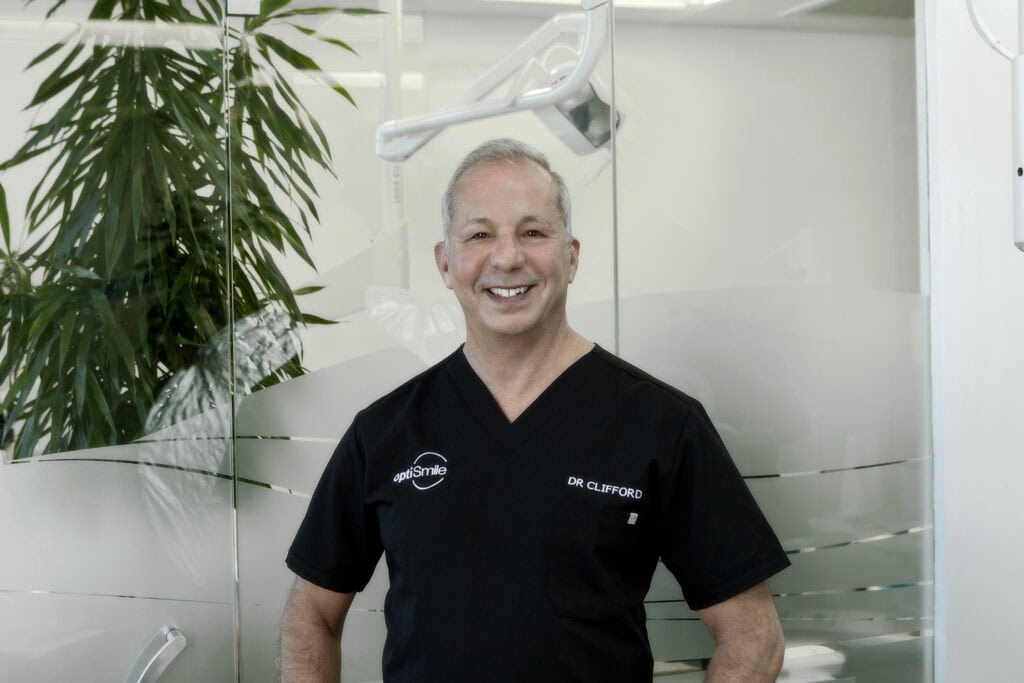
Welcome to Save Your Money and Save Your Teeth, the podcast where curiosity meets dentistry. Host Eon Engelbrecht from E-Radio chats with Dr. Clifford Yudelman of OptiSmile. This episode delves into the world of take-home teeth whitening kits, offering practical advice and insights from a consumer’s perspective.
Understanding Take-Home Whitening Kits
[00:01:36]
Dr. Yudelman explains the different types of take-home teeth whitening kits available: Custom-Fitted Whitening Trays and Pre-Filled Whitening Trays like Opalescence Go. He stresses the importance of obtaining kits from licensed dentists to ensure safety.
Comparing Take-Home Kits to In-Chair Treatments
[00:06:32]
Take-home kits provide gradual, significant results, especially when combined with in-chair whitening. Dr. Yudelman shares a success story involving a patient who used Invisalign aligners as whitening trays.
What to Look For When Choosing a Whitening Kit
[00:09:47]
Consult a professional, check the active ingredients, and avoid over-the-counter kits that may not be legal or safe.
Risks Associated with Take-Home Whitening Kits
[00:12:24]
Proper instruction is crucial to avoid gum irritation and ensure even whitening. Professional oversight can help address potential issues like fluorosis.
Expected Timeframe for Results
[00:14:06]
Results vary based on enamel condition and stain type, but noticeable changes can occur within a few days with products like Pola teeth whitening gel.
Combining Take-Home Kits with In-Chair Treatments
[00:18:46]
For optimal results, Dr. Yudelman recommends combining take-home kits with in-chair treatments. This dual approach enhances and prolongs whitening effects.
Importance of Following Instructions Precisely
[00:19:53]
Adhering to guidelines is key to ensuring safety and avoiding mistakes like overuse of gel or ignoring existing dental work.
Common Mistakes with Take-Home Kits
[00:24:06]
Overusing gel, inconsistent usage, and ignoring dietary restrictions are common mistakes that hinder progress.
Managing Sensitivity
[00:26:49]
Using desensitizing toothpaste and adjusting the treatment frequency can help manage sensitivity during the teeth whitening process.
Cost Comparison: Take-Home Kits vs Professional Treatments
[00:28:13]
Take-home kits are more affordable, with custom trays costing around 2000 Rand and gel syringes at 380 Rand each. In-chair treatments are more expensive but may yield faster results.
Conclusion and Upcoming Topics
[00:31:55]
Take-home whitening kits are cost-effective, and their additional gum health benefits make them a smart choice. Tune in next week for a discussion on non-professional whitening methods.
Transcript
[Eon Engelbrecht E-Radio] (0:04 – 0:55)
Welcome again to Save Your Money and Save Your Teeth, the go-to podcast where curiosity meets dentistry, straight from the experts. I’m Eon, and every week I’m chatting to Dr Clifford Yudelman from OptiSmile, and we take a deep dive into the world of dental care from a consumer’s perspective. So, if you’re looking to brighten your smile or maybe just protect your wallet, we’ve got you covered with practical advice and the latest insights.
So, stay tuned as we uncover the secrets to maintaining both your dental health and your finances. Today, we’ll be talking about take-home kits, continuing our discussion on teeth whitening and bright smiles with clear answers by Dr Clifford Yudelman. Welcome back, Doctor.
[Dr Clifford Yudelman – OptiSmile] (0:55 – 1:36)
Thanks! I hope you had a great week, and thanks for having me on again. I’m really loving doing these podcasts. I feel that if people listen to today’s podcast, they won’t make mistakes or spend too much money, or more than they need to, and this is one of my favourite topics. Take-home kits are my best recommendation for patients to get whiter teeth and also healthier gums.
There are other benefits to take-home teeth whitening trays and gels, so we’ll get right into it.
[Eon Engelbrecht E-Radio] (1:36 – 1:46)
So, last week, you also mentioned take-home whitening kits. Can you tell us what types of take-home whitening kits are available and how do they work?
[Dr Clifford Yudelman – OptiSmile] (1:47 – 6:31)
Okay, fantastic. So, all teeth whitening that works well—excuse the English—but effective teeth whitening in this day and age almost always uses, or in fact, in every case, uses a form of hydrogen peroxide. In South Africa, and most countries, hydrogen peroxide is regulated almost as if it’s a drug.
It can only be dispensed by a licensed dentist or a hygienist working under a dentist. If you go to Dis-Chem or Clicks and buy a take-home kit that has hydrogen peroxide in it, it’s probably not legal. Maybe there’s some loophole that’s allowed it on the shelf.
And if you’ve got teeth whitening strips or a kit from the U.S., that could be legitimate, could be a proper product. I believe they are allowed to sell them there. They’re these whitening strips—that type of stuff we’re going to talk about next week.
The types of take-home whitening kits that are available from a dentist are what we’re talking about today. So, there are pre-filled trays. The one I used quite a lot, nine or ten years ago, was called Opalescence Go.
It’s a box. If I remember correctly, it’s 10 trays. They’re pre-filled.
You just peel them open and stick them in. They actually work reasonably well. It’s a professional product.
It can end up being quite expensive because one box will not usually do the trick. There are also professional teeth whitening strips and things like that, but I think we’ll leave the strips for next time. So, custom-fitted trays are what we’re talking about mainly today.
Custom-fitted trays from a dentist or hygienist offer a precise fit, and we make them at OptiSmile. We either scan you with an iTero scanner and we have models printed. We’ll soon be printing the models in-house with our own 3D printer.
Then, we use a vacuum former to melt a thin sheet of plastic, and then we vacuum it over the model. Then, we trim it at OptiSmile. We don’t scallop it or trim it to the tooth edge.
We actually cover a little bit of your gum as well, and it creates a really good seal. So, there’s a lot that goes into making a good tray. The other way that it’s done is you take a mould using a very quick-setting alginate material, which is a powder that you mix with water.
We put that in your mouth, then we take a mould and pour up plaster, Paris or stone models. We let that sit, trim them, and then do the same vacuum forming. In our practice, the hygienist, dentist, or even the dental assistants are able to make those trays.
There’s quite a lot involved in making a really good and well-fitting tray. It’s very important that the trays fit very well. If you get a tray from a place that’s not a licensed dentist, or even from a dentist where the hygienist or assistant was unsupervised, and it doesn’t fit properly, then you may not get the results you’re looking for, or you may end up swallowing a lot of gel.
At OptiSmile, we charge around 2,000 Rand to make custom trays, and then we actually sell the gel independently. Some patients might only need trays to touch up because they’ve been whitening for years and they’ve lost their trays, so they’ll buy one tube of gel. Other patients may have very dark teeth and want to whiten for six or even eight weeks, so they can buy four or five tubes of gel or syringes.
We customise it per patient. We sell the gel for, at the moment, about 380 Rand per syringe. An in-chair whitening, not including cleaning and check-up, if you get three syringes and some trays, it’s around 3,000 Rand, which is a fairly reasonable cost given how expensive things are these days.
[Eon Engelbrecht E-Radio] (6:32 – 6:40)
Yeah, and in terms of results, how do take-home kits compare to in-chair treatments, Doctor?
[Dr Clifford Yudelman – OptiSmile] (6:41 – 9:46)
So, we get gradual results. I had a patient in yesterday who is doing Invisalign. With Invisalign, we treat the Invisalign trays as take-home trays in most cases, and we give patients gel to put in their Invisalign trays.
That way, they save the 2,000 Rand on getting custom trays. They’re going to be wearing these Invisalign trays anyway. The patient has done about four or five sessions of take-home, and he was just beaming.
He thought his teeth were so much whiter. I could see that they did look whiter, but we see a lot of teeth, so I pulled up the photos, and it was quite dramatic. I warned him.
I said, if you stop now, they’ll drop back almost halfway to where they were. So, the thing is, it’s gradual. You have to keep going until you don’t see any further whitening, and then you go a little longer, maybe a week extra, because that way, when you stop, the teeth don’t rebound too far.
Like we said last week, we often use it to maintain the in-chair results. In fact, at OptiSmile, we almost insist. In fact, we do insist, but of course, everyone has the right to choose their own treatment, and some people just refuse take-home trays, even with us being quite insistent on it.
Yes, the main use, if you’ve done in-chair, is to do the take-home as well. Some people think it’s better for sensitive teeth due to the slower process, but in fact, we’ll still do in-chair whitening on people with even very sensitive teeth because we cover the areas that are unprotected. We only bleach enamel.
We don’t put bleach on cracks or leaking fillings or at the gum line where you’re already sensitive. We cover that up with the gum protection gel. But then, that’s where trays are very important, because the trays can be used for fluoride treatments, which we don’t really dispense anymore at OptiSmile. We use something called tooth mousse, which is a preventive material.
We’ve spoken about it before. It’s like an anti-cavity conditioner for your teeth. We also have concentrated desensitisers, something called UltraEZ from Ultradent.
It’s similar to Opalescence, the people that make Opalescence. For people with very, very sensitive teeth, or people who’ve had in-chair whitening or unprofessional whitening and now have very sensitive teeth, we might give them these trays and let them desensitise for two or three days or two or three sessions before they even put gel on their teeth. But yes, after in-chair whitening, it’s really good to have these trays for a number of reasons.
[Eon Engelbrecht E-Radio] (9:47 – 9:53)
And what should someone look out for when purchasing a take-home whitening kit?
[Dr Clifford Yudelman – OptiSmile] (9:54 – 12:23)
I mean, you say purchasing, but it’s more a case of consulting with a dentist that’s got a lot of experience in teeth whitening and customising it for you, making sure that you don’t have fillings or veneers that aren’t going to whiten. And it’s really more a case of it being dispensed or prescribed like a doctor prescribing an antibiotic. It should be customised for you.
You must always be sure if you’ve got trays that you got from a dentist and you’ve kept them—they last a number of years—always check the active ingredient. Because some people have had take-home trays and they’ve used the 10% carbamide peroxide, which is an overnight one, they are used to wearing it overnight. And then they may walk into a dentist and say, I’ve got these trays and I want to buy some gel.
So that’s where this purchasing comes in. At OptiSmile, we won’t sell a teeth whitening gel over the counter. And we’ll often get people—we have a gym next door—and people come past or they’re visiting from Johannesburg and they pop in and they say, oh, my friend comes here to get teeth whitening and I want to buy some gel.
And we just won’t—we refuse to sell gel to someone that has not seen one of the dentists or that we haven’t prescribed it for because we need to instruct them on how to use it properly. If we sold them a hydrogen peroxide 7.5% or 9.5% over the counter and they went and put it in their trays and they used it overnight, it would definitely burn their gums and cause all kinds of sensitivity and problems. So, you’ve got to treat it like a medication.
The other thing is, so always just read the ingredients and get customised instructions. The best, as I said, is for the dentist to prescribe that for you or a hygienist under the supervision of a dentist. And also, if you do have sensitive teeth, make sure that you get some desensitising gels or you get some tooth mousse, which has got desensitising properties.
[Eon Engelbrecht E-Radio] (12:24 – 12:32)
So, Doctor, for those who are concerned, are there any risks associated with using these take-home whitening kits?
[Dr Clifford Yudelman – OptiSmile] (12:33 – 14:05)
Yes, so we’ve already covered some of that now. You need proper instruction on how to do it. So we always show the patients in their mouth and in the trays exactly how much to put.
In most cases, you’re putting similar to a grain of rice, but it’s customised depending on the size of your tooth. The gel should be minimal so it just spreads out over your teeth and doesn’t go onto your gums. If you haven’t been instructed properly or you’ve been instructed incorrectly or it’s like a DIY kit and you put too much gel and it’s a stronger hydrogen peroxide gel, you will irritate your gums and you will get sensitivity.
If you’re putting way too little, you could get uneven whitening or initially the first few days your teeth could be whitening unevenly, which is not a big deal because eventually the gel does just spread through the tooth and whitens everything. A lot of patients have fluorosis or little white spots on their teeth which are hardly visible and as soon as they start whitening, it can become very apparent initially. It does even out, but those are the things that your dentist will be able to warn you about before you start.
Other risks associated with using take-home whitening: if you haven’t heard our previous two podcasts, some of the things would be avoiding enamel damage and avoiding things that are not professionally approved.
[Eon Engelbrecht E-Radio] (14:06 – 14:14)
Now, how long does it take to see results? I think a lot of listeners will ask that question as well.
[Dr Clifford Yudelman – OptiSmile] (14:14 – 17:14)
Yes. Even with the in-chair and the take-home, the results are variable according to the colour of your own teeth, the enamel, and the type of staining that you have according to your age. It can be effective even for someone’s teeth.
If someone’s got very yellow or brown teeth and it’s been like that their whole life, they may do a carbamide peroxide overnight for as long as three to six months. I’m on a study group that I mentioned where they post a lot of cases and so on. In the UK, in fact, they can’t sell or even obtain any very strong peroxides.
The overnight one, carbamide peroxide, which is a 10% carbamide peroxide which breaks down to 3% hydrogen peroxide—I think that’s the strongest one they can get. If they get a 6% hydrogen peroxide in the UK, that’s considered a very strong substance. I’m not that familiar with the UK, but I’ve seen it on groups that they just can’t get the 9.5% peroxide. I think the 6% is for medically necessary in-chair—it’s got to be done in-chair by a dentist. In South Africa, we can dispense 9.5% and show you how to use it and you can take it home. We’ve been doing it for years. I think in most other countries, it’s just the UK and maybe some other EU countries that are very strict like that. We use different ones.
If you haven’t heard the previous podcast, we like to use Pola, which is from Australia. It’s a very good company, P-O-L-A. We like to use the 7.5% or the 9.5% peroxide. We see results with that very, very quickly. Two or three days, the teeth are looking much whiter. Back to the original question, which is how long does it take to see results?
We have patients continue with that sometimes for up to two weeks and that’s sufficient. They stop and there’s no rebound. If it’s a 10% carbamide peroxide gel like Opalescence or, as I mentioned before, there’s a Zoom one which we don’t like.
We used to see a lot of sensitivity for some reason or another with the Zoom product, but the Opalescence we do use in aligners because people are wearing the aligners anyway. Sometimes patients will carry on with that for up to a month because it’s much weaker and slower. The results vary from one patient to another.
It’s a gradual process which often looks more natural and it’s not like the next day you get to work and people say, what have you done? People always refer to that episode in Friends where—is it Ross?
[Eon Engelbrecht E-Radio] (17:14 – 17:15)
Is it Chandler?
[Dr Clifford Yudelman – OptiSmile] (17:15 – 18:45)
What’s his name? Yeah, yeah. One of them gets their teeth whitened way too white and they’re glowing in the dark.
With in-chair or take-home whitening, you’re not going to get a result like that. Your teeth will always look natural. When you see these Instagram people with very, very white teeth, it’s either a filter or they’ve gone off to Turkey and they got very, very white veneers.
Teeth whitening will never do that. You must always have realistic expectations and that’s what a professional hygienist and dentist will explain to you. We can’t always predict.
We sometimes get patients where we think their teeth will whiten very nicely and it just takes an awful long time. Other patients, we’re not sure how well it will work and it looks amazing. It’s always better to under-promise and over-deliver.
Patients need to set realistic expectations. If you’re going to a high school reunion or a wedding next week, then that’s a case where you might want to do an in-chair and then a week or two of take-home; the in-chair will just get things going a bit quicker. If you’re really in a hurry, you could do that and then finish with another in-chair, and then you always just maintain with take-home.
We call it WOW—way of whitening. We customise it for each patient and I’m sure your dentist or hygienist can as well.
[Eon Engelbrecht E-Radio] (18:46 – 18:56)
I want to ask you, Doctor, is it possible to combine take-home whitening kits with in-chair treatments if you’re looking for better results?
[Dr Clifford Yudelman – OptiSmile] (18:57 – 19:52)
One hundred percent. That’s exactly what I’ve been saying all along—the take-home kits are often used for maintenance, but it’s not even a case of maintenance. That whitening effect that you get after an in-chair is fairly temporary.
It won’t go all the way back to where they were, but if you just do an in-chair and you don’t do take-home, it’s not going to be that effective. If for some reason someone manages to do four sessions of in-chair and you put up with the zingers and you’ve really had a very intense in-chair session, you may get some moderate lasting results, but it’s really not something that I recommend. Go back and listen to last week’s one if you want to know more about zingers.
Combining treatments really is a good way to go.
[Eon Engelbrecht E-Radio] (19:52 – 19:59)
How important is it to follow the instructions on these take-home kits exactly?
[Dr Clifford Yudelman – OptiSmile] (20:00 – 24:05)
Precise adherence to these instructions is very important. We’ve taken it a step further at OptiSmile. Instead of just handing someone some gel and trays and having the assistant or even just showing them very quickly, we make sure that they fully understand.
We have them do it. We even send them a PDF by email that they have to sign before they get a copy of it, so we’ve got it on file that they received proper written instructions. We give patients—I know it sounds like overkill and a lot of dentists aren’t doing it—we give patients a full informed consent as if it’s a medical procedure because we tell them if you have any veneers or you have any fillings or crowns that these are not going to whiten, and they’ve signed off on that.
If you just go to a hygienist that’s maybe moonlighting down the road and just after doing your whitening and not consulting with a dentist or maybe not licensed to practise independently where they get trained to do a full exam and X-rays and to inform you the same way a dentist would inform you, you’re not going to be very happy if you whiten your teeth and you’ve got a single crown. In fact, that happened—only ever happened once at OptiSmile. I had a young gentleman who was a long-term patient at the practice and his teeth were lovely; they were white.
He had a surfing accident when he was young and somebody did—not OptiSmile, another dentist, actually a prosthodontist—did a perfectly matching single crown on his teeth, on his one front tooth, which is the most difficult cosmetic procedure we can do is to match a single front tooth, and it was so well done that the hygienist at the time at OptiSmile was cleaning his teeth and someone unbeknown to him had given him a birthday present and prepaid for a whitening treatment for him to get his teeth whitened, and he was about 18 at the time and he was oblivious. He couldn’t even remember that he had a crown, and the hygienist did this whitening without one of us first checking or looking at the X-ray, and yeah, it was a disaster to be honest because his teeth whitened quite a lot—they were already white—and they whitened a lot, and the auntie or I can’t remember who it was that bought him the teeth whitening, he went home and his teeth were white and then this crown that matched perfectly looked relatively yellow, and we were like, no, don’t worry, it will fade.
In those days, the hygienist was trying to do three or even four in-chair whitenings. He had zingers; it was like a whole story, but if you warn people about the zingers, sometimes they’ll say, okay, go ahead. But yeah, the guy had tears in his eyes and then he came back and we said, no, come back a few weeks later and we’ll see, and then he came back a few weeks later and the single front tooth—it looked like someone did a terrible crown for him, and then a few weeks later and his teeth were still white and we obviously didn’t give him take-home trays, and we ended up having to replace that front crown for him. So yeah, don’t make that mistake, or if you’re a dentist, make sure you look at the patients beforehand.
From what I remember, I think we even redid the front crown for him at no charge, and we were very apologetic, and it’s good to have a good relationship with your patients, but everyone was happy in the end.
[Eon Engelbrecht E-Radio] (24:06 – 24:17)
And now that you mentioned mistakes, Doctor, in your experience, what common mistakes do people make when they take home whitening kits home?
[Dr Clifford Yudelman – OptiSmile] (24:18 – 26:48)
They think more gel will work quicker, so they put in too much gel and like we said before, that will irritate your gums. I’ve had patients that treat it like a toxic poison when in fact it isn’t. We make hydrogen peroxide in our own saliva, and these gels, if they’re medically formulated from a decent company like Pola, they’re not toxic.
Then people take out the trays and they brush really hard and they irritate their gums, and then they go back the next day and they put too much gel in the trays and the peroxide gets on the gums and they really irritate their gums. So then we get them to stop for a few days—just overdoing it, not following the instructions. If we tell you to use the 7.5% for 30 minutes a day, don’t think that an hour will be better. Definitely don’t use them inconsistently. I tell patients it’s like digging a hole on the beach in the sand. If you just dig a little bit every day, eventually you’ll have a nice big hole—that’s basically like digging all the yellow out of your teeth.
But if you dig one day and then you don’t dig for a few days, you go back and you dig again for two or three days and then you don’t dig and you go back. At the end of a month, you’re sort of one step forward, two steps back. Doing a little bit every day and following the directions is very important.
And then also forgetting to avoid staining foods after in-chair teeth whitening. To be honest, that’s like general advice. I’ve never seen anyone do that, and I’m sure people have done that.
They get an in-chair and they go and have a curry or tomato sauce and supposedly it’s supposed to soak into their teeth and it’s going to be very difficult to remove that. I’ve never personally seen that, but we generally, we always give people that advice and it’s in the written informed consent and in the take-home instructions. So that would be a big mistake—but with in-chair whitening.
And like I said last time, if you’ve got the take-home kits, I don’t think it would be such a big deal because those gels, the take-home gel, will start bleaching out any little bit of tomato sauce or curry, but don’t quote me—just avoid those things. I think that’s always best to follow instructions.
[Eon Engelbrecht E-Radio] (26:49 – 26:52)
And any tips for managing sensitivity, Doctor?
[Dr Clifford Yudelman – OptiSmile] (26:53 – 28:12)
So, with the take-home whitening kits, it’s quite easy to manage sensitivity. We always recommend people use a desensitising toothpaste. There’s quite a few on the market.
We have some special ones at OptiSmile that we’ll dispense. Reducing the frequency of use—so with the Pola 7.5%, you can use it for up to 45 minutes in a single session or two 30-minute sessions a day if you’re in a hurry, and that works really well. But if your teeth are getting a bit sensitive, then you dial back on that.
You can rinse out the trays, clean them out, dry them, and put something like UltraEZ or tooth mousse in the trays and put that in as instructed, whether it’s 10 minutes or half an hour. If there’s one particular tooth that’s got a recession at the gum line, we can paint on—or your dentist can paint on—desensitiser at that spot if it’s sensitive with cold air. We treat sensitivity with Ultradent makes a product called Dentin Desensitizer, and it’s got a little dispensing brush.
We just squirt it out of the syringe and brush it straight on, and that works very nicely.
[Eon Engelbrecht E-Radio] (28:13 – 28:21)
And then finally, what is the average cost of take-home whitening kits compared to professional treatments?
[Dr Clifford Yudelman – OptiSmile] (28:23 – 31:54)
I can’t speak for other dentists in South Africa, but when you look at advertising—so I’m not a big one, I don’t really like the idea of a loss leader. If you see a dentist advertising a special on teeth whitening where it’s normally in-chair plus take-home is normally 8,000 or 9,000 Rand and they’re giving it away for 3,000 Rand, then I would say watch out because there’s no such thing as a free lunch.
If it’s a minimal discount like a Mother’s Day discount or something—Nurses Week—or there’s a little bit of a discount on there and it’s a marketing thing, that would be fine. The in-chair kit themselves, they’re very expensive for the dentist to purchase if they’re using a legit one like Flash because when you buy the kit, you get a credit card that goes into the light and you’ve got to use the light with that gel. I don’t know offhand, but it can be as much as up to 2,000 Rand for a kit.
That’s before the dentist has even touched you, so it can be very expensive. On our website at OptiSmile, if you go to book online, we’ve got different packages where you can have an exam, X-rays and cleaning, and take-home kit, and there’s a package for exam, X-rays, cleaning, in-chair whitening plus take-home kit. I’m sorry, I don’t know the prices offhand, but go to the website.
There are dentists who sort of undersell the take-home whitening trays and gels, and I would just be careful because sometimes maybe those cheap trays are not very nicely made, or they’re purchasing in bulk some kind of generic gel, so I think you always get what you pay for in most cases. At OptiSmile, I do know the price of our take-home whitening. We charge around 2,000 Rand for the trays and 380 Rand per syringe, but we don’t sell a tray with six syringes.
We dispense for the patients. We might send someone home with a 7.5% to use for the first week with two tubes of desensitiser and then maybe even a 9.5% when they come for a follow-up. We include all the follow-ups, there’s no charge, so we take your scan or your moulds, we make your trays, you come back, we show you, we give you written instructions, informed consent, then you come back a week or two weeks later, whatever it is that we tell you, and we take more photos and we check that you’re doing it properly and we dispense more or different gel, and all of that is included in that 2,000 Rand, and then the gels you pay for on their own.
I want to hazard a guess on the in-chair, but to be honest, it’s just slipped my mind right now. We can post it in the notes. I’ll put it in the transcript.
[Eon Engelbrecht E-Radio] (31:55 – 32:05)
Awesome. That is it for another week’s very informative Save Your Money, Save Your Teeth with a big thanks to you, Dr Clifford Yudelman.
[Dr Clifford Yudelman – OptiSmile] (32:05 – 33:54)
Thank you very much. I thought today was a fantastic one. If people are interested in saving their money and saving their teeth and they’ve heard our previous podcasts, some of our early ones were about confidence and cosmetics—having your teeth whitened really does boost one’s self-confidence.
Also, one of the positive side effects of take-home teeth whitening is it’s very good for your gums. If you do suffer from mild gingivitis or your oral hygiene isn’t great. In the States, they sell a very, very mild—a 1% sort of bleaching gel.
They say one of the side effects is your teeth will get white, obviously very slowly, but they sell it especially for gum treatment and even for cavity treatment. There are health benefits of take-home whitening. Obviously, the take-home kits are more affordable, but there’s a bit more of a time and a bit more commitment.
Be sure to listen to our previous podcasts and be sure to tune in next week because next week, we’re talking about the risks and benefits of non-dental or non-professional teeth whitening, things like beauty salons, over-the-counter whitening products compared to professional treatments, some of these other horror stories and so on to do with illegal teeth whitening. Then the very last one will also be on teeth whitening, and that will be teeth whitening tips and advice. It will be like a recap on all of the stuff we’ve spoken about.
There’s still two more teeth whitening podcasts, and I’m looking forward to speaking to you next week.
[Eon Engelbrecht E-Radio] (33:54 – 34:28)
Same here, Dr Yudelman. Thank you so much once again and also a big thanks to our listeners. Remember, while we strive to provide valuable insights, always consult with your own dental professional for advice tailored to your personal health. Don’t forget to subscribe to our podcast for more enlightening discussions and join us again next time as we continue to explore the fascinating intersection of dental health and financial savvy.
Until then, keep smiling and taking great care of your teeth.
[Announcer] (34:49 – 35:33)
Discover the world of dental excellence with OptiSmile. Join us for a weekly podcast featuring Dr Clifford Yudelman, a seasoned expert with 40 years of dental experience across four continents. Gain unique insights and expert dental advice by visiting OptiSmile.co.za for articles that illuminate the path to optimal oral health. If you’re seeking unparalleled dental care in Cape Town, get in touch with OptiSmile or book directly online on OptiSmile.co.za. OptiSmile—where global expertise meets local care.
Disclaimer: The content provided in this podcast, “Save Your Money Save Your Teeth” on Medical Mondays, is for informational and educational purposes only. It is not intended to serve as dental or medical advice. The insights and opinions expressed by Dr. Clifford Yudelman and any guests are designed to foster a better understanding of dental health, preventive measures, and general well-being, but should not be interpreted as professional dental or medical recommendations.Dr. Clifford Yudelman does not diagnose, treat, or offer prevention strategies for any health conditions directly through this podcast. This platform is not a substitute for the personalized care and advice provided by a licensed dental or healthcare professional. We strongly encourage our listeners to consult with their own dental care providers to address individual dental health needs and concerns.The information shared here aims to empower listeners with knowledge about dental health but must not be used as a basis for making health-related decisions without professional guidance. Your dental care provider is the best source of advice about your dental and overall health. Please always seek the advice of your dentist or other qualified health professionals regarding any questions or concerns about your dental health.