Chapters
Introduction to the Podcast
[0:05 – 0:51]
Eon Engelbrecht introduces the podcast “Save Your Money, Save Your Teeth,” highlighting its focus on providing expert dental advice with a consumer-friendly perspective. Dr Clifford Yudelman of OptiSmile is welcomed back to discuss Invisalign and the importance of choosing the right treatment.
Why Choosing Invisalign is Important
[0:51 – 2:34]
Dr Clifford Yudelman discusses why Invisalign is a significant choice for those looking to enhance their smile. He emphasises the discreet and clear nature of Invisalign aligners, the psychological benefits of avoiding traditional braces, and the technological precision of Invisalign.
Assessing Candidacy for Invisalign
[2:34 – 3:32]
Dr Yudelman explains the process of assessing whether a patient is a good candidate for Invisalign. Factors include the complexity of the dental issue, the patient’s lifestyle, and their commitment to wearing the aligners.
The Initial Consultation Process
[3:32 – 5:38]
A detailed explanation of what to expect during the initial consultation, including a comprehensive oral exam, 3D digital scans with the iTero scanner, and the creation of a customised treatment plan using the Invisalign Outcome Simulation tool.
Setting Realistic Expectations
[5:39 – 7:46]
Dr Yudelman discusses the importance of setting realistic expectations for Invisalign treatment, including the commitment required to wear the aligners for 22 hours a day and understanding the treatment’s potential challenges.
Financial Options for Invisalign
[7:47 – 8:52]
The financial flexibility offered at OptiSmile is outlined, including payment plans, upfront discounts, and the possibility of medical aid coverage for Invisalign.
Preparing for the First Set of Aligners
[9:03 – 11:47]
Dr Yudelman provides a step-by-step guide to preparing for the first set of aligners, including instructions on using chewies, cleaning the aligners, and setting up virtual care for progress tracking.
Support During Invisalign Treatment
[12:01 – 14:40]
An overview of the ongoing support available to patients during their Invisalign treatment, including progress assessments, motivational tips, and WhatsApp support from the OptiSmile team.
Success Stories with Invisalign
[14:48 – 17:16]
Dr Yudelman shares success stories from patients who have undergone Invisalign treatment, highlighting the transformative effects on their confidence and overall appearance.
Addressing Common Concerns
[17:27 – 19:17]
Common concerns about Invisalign, such as pain and discomfort, are addressed. Dr Yudelman explains the gentle pressure applied by Invisalign aligners and the difference between Invisalign and generic aligners.
Ensuring Patient Confidence
[19:28 – 21:12]
Dr Yudelman discusses how OptiSmile ensures that patients feel confident and comfortable with their decision to choose Invisalign, emphasising the no-pressure consultation environment and ongoing support.
Closing Remarks and Next Episode Preview
[21:12 – 22:26]
Eon Engelbrecht wraps up the episode, thanking Dr Yudelman and previewing the next episode, which will delve into life with Invisalign and more in-depth information for those seriously considering the treatment.
OptiSmile Promotional Segment
[22:43 – 23:27]
The episode concludes with a promotional segment highlighting OptiSmile’s expertise and inviting listeners to visit OptiSmile’s website for more information and to book appointments.
Transcripts
OptiSmile Podcast 28: The Invisalign Journey – Deciding on Treatment
[Eon Engelbrecht E-Radio] (0:05 – 0:51) Welcome again to Save Your Money, Save Your Teeth here on eRadio. It’s our go-to podcast where curiosity meets dentistry straight from the experts. I’m Eon, and it’s time for us again to chat to Dr Clifford Yudelman to take a nice deep dive into the world of dental care from a consumer’s perspective. Dr Yudelman is, of course, from OptiSmile. Whether you’re looking to brighten your smile or protect your wallet, we’ve got you covered with practical advice and the latest insights. So stick around as we uncover the secrets to maintaining both your dental health and your finances.
Dr Yudelman, welcome back.
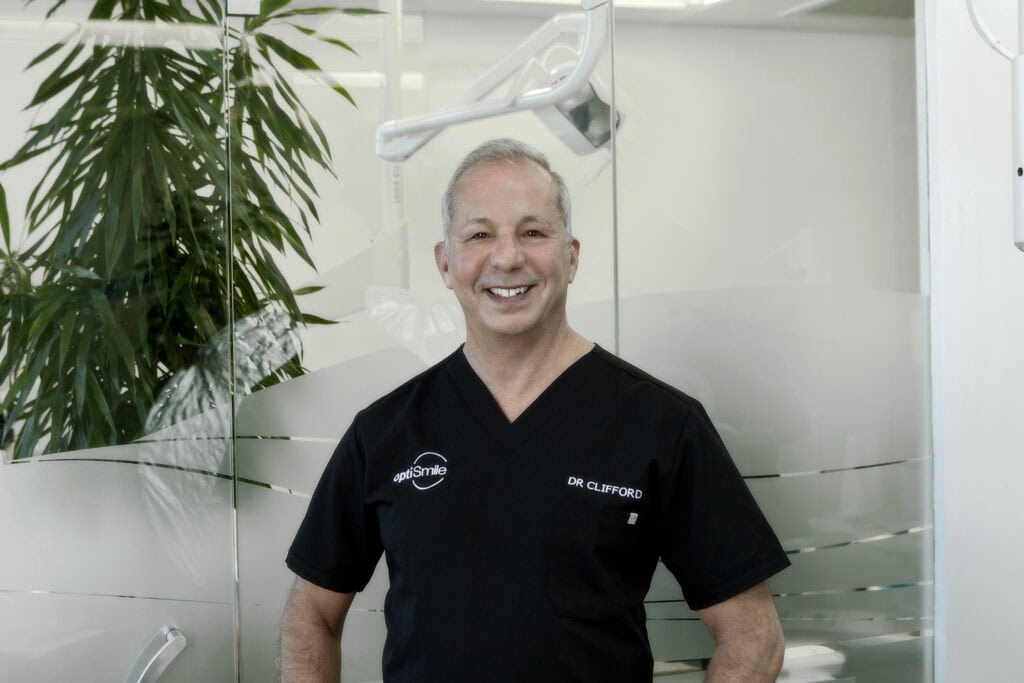
[Dr Clifford Yudelman OptiSmile] (0:51 – 1:05) Thank you. Thanks for having me back. I’m looking forward to today’s episode on Invisalign again, this time about deciding on treatment and sharing a little bit more detail about the actual process.
[Eon Engelbrecht E-Radio] (1:06 – 1:16) So yes, Dr Yudelman, I want to ask you, why is choosing Invisalign an important decision for those looking to enhance their smile?
[Dr Clifford Yudelman OptiSmile] (1:17 – 2:34) Invisalign offers a clear and discreet way to achieve a straighter smile without the need for metal railway tracks or traditional braces. Patients can enjoy the freedom to live their lives without the self-consciousness often associated with crooked teeth, and the prospect of metal brackets and wires for 12 to 18 months can be even more daunting. With Invisalign, it’s almost invisible, clear, and discreet, so most people won’t even notice you’re straightening your teeth. You’ll start to see results after just four to eight weeks, with significant improvements, especially at the front. Without metal brackets and wires, the beauty of your smile can truly emerge, like a butterfly coming out of a cocoon. Invisalign’s advanced technology is very precise, customised to each individual. Using Invisalign is an investment both in your confidence and your long-term dental health. So I think it’s a very important decision.
[Eon Engelbrecht E-Radio] (2:34 – 2:41) So now, Doctor, how do you assess if a patient is a good candidate for Invisalign?
[Dr Clifford Yudelman OptiSmile] (2:42 – 3:32) We assess the complexity of the dental issue to ensure that Invisalign can deliver the desired results. There are very few cases these days, with the latest versions of Invisalign, that require other treatments. Invisalign can handle almost any type of malocclusion or misalignment. We also consider the patient’s lifestyle and commitment level to gauge their compliance with wearing the aligners, which we’ll talk about a bit later. Additionally, we evaluate the patient’s oral health to ensure there are no underlying conditions that could interfere with treatment. Our goal is to match the patient’s expectations with what Invisalign can realistically achieve and create a clear path forward.
[Eon Engelbrecht E-Radio] (3:32 – 3:40) Okay, and what is the initial consultation process like for Invisalign? Can you talk us through it?
[Dr Clifford Yudelman OptiSmile] (3:41 – 5:38) We start with a detailed discussion about your smile goals and concerns, followed by a comprehensive oral exam. We use 3D digital scans with the iTero scanner, which has a feature called an Occlusogram. It’s like a heat map that shows us which teeth are hitting where they shouldn’t be. The touch screen allows us to zoom in and rotate the image, giving us a complete view of the top and bottom teeth from every angle. For many patients, it’s the first time they get to see what their teeth really look like. Patients will receive a customised treatment plan, including an estimated timeline and expected results. Invisalign also offers a unique feature called the Invisalign Outcome Simulation. After we scan you, we can create a simulation of your new smile on the touch screen. Our latest scanner, the iTero 5D, includes the Outcome Simulator Pro, which uses an iPhone or Android app to take a picture of you smiling. By the time we finish scanning, we can show you what your new smile will look like in your own mouth, and we can adjust it on the models to reflect the changes in real-time. This is not just Photoshop; it’s using AI and 3D tools. It’s a very unique feature that only Invisalign offers. We explain all the next steps and make sure the patient is fully informed and confident.
[Eon Engelbrecht E-Radio] (5:39 – 5:56) I like how patients can see beforehand what it will look like. I think that’s very nice, thanks to modern technology. How do you, Dr Yudelman, help patients set realistic expectations for their Invisalign treatment?
[Dr Clifford Yudelman OptiSmile] (5:57 – 7:46) We provide a completely transparent overview of the treatment process, including any potential challenges. As I mentioned, we show digital simulations and discuss the commitment required to wear the aligners for the recommended 22 hours a day. If you don’t think you can comply with that, it’s better not to proceed. You need to wear them all the time, except when eating or cleaning your teeth. If you only wear them 18 hours a day or overnight, it won’t work effectively, and it’s a waste of time and money. We also explain the process, which includes the use of custom attachments designed with AI. These are tiny tooth-coloured bits of plastic bonded to specific teeth, usually at visit number three. We show you what these attachments look like on a model, and once we’ve submitted your plan to Invisalign, we can show you exactly where they’ll go on your teeth. We also explain a procedure called IPR (interproximal reduction), where we polish between the teeth to ensure they don’t collide. This is a very precise procedure, reducing the thickness by 0.2 or 0.3 millimetres – thinner than a fingernail. It’s all digitally simulated and controlled, not a random process. We also discuss the continuous support and regular follow-ups to keep you motivated and on track.
[Eon Engelbrecht E-Radio] (7:47 – 7:54) That’s great. What are the financial options available for patients considering Invisalign?
[Dr Clifford Yudelman OptiSmile] (7:55 – 8:52) At OptiSmile, we offer flexible payment plans tailored to different budgets to make Invisalign accessible. There are discounts for paying upfront, with patients receiving a 15% discount, which not many practices offer. There are also options to pay over 12 months. We provide information so you can check if your medical aid might cover the cost. Some medical aids pay for braces, in which case they will often cover Invisalign as well, usually up to about R35,000 per year. We work closely with patients to find a solution that fits their specific situation, and we also offer outside financing options for those who need them.
[Eon Engelbrecht E-Radio] (8:53 – 9:02) Okay, that’s fantastic. And now, for the preparation process, how do patients prepare for their first set of aligners?
[Dr Clifford Yudelman OptiSmile] (9:03 – 11:47) By this point, patients have had their scans and have seen their ClinCheck, either virtually or in person. We show them the treatment plan, including the number of aligners and the timeline. We’ve sent them frequently asked questions, brochures, and had several discussions with them, so they’re usually well-prepared. A few days before the first appointment, we send more detailed instructions on how to put the aligners in, how to take them out, and how to clean them. We talk about “chewies,” which are small rubber-like tools that look like mini pool noodles. You bite on them every time you put your aligners back in, about 10 or 20 times. We give specific instructions on using chewies and ensure there’s enough time during the appointment to show patients how to handle their aligners. We encourage patients to plan their meals and snacks around the aligner wear time. We also send a link to a video and information on setting up virtual care, where you take pictures of your aligners every week before switching to the next set, and we can track your progress using AI. We help patients mentally prepare for the commitment of wearing aligners. Most patients are very excited and find the process simple. We always make sure that the first two aligners don’t have any attachments or require IPR. You basically come in, and it’s like unboxing a new iPad – there’s a beautiful box, a special case, chewies, and a silk bag for your extra aligners. The aligners come sealed, numbered, and packaged, and we usually give you two to four sets at a time. You’ll return after a month or sometimes longer if using virtual care. We take care of everything, holding your hand every step of the way. We check in with you after a couple of days to see how you’re doing, and you have access to my number, Dr Harris’, Dr Kiera’s, and Dr Kara’s. There are four of us who do Invisalign, and you have our personal WhatsApp numbers should you have any questions. We really try to look after our patients.
[Eon Engelbrecht E-Radio] (11:48 – 11:59) I love how you’re with them every step of the way. I think that’s so important. Well done. What kind of support is available to patients during their Invisalign treatment?
[Dr Clifford Yudelman OptiSmile] (12:01 – 14:40) In addition to what I just mentioned, we make sure… So, in the States, where they’ve been using virtual care for a long time, especially since COVID, they might give someone all 14 aligners if that’s what they need and book them back in 14 weeks later. We prefer a combination of both approaches, judging each patient individually. Some people are very adaptable and good at managing things themselves, while others, especially older patients, prefer more hands-on guidance. We usually see them after a month. After anywhere from four to eight aligners, we do something called a progress assessment. We scan you with the iTero scanner, with your aligners out, and the scan goes onto the cloud. If you’re on aligner number eight, for example, the system pulls in where your teeth should be on aligner number eight and compares it to where they actually are. It’s incredibly accurate, unlike other systems, with an accuracy of 0.2 millimetres. If a tooth was supposed to move 0.5 millimetres and it’s only moved 0.4 millimetres, it’ll show up as yellow instead of green. We can then discuss whether you’re wearing the aligners for 22 hours a day or if you’re struggling with compliance. We offer coaching, encouragement, and motivational tips. In cases where patients can’t get the full 22 hours in, we might advise slowing down the treatment and changing aligners every 10 or even 14 days. The more you wear them, the quicker the process goes, and the sooner you can switch to the next set. If you’re not wearing them as prescribed, the treatment will take longer. So, it’s a matter of choice, but we celebrate milestones together, keeping patients engaged and excited. We offer WhatsApp support, and patients have access to the practice’s WhatsApp number, my number, and the other dentists’ numbers. We make it as easy as possible.
[Eon Engelbrecht E-Radio] (14:41 – 14:47) Fantastic. Can you also share some success stories from patients who chose Invisalign?
[Dr Clifford Yudelman OptiSmile] (14:48 – 17:16) Well, I’d like to say that every patient we’ve ever treated with Invisalign is a success story. Patients invest a lot of time and commitment, whether it’s Invisalign Lite with 14 aligners, Invisalign Moderate with 20 aligners, or a comprehensive case involving up to 30 or 40 weeks, and some patients require even longer treatment if they have severe bite issues or malocclusions. Depending on how crooked the teeth were and how it affected the patient’s confidence, every single patient experiences a boost in confidence. In previous podcasts, I’ve mentioned patients who, by the end of their treatment, are engaged or have started new relationships. People return to the workplace, and older patients, especially those who have taken time off to raise children and are now in their late 40s or 50s, gain the confidence to return to work. We see a transformation in every patient. I think, as I said, every patient is a success story. We’ve had patients who were anxious about orthodontic treatment and found it life-changing because Invisalign is clear and discreet. For teenagers, who can be very shy if a front tooth is biting behind another or if they have a lot of gaps or crowding, the results can be dramatic. By the time they finish, they come in with makeup on, their hair done beautifully, and they’ve really come out of their shells. Their parents tell us how it doesn’t disrupt their schoolwork or sporting activities. I know I sound overly positive, but we love doing Invisalign, and our patients love it too. Although it’s a significant investment financially and time-wise, the rewards are plentiful.
[Eon Engelbrecht E-Radio] (17:17 – 17:26) Sounds amazing. Also, Doctor, what common concerns do patients have before starting Invisalign, and how do you address them?
[Dr Clifford Yudelman OptiSmile] (17:27 – 19:17) Patients often worry about pain or discomfort. We explain that each aligner applies very gentle pressure on the teeth. With generic aligners, they can’t achieve the same level of accuracy. They don’t use the SmartTrack material that Invisalign has. Invisalign researched nearly 400 materials before they developed this special material. They’ve done 19 million cases, as I learned at a lecture yesterday. Their research is extensive, and they use Smart Staging, which stages each movement very precisely. With generic aligners, you change them every two weeks, and they can sometimes push on your teeth up to half a millimetre, which is quite a lot of pressure. With Invisalign, that same millimetre of movement might be spread over five aligners, applying very gentle pressure. When patients receive their first few aligners, we encourage them to take Panado if they experience a dull ache or any tenderness in their teeth. We try to avoid aspirin or non-steroidal anti-inflammatories like ibuprofen. We address any concerns, and they can look in the mirror and see that the aligners are very discreet. We answer any questions about effectiveness by showing them successful cases, but we always make sure they understand the time commitment and give them tips on how to wear the aligners effectively without disrupting their lives.
[Eon Engelbrecht E-Radio] (19:17 – 19:28) And the final question for today: how do you ensure patients feel confident and, very importantly, comfortable with their decision?
[Dr Clifford Yudelman OptiSmile] (19:28 – 21:12) At the initial consultation, there’s no pressure. It’s a no-pressure environment, and we allow plenty of time. We spend an hour to an hour and a half with each patient. They also spend up to an hour with a trained treatment coordinator at OptiSmile. Verona has undergone an extensive Invisalign treatment herself and is currently wearing Invisalign, so she can explain the process from a personal perspective. We build trust by providing thorough information and addressing any concerns upfront. Patients get to feel what an aligner is like, and we reassure them that they’ll have ongoing communication and support throughout their treatment. We guarantee that they won’t be alone on their journey. Unlike in the States and the UK, where there are direct-to-consumer aligners that cut out the middleman – the orthodontic care practitioner or dentist – that’s the most important part of the process. Cutting out the middleman isn’t the way to go when straightening your teeth. Fortunately, in South Africa, we don’t have that issue, but some dentists offer generic aligners that are similar. It’s almost like a mail-order service. They scan your teeth, give you the aligners, and send you on your way, but it’s not as sophisticated as Invisalign. From what we’ve seen, we don’t offer those at OptiSmile.
[Eon Engelbrecht E-Radio] (21:12 – 21:28) Well, thank goodness we’re in South Africa! Yes, that wraps up another edition of Save Your Money, Save Your Teeth. Dr Clifford Yudelman, once again, a big thank you for sharing your expertise with us.
[Dr Clifford Yudelman OptiSmile] (21:29 – 21:50) Thank you very much, and I look forward to next week for our final episode, number six, on straightening your teeth. We’ll discuss life with Invisalign and provide more in-depth information for those who are seriously considering it by now. So, keep well, and we’ll speak next week.
[Eon Engelbrecht E-Radio] (21:51 – 22:26) Absolutely. Certainly looking forward to that. And a big thank you to our listeners for tuning in. While we strive to provide valuable insights, always consult with your own dental professional for advice tailored to your personal health. Don’t forget to subscribe to our podcasts for more advice and enlightening discussions, and join us again next week as we continue to explore the fascinating intersection of dental health and financial savvy. Until then, keep smiling and taking great care of your teeth.
[OptiSmile Voiceover] (22:43 – 23:27) Discover the world of dental excellence with OptiSmile. Join us for a weekly podcast featuring Dr Clifford Yudelman, a seasoned expert with 40 years of dental experience across four continents. Gain unique insights and expert dental advice by visiting OptiSmile.co.za for articles that illuminate the path to optimal oral health. If you’re seeking unparalleled dental care in Cape Town, get in touch with OptiSmile or book directly online at OptiSmile.co.za. OptiSmile, where global expertise meets local care.
Disclaimer: The content provided in this podcast, “Save Your Money Save Your Teeth” on Medical Mondays, is for informational and educational purposes only. It is not intended to serve as dental or medical advice. The insights and opinions expressed by Dr. Clifford Yudelman and any guests are designed to foster a better understanding of dental health, preventive measures, and general well-being, but should not be interpreted as professional dental or medical recommendations.Dr. Clifford Yudelman does not diagnose, treat, or offer prevention strategies for any health conditions directly through this podcast. This platform is not a substitute for the personalized care and advice provided by a licensed dental or healthcare professional. We strongly encourage our listeners to consult with their own dental care providers to address individual dental health needs and concerns.The information shared here aims to empower listeners with knowledge about dental health but must not be used as a basis for making health-related decisions without professional guidance. Your dental care provider is the best source of advice about your dental and overall health. Please always seek the advice of your dentist or other qualified health professionals regarding any questions or concerns about your dental health.