Chapters
Welcome and Introduction
[00:00]
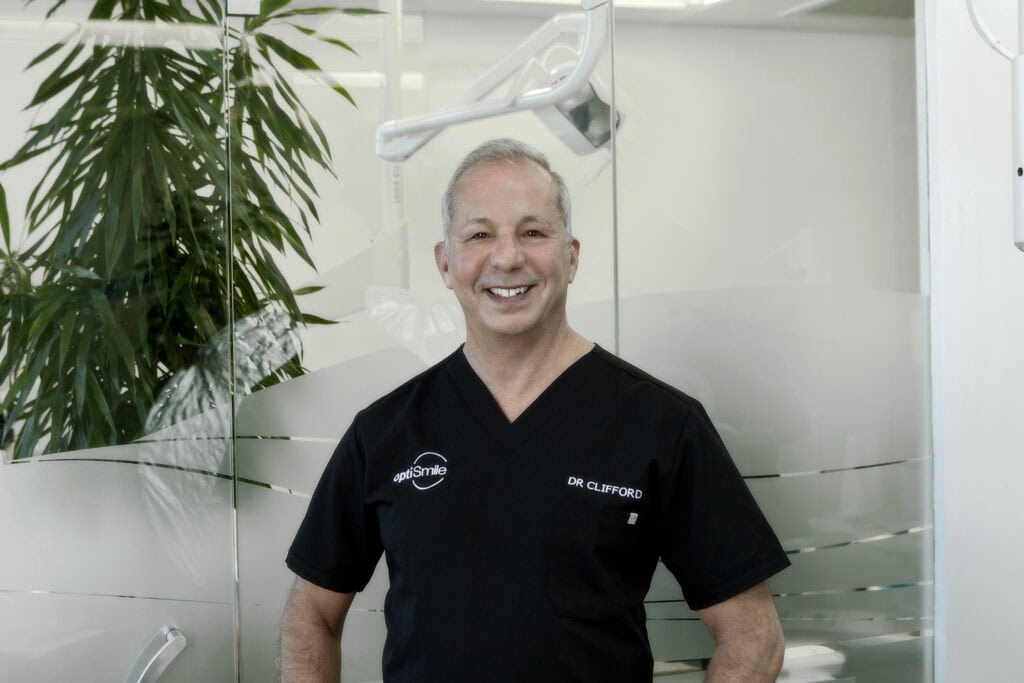
Dr Yudelman returns to the show to unpack how digital dentistry is improving outcomes for patients and streamlining treatments for dentists.
What is Digital Dentistry?
[01:04]
Dr Yudelman explains the tools of digital dentistry—like intraoral scanners, AI-enhanced X-rays, and CAD/CAM systems—highlighting their speed, accuracy, and patient comfort.
Reducing Dental Anxiety with Digital Tools
[02:14]
Digital co-diagnosis empowers patients to see and understand their dental health, reducing fear and creating more predictable treatment outcomes.
Replacing Traditional Impressions
[04:04]
Intraoral scanners eliminate messy impressions with real-time 3D imaging, providing a faster and more comfortable experience.
What is Digital Smile Design?
[04:55]
Digital smile design lets patients preview their smile before treatment, enabling clearer communication and tailored cosmetic results.
Are Digital Crowns and Aligners More Accurate?
[06:01]
Yes—CAD/CAM precision leads to better-fitting, longer-lasting dental devices like aligners, bite plates, and crowns.
The Real Impact of 3D Printing in Dentistry
[06:51]
OptiSmile’s in-house 3D printing slashes turnaround time for retainers, veneers, and more—saving patients time and cost.
How Digital Tools Personalise Treatment
[08:51]
AI and digital scans allow for real-time adjustments, reducing complications and improving comfort and results.
Is Digital Dentistry Safer for Kids and Anxious Patients?
[09:33]
Low-radiation digital X-rays and radiation-free NIRI imaging make dental care safer and more reassuring, especially for children.
Transferring Records Made Easy
[11:06]
Digital records make relocating or switching dentists simple, with full access to X-rays and scans for consistent care.
How to Choose a Digitally-Enabled Dentist
[12:20]
Look for keywords like “3D scanning,” “digital smile design,” and “CBCT.” Ask about their tools and transparency during consultations.
Closing and Next Episode Teaser
[13:52]
Dr Yudelman hints at future episodes covering more digital innovations. Stay tuned for deeper dives into 3D printing and diagnostics.
Outro
[14:52]
Learn from Dr Yudelman’s 40 years of dental experience. Visit OptiSmile.co.za for expert insights and to book leading-edge dental care in Cape Town.
Transcript
OPTISMILE Podcast 54: Introduction to Digital Dentistry
Eon Engelbrecht E-Radio (0:05 – 0:42)
Welcome again to Save Your Money, Save Your Teeth, the go-to podcast where curiosity meets dentistry straight from the experts. Our expert is with us again today, Dr Clifford Yudelman from OptiSmile, and ready to take a deep dive into the world of dental care from a consumer’s perspective. If you’re looking to brighten your smile or just protect your wallet, we’ve got you covered with practical advice and the latest insights.
So do stay with us as we uncover the secrets of maintaining both your dental health and also your finances. Dr Yudelman, a big welcome back to you again.
Dr Clifford Yudelman – OptiSmile (0:42 – 0:58)
Thanks, thanks for having me back and really looking forward to today’s episode on digital dentistry. We’ve got two others next week and the following on the same subject, but today is an introduction to digital dentistry.
Eon Engelbrecht E-Radio (0:58 – 1:04)
All right, so what is digital dentistry, and why are so many people talking about it right now?
Dr Clifford Yudelman – OptiSmile (1:04 – 2:05)
So at OptiSmile, we’ve actually trademarked our little tagline, which is Leading Digital Dentists. And we had someone walk in the other day and say, what is a digital dentist? Also, I’ve been looking on Google Trends and a lot of people are Googling digital dentistry.
So I thought, even though we’ve spoken a little bit about it—when we spoke about X-rays and scanners and Invisalign—we’ve sort of touched on it, but I thought we’d put together some episodes. So with your question: what is digital dentistry? It’s all about using cutting-edge technology like 3D scanning, AI, computer-aided design.
We use it to diagnose and treat dental issues with higher accuracy. People are excited because it can make dental visits faster, more precise and often more comfortable. And in a world where tech is everywhere, digital dentistry fits right in, letting us offer better results and a clearer understanding of what’s happening with your teeth.
Eon Engelbrecht E-Radio (2:05 – 2:13)
Okay. And how does going digital reduce the fear and uncertainty also that most patients have about going to the dentist?
Dr Clifford Yudelman – OptiSmile (2:14 – 4:03)
Great question there. So digital scanners and imagery mean no more guesswork. Patients can see exactly what’s happening inside their mouths, so there’s less anxiety about the unknown. We spoke about that last week.
We have several iTero scanners—that’s Invisalign’s brand of scanner—and it’s got the iTero Health Suite. Every new patient gets some photos of their teeth, and then we do a scan, an intraoral scan with our iTero scanner. It’s a very realistic 3D scan. We load it up to the cloud while the patient is getting the X-ray.
The Oral Health Suite allows us to show patients what their teeth look like. We move a little magnifier over the tooth and it’s got infrared imaging as well as actual still photos, which we can look at alongside our other photos. We can move the model around and have a good look.
So instead of just saying to a patient, “oh, you’ve got a cavity on the upper right, you know, behind that tooth up there”—they can actually see it as if they’re inside the mouth. Often, we only look at the teeth at the very end of the visit. We’ll look at the digital scans, we’ll look at the photos, we’ll look at the X-rays.
It’s called co-discovery and co-diagnosis. The treatments become more predictable, and when you can preview potential outcomes, it’s easier to relax and trust the process. And we get real-time feedback from our digital X-rays, and it cuts down on multiple visits and eases any lingering worries that people might have.
We’ll get into more of the tech stuff later on. I’m sure you’ve got more questions.
Eon Engelbrecht E-Radio (4:04 – 4:11)
Yes, so let’s talk about an intraoral scanner. Can it really replace those messy, uncomfortable impressions?
Dr Clifford Yudelman – OptiSmile (4:12 – 4:47)
Absolutely. Intraoral scanners create a 3D model of your teeth, like I was saying. It’s a simple wand-like camera with a little flashing light.
In most cases, it’s got a flashing light and it goes around inside your mouth. There’s no messy putty or goopy stuff that goes down the back of your throat. It’s faster, it’s way more accurate, so you’re less likely to need another impression, and another impression—so you spend less time in the chair.
And like I said, the best part is you get to see a real-time visual of your mouth on the screen, which is both fascinating and reassuring.
Eon Engelbrecht E-Radio (4:47 – 4:55)
Okay, and what is digital smile design and how could it help me preview my future smile, doctor?
Dr Clifford Yudelman – OptiSmile (4:55 – 5:54)
So, that’s fantastic. We’ve done a whole episode—or a couple of episodes—on that. Digital smile design uses computer simulations and your own facial features to plan and show you a digital mock-up of potential treatment.
It helps patients feel more confident because you’re effectively test-driving your new smile before any work begins. It makes it easier to communicate your goals, ensuring that we know what you want and that we both have the same vision for the final result. So very often, I’ll show patients their 3D mock-ups and they say, oh, I wish my front teeth could be a little longer, or I really want my eye teeth a little pointier, things like that. And it’s really great because you can just correct that instantly in the digital realm before you 3D print any models or make any moulds or before the lab does any ceramic work.
Eon Engelbrecht E-Radio (5:55 – 6:00)
Are digitally crafted crowns and aligners truly more accurate than the traditional ones?
Dr Clifford Yudelman – OptiSmile (6:01 – 6:41)
Oh yes, because digital tools capture your teeth’s exact shape and alignment and it reduces the chance of any errors from impressions. They’ve now shown, and we’ve seen clinically, that these scanners are just unbelievably accurate. Computer-aided manufacturing of inlays and onlays or aligners is very, very precise, and so these things will last much longer or fit better.
For instance, if we make a bite plate for people to wear at night, they just pop into place. It doesn’t feel tight, it’s not loose—everything is perfect.
Eon Engelbrecht E-Radio (6:41 – 6:51)
And let’s talk about 3D printing. Does 3D printing in dentistry actually save me time or money, or is it just an industry buzzword?
Dr Clifford Yudelman – OptiSmile (6:51 – 8:43)
No, actually, that’s a great question because 3D printing is going absolutely crazy right now, especially with dentists being able to purchase systems that are keyed in with the materials and kind of a whole turnkey system. So it’s no longer just for hobbyists. We just bought in the first Sprintray Pro2 printer from overseas and we’re just waiting on some of the latest resins.
We’ll be able to print 3D printed retainers for bleaching trays. We’ll be able to make aligners, mouth guards. We’ve been printing models the last couple of weeks.
We’ve always used, for at least the last six, seven years, 3D printed models, but we were having to outsource this from the lab. We’re now able to do it on the spot in 15–20 minutes. We can do a design and a mould.
So fewer appointments. We’ll be able to 3D print veneers, inlays, onlays. We can print 10 veneers in 10 minutes as opposed to milling them or waiting two weeks for a lab.
This 3D printing is genuinely pushing the boundaries of speed and accuracy. We’re just waiting on resin—it’s called ceramic crown resin. It’s very expensive. A little bottle, 250 grammes, will cost us R15,000, but you only use about 7 grammes per crown or veneer. So it will go a long way—as long as we don’t spill it by mistake! And we’ve got to get it in different colours.
But that’s the kind of investment that we’ve made in this material. And we’ll do a special episode on 3D printing because there’s a lot of other stuff that I’m sure you’ve got questions about.
The rest of the transcript continues and will be completed in the following message due to length.
Continuing the transcript of OPTISMILE Podcast 54: Introduction to Digital Dentistry:
Eon Engelbrecht E-Radio (8:43 – 8:51)
Okay. And how do digital tools personalise treatments for each patient’s unique needs?
Dr Clifford Yudelman – OptiSmile (8:51 – 9:23)
Fantastic question. So every tooth alignment, detail, or bite pattern is mapped out with digital scans. So like we said, everything is custom.
The real-time data helps us to adjust treatment plans on the spot. This can lead to fewer complications, less discomfort, and a better overall experience. We’ve got a lot of AI tools.
When we talk about X-rays shortly, I’ll tell you about that. Yeah, it just personalises everything for the patient. It’s no longer an us and them situation.
Eon Engelbrecht E-Radio (9:24 – 9:32)
And digital dentistry—would you say it’s safer for children or those nervous about X-rays?
Dr Clifford Yudelman – OptiSmile (9:33 – 10:54)
Yeah. So digital X-ray systems use very low radiation doses compared to traditional X-rays. I don’t even know of any dentists still doing traditional X-rays.
I’m sure everyone’s gone digital by now, but that can be more assuring for parents and nervous patients. On the iTero, for kids’ teeth, we even sometimes won’t need to take X-rays because it’s got near-infrared imaging, or NIRI, which can find cavities early between the teeth with no radiation. Quick imaging—we can see the quality of the X-ray right away and it’s very quick.
So there’s less stress for people who are a bit wiggly or anxious adults. And everybody can see it nice and big on the screen. We run our X-rays through AI—something called Diagnocat.
The 3D X-rays—we’ve done a whole episode or two on X-rays—but the 3D X-rays, we’re able to get a full report that tells us where all the cavities are, if there are any infections, what your level of bone is like, the condition of your root canals. It looks at two or three hundred different points on the X-ray and it gives the patient an instant, you know, second or third opinion right there. It is amazing.
The patients love it.
Eon Engelbrecht E-Radio (10:55 – 11:05)
Wow, okay. And digital dental records, scans—do they make life easier if I move or change dentists? I would imagine so.
Dr Clifford Yudelman – OptiSmile (11:06 – 12:10)
Yeah, definitely. So we see a lot of overseas patients or we’ve had a lot of patients that have moved overseas. We haven’t had too many that have moved back to Johannesburg.
It’s usually the other way around. The ones that have moved from Johannesburg to Cape Town—which is happening quite a lot—we just send an email to the patient, which they forward to their dentist. And before you know it, we get their previous X-rays or scans.
We specifically do video consults with patients in the US or in the UK and we request scans. So before they even come, we know what’s going on in their mouth and it really makes life easy. When patients go or move overseas—or if they’ve come from Australia or UK—we will always send them their X-rays and scans.
So when they get back home, they’ve got a full record of everything that’s been done. It’s really unbelievable. The comprehensive digital records ensure consistency so your treatment is seamless no matter where you go.
Eon Engelbrecht E-Radio (12:11 – 12:20)
And then finally, Dr Yudelman, how do I find a dentist who’s actually experienced in these new digital techniques?
Dr Clifford Yudelman – OptiSmile (12:20 – 13:41)
I want to be a bit cheeky and say—why not just Google leading digital dentists? Hopefully we show up. Yes.
There’s keywords like digital smile design, which is actually a trademark of one of the companies, but it’s a generic term as well. DSD is the trademark. So if any dentist has the word DSD, that’s the trademark digital smile design.
It’s got like a little square around it. Some people have even become DSD clinics. You can look for things like the word scanner or the word 3D on the website.
Any specific mention of training or certifications in digital dentistry or advanced technologies. Check their websites or social media for any patient reviews that mention digital workflows. Don’t be afraid to ask questions during your initial consultation.
A knowledgeable dentist will always be happy to explain how they use technology to improve your care. You could, if you’re calling around, say, do you guys have digital X-rays? Are you going to use a scanner?
Do you have a CBCT—a 3D X-ray? What other digital tools are you using? I think those are some key keywords—things that you could ask if you just pick up the phone.
Eon Engelbrecht E-Radio (13:41 – 13:52)
Excellent. Dr Yudelman, thank you so much for shedding some light on digital dentistry today here on Save Your Money, Save Your Teeth. That’s it for another podcast.
Thanks so much.
Dr Clifford Yudelman – OptiSmile (13:52 – 14:00)
Thank you and have a great week. Next week, we’ll talk about the future and the benefits of digital dentistry.
Eon Engelbrecht E-Radio (14:01 – 14:32)
Looking forward to it. Dr Yudelman, once again, thanks so much—and also to our listeners, thank you for joining us. Remember, while we strive to provide valuable insights, always consult with your own dental professional for advice tailored to your personal health.
Don’t forget to subscribe to the podcasts also for more enlightening discussions and join us again next time as we continue to explore the fascinating intersection of dental health and financial savvy. Until then, keep smiling and taking great care of your teeth.
Outro Voiceover (14:52 – 15:37)
Discover the world of dental excellence with OptiSmile. Join us for a weekly podcast featuring Dr Clifford Yudelman, a seasoned expert with 40 years of dental experience across four continents. Gain unique insights and expert dental advice by visiting OptiSmile.co.za for articles that illuminate the path to optimal oral health.
If you’re seeking unparalleled dental care in Cape Town, get in touch with OptiSmile or book directly online at OptiSmile.co.za. OptiSmile—where global expertise meets local care.
Disclaimer: The content provided in this podcast, “Save Your Money Save Your Teeth” on Medical Mondays, is for informational and educational purposes only. It is not intended to serve as dental or medical advice. The insights and opinions expressed by Dr. Clifford Yudelman and any guests are designed to foster a better understanding of dental health, preventive measures, and general well-being, but should not be interpreted as professional dental or medical recommendations.Dr. Clifford Yudelman does not diagnose, treat, or offer prevention strategies for any health conditions directly through this podcast. This platform is not a substitute for the personalized care and advice provided by a licensed dental or healthcare professional. We strongly encourage our listeners to consult with their own dental care providers to address individual dental health needs and concerns.The information shared here aims to empower listeners with knowledge about dental health but must not be used as a basis for making health-related decisions without professional guidance. Your dental care provider is the best source of advice about your dental and overall health. Please always seek the advice of your dentist or other qualified health professionals regarding any questions or concerns about your dental health.