Chapters
Introduction
(0:00 – 0:48)
Welcome to Save Your Money, Save Your Teeth
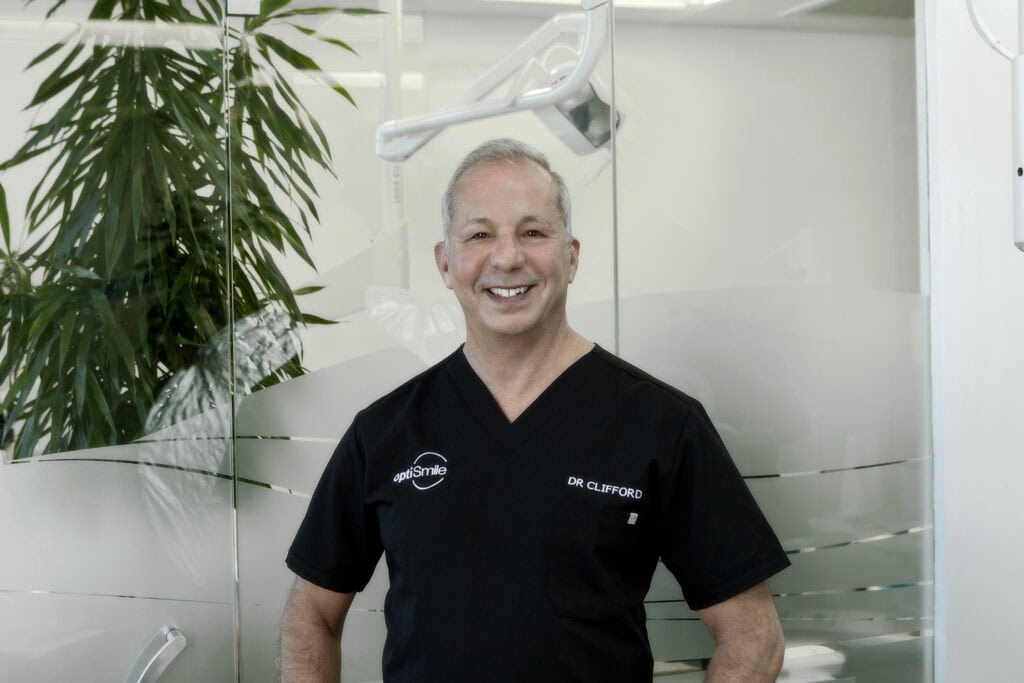
Introduction of Dr Clifford Yudelman from OptiSmile
Overview of the podcast’s focus on dental care and financial savings
Episode Overview
(0:49 – 1:02)
Discussion on Invisalign vs traditional braces
Importance of the topic for dental patients
Key Differences between Invisalign and Traditional Braces
(1:03 – 3:03)
Visibility and aesthetics of Invisalign aligners
Comfort and irritation comparison
Maintenance and cleaning ease
Food restrictions with traditional braces
Cost Comparison
(3:04 – 6:34)
Initial costs of Invisalign and traditional braces
Insurance and medical aid coverage
Long-term value and predictability of Invisalign
Financing options for braces and Invisalign at OptiSmile
Importance of Research
(6:35 – 6:52)
Encouraging listeners to do thorough research before deciding
Aesthetic Benefits of Invisalign
(6:53 – 8:42)
Discreet nature of Invisalign aligners
Popularity among adults and older teens
Confidence boost and professional settings
Comfort Level Comparison
(8:43 – 10:22)
Smooth surface of Invisalign aligners
Discomfort with metal brackets and wires of traditional braces
Ease of adjustments with Invisalign
Effectiveness of Invisalign
(10:23 – 12:59)
Range of issues Invisalign can address
Complex cases requiring traditional braces
Consultation with orthodontics care practitioner or experienced dentists
Maintenance Comparison
(13:00 – 14:38)
Easy maintenance of Invisalign aligners
Time-consuming maintenance of braces
Convenience of travel with Invisalign
Eating Habits
(14:39 – 15:25)
No food restrictions with Invisalign
Difficulty eating certain foods with braces
Patient Experiences
(15:26 – 16:34)
Positive feedback from patients who had both treatments
Preference for Invisalign due to comfort and aesthetics
Age Recommendations
(16:35 – 19:10)
Invisalign treatment for younger children
Compliance indicators for teens
Popularity among adults
Considerations for Choosing Between Invisalign and Braces
(19:11 – 21:45)
Budget and financing options
Complexity of dental issues
Lifestyle and convenience
Aesthetic preferences
Closing Remarks
(21:46 – 21:58)
Dr Clifford Yudelman’s contact information
Availability for free video consultations and appointments in Stellenbosch
Podcast Outro
(21:59 – 23:20)
Reminder to consult personal dental professionals
Encouragement to subscribe for more episodes
OptiSmile Promotion
(23:21 – 24:24)
Weekly podcast featuring Dr Clifford Yudelman
Expert dental advice and articles at OptiSmile.co.za
Booking information for dental care in Cape Town
Transcript
[Eon Engelbrecht E-Radio] (0:09 – 0:48)
Hello and welcome again to Save Your Money, Save Your Teeth, the go-to podcast where curiosity meets dentistry straight from the experts. I’m Eon and I’m chatting to Dr Clifford Yudelman from OptiSmile. We take a nice deep dive into the world of dental care from a consumer’s perspective.
So, whether you’re looking to brighten that smile of yours or protect your wallet, we’ve got you covered with practical advice and the latest insights. So stick around and join us as we uncover the secrets to maintaining both your dental health and your finances. A big welcome to you once again, Dr Clifford Yudelman.
[Dr Clifford Yudelman OptiSmile] (0:49 – 1:02)
Hi, thanks. Thanks for having me on. I hope you had a great week and I am very excited about today’s episode. We did mention last week we were going to talk about Invisalign versus traditional braces.
[Eon Engelbrecht E-Radio] (1:02 – 1:08)
So, doctor, what are the main differences between Invisalign and traditional braces?
[Dr Clifford Yudelman OptiSmile] (1:09 – 3:03)
So I’m very biased as at OptiSmile, we only do Invisalign clear aligners. We do occasionally send patients to the orthodontic care practitioner for traditional braces. The obvious thing is visibility and aesthetics. Invisalign aligners are clear, virtually invisible, and they’re very discreet.
Traditional braces are more noticeable, which is a concern for some patients. Comfort and irritation: Invisalign aligners are smooth, and the genuine Invisalign are cut above the gum line. Unlike some of the copy aligners which cover the gum line, the genuine Invisalign do not irritate your gum at all. Traditional braces, with brackets and wires, can definitely cause discomfort and often require adjustments.
Maintenance and cleaning: Invisalign aligners are removable, allowing for easier cleaning of the aligners and the teeth. With braces, you can spend an hour cleaning your teeth and still not get all the plaque off. I think a lot of people are familiar with that. And of course, we love eating, and with Invisalign, there are no food restrictions. You take them out, you eat, you rinse your mouth, and you give them a quick brush depending on the time of day. You only really have to give them a good brush first thing in the morning and at night; after lunch, you can just rinse your mouth.
Traditional braces: you’re always getting food stuck in them, and every time you eat anything, it’s a whole big to-do to keep them clean. And yeah, so from that point of view, there’s a very big difference. Invisalign is generally much, much quicker than braces, which we can talk about a little bit later.
[Eon Engelbrecht E-Radio] (3:05 – 3:11)
And in terms of costs, doctor, how do the costs of Invisalign compare with traditional braces?
[Dr Clifford Yudelman OptiSmile] (3:12 – 6:34)
So as we were starting to talk about last week, the initial costs, Invisalign tends to have a higher initial cost due to the advanced technology and the customisation involved. And of course, I wouldn’t say the dentist or orthodontic care practitioner is the middleman, but it’s an imported product in South Africa, which makes it more expensive in South Africa than maybe if you were in New York. Traditional braces can be more affordable upfront and depending on the orthodontic care practitioner, they might charge you quite a bit extra for adjustments and repairs.
When it comes to insurance coverage or medical aid, should I say, they cover both Invisalign and traditional braces. Generally, if you’ve got orthodontic cover for braces, they should pay the same towards your Invisalign, which can help, but you need to check with your medical aid. The long-term value, so Invisalign is more predictable.
There’s fewer emergency visits and for a lot of people, it’s got a better long-term value. There are ways to do Invisalign where we monitor virtually, we’ll talk about that, where you only need to see the dentist, if not every month, in some cases, you can go every two or three months, we use a special app to track, which uses AI. For most cases in South Africa, you can get financing for traditional braces.
If you’re going to have braces on for 18 months or two years, the dentist might charge you two grand or three grand, sorry, 3000 rand a month. Most places in South Africa that do genuine Invisalign don’t offer payment plans. At OptiSmile, we do have a number of different flexible payment plans.
It can still be quite expensive. You can pay anywhere from five to 8,000 rand a month over a course of treatment, depending on how it’s broken up. There’s no way around it.
Invisalign is more expensive and the cheap alternate South African copycat ones on the surface can appear less expensive, but I can assure people that it doesn’t do what Invisalign does. There are a lot of hidden costs that one needs to ask about when it comes to having to scan again at the end and get more and more and more aligners. They actually charge quite a bit for these additional aligners.
We just saw a patient from Stellenbosch who had one of these other copycat aligner systems and he’s been going for a long time. He could only change his aligners every two weeks. With Invisalign, it’s every week, and he’s not finished yet.
We thought we would get a quote from that lab and get some more aligners for him. To get 13 more aligners, they wanted to charge us 26,000 rand, which is before we even add any of our own fees on there. And what he needs, the actual manufacturer of Invisalign would actually be a little bit less than that for more aligners because we’re a top Invisalign provider in South Africa and we get special terms from Invisalign.
You always want to check out your options properly.
[Eon Engelbrecht E-Radio] (6:35 – 6:52)
Yeah, always do your research before you do this. I think that’s very, very important. Doctor, we touched on it briefly in last week’s podcast, but perhaps you could elaborate a bit. What are the aesthetic benefits of Invisalign?
[Dr Clifford Yudelman OptiSmile] (6:53 – 8:42)
It’s discreet. They’re clear, nearly invisible. You can straighten your teeth without drawing attention.
It’s especially appealing to adults and older teens. You’d think that a 12, 13 or 14-year-old wouldn’t worry about braces. Now that they know the kids watch TikTok and YouTube and that, and they know that Invisalign is available, they’re not so keen.
It used to be that kids really wanted braces, but now we’re seeing it’s the opposite. It’s not always that affordable if you’ve got two or three kids and they all need teeth straightening. Those are the cases we tell parents, maybe you need to go and get traditional braces.
This is going to cost a small fortune for three of them. And often mum wants it and dad wants it. So if people can afford it, we’re there for them.
But a lot of the time, it can be someone who had braces and their teeth have now gone crooked again because they weren’t wearing their retainers, and they just need 14 aligners. It’s not that expensive. They’re in their mid-20s or 30s and they just want them straight again.
It’s a confidence boost because during treatment, you don’t have railway tracks. You can smile and speak freely with Invisalign in your mouth. When you smile in photos, you really can’t see them.
And it’s really good in professional settings. People can wear them on Zoom meetings. You can wear them in meetings, as long as you’re not eating.
The invisibility of the aligners reduces your self-consciousness when you’re in these meetings or personal, when you’re going out with your friends. I know I love Invisalign so much, I sound like a salesperson. And I think, in fact, I am.
[Eon Engelbrecht E-Radio] (8:44 – 9:04)
Okay. So it’s nice to know that you can’t really see it in photos because in the older days with those train tracks, as some of the children called it at school, it was difficult. Everybody could see that you had braces. But how does the comfort level of Invisalign compare with braces?
[Dr Clifford Yudelman OptiSmile] (9:05 – 10:22)
That’s a very good question. Thank you for asking. So basically, it’s a smooth surface. Invisalign is smooth, smooth plastic. The braces, I think everyone’s familiar, can cause discomfort with the metal brackets and wires. There’s fewer adjustments.
In fact, you just change your aligners generally weekly. And they push on the teeth a tiny, tiny bit in the correct direction, 0.2 of a millimetre. When you go to the orthodontic care practitioner to adjust traditional braces, there’s no, I’m not exaggerating, I’ve never had braces myself, but people tell me that it can be extremely sore for a few days every time they get a new spring or elastic or a new wire.
The ease of use: patients can remove Invisalign when eating and cleaning, which we’ve spoken about, and the braces are stuck there. And there’s less discomfort. Basically, the aligners shift the teeth very gradually, less overall discomfort compared to the abrupt adjustments of the braces.
And they’ve done study after study to show that there’s less pain and soreness with Invisalign.
[Eon Engelbrecht E-Radio] (10:22 – 10:30)
So doctor, just to make sure, can Invisalign address all the same issues that traditional braces can?
[Dr Clifford Yudelman OptiSmile] (10:30 – 12:59)
So there’s a very large range of treatment that’s effective for treating things like crowding, spacing, overbites, underbites, crossbites. There are some extremely complex cases, which are few and far between, that may still require traditional braces to get the best results. There are cases we’ve seen, just recently, I had a teenager where they’d left it a bit late and his canine or eye teeth were stuck up in the palate.
He had to have surgery to expose these and the surgeon attaches a little gold chain onto those and then they need to be attached to something fixed like braces and wires. There are ways to do that with Invisalign using something called TADs, temporary anchorage devices, which I won’t get into now. We’re exploring that as an added option at OptiSmile so that we can treat even a broader range.
But for most things, Invisalign can do a lot more than what most dentists or orthodontic care practitioners realise. Some of the limitations are just jaw alignment issues that, like we mentioned, sometimes pre-surgical, if someone’s going to be having jaw surgery to correct quite a large deformity, although now Invisalign is the more popular choice for pre-surgical orthodontics. The best is to have a consultation with an orthodontic care practitioner or a very experienced dentist to decide on the best option and not to try and make that decision yourself.
You have to be sure though, as far as I’ve seen, if it is a complex issue, the only orthodontic system with clear aligners that has all of the patents and the technology that could do something like this would be Invisalign. The other copycat aligners don’t stand a chance.
They usually will work okay for what we call the social six, the six front teeth. They don’t move back teeth around. I haven’t looked into them again lately, but as far as I’ve seen, they don’t do very much compared to Invisalign. You might be better off with braces if you can’t get genuine Invisalign.
[Eon Engelbrecht E-Radio] (12:59 – 13:06)
Okay. And in terms of maintenance, what is the maintenance like for Invisalign compared to braces?
[Dr Clifford Yudelman OptiSmile] (13:07 – 14:38)
Well, Invisalign, it’s a breeze. You just basically brush them under cool water. You can soak them in a special cleaning solution. It’s not always necessary. When you pop them out, you don’t leave saliva. You just give them a quick rinse. You make sure you don’t have a lot of food on your teeth. You pop them back in. We give you a thing called a chewy, a little sort of like a mini pool noodle, a little piece of polystyrene that you chew on to push them in. And it’s very, very convenient. You get a little carry case. It’s quite easy.
Braces, I think we’ve spoken about even in the last podcast, it’s very time-consuming. Oral hygiene is a lot more difficult with the braces. It’s obvious that the aligners are much more convenient. And the follow-up visits: there’s no emergencies with Invisalign. Whereas braces, there’s often emergency visits for broken brackets, springs that have popped off, wires that have broken. There’s nothing like that with Invisalign. You can travel overseas. You take your aligners with you. If you’re going to be away for three, four weeks, you just make sure the dentist has given you your next three or four weeks of aligners. Whereas with braces, if you’re not getting them constantly adjusted, they stop working really. And it’s a very stop-go thing.
[Eon Engelbrecht E-Radio] (14:39 – 14:49)
Yeah. Invisalign is sounding like the much better option at this stage. But how do eating habits differ between Invisalign and braces?
[Dr Clifford Yudelman OptiSmile] (14:50 – 15:19)
Yeah. You pop them out, you eat what you want, you have a rinse, or you brush, you pop them back in. Really a no-brainer, so they say. Braces: you can’t eat sticky things, hard things, things that get stuck. You can damage your brackets and wires. Yeah. I mean, ease of eating: obviously, Invisalign is a winner. Oral hygiene: we just spoke about the dietary flexibility. I think it speaks for itself.
[Eon Engelbrecht E-Radio] (15:19 – 15:25)
Okay. And what do your patients say about their experiences with Invisalign versus braces?
[Dr Clifford Yudelman OptiSmile] (15:25 – 16:34)
So that’s a great question because a lot of our patients that come for Invisalign had braces when they were younger and then the retainer wire popped off or the orthodontic care practitioner removed the braces too early and their teeth have shifted. So a lot of them have had braces before and they swear they would never get it done again because of all the things we’ve mentioned. And then they get Invisalign and they absolutely love it.
I know it sounds like I’m selling it, I am. Patients love it. Invisible, they feel more confident. A lot of them that have had braces on themselves and their teeth are nice and straight and they appreciate the two or three or four years that they had their braces and now they’ve got teenagers and kids. They’re the ones that bring people and they say, there’s no way I’ll put braces on my kid. Please tell me about Invisalign.
I’ve been saving up my whole life. Since little Johnny was born, I knew he was going to have crooked teeth like me. So I’ve put away a small fortune and here I am, please do Invisalign because I couldn’t let him suffer like I did.
[Eon Engelbrecht E-Radio] (16:35 – 16:42)
And now that you mentioned the kids, any age restrictions or recommendations for Invisalign versus braces?
[Dr Clifford Yudelman OptiSmile] (16:42 – 19:10)
Well, it used to be that we couldn’t treat the younger kids, but now as long as the six-year-old molars are in and the four front teeth, top and bottom, what’s called mixed dentition, we’ve got Invisalign phase one or Invisalign for kids. And we actually like to treat them very early like that at that stage to prevent the problems from getting worse. And a lot of time then there’s a delay.
We do maybe three, four months or a little bit longer of early treatment. Then we keep them in an Invisalign-type retainer that’s got space for the permanent teeth that guides the permanent teeth into place. And then they might do a short course of Invisalign later on when all the permanent teeth are in at 12 or 13 and then they’re done. They don’t ever have to have braces. So that’s fantastic. We’ve only been able to do that treatment. It’s been available for a long time overseas, but it wasn’t available in South Africa. It’s now been available since last year in March. We are seeing more and more kids.
I’m friendly with an orthodontic care practitioner in Johannesburg. He told me last time I spoke to him, he’s done about 50 kids like that just in the last year. He gets a lot of referrals from other dentists and he does 99% Invisalign. He doesn’t do a lot of braces. The growing teeth, when the kids are growing, it’s ideal. It works really quickly.
All kinds of teens, there’s no limitation on teens. And for adults, I think it’s obvious they much prefer Invisalign for the aesthetic advantages. It’s a lot quicker. People worry about compliance, that the kids are not going to wear the Invisalign. They can take it out as soon as they get to school. But we don’t see that.
The kids, especially even the younger ones, they’re very good at wearing their Invisalign. And Invisalign now, if you’re worried about compliance with a teenager, maybe a 14-year-old boy, you can put these little blue dots into the compliance indicator. And if he’s not wearing it, the colour won’t fade.
And they come in and they say they’ve been wearing it for a week and it’s still deep blue. And it shows that they’re not telling the truth. So, you can run, but you can’t hide.
[Eon Engelbrecht E-Radio] (19:12 – 19:20)
And then, doctor, finally, what should patients consider when choosing between Invisalign and traditional braces?
[Dr Clifford Yudelman OptiSmile] (19:21 – 21:45)
Obviously, budget and financing. Compare the cost of Invisalign to traditional braces, including the consultation fees, the treatment costs, the follow-up visits. Look at all your financing options.
We’re introducing a special payment plan, a new payment plan at OptiSmile where you can pay on your credit card and they’ll deduct your monthly payments with no interest. So, that’s very interesting. It’s called Flow.
There’s the complexity of the case. Sometimes, you may just decide that braces are better for you. Although, like I said, there are very few cases that Invisalign can’t treat and it’s often much quicker.
Lifestyle and convenience: you have to decide, is your lifestyle, your oral hygiene, what you’re allowed to eat and not allowed to eat, is that more important to you than how much it’s going to cost you if all other things are equal? And then, maybe you’ve got hours in the day to clean your brackets and your elastics. Maybe you don’t mind spending a lot of time cleaning the braces.
And the last one, which is most obvious, is aesthetic preferences. How important is it to you? If you’re already embarrassed about having crooked teeth or you’re very shy and over the first 6, 8, 10 weeks, the teeth can already be straight and you’ve got clear aligners in, your confidence just increases.
But if you put brackets and wires on, you’ll probably end up being even more embarrassed or don’t want to smile in Zoom meetings because now, you not only have crooked teeth, but now, they’ve got metal on them and you’re telling the world, I hate my smile, I’m straightening it. So, I’m just throwing that out there. If the main concern is self-esteem and so on, I think Invisalign clear aligners would be the winner, hands down.
I can’t see people feeling more confident with braces. Maybe when it’s over and everything looks straight and neat and nice, for sure, but not during the… yeah. I mean, a lot of times, we do 20 aligners, 20 weeks that we know an orthodontic care practitioner might spend a year or 18 months doing the same thing.
[Eon Engelbrecht E-Radio] (21:46 – 21:58)
That’s incredible. I don’t know about you, but I’m totally sold on Invisalign right now. And that wraps up today’s episode of Save Your Money, Save Your Teeth. Dr Yudelman, thank you so much once again.
[Dr Clifford Yudelman OptiSmile] (21:58 – 22:48)
Thank you. I really love talking about Invisalign, as you can tell. If anyone is interested, they can book a free video consultation with me. They can WhatsApp me via the website at OptiSmile.co.za. I’m in Stellenbosch every Wednesday to do Invisalign at Dorp Street Dental.
We have an association with them. They’re specialists in that practice and I’m your Invisalign guy in that Winelands region. And yeah, we get patients from all over the Western Cape. Stellenbosch is a little bit more convenient than coming into Sea Point. And yeah, look, until you actually find out if it’s for you or what one can do, you’ll just always be wondering. So make that call when you’re ready.
[Eon Engelbrecht E-Radio] (22:49 – 23:20)
Exactly. Thank you so much again, Dr Yudelman. And also remember, while we strive to provide valuable insights with this podcast, always consult with your own dental professional for advice tailored to your personal health.
Don’t forget to subscribe to the podcast for more enlightening discussions. Join us again next week as we continue to explore the fascinating intersection of dental health and financial savvy. Until then, keep smiling and taking great care of your teeth.
[OptiSmile Announcer] (23:40 – 24:24)
Discover the world of dental excellence with OptiSmile. Join us for a weekly podcast featuring Dr Clifford Yudelman, a seasoned expert with 40 years of dental experience across four continents. Gain unique insights and expert dental advice by visiting OptiSmile.co.za for articles that illuminate the path to optimal oral health. If you’re seeking unparalleled dental care in Cape Town, get in touch with OptiSmile or book directly online at OptiSmile.co.za. OptiSmile, where global expertise meets local care.
Disclaimer: The content provided in this podcast, “Save Your Money Save Your Teeth” on Medical Mondays, is for informational and educational purposes only. It is not intended to serve as dental or medical advice. The insights and opinions expressed by Dr. Clifford Yudelman and any guests are designed to foster a better understanding of dental health, preventive measures, and general well-being, but should not be interpreted as professional dental or medical recommendations.Dr. Clifford Yudelman does not diagnose, treat, or offer prevention strategies for any health conditions directly through this podcast. This platform is not a substitute for the personalized care and advice provided by a licensed dental or healthcare professional. We strongly encourage our listeners to consult with their own dental care providers to address individual dental health needs and concerns.The information shared here aims to empower listeners with knowledge about dental health but must not be used as a basis for making health-related decisions without professional guidance. Your dental care provider is the best source of advice about your dental and overall health. Please always seek the advice of your dentist or other qualified health professionals regarding any questions or concerns about your dental health.